


 Deutsch
 English
 Español
 Français
 Nederlands
 Português


 Share
Share




The Strategic Reshaping of Global Supply Chains: Geopolitical Fragmentation and Economic Realignment
Global supply chains are undergoing their most profound transformation in decades, fundamentally rewired by escalating geopolitical tensions and accelerating economic fragmentation. According to recent World Economic Forum and Kearney analysis, four distinct scenarios will define supply chain evolution through 2027, as businesses navigate competing regulatory blocs, shifting trade patterns, and the strategic rise of 'friendshoring' approaches. With the World Trade Organization projecting global trade growth to slow to just 0.5% in 2026, companies face unprecedented challenges in building resilience while managing geopolitical risks.
What is Supply Chain Geopolitical Fragmentation?
Supply chain geopolitical fragmentation refers to the systematic reorganization of global production networks along political and strategic lines rather than purely economic efficiency. This represents a fundamental departure from decades of globalization, where cost optimization drove manufacturing to the lowest-cost locations regardless of political alignment. Today, national security concerns, trade tensions, and strategic competition are reshaping how goods flow across borders, creating what experts call a 'new era for supply chains' where resilience and strategic alignment increasingly rival cost considerations.
The Four Scenarios: World Economic Forum's 2025-2027 Outlook
The World Economic Forum and Kearney have identified four plausible scenarios that will shape global supply chains through 2027, each representing different combinations of geopolitical alignment and economic convergence.
Scenario 1: Reformed Multilateralism
In this optimistic outlook, supply chains rebalance within a rules-based multilateral framework with regulatory convergence and significant digitalization investments. Global cooperation improves, and businesses benefit from more predictable trade environments while investing in digital transformation. This scenario assumes successful international trade negotiations and reduced geopolitical tensions.
Scenario 2: Fragmented Competition
This more likely scenario sees supply chains scaling selectively amid competing blocs and regulatory divergence. Reshoring, resource nationalism, and strategic decoupling characterize this environment, with companies building parallel supply chains for different geopolitical spheres. The US-China technology competition accelerates under this scenario, forcing businesses to make difficult strategic choices.
Scenario 3: Volatile Adaptation
Characterized by uneven growth and softened tensions, this scenario features persistent chokepoints and uneven technology adoption. Supply chains adapt to localized disruptions while maintaining some global integration, creating a patchwork of regional approaches with varying levels of resilience.
Scenario 4: Degraded Conflict
The most challenging outlook involves supply chains recoiling from conflict in a world of fading multilateralism. Deglobalization accelerates, infrastructure degrades, and digital isolation becomes prevalent, forcing companies into survival mode with highly localized operations.
Case Studies: Huawei's Resilience and Red Sea Disruptions
Real-world examples illustrate how companies are adapting to this new landscape. Huawei's remarkable response to US sanctions demonstrates corporate resilience against geopolitical pressures. According to a 2025 ITIF report, U.S. export controls against Huawei have backfired, making the Chinese tech giant more innovative while harming American companies. Since 2018, U.S. sanctions aimed at crippling Huawei's supply chain instead prompted the company to develop its own operating system (HarmonyOS), build its own chips, and create an ecosystem independent of U.S. technologies. Huawei's global telecom equipment market share actually increased from 29% in 2018 to 34% in 2024.
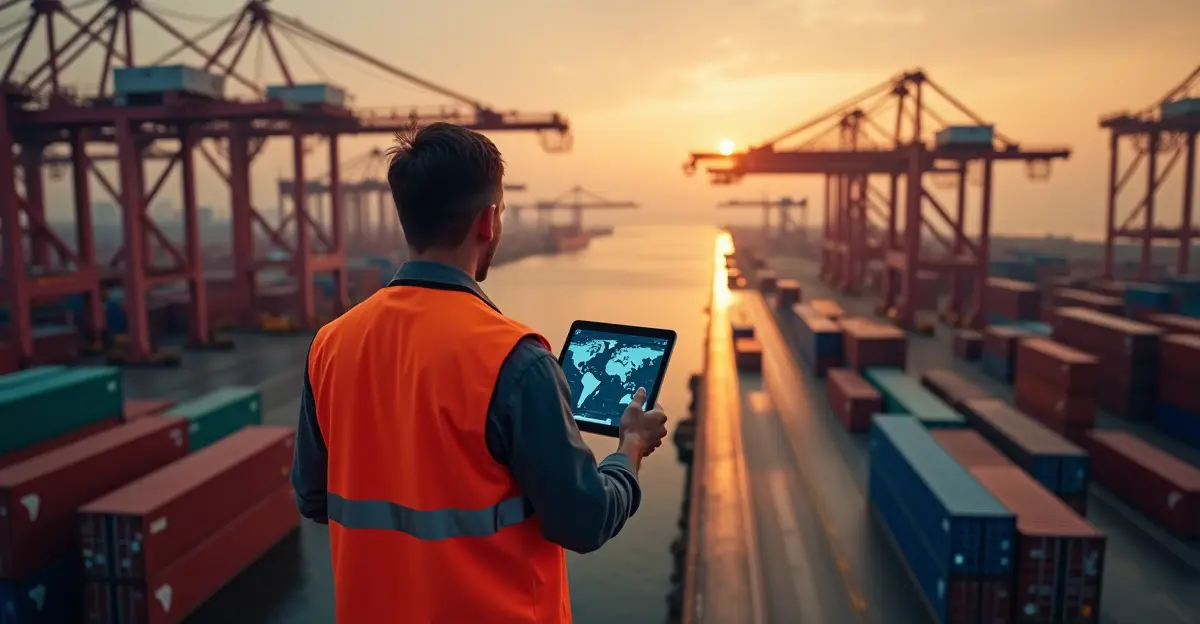
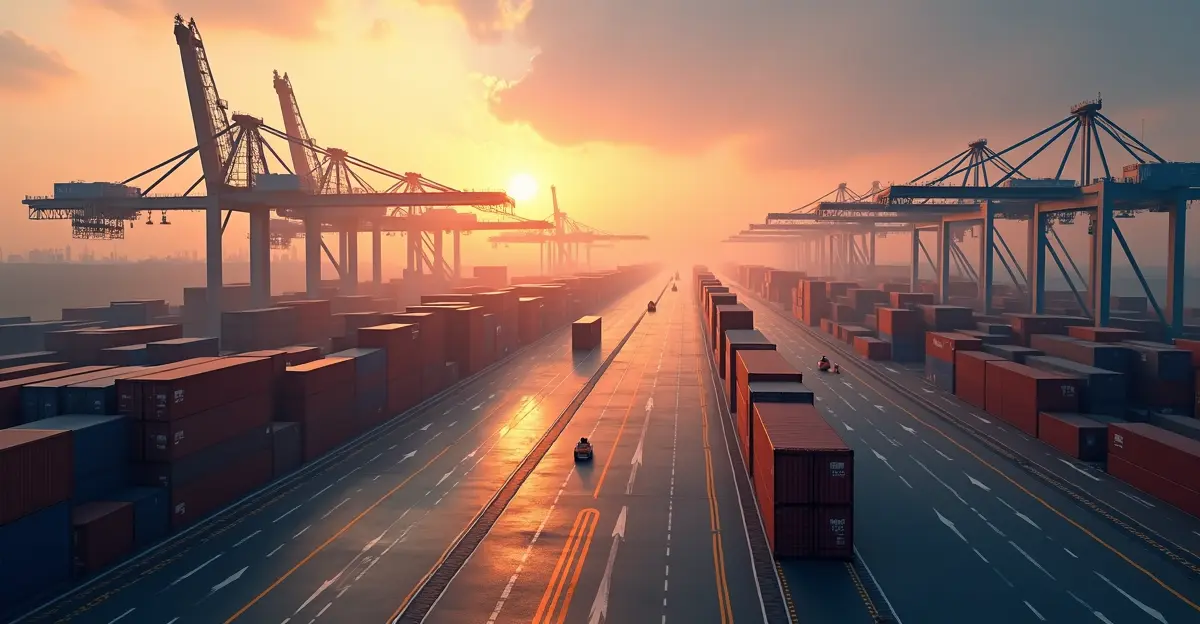
Meanwhile, the Red Sea crisis has exposed critical vulnerabilities in global shipping routes, forcing companies to reroute vessels around Africa's Cape of Good Hope, adding weeks to transit times and increasing costs by 30-40%. This disruption has accelerated the shift toward regional supply chain networks and highlighted the strategic importance of alternative transportation corridors.
The Rise of Friendshoring Strategies
Friendshoring has emerged as a dominant strategy where companies relocate supply chains to politically aligned, economically stable countries to mitigate risks from trade wars, sanctions, and geopolitical instability. Unlike nearshoring (proximity-focused) or reshoring (returning home), friendshoring prioritizes shared governance values and regulatory alignment. Key examples include Apple shifting iPhone production to India, Mexico becoming a manufacturing magnet for US companies, and US government incentives for semiconductor production in allied nations through initiatives like the CHIPS Act.
According to research published in 2026, this approach represents a significant shift from traditional globalization models, driven by growing geopolitical rivalries, trade tensions, and national security concerns. The trend reflects the increasing intersection of geopolitics and global trade, where strategic alliances and political relationships are becoming as important as economic factors in supply chain decision-making.
WTO's Dire Trade Projections and Economic Implications
The World Trade Organization's latest forecasts paint a concerning picture for global commerce. While the WTO has upgraded its 2025 global trade forecast to 2.4% growth (up from 0.9% in August), it warns of a sharp slowdown to just 0.5% growth in 2026. The 2025 boost is attributed to strong first-half performance (4.9% year-on-year) driven by front-loading of U.S. imports ahead of expected tariff hikes, favorable macroeconomic conditions, and a surge in AI-related goods trade which accounted for nearly half of the expansion.
WTO Director-General Ngozi Okonjo-Iweala has urgently warned that any U.S.-China decoupling could reduce global economic output by 7% over the longer term, with developing countries facing double-digit welfare losses. She emphasized that while 72% of global trade still follows WTO rules despite recent bilateral deals, escalating tensions remain a serious risk to global trade stability.
Strategic Business Implications and Digital Transformation
For businesses navigating this complex landscape, several strategic imperatives have emerged. First, companies must conduct comprehensive risk assessments, categorizing products as strategic/critical, bottleneck, leverage, or non-critical. Second, organizations should evaluate alternative sourcing scenarios across multiple geopolitical blocs. Third, digital transformation has become essential, with successful companies in 2025 replacing legacy systems with cloud-based platforms that break down data silos between procurement, logistics, manufacturing, and distribution.
Looking ahead to 2026, the focus shifts to orchestration through unified control towers that combine analytics, AI forecasts, and risk indicators. Sustainability and risk resilience will become core priorities, with organizations integrating environmental footprint data and supplier compliance into supply chain decisions. The key lesson is that digital transformation is about building continuous capability rather than just acquiring technology.
Expert Perspectives on Navigating the New Landscape
Supply chain experts emphasize that traditional approaches are no longer sufficient. 'We're witnessing a fundamental recalibration where strategic imperatives now rival market prices in corporate decision-making,' notes one industry analyst. 'The move toward friendshoring and regionalization represents not just a tactical adjustment but a strategic reorientation of how global commerce operates.'
Business leaders must now balance multiple competing priorities: maintaining cost competitiveness while building resilience, navigating complex regulatory environments across different blocs, and investing in digital capabilities that provide visibility across increasingly fragmented networks. The future of global manufacturing will likely involve more distributed, regionalized production networks with greater redundancy and strategic alignment.
FAQ: Global Supply Chain Transformation
What is friendshoring and how does it differ from reshoring?
Friendshoring involves relocating supply chains to politically aligned countries, while reshoring means bringing manufacturing back to the home country. Friendshoring prioritizes strategic alliances over pure geographic proximity.
How will WTO's 0.5% trade growth projection affect businesses?
Slower trade growth means companies must focus on efficiency within regional blocs rather than relying on expanding global trade volumes. It also increases competition for market share within protected markets.
What are the key risks in the fragmented competition scenario?
Key risks include regulatory divergence between blocs, duplication of supply chains, higher costs from reduced economies of scale, and potential technology standards fragmentation.
How can small and medium enterprises adapt to these changes?
SMEs should focus on niche specialization, develop partnerships within regional ecosystems, invest in digital tools for visibility, and prioritize relationships with larger companies that have established multi-regional networks.
What role does digital transformation play in supply chain resilience?
Digital transformation enables real-time visibility, predictive analytics for risk management, automated responses to disruptions, and integration of sustainability metrics into decision-making processes.
Conclusion: Navigating an Uncertain Future
The strategic reshaping of global supply chains represents one of the most significant economic transformations of our time. As geopolitical fragmentation accelerates and economic realignment continues, businesses must develop sophisticated strategies that balance efficiency, resilience, and strategic alignment. The World Economic Forum's four scenarios provide a valuable framework for planning, but ultimately, success will depend on organizational agility, digital capability, and strategic foresight. With trade growth projected to slow dramatically in 2026, companies that proactively adapt to this new landscape will be best positioned to thrive amid uncertainty.



Follow Discussion