


 Deutsch
 English
 Español
 Français
 Nederlands
 Português


 Share
Share




As Arctic sea ice hits record lows for the second consecutive year, the region is rapidly transforming from a frozen frontier into a theater of great-power rivalry. In 2026, Russia, China, and NATO are accelerating military and infrastructure investments, racing to control transpolar shipping routes and undersea energy deposits. With satellite data confirming the lowest winter ice extent since 1979, the strategic window for understanding this shift is narrowing fast.
Record-Low Ice Opens the Arctic
On March 15, 2026, Arctic sea ice reached its annual maximum extent at just 14.29 million square kilometers — statistically tied with 2025 for the lowest in the 48-year satellite record, according to NASA and the National Snow and Ice Data Center (NSIDC). This is 1.36 million square kilometers below the 1981–2010 average, an area roughly twice the size of Texas. NSIDC senior research scientist Walt Meier noted that while individual low years are not definitive, the long-term downward trend is unmistakable. The thinning ice, particularly in the Barents Sea and Sea of Okhotsk, is opening longer navigation seasons and exposing previously inaccessible seabed resources. The impact of Arctic ice melt on global trade is now a central concern for policymakers.
Russia's Northern Fleet Expansion
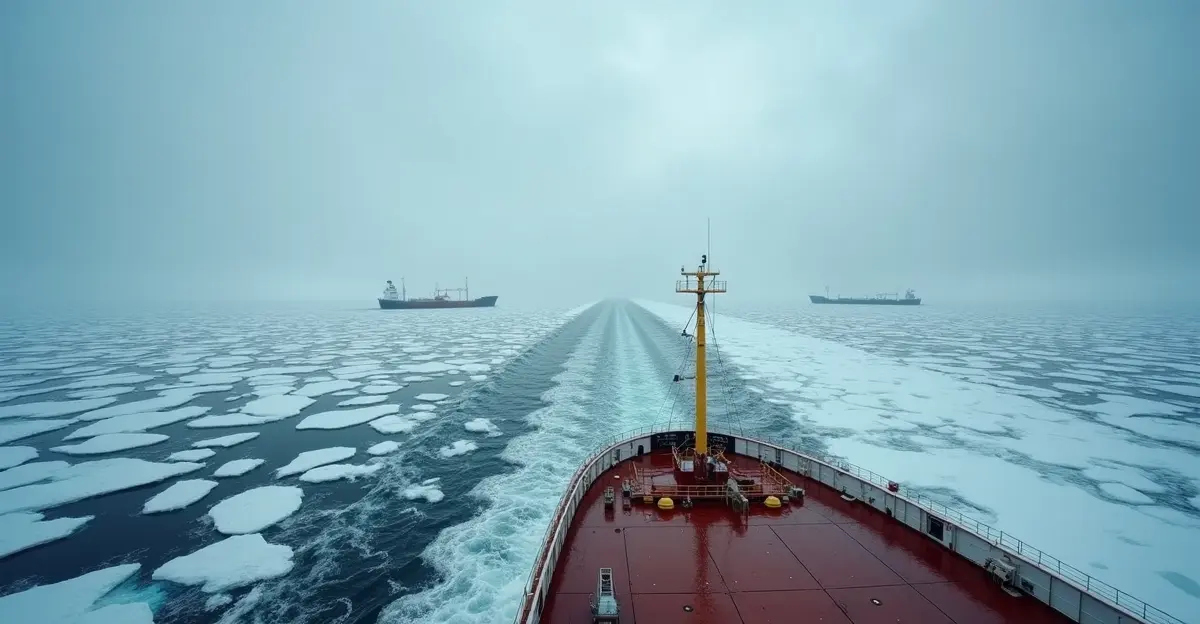
Moscow is doubling down on its Arctic dominance. In September 2025, the Russian Navy commissioned the Ivan Papanin, the first Project 23550 armed icebreaker, at Severomorsk — the headquarters of the Northern Fleet. This vessel is designed to patrol the Northern Sea Route (NSR) and project force across the region. Rosatom Director General Alexei Likhachev announced plans to expand Russia's icebreaker fleet from 11 to 15–17 vessels to handle projected cargo volumes of 100–150 million tonnes annually, up from nearly 38 million tonnes in 2025. Russia currently operates eight nuclear-powered icebreakers, with more under construction. The Russia Northern Fleet Arctic strategy is closely tied to its energy exports, as the NSR offers a shorter route for oil and gas shipments to Asia, bypassing Western sanctions. However, the costly program strains Russia's economy, and experts question whether Moscow can sustain such an ambitious buildup amid international isolation.
China's Polar Silk Road Ambitions
Beijing frames its Arctic engagement under the Polar Silk Road (PSR), an extension of the Belt and Road Initiative (BRI). China's 2018 Arctic White Paper and the 14th Five-Year Plan (2021–2025) explicitly call for developing Arctic shipping routes. In 2026, China is investing in ice-capable cargo ships, port infrastructure in partner countries like Russia, and research stations in Svalbard. The PSR aims to create a viable alternative to the Suez Canal and the Malacca Strait, reducing China's dependence on chokepoints vulnerable to disruption. Chinese state-owned enterprises are also eyeing mineral and hydrocarbon exploration in Greenland and the Norwegian Arctic. The China Polar Silk Road investments are part of a broader strategy to secure supply chains and assert influence in a region traditionally dominated by Arctic states.
NATO's Arctic Command and Military Exercises
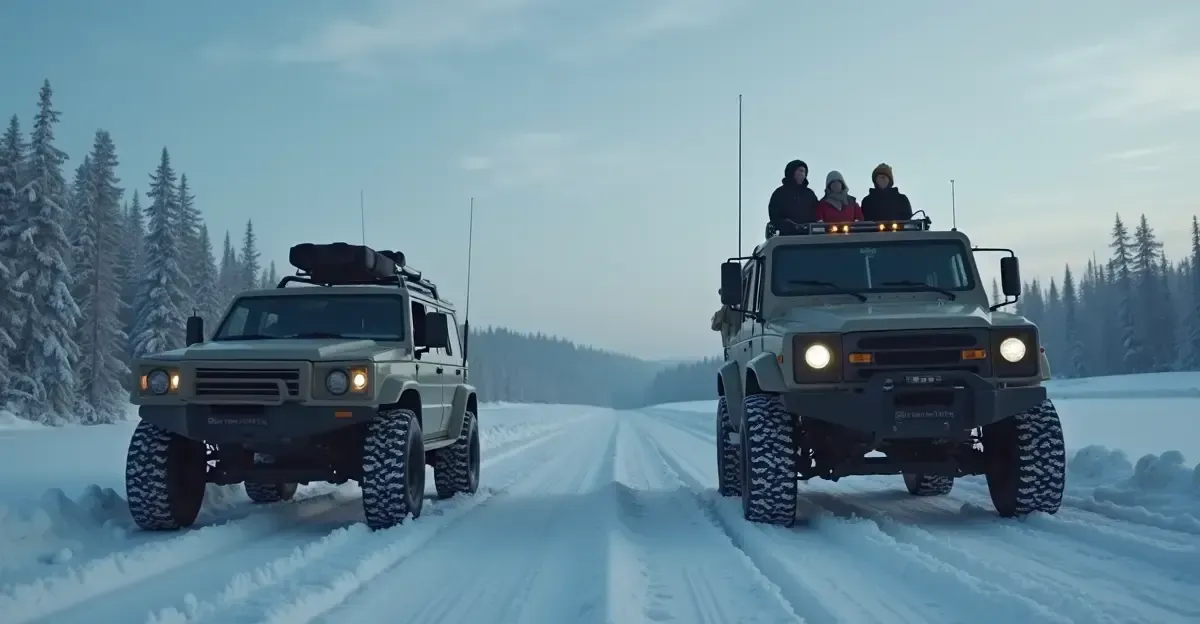
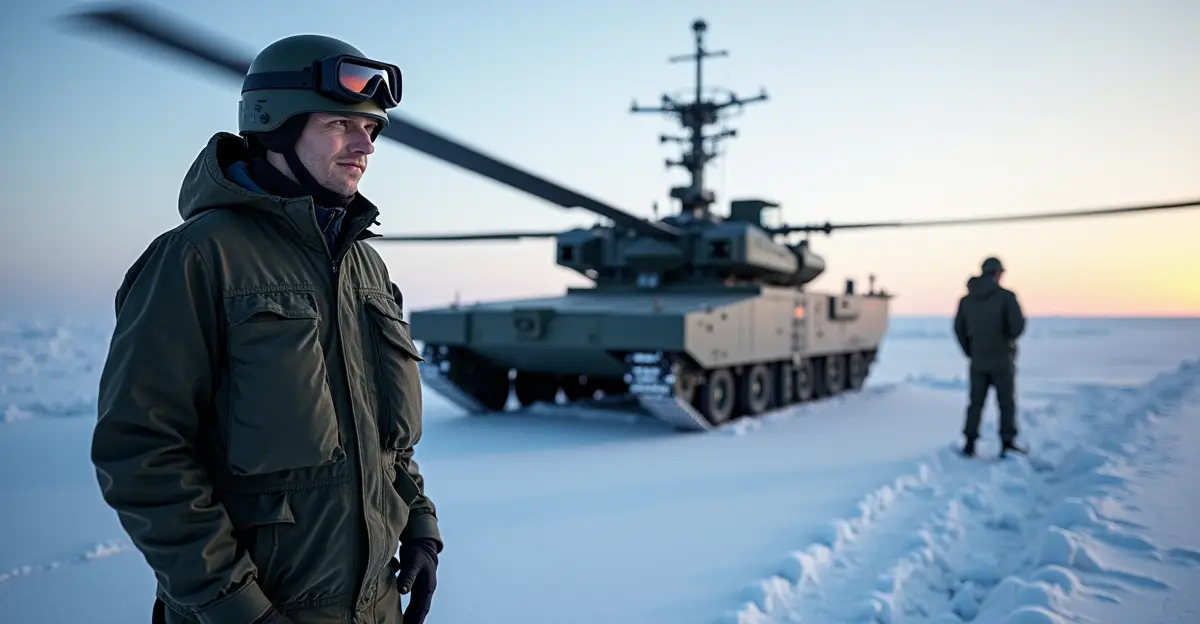
NATO has responded by establishing a dedicated Arctic command and ramping up exercises. In March 2026, Cold Response 26 brought together 32,500 troops from 14 allied nations in Norway for the alliance's largest Arctic exercise of the year. The US Army's new Sword 26 umbrella, replacing DEFENDER-Europe, dominated spring and summer operations across eight countries from the High North to Poland. Three open-ended 'Sentry' operations — Baltic, Eastern, and Arctic — provide persistent year-round posture. Notably, Denmark launched Operation Arctic Endurance in early 2026, a multinational presence operation in Greenland involving European NATO members, in response to US President Donald Trump's threats to annex the island. The operation serves as a tripwire force, making any unilateral US move politically costly. The NATO Arctic command 2026 exercises underscore the alliance's determination to defend its northern flank.
Transpolar Shipping Routes and Undersea Resources
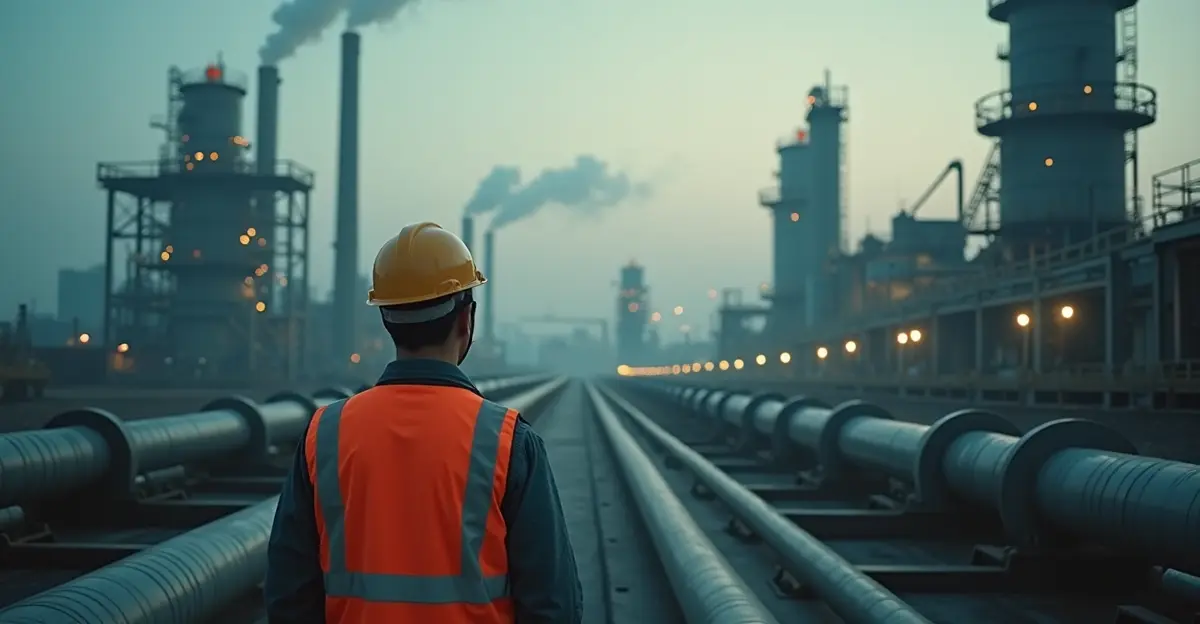
The melting ice cap is opening two key transpolar routes: the Northern Sea Route along Russia's coast and the Transpolar Sea Route directly across the North Pole. The NSR already sees significant traffic, with cargo volumes rising steadily. The Transpolar Route, while still largely impassable, could cut the distance between Asia and Europe by up to 40% compared to the Suez Canal. Beneath the Arctic seabed lie an estimated 13% of the world's undiscovered oil and 30% of its undiscovered natural gas, along with vast deposits of rare earth minerals critical for green energy technologies. The Arctic undersea energy mineral deposits are a major driver of competition, as nations scramble to secure exploration rights through the United Nations Convention on the Law of the Sea (UNCLOS) submissions.
Impact on Global Security and Trade
The militarization of the Arctic carries risks of miscalculation and escalation. Russia views the NSR as a strategic asset and has fortified its bases with advanced air defense and anti-ship missiles. NATO's increased presence raises the potential for close encounters between warships and aircraft. Meanwhile, China's economic entanglement with Russia in the Arctic complicates the security landscape. Trade flows are already shifting: shipping companies are testing longer Arctic seasons, and insurance premiums for polar voyages are declining as technology improves. However, the region remains hazardous, with limited search-and-rescue infrastructure and environmental sensitivities. The global security trade Arctic 2026 dynamics demand careful diplomacy to prevent the region from becoming a flashpoint.
Expert Perspectives
Walt Meier, NSIDC senior research scientist, stated: 'The 2026 maximum continues the significant downward trend observed since 1979, reinforcing the dramatic transformation of Arctic sea ice across all seasons.' Alexei Likhachev, Rosatom Director General, emphasized: 'We need to switch to 30-year planning for NSR development and create competitive transport conditions, or high lending rates could halt Arctic projects.' Major General Peter Harling Boysen, commander of Operation Arctic Endurance, affirmed: 'We are ready to defend Greenland. European forces act as a tripwire, making any invasion politically costly.'
Frequently Asked Questions
What is the current state of Arctic sea ice in 2026?
Arctic sea ice reached its annual maximum on March 15, 2026, at 14.29 million square kilometers — statistically tied with 2025 for the lowest maximum in the satellite record since 1979.
Why is Russia expanding its icebreaker fleet?
Russia aims to secure year-round navigation along the Northern Sea Route to boost energy exports to Asia and project military power, planning to grow its fleet from 11 to 15–17 icebreakers.
What is China's Polar Silk Road?
The Polar Silk Road is China's initiative to develop Arctic shipping routes as part of the Belt and Road Initiative, reducing dependence on traditional chokepoints like the Suez Canal.
How is NATO responding to Arctic competition?
NATO established a dedicated Arctic command and conducted major exercises in 2026, including Cold Response 26 with 32,500 troops and Operation Arctic Endurance in Greenland.
What resources are at stake in the Arctic?
The Arctic holds an estimated 13% of undiscovered oil, 30% of undiscovered natural gas, and significant rare earth mineral deposits, alongside strategic shipping routes.
Conclusion and Future Outlook
The Arctic is no longer a peripheral concern but a central arena for strategic competition. As ice retreats, the window for cooperative governance narrows. The Arctic Council, the primary multilateral forum, faces strain from geopolitical tensions. In 2026, the race for the Arctic is accelerating, with profound implications for global security, trade, and the environment. Policymakers must balance national interests with the need for rules-based order to prevent the region from becoming a new theater of conflict.


Follow Discussion