


 Deutsch
 English
 Español
 Français
 Nederlands
 Português


 Share
Share




The Arctic Frontier: Why Global Powers Are Moving North
As climate change accelerates Arctic ice melt at unprecedented rates, the world's major powers are engaged in a high-stakes strategic competition over newly accessible shipping routes and vast natural resources in the Earth's northernmost frontier. The Arctic, once a frozen wasteland of limited economic interest, has transformed into a geopolitical hotspot where Russia, China, the United States, and European nations are vying for influence, control, and economic advantage. This analysis examines the complex dynamics driving this competition, focusing on the dual prizes of shortened shipping lanes and untapped mineral wealth that could reshape global trade and energy security for decades to come.
What is the Arctic Strategic Competition?
The Arctic strategic competition refers to the intensifying geopolitical rivalry among global powers seeking to establish dominance in the rapidly changing Arctic region. This competition encompasses military positioning, economic development, resource extraction, and control over emerging shipping corridors. At its core, the contest revolves around two primary objectives: securing access to the Northern Sea Route and Northwest Passage, which offer dramatically shorter shipping distances between Asia and Europe, and exploiting the region's estimated 13% of the world's undiscovered oil and 30% of undiscovered natural gas, along with critical minerals essential for modern technology. The climate change impacts on polar regions have accelerated this competition by making previously inaccessible areas increasingly navigable and economically viable.
The Shipping Route Revolution
Northern Sea Route: Russia's Arctic Corridor
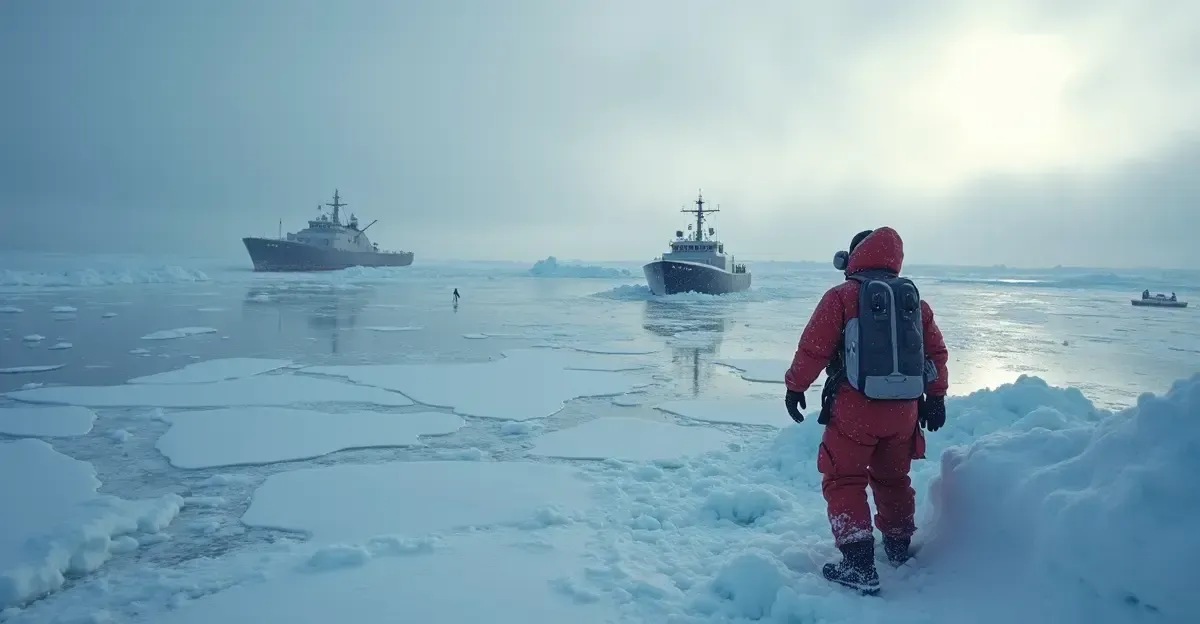
The Northern Sea Route (NSR) along Russia's Arctic coast represents the most developed Arctic shipping corridor, with cargo traffic reaching a record 38 million tonnes in 2024. This route reduces the distance between Murmansk, Russia, and Yokohama, Japan, from 12,840 nautical miles via the Suez Canal to just 5,770 nautical miles – a 55% reduction that translates to approximately 30-40% less sailing time and substantial fuel savings. In September 2025, a Chinese shipping company launched the first China-Europe container express service via the Arctic, cutting transit time from 40 to 18 days and reducing carbon emissions by nearly 50%. However, this development comes with significant environmental concerns, as a Nature Communications study projects that Arctic shipping could increase global shipping emissions by 8.2% by 2100 despite shorter routes.
Northwest Passage: Canada's Contested Waters
Canada's Northwest Passage presents another potentially transformative shipping route, though it remains more challenging due to ice conditions and sovereignty disputes. Canada claims the passage as internal waters, while the United States and other nations consider it an international strait. The commercial viability of this route continues to improve as ice coverage diminishes, with projections suggesting regular commercial transit could become feasible within the next decade. The strategic importance of these routes extends beyond mere economic efficiency; they offer alternative pathways that bypass traditional chokepoints like the Suez and Panama Canals, providing strategic redundancy in global supply chains.
The Resource Race Intensifies
Energy Resources: Oil and Gas Reserves
The Arctic holds approximately 90 billion barrels of undiscovered oil and 1,670 trillion cubic feet of natural gas, according to US Geological Survey estimates. Russia has been particularly aggressive in developing its Arctic energy resources, with projects like the Yamal LNG facility producing liquefied natural gas for export to global markets. However, Western sanctions following Russia's invasion of Ukraine have complicated these developments, creating opportunities for China to increase its involvement through investment and technology transfer. The energy security concerns driving this resource extraction are particularly acute for European nations seeking to diversify away from Russian energy supplies.
Critical Minerals: The New Strategic Prize
Beyond fossil fuels, the Arctic contains vast deposits of critical minerals essential for renewable energy technologies, electric vehicles, and defense systems. Greenland has emerged as a focal point, with an estimated $2.5 trillion in underground resources including rare earth elements, uranium, and base metals. Recent discoveries of germanium and gallium – metals essential for semiconductors that China previously restricted – have heightened geopolitical interest. As noted in a CNBC analysis, 'national security has become the primary driver for critical mineral permitting in the region,' with a significant shift in permitting processes expected by 2026.
Military and Security Implications
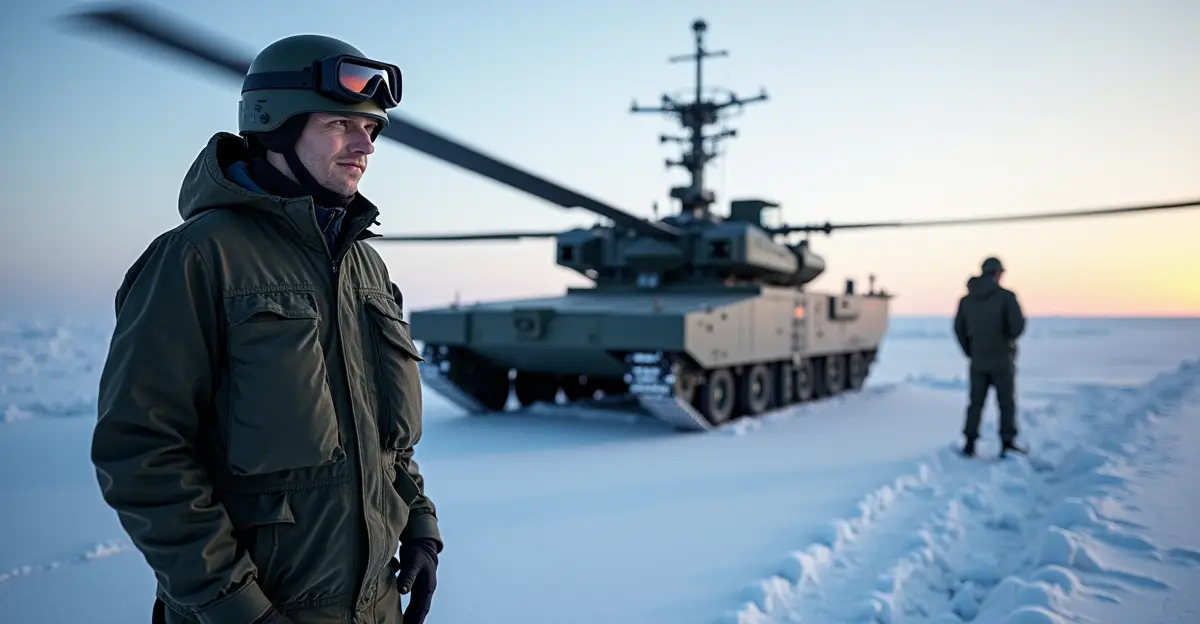
The strategic competition extends into the military domain, with nations bolstering their Arctic military presence. Russia has established or modernized numerous military bases along its Arctic coastline, including the Northern Fleet headquarters at Severomorsk and air defense installations on remote islands. China, while not an Arctic state, has declared itself a 'near-Arctic state' and has conducted joint maritime patrols with Russia near Alaska. NATO countries, particularly the United States, Canada, Norway, and Denmark, have responded by increasing military exercises, surveillance capabilities, and infrastructure investments in the region. This militarization raises concerns about potential conflicts, particularly given the international law disputes over maritime boundaries and passage rights.
Environmental and Indigenous Concerns
The rapid development of the Arctic raises serious environmental questions. Increased shipping traffic brings risks of oil spills in remote, cold environments where cleanup is exceptionally difficult. Black carbon emissions from ships accelerate ice melt through a feedback loop, while noise pollution disturbs marine wildlife. Indigenous communities, who have inhabited the Arctic for millennia, face threats to their traditional ways of life from industrial development and environmental changes. As one expert noted, 'While Arctic shipping offers economic opportunities, it requires strict environmental regulations and international oversight to balance short-term gains against long-term ecological damage.'
Geopolitical Alignments and Future Outlook
The Arctic strategic landscape features complex alignments. The Sino-Russian partnership has deepened significantly, with joint commercial projects and security cooperation agreements. Western nations, meanwhile, are strengthening cooperation through NATO and bilateral arrangements. Greenland's growing autonomy adds another layer of complexity, with its 2024 foreign and security strategy asserting sovereignty with the principle 'Nothing About Us Without Us.' Looking ahead, several trends will shape the Arctic's future: continued ice melt opening new areas for development, technological advances in ice-class shipping and remote operations, evolving regulatory frameworks, and potential conflicts over resource access and shipping rights. The region's transformation from a frozen frontier to a contested strategic space represents one of the most significant geopolitical shifts of the 21st century.
Frequently Asked Questions
Why is the Arctic becoming so important strategically?
The Arctic is gaining strategic importance due to climate change making shipping routes accessible and resources extractable. The Northern Sea Route offers dramatically shorter Asia-Europe transit times, while the region contains vast oil, gas, and critical mineral reserves essential for modern economies and national security.
Which countries are most active in the Arctic competition?
Russia is the most active with extensive military bases and resource development. China is increasing its presence through investments and the 'Polar Silk Road.' The United States, Canada, Norway, Denmark, and other NATO members are strengthening their Arctic capabilities in response.
What are the main environmental risks of Arctic development?
Key risks include oil spills in remote cold environments, black carbon emissions accelerating ice melt, noise pollution disturbing marine life, invasive species introduction via ballast water, and greenhouse gas emissions worsening climate feedback loops.
How does Arctic shipping compare to traditional routes?
The Northern Sea Route reduces Asia-Europe shipping distances by 55%, cutting transit time from 40 to 18 days and reducing fuel consumption and emissions by approximately 30-50%. However, it faces challenges from unpredictable ice conditions and requires specialized ice-class vessels.
What role do indigenous communities play in Arctic development?
Indigenous communities are increasingly asserting their rights in development decisions. Many have traditional knowledge of the region and are advocating for sustainable development that protects their cultures and livelihoods from environmental damage.



Follow Discussion