


 Deutsch
 English
 Español
 Français
 Nederlands
 Português


 Share
Share




Arctic Sea Ice Hits Record Low Again: 2026 Winter Maximum Ties Historic Minimum
Arctic sea ice has reached another alarming milestone in 2026, with the winter maximum extent tying last year's record low for the second consecutive year. According to NASA and the National Snow and Ice Data Center (NSIDC), the Arctic sea ice cover measured just 14.29 million square kilometers (5.52 million square miles) on March 15, 2026, statistically matching the 2025 record and marking the lowest winter maximum in the 48-year satellite monitoring era. This represents a staggering 1.36 million square kilometer reduction compared to the 1981-2010 average—an area equivalent to about thirty times the size of the Netherlands or twice the size of Texas.
What is Arctic Sea Ice and Why Does It Matter?
Arctic sea ice is frozen ocean water that forms and melts with the seasons in the Arctic Ocean and surrounding seas. Unlike land ice (glaciers and ice sheets), sea ice doesn't directly contribute to sea level rise when it melts, but it plays a crucial role in Earth's climate system. The polar ice albedo effect is particularly important—bright white ice reflects up to 80% of incoming solar radiation back into space, while dark ocean water absorbs about 90% of that energy. This creates a powerful feedback loop where less ice means more heat absorption, which leads to further melting.
The 2026 Winter Sea Ice Record: Key Findings
Record-Low Maximum Extent
NASA and NSIDC scientists confirmed that Arctic sea ice reached its annual maximum extent on March 15, 2026, measuring 14.29 million square kilometers. This ties with the 2025 measurement of 14.31 million square kilometers, with both years statistically considered equal within measurement uncertainty. "This record low maximum gives a head start to the spring and summer melt season and reinforces the significant downward trend we've observed since 1979," said NSIDC senior research scientist Walt Meier.
Earlier Peak Timing
The 2026 maximum occurred a week earlier than in 2025, continuing a trend of earlier seasonal peaks. Typically, Arctic sea ice reaches its maximum in late March, but climate change has been shifting this timing earlier in recent years. The earlier peak means a longer melt season ahead, potentially leading to lower summer minimums.
Thinning Ice Quality
NASA's ICESat-2 satellite data reveals that much of the Arctic ice is thinner this year, particularly in the Barents Sea northeast of Greenland. Thinner ice melts more quickly and is more vulnerable to storms and warm ocean currents. The loss of multi-year ice—thicker, more resilient ice that survives through summer—is particularly concerning for long-term Arctic stability.
Climate Change Impacts and Consequences
Wildlife at Risk
The declining sea ice threatens numerous Arctic species that depend on ice for survival. Polar bears use sea ice as hunting platforms to catch seals, while walruses rely on ice for resting between feeding dives. Emperor penguins in Antarctica face similar challenges, though they inhabit the opposite pole. The International Polar Bear Day 2026 highlighted how shrinking ice compresses feeding windows and extends fasting periods for these iconic predators.
Increased Shipping Activity
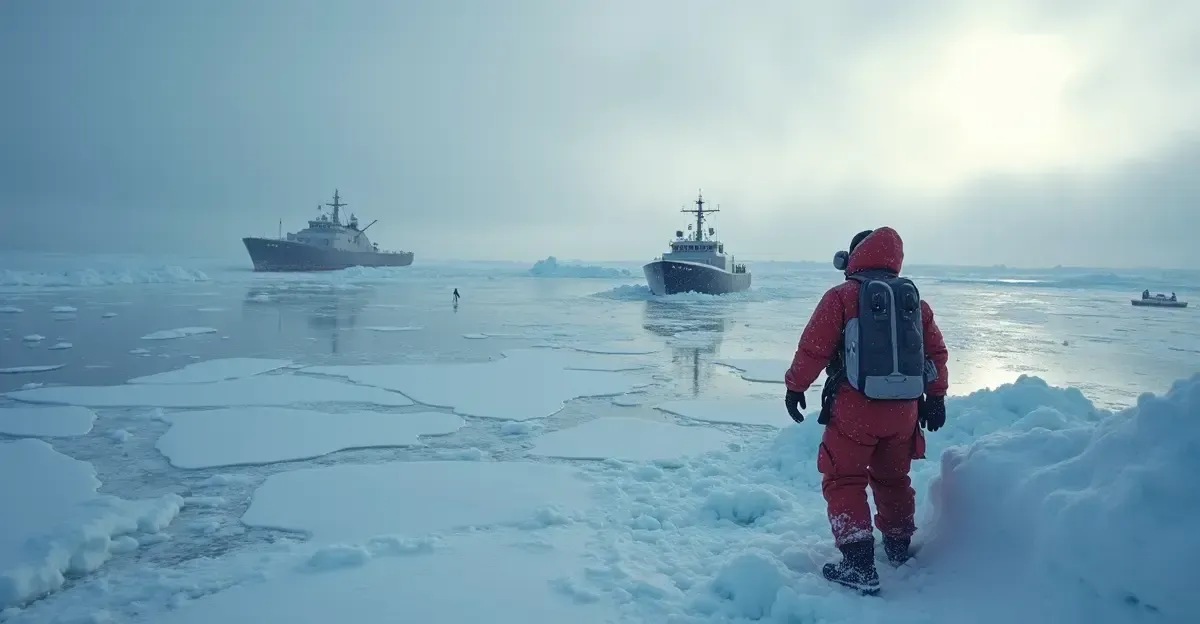
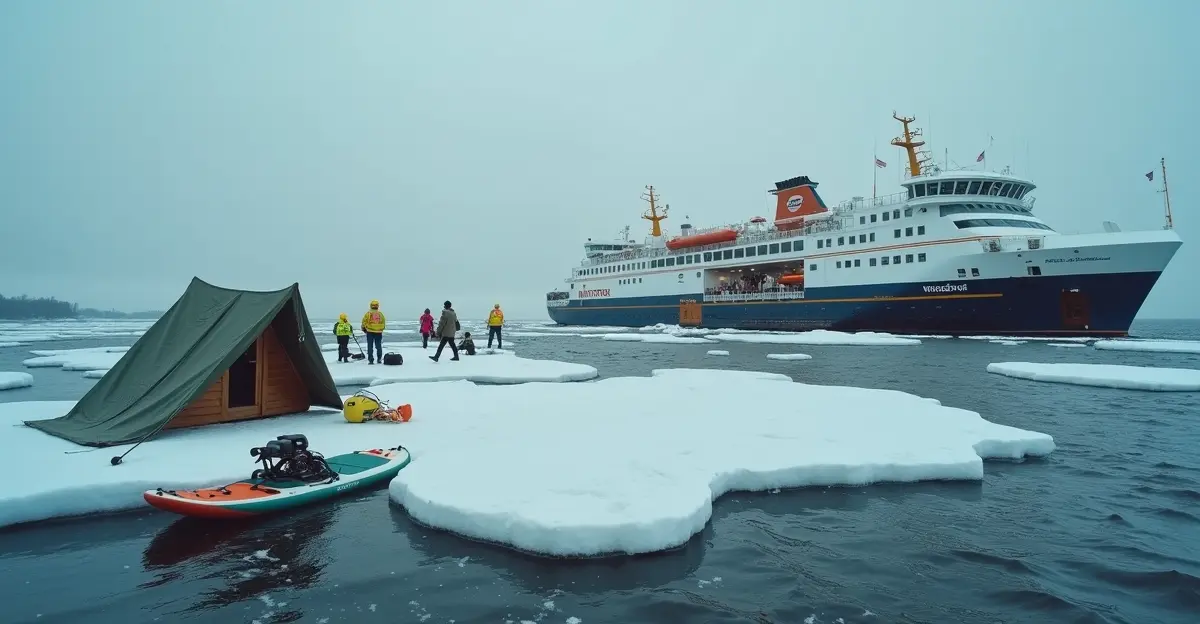
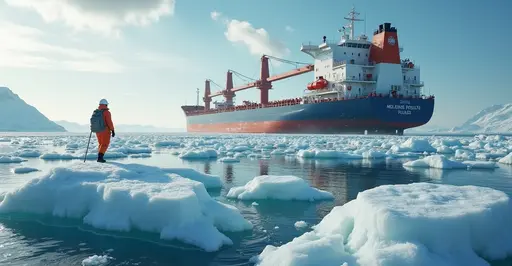
As Arctic ice diminishes and thins, the region becomes increasingly accessible to commercial shipping. Between 2013 and 2023, the number of ships navigating Arctic waters increased by 37%. While this opens new economic opportunities through shorter shipping routes like the Northern Sea Route and Northwest Passage, it brings environmental risks including black carbon emissions (which accelerate ice melt), oil spill threats in fragile ecosystems, and disruption to marine wildlife.
Global Climate Effects
The loss of Arctic sea ice affects global weather patterns by altering the jet stream and atmospheric circulation. Warmer Arctic temperatures can lead to more extreme weather events in mid-latitudes, including prolonged heatwaves, severe winter storms, and altered precipitation patterns. The 2026 global heat records observed across North America, Europe, and Australia may be connected to these Arctic changes.
Long-Term Trends and Future Projections
Since satellite monitoring began in 1979, Arctic sea ice has declined at a rate of approximately 13% per decade. The 2026 record continues this dramatic downward trend across all seasons. Scientists warn that if current emissions continue, the Arctic could experience ice-free summers by mid-century—a scenario that would fundamentally transform the region's ecology and global climate systems.
While individual record years might be influenced by weather patterns, the consistent pattern of low winter and summer sea ice indicates a clear climate change signal. "We're seeing dramatic changes to Arctic sea ice throughout all seasons," emphasized Dr. Meier. "This isn't just about one bad year—it's about a fundamental shift in how the Arctic functions."
Frequently Asked Questions About Arctic Sea Ice
What is the difference between sea ice and land ice?
Sea ice forms when ocean water freezes, while land ice (glaciers and ice sheets) forms from accumulated snow on land. Melting sea ice doesn't raise sea levels (like an ice cube in a glass), but melting land ice does contribute to sea level rise.
Why does Arctic sea ice matter for global climate?
Arctic sea ice acts as Earth's natural air conditioner by reflecting sunlight back into space. Less ice means more heat absorption by dark ocean waters, accelerating global warming through the albedo feedback effect.
How does sea ice loss affect wildlife?
Polar bears, walruses, seals, and numerous bird species depend on sea ice for hunting, breeding, and migration. Reduced ice cover threatens their survival by limiting access to food and increasing human-wildlife conflicts.
What are the economic implications of melting Arctic ice?
Melting ice opens new shipping routes, fishing grounds, and potential mineral extraction opportunities, but also increases environmental risks and requires new international regulations for Arctic governance.
Can Arctic sea ice recover?
Yes, with significant reductions in greenhouse gas emissions, Arctic sea ice could stabilize and potentially recover over decades. However, some changes may be irreversible on human timescales.
Follow Discussion