


 Deutsch
 English
 Español
 Français
 Nederlands
 Português


 Share
Share




The Arctic: From Frozen Periphery to Strategic Battleground
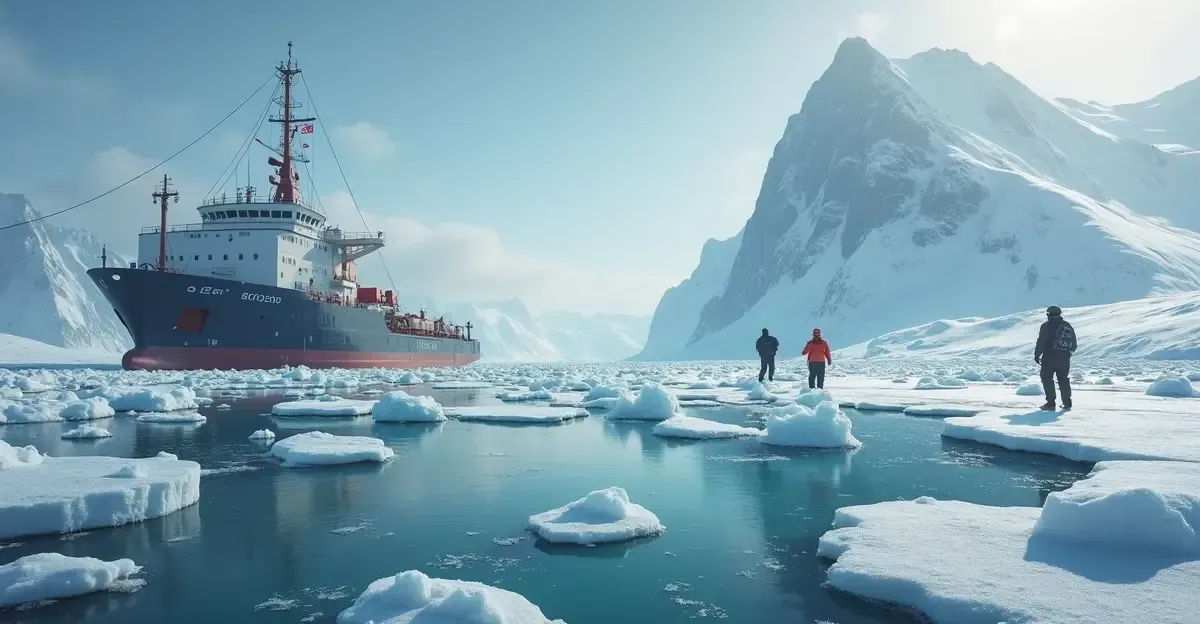
With sea ice melting four times faster than the global average, the Arctic has transformed from a frozen periphery into a strategic theater where NATO, Russia, and China compete for control over new shipping lanes, critical minerals, and energy reserves. In February 2026, NATO launched 'Arctic Sentry,' a multi-domain military activity consolidating allied operations across the High North, while Russia maintains the longest Arctic coastline with extensive military infrastructure along the Northern Sea Route and China advances its Polar Silk Road strategy. This article analyzes how climate-driven accessibility is accelerating great-power competition, the strategic implications of Finland and Sweden joining NATO, and what the militarization of the Arctic means for global trade routes and energy security.
NATO's Arctic Sentry: A New Era of Collective Defense
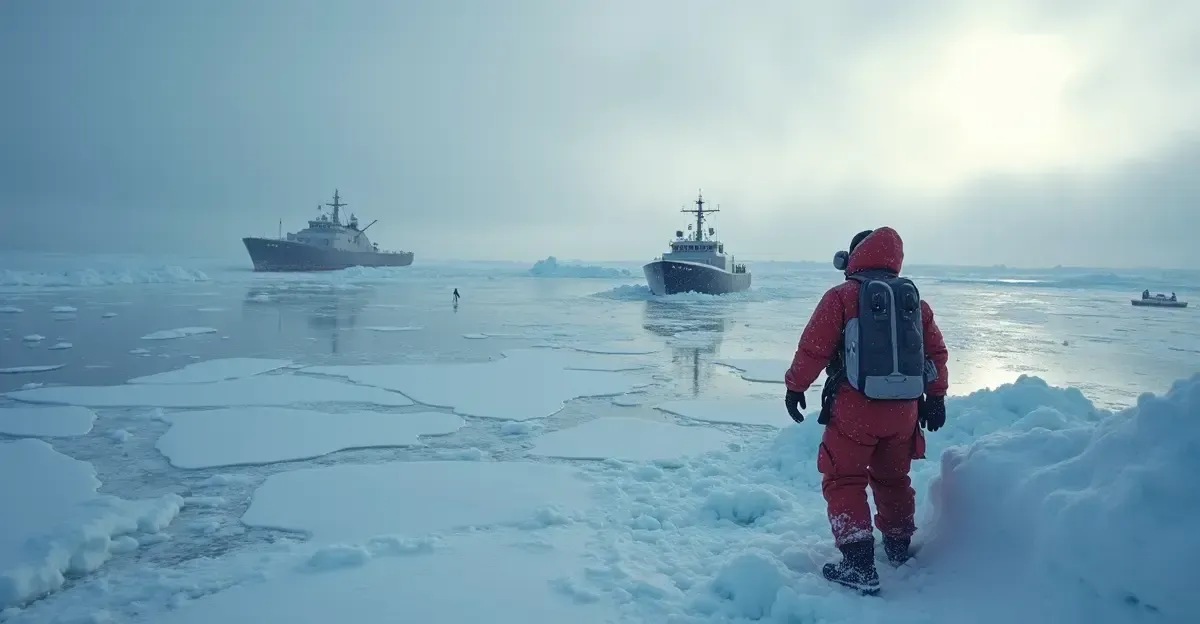
On February 11, 2026, NATO Secretary General Mark Rutte announced the launch of Arctic Sentry, a multi-domain military activity designed to bolster allied presence in the Arctic and High North. The mission, led by Joint Force Command Norfolk, aims to enhance intelligence, surveillance, and reconnaissance (ISR), strengthen offensive and defensive capabilities, improve coordination among allied forces in Arctic conditions, and protect critical infrastructure and sea routes—particularly the GIUK gap between Greenland, Iceland, and Great Britain. Participating nations include Canada, Denmark (including Greenland), Finland, Iceland, Norway, Sweden, the United Kingdom, and the United States, with Germany committing four Eurofighter Typhoon jets and Sweden sending Gripen fighters to patrol Greenland.
Arctic Sentry represents NATO's most significant response to increased Russian and Chinese activities in the region. The NATO Arctic strategy coordinates with NORAD, US Northern Command, and US European Command, creating a unified operational framework. Exercise Dynamic Mongoose 2026, held in May 2026 across the Norwegian Sea and North Atlantic, served as a key component of Arctic Sentry, sharpening anti-submarine warfare and anti-surface warfare skills through high-end scenarios.
Finland and Sweden: Reshaping the Nordic Balance
The accession of Finland and Sweden to NATO has fundamentally altered the strategic landscape of the Arctic. With seven of eight Arctic states now NATO allies, the alliance has gained a contiguous land border with Russia stretching over 1,300 kilometers. Sweden's accession brings advanced capabilities including a modern air force (Gripen fighters), a capable navy, and a respected intelligence apparatus. Finland contributes extensive Arctic warfare expertise, a large artillery force, and strategic depth in the Baltic Sea region. The Finland Sweden NATO accession impact has effectively turned the Baltic Sea into a NATO lake and extended allied monitoring capabilities deep into the Arctic Circle.
Russia's Arctic Military Buildup: The Northern Sea Route Fortress
Russia maintains the longest Arctic coastline and has invested heavily in military infrastructure along the Northern Sea Route (NSR). Moscow's strategy centers on revitalizing Soviet-era military garrisons across Arctic islands like Novaya Zemlya and Franz Josef Land, modernizing the Northern Fleet with ice-class vessels and submarines, and expanding air defense networks with advanced radar and missile systems. A cornerstone of Russia's Arctic capability is its unrivaled nuclear icebreaker fleet, which enables year-round access through ice-choked waters.
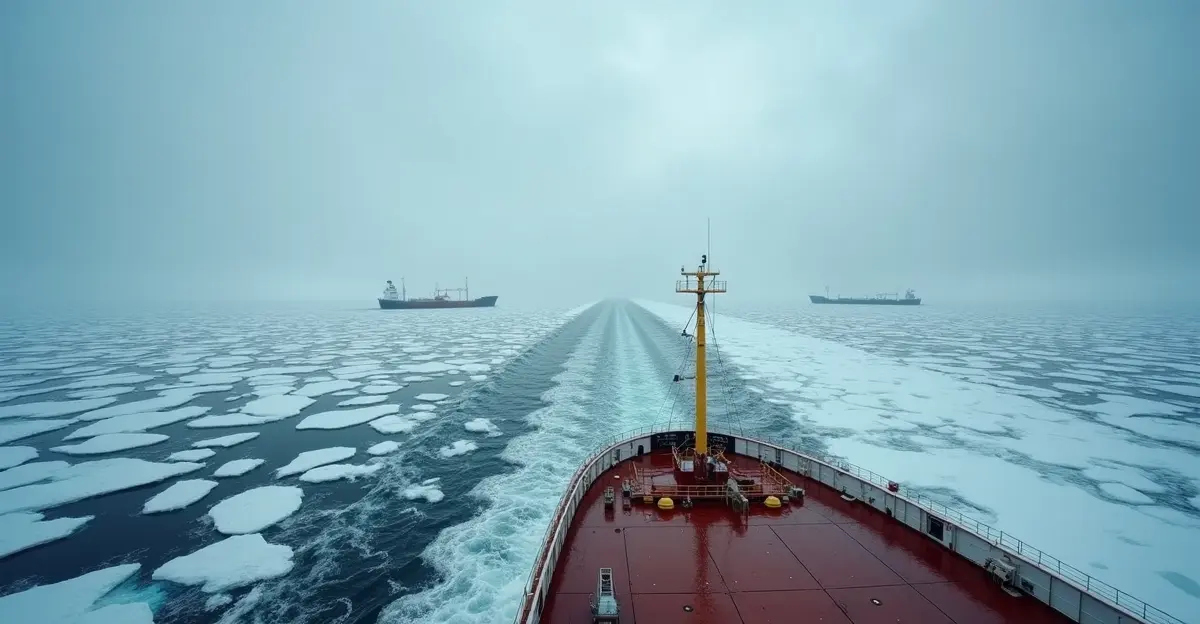
In 2025, the NSR saw 103 transit voyages by 88 unique vessels, carrying 3.2 million tons of cargo—a 6.2% increase in voyages and 3.2% growth in cargo volume compared to 2024. Russia views the NSR as a vital national infrastructure project, with President Putin establishing a Russian maritime collegium in August 2024 to oversee its development. The Russia Northern Sea Route militarization includes restored airfields, radar stations, and coastal missile systems along the entire route, effectively turning the NSR into a militarized economic corridor.
Energy and Mineral Riches
The Arctic seabed holds an estimated 13% of undiscovered oil and 30% of undiscovered natural gas reserves globally. Russia's Arctic zone already accounts for over 80% of its natural gas production and a significant share of its oil output. Control over these resources could dramatically increase Russian revenues, potentially funding further military aggression. The Arctic energy security geopolitics is therefore central to understanding Moscow's strategic calculus.
China's Polar Silk Road: The Near-Arctic State
China, which declared itself a 'near-Arctic state' in its 2018 Arctic Policy white paper, has pursued the Polar Silk Road as an extension of the Belt and Road Initiative. Beijing's interests span four main areas: scientific research, natural resources, shipping routes, and strategic positioning. In September 2025, a Chinese shipping company launched the first official China-Europe container express via the Arctic, completing a voyage from Ningbo to Felixstowe in just 18 days—half the usual time—with 50% lower carbon emissions.
China has invested heavily in Russian LNG projects like Yamal LNG and has sought access to Greenland's rare earth deposits, which hold an estimated 1.5 million metric tons of critical minerals essential for clean energy technologies and defense systems. However, China's growing presence has drawn scrutiny from Arctic nations. In January 2026, Chinese spokesperson Mao Ning reiterated Beijing's commitment to international law in Arctic activities amid renewed US interest in acquiring Greenland.
Critical Minerals: The New Arctic Gold Rush
Greenland's rare earth reserves—the world's eighth-largest at 1.5 million tons—have become a focal point of great-power competition. Two major deposits, Kvanefjeld and Tanbreez, contain neodymium and dysprosium essential for wind turbines, electric vehicles, and military electronics. China currently controls about 80% of the global rare earth market, making alternative sources strategically vital for Western nations. The Greenland rare earth minerals competition has intensified US interest, with President Trump stating "we need Greenland from the standpoint of national security." However, commercial extraction faces significant barriers including extreme weather, fragile ecosystems, infrastructure deficits, and concerns from indigenous communities.
Global Trade Routes: The Suez Canal Bypass
The opening of Arctic shipping routes promises to reshape global trade patterns. The Northern Sea Route reduces the distance between Rotterdam and Shanghai by approximately 40% compared to the Suez Canal route, cutting transit times from 30-35 days to 18-22 days. This bypasses chokepoints like the Strait of Malacca and the Suez Canal, offering strategic redundancy for global supply chains. However, challenges remain including unpredictable ice conditions, high insurance costs, incomplete infrastructure, and environmental risks from black carbon emissions and potential oil spills.
The Arctic shipping routes global trade impact is already being felt. In 2025, container voyages along the NSR increased noticeably, driven largely by Russia-China trade and Asia-Europe express runs. Analysts project that by 2030, the Arctic could handle up to 10% of global container traffic during summer months, fundamentally altering maritime logistics.
Expert Perspectives
"The Arctic is no longer a frozen periphery—it is the front line of great-power competition in the 21st century," said Dr. Elizabeth Buchanan, Arctic security expert at the Australian National University. "NATO's Arctic Sentry is a necessary response to Russia's militarization of the Northern Sea Route and China's growing ambitions. But the alliance must also invest in diplomatic frameworks to prevent miscalculation."
"Russia treats the Arctic as both an economic lifeline and a strategic fortress," noted Pavel Baev, research professor at the Peace Research Institute Oslo. "The Northern Sea Route is central to Moscow's vision of itself as a great power. Any NATO activity perceived as threatening this corridor will be met with a robust response."
Frequently Asked Questions
What is NATO Arctic Sentry?
NATO Arctic Sentry is a multi-domain military activity launched on February 11, 2026, to enhance allied presence, surveillance, and deterrence in the Arctic and High North. It coordinates operations across eight participating nations and focuses on protecting critical infrastructure and sea routes.
Why is the Arctic strategically important?
The Arctic holds vast untapped energy reserves (13% of undiscovered oil, 30% of undiscovered gas), critical minerals essential for clean energy and defense, and new shipping routes that could reduce transit times between Asia and Europe by up to 40%.
How has Finland and Sweden joining NATO affected Arctic security?
Their accession has made seven of eight Arctic states NATO members, extending the alliance's land border with Russia by over 1,300 kilometers and turning the Baltic Sea into a NATO-dominated basin. This significantly enhances allied monitoring and deterrence capabilities.
What is China's role in the Arctic?
China describes itself as a 'near-Arctic state' and pursues the Polar Silk Road—an extension of the Belt and Road Initiative—focusing on scientific research, resource extraction, and shipping routes. China has invested in Russian LNG projects and sought access to Greenland's rare earth minerals.
What are the environmental risks of Arctic militarization?
Increased shipping and military activity risk black carbon emissions (with 900 times the warming potential of CO2), noise pollution disturbing marine life, oil spills in fragile ecosystems, and introduction of invasive species. Scientists warn that Arctic ice melt is accelerating faster than previously projected.
Conclusion: The New Great Game
The Arctic has become the defining geopolitical theater of 2026. NATO's Arctic Sentry, Russia's militarization of the Northern Sea Route, and China's Polar Silk Road ambitions have created a three-way competition that will shape global security for decades. As sea ice continues to retreat, the region's strategic importance will only grow. The challenge for policymakers lies in balancing deterrence with diplomacy, economic opportunity with environmental protection, and national interests with international cooperation. The Arctic is no longer a frozen frontier—it is the front line of the 21st century's great-power competition.


Follow Discussion