


 Deutsch
 English
 Español
 Français
 Nederlands
 Português


 Share
Share




What Is the 2026 Critical Minerals Ministerial?
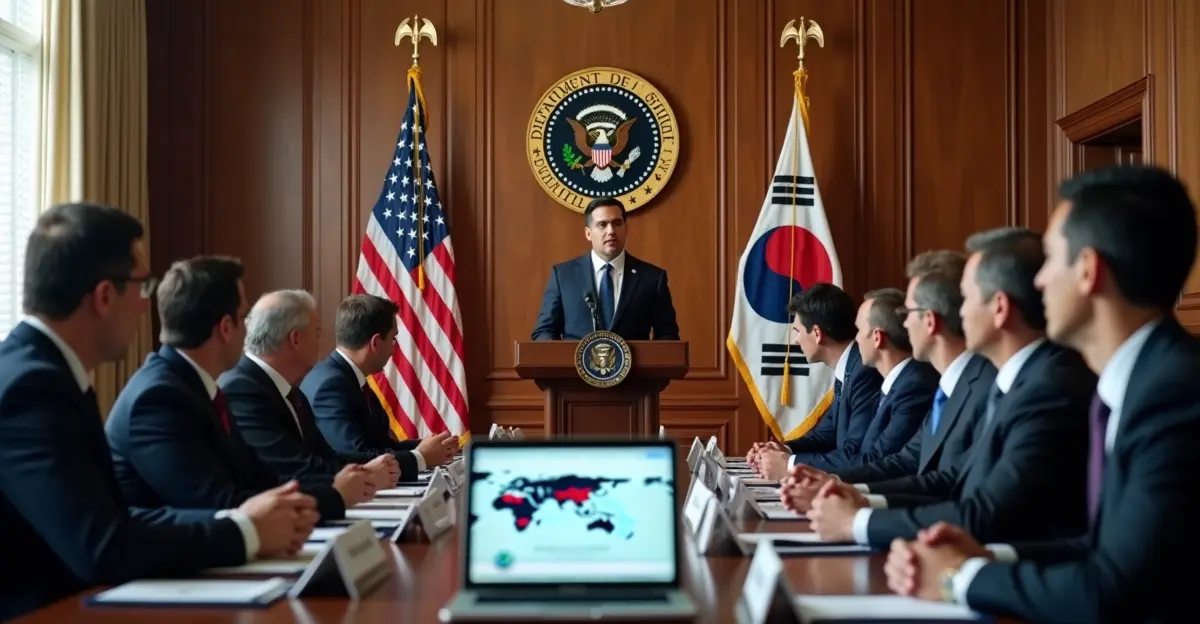
On February 4, 2026, the U.S. Department of State hosted the inaugural Critical Minerals Ministerial in Washington, D.C., bringing together representatives from 54 nations and the European Commission. Led by Secretary of State Marco Rubio and Vice President JD Vance, the ministerial marked a decisive escalation in the West's efforts to counter China's dominance over critical mineral supply chains. With China projected to control 60–80% of refined lithium, cobalt, and rare earth processing by 2035, the event produced 11 new bilateral frameworks and launched the Forum on Resource Geostrategic Engagement (FORGE), a plurilateral coalition replacing the Minerals Security Partnership (MSP). The U.S. government mobilized over $30 billion in support, including the Export-Import Bank's $10 billion Project Vault for a Strategic Critical Minerals Reserve.
Background: Why Critical Minerals Matter Now
Critical minerals—lithium, cobalt, rare earth elements, graphite, and others—are the building blocks of modern technology. They power electric vehicle batteries, wind turbines, defense systems, AI data centers, and advanced robotics. China currently refines roughly 60% of the world's lithium, 70% of cobalt, and 90% of rare earths, according to the International Energy Agency. This concentration creates strategic vulnerabilities: Beijing has previously restricted exports of gallium, germanium, and antimony, demonstrating its ability to weaponize supply chains. The 2025 critical minerals export controls by China sent shockwaves through global markets, accelerating Western efforts to diversify sources.
The February 2026 ministerial was not an isolated event. It followed months of bilateral deal-making: since October 2025, the U.S. signed 21 critical minerals framework agreements with partner nations, including Argentina, Morocco, Peru, the Philippines, the UAE, and the UK. These agreements cover joint exploration, processing investment, and technology transfer. The U.S.-Argentina critical minerals deal signed in late 2025, for example, targets Argentina's vast lithium reserves in the Lithium Triangle.
The FORGE Initiative: A New Plurilateral Framework
From MSP to FORGE
The Minerals Security Partnership (MSP), launched in 2022, brought together 14 partner countries and the EU but lacked binding mechanisms and investment firepower. FORGE—the Forum on Resource Geostrategic Engagement—is designed to overcome those limitations. Chaired initially by the Republic of Korea, FORGE aims to create a preferential trade-and-investment zone for critical minerals, with coordinated price floors enforced through adjustable tariffs under Section 232 of the Trade Expansion Act.
Vice President JD Vance outlined the mechanism: "We will establish reference prices for critical minerals. If foreign producers sell below those prices—whether through state subsidies or dumping—we will adjust tariffs to maintain a level playing field." This approach directly targets China's practice of undercutting competitors through state-owned enterprises and below-cost pricing.
FORGE's membership covers roughly two-thirds of the global economy, including the U.S., EU, Japan, South Korea, Australia, Canada, and key resource-rich nations. The initiative is structured to link bilateral deals into a functioning plurilateral system, with working groups on financing, standards, and crisis response. The FORGE initiative governance structure includes a rotating chair and secretariat hosted by the U.S. Department of State.
Eleven New Bilateral Frameworks
At the ministerial, the U.S. signed MOUs or framework agreements with Argentina, Morocco, Peru, the Philippines, the UAE, the UK, and others. These agreements typically include commitments to: (1) facilitate joint geological surveys and data sharing; (2) streamline permitting for mining and processing projects; (3) co-invest in downstream processing facilities; and (4) establish supply chain transparency standards. The UK agreement, for instance, focuses on rare earth magnet production, while the Philippines deal targets nickel and cobalt processing.
Project Vault: A $10 Billion Strategic Reserve
On February 2, 2026, the Export-Import Bank approved a direct loan of up to $10 billion to Project Vault, establishing America's first Strategic Critical Minerals Reserve. The public-private partnership will stockpile essential raw materials—including lithium, cobalt, rare earth oxides, and graphite—across multiple U.S. facilities. Major participating OEMs include Clarios, GE Vernova, Western Digital, and Boeing, with suppliers such as Hartree Partners, Mercuria Americas, and Traxys managing logistics.
EXIM Chairman John Jovanovic stated: "Project Vault ensures that American manufacturers have access to the minerals they need, when they need them, at stable prices. It protects taxpayers by generating a net positive return while advancing national security." The reserve is designed to cover 90 days of critical demand for defense and energy applications, with options to expand.
The EXIM Bank Project Vault funding complements private-sector initiatives like Pax Silica, a consortium of technology companies investing in domestic processing capacity. Together, these efforts aim to reduce U.S. reliance on Chinese processing from 80% to below 50% by 2035.
Impact and Implications
Geopolitical and Economic Ramifications
The ministerial and FORGE launch represent a fundamental shift in U.S. strategy: from bilateral deal-making to plurilateral institution-building. By linking trade preferences, investment guarantees, and price floors, the U.S. is creating an alternative ecosystem that competes directly with China's Belt and Road Initiative and its dominance in mineral processing.
China's response has been swift. In early February 2026, Beijing announced expanded export controls on rare earth processing technology and hinted at further restrictions on lithium-ion battery precursors. The China rare earth export controls 2026 are widely seen as retaliation for the U.S.-led alliance. Analysts warn that a full-blown trade war over critical minerals could disrupt global supply chains for years.
For partner nations, the frameworks offer access to U.S. technology and capital in exchange for commitments to responsible mining and processing. Argentina, for example, stands to benefit from U.S. investment in lithium brine extraction, while Morocco's phosphate reserves—rich in rare earth byproducts—become strategically significant.
Can the West Build Alternative Supply Chains Fast Enough?
The central question remains whether the $30 billion mobilization is sufficient. Building new mines and processing facilities typically takes 7–15 years, while China's existing infrastructure is already operational. The International Energy Forum estimates that to meet 2035 demand, the world needs $400 billion in critical mineral investment—far exceeding current commitments.
Moreover, FORGE's price floor mechanism could create tensions with free-trade allies and World Trade Organization rules. Some experts argue that the initiative risks fragmenting global markets into competing blocs—a "minerals Cold War" that could raise costs for the energy transition.
Dr. Sarah Chen, a senior fellow at the Center for Strategic and International Studies, notes: "The scale of the challenge is enormous. China has a 20-year head start in processing technology and supply chain integration. FORGE is a necessary step, but it will take a decade of sustained investment and policy coordination to meaningfully reduce dependence."
Expert Perspectives
Industry leaders and policymakers at the ministerial expressed cautious optimism. Glencore signed an MOU to develop cobalt processing in the Democratic Republic of Congo, while U.S. battery manufacturer Redwood Materials announced plans to build a lithium refinery in South Carolina using Australian spodumene. The private sector's role is critical: FORGE includes a dedicated industry advisory council with representatives from Tesla, General Motors, Siemens, and Samsung.
However, governance challenges remain. Overlapping initiatives—the G7's Minerals Security Partnership, the EU's Critical Raw Materials Act, and now FORGE—create coordination risks. The global critical minerals governance challenges include differing environmental standards, labor practices, and geopolitical priorities among partner nations.
Frequently Asked Questions
What is FORGE and how does it differ from the Minerals Security Partnership?
FORGE (Forum on Resource Geostrategic Engagement) is the successor to the MSP, launched at the February 2026 Critical Minerals Ministerial. Unlike the MSP, which was a loose consultative group, FORGE includes binding price floors, adjustable tariffs, and a dedicated financing mechanism. It is chaired by South Korea and aims to create a preferential trade zone covering two-thirds of the global economy.
How much funding is the U.S. committing to critical minerals?
The U.S. government has mobilized over $30 billion, including $10 billion from the EXIM Bank's Project Vault for a Strategic Critical Minerals Reserve, plus additional loans, grants, and tax incentives through the Department of Energy and Department of Defense.
Which countries signed bilateral frameworks with the U.S.?
Eleven new frameworks were signed at the ministerial, including with Argentina, Morocco, Peru, the Philippines, the UAE, and the UK. Since October 2025, the U.S. has signed 21 total bilateral critical minerals agreements.
What is Project Vault?
Project Vault is a $10 billion public-private partnership administered by the EXIM Bank to establish a U.S. Strategic Critical Minerals Reserve. It will stockpile lithium, cobalt, rare earths, and graphite across U.S. facilities, with participation from Boeing, GE Vernova, and Western Digital.
Can the West realistically reduce dependence on China?
Analysts say it is possible but will take 10–15 years and hundreds of billions in investment. China currently controls 60–90% of processing for key minerals. FORGE and Project Vault are significant steps, but success depends on sustained political will, technology transfer, and private-sector engagement.
Conclusion: A Defining Geopolitical Contest
The February 2026 Critical Minerals Ministerial marks a turning point in the global race for strategic resources. With FORGE, Project Vault, and 21 bilateral frameworks, the U.S. has assembled the most comprehensive countermeasure yet to China's supply chain dominance. Yet the path ahead is fraught with challenges: long lead times, governance complexity, and the risk of retaliatory escalation. The outcome will shape not only the future of AI, defense, and clean energy, but the broader balance of economic power in the 21st century.



Follow Discussion