


 Deutsch
 English
 Español
 Français
 Nederlands
 Português


 Share
Share




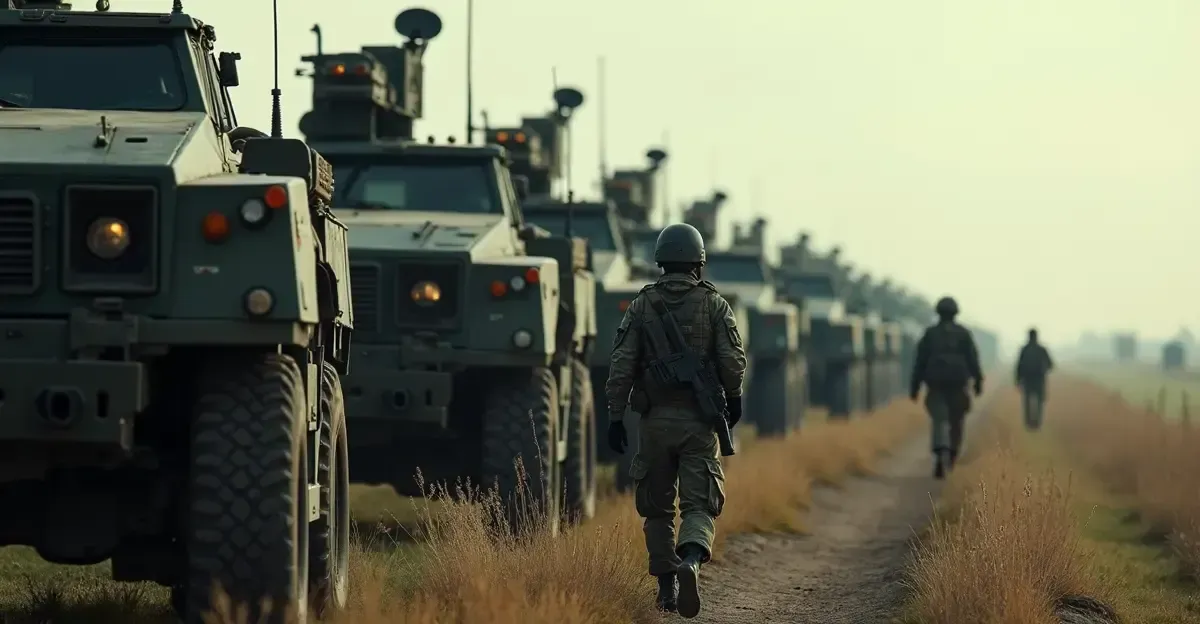
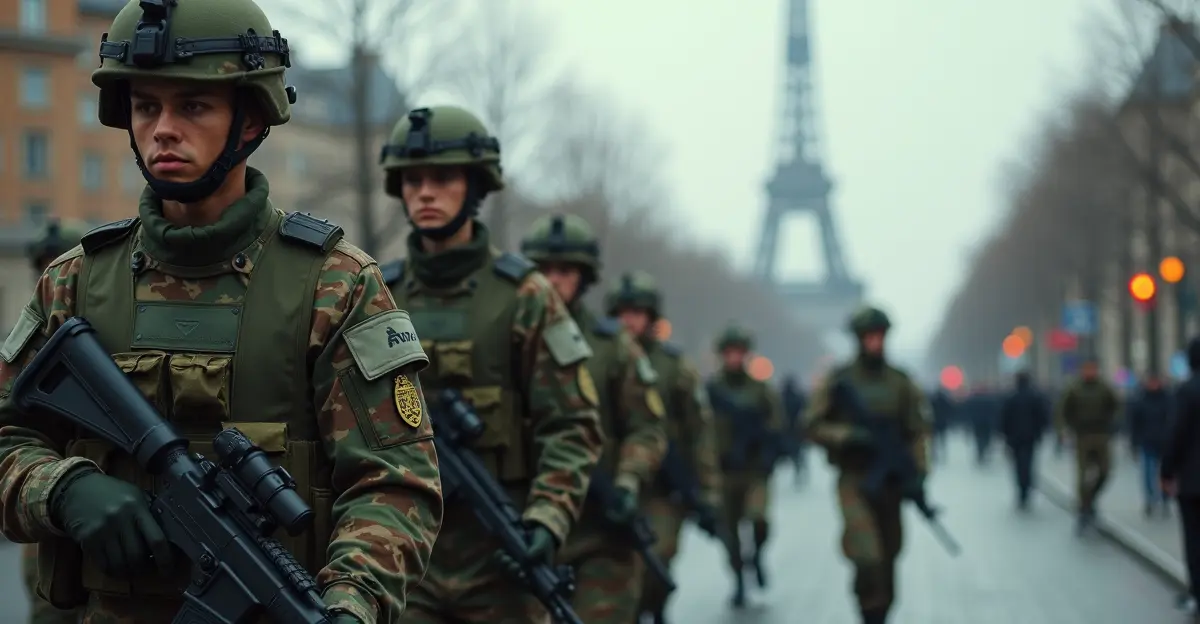
Europe is embarking on its most dramatic peacetime military buildup since the Cold War, with defense spending projected to reach €800 billion annually by 2030 — nearly double 2019 levels. Following NATO's June 2025 Hague Summit, which set a 3.5% GDP defense floor, the continent is undergoing a structural transformation that goes far beyond budget increases. The EU's €150 billion SAFE loan program, Germany's record €108 billion defense budget, and a surge in defense-tech venture capital from €200 million in 2021 to €2.6 billion in 2025 signal a fundamental shift. Yet the central question remains: can Europe overcome its fragmented industrial base, acute labor shortages, and continued reliance on US high-end systems to translate this unprecedented spending into genuine military capability and strategic autonomy?
Context: The Hague Summit and the New NATO Spending Floor
At the NATO summit in The Hague on June 25, 2025, Allied leaders committed to investing 5% of GDP annually on core defense and security-related spending by 2035, with at least 3.5% of GDP allocated to core defense requirements. The declaration marked a historic shift, exceeding the previous 2% target that had been a source of transatlantic tension for years. The NATO burden-sharing debate has now moved from political rhetoric to binding commitments, with member states scrambling to align national budgets with the new targets.
The summit also reaffirmed support for Ukraine, allowing direct contributions to Kyiv's defense to count toward national spending calculations. This provision has significant implications for European defense industrial strategy, as it incentivizes member states to invest in production capacity that can serve both national and Ukrainian needs simultaneously.
The Financial Architecture: SAFE, National Budgets, and Private Capital
The EU's €150 Billion SAFE Program
The Security Action for Europe (SAFE) program, adopted as part of the broader ReArm Europe plan in May 2025, provides up to €150 billion in competitively priced, long-maturity loans to member states for defense investments. The European Commission estimates that first disbursements will begin in early 2026, with Poland emerging as the largest beneficiary at €43.7 billion. France, Hungary, and Romania each receive over €16 billion, while Italy gets nearly €15 billion. Notably, Germany has chosen to forgo SAFE allocations entirely, relying instead on its national budget and the remaining Zeitenwende special fund.
SAFE funds are designed to finance urgent, large-scale procurement and industrial projects, including independent production of ammunition, air defense systems, and advanced technologies. The program aims to steer national spending toward joint procurement and industrial scale-up, addressing the chronic fragmentation that has plagued European defense for decades.
Germany's €108 Billion Defense Budget
Germany's 2026 defense budget, approved by Chancellor Friedrich Merz's cabinet on July 30, 2025, stands at a record €108.2 billion. This comprises an €82.7 billion regular allocation (up ~€29.4 billion from 2025) plus a €25.5 billion one-off tranche from the Zeitenwende special fund. German defense spending will rise to approximately 2.8% of GDP in 2026 and is projected to reach ~3.5% by 2029 — nearly double France's €57.2 billion budget.
Major procurements include up to 1,000 Leopard 2A8 tanks, 3,500 Boxer armored vehicles, Patriot and MEADS air-defense systems, and approximately 20 additional Eurofighter jets. The budget also funds 10,000 new soldiers, 2,000 civilian posts, and roughly €8-9 billion in Ukraine assistance. Defense Minister Boris Pistorius emphasized that "the security situation comes before budget constraints" as Germany initiates this historic buildup.
Defense-Tech Venture Capital Boom
European defense-tech venture capital has surged from just €200 million in 2021 to an estimated €2.6 billion in 2025 — a 13-fold increase. In H1 2025 alone, VCs deployed €946.2 million, a 26% year-on-year increase. The NATO Innovation Fund (€1 billion, launched in 2023) is bridging startups with defense ministries, accelerating dual-use technology adoption. Leading startups include Helsing (AI defense software, valued at ~€18 billion), Quantum-Systems (drones), TEKEVER (maritime surveillance), and ICEYE (satellite imagery).
However, late-stage funding remains a challenge: nearly 60% of deals over $200 million involve US capital, highlighting Europe's defense-tech funding gap and the continued pull of American investors.
Structural Challenges: Fragmentation, Labor Shortages, and US Dependence
Industrial Fragmentation
Europe's defense industrial base remains deeply fragmented across national boundaries, with duplicative programs, incompatible standards, and protectionist procurement practices. The European Parliament's Research Service notes that creating a genuine common market for defense could reduce costs by 20-30% and improve interoperability. Yet national champions and political considerations have historically blocked consolidation. The SAFE program and the European Defence Industrial Programme (EDIP, €1.5 billion) aim to incentivize joint procurement, but progress remains slow.
McKinsey has identified significant opportunities through consolidation, arguing that economies of scale are essential to compete with US giants like Lockheed Martin and RTX. The European defense industry consolidation trend is accelerating, with Rheinmetall, KNDS, and Leonardo pursuing cross-border partnerships, but full integration remains elusive.
Labor Shortages
The defense industry faces a critical workforce crisis. According to Randstad CEO Sander van 't Noordende, while the sector is projected to grow from 1 million to 1.46 million direct jobs by 2030, the EU could face a tech talent gap of up to 3.9 million people by 2027. Key issues include an aging workforce (25% of defense engineers nearing retirement), 13% annual attrition (four times the US rate), and competition from adjacent sectors offering 20-50% higher pay.
Euronews reported in February 2025 that the industry is struggling to find skilled workers in engineering, cybersecurity, and advanced manufacturing. Proposed solutions include broadening talent sources from adjacent industries (17 million skilled professionals), investing in upskilling programs, and modernizing the sector's employer brand to attract younger generations.
Dependence on US High-End Systems
Despite increased spending, Europe remains heavily reliant on US defense systems for critical capabilities. The F-35 fighter program, Patriot air defense systems, and advanced munitions are all US-supplied. The US National Security Strategy published in December 2025 explicitly demands that European partners assume "significantly greater responsibility" for regional defense, signaling Washington's intent to reallocate strategic focus toward the Indo-Pacific.
European strategic autonomy requires developing indigenous alternatives in key areas: next-generation fighter jets (the Franco-German-Spanish FCAS program), air defense (the European Sky Shield Initiative), and precision munitions. However, these programs face technical hurdles, political disagreements, and funding gaps. The European strategic autonomy debate has intensified, with proponents arguing that dependence on US systems undermines Europe's ability to act independently in crises.
Impact and Implications: Can Europe Deliver?
The scale of Europe's rearmament is unprecedented. EU defense spending reached €381 billion in 2025 (2.1% of GDP), up from €343 billion in 2024. If current trajectories hold, the €800 billion annual target by 2030 is achievable. However, higher budgets do not automatically translate into faster deliveries or improved capabilities.
Production capacity constraints remain severe. European ammunition production, while ramping up, still falls short of Ukrainian consumption rates. Shipbuilding faces bottlenecks in steel, skilled labor, and drydock capacity. The European Defence Agency warns that without structural reforms, increased spending could simply drive up prices rather than output — a phenomenon known as "defense inflation."
Three critical votes in early 2026 will define the trajectory: the European Parliament's approval of SAFE disbursement rules, national budget votes in Germany, France, and Italy, and NATO's implementation review of the 3.5% commitment. These decisions will determine whether Europe's rearmament becomes a sustained structural shift or a temporary spike.
Expert Perspectives
Analysts at the Atlas Institute describe Germany's path as "Kriegstüchtigkeit" (war readiness), emphasizing that the 2026 budget represents a generational commitment. However, they caution that procurement timelines remain long: the Leopard 2A8 tanks ordered now will not be fully delivered until 2030.
Defence Innovation Review notes that the war in Ukraine has acted as a catalyst, demonstrating the battlefield value of drones, AI, and electronic warfare. This has created favorable conditions for a new generation of European defense tech startups, though scaling production and navigating export regulations remain challenges.
The European Parliament's strategic autonomy study concludes that the EU must recalibrate its competitiveness strategy to integrate security imperatives as a core component, moving beyond a purely market-driven approach. Security considerations now take precedence over traditional economic openness.
Frequently Asked Questions
What is the NATO 3.5% GDP defense target?
At the June 2025 Hague Summit, NATO allies committed to investing at least 3.5% of GDP on core defense requirements by 2035, plus up to 1.5% for critical infrastructure, civil preparedness, and defense industrial base strengthening — totaling 5% of GDP.
How does the EU's SAFE program work?
SAFE (Security Action for Europe) provides up to €150 billion in EU-backed loans to member states for joint procurement of European-made defense equipment. First disbursements are expected in early 2026, with Poland as the largest beneficiary.
Why is Germany's defense budget so large in 2026?
Germany's €108.2 billion 2026 defense budget reflects the combination of a regular budget increase (€82.7 billion) plus the final tranche of the Zeitenwende special fund (€25.5 billion), established after Russia's 2022 invasion of Ukraine. It funds major tank, vehicle, and air defense procurements.
What are the main challenges to Europe's rearmament?
The three biggest challenges are industrial fragmentation (duplicative national programs), labor shortages (up to 3.9 million tech talent gap by 2027), and continued dependence on US high-end systems like the F-35 and Patriot.
Can Europe achieve strategic autonomy in defense?
Full strategic autonomy remains years away. While Europe is investing in indigenous programs like FCAS (next-gen fighter) and the European Sky Shield Initiative, critical capabilities still rely on US technology. The 2026 votes on SAFE, national budgets, and NATO commitments will determine the pace of progress.
Conclusion: A Defining Moment for European Defense
Europe's €800 billion rearmament represents a structural shift in the continent's defense posture, driven by the war in Ukraine, US pressure, and a genuine recognition that security can no longer be taken for granted. The financial commitments are historic: SAFE loans, record national budgets, and a booming defense-tech VC ecosystem provide the resources. However, translating money into military capability requires overcoming deep-seated industrial fragmentation, acute labor shortages, and technological dependencies.
The early 2026 votes on EU defense financing, national budgets, and NATO commitments will be decisive. If Europe can reform its procurement practices, invest in workforce development, and build genuine industrial cooperation, the rearmament could deliver the strategic autonomy that has eluded the continent for decades. If not, the €800 billion may simply be the most expensive lesson in the limits of spending without structural reform.



Follow Discussion