


 Deutsch
 English
 Español
 Français
 Nederlands
 Português


 Share
Share




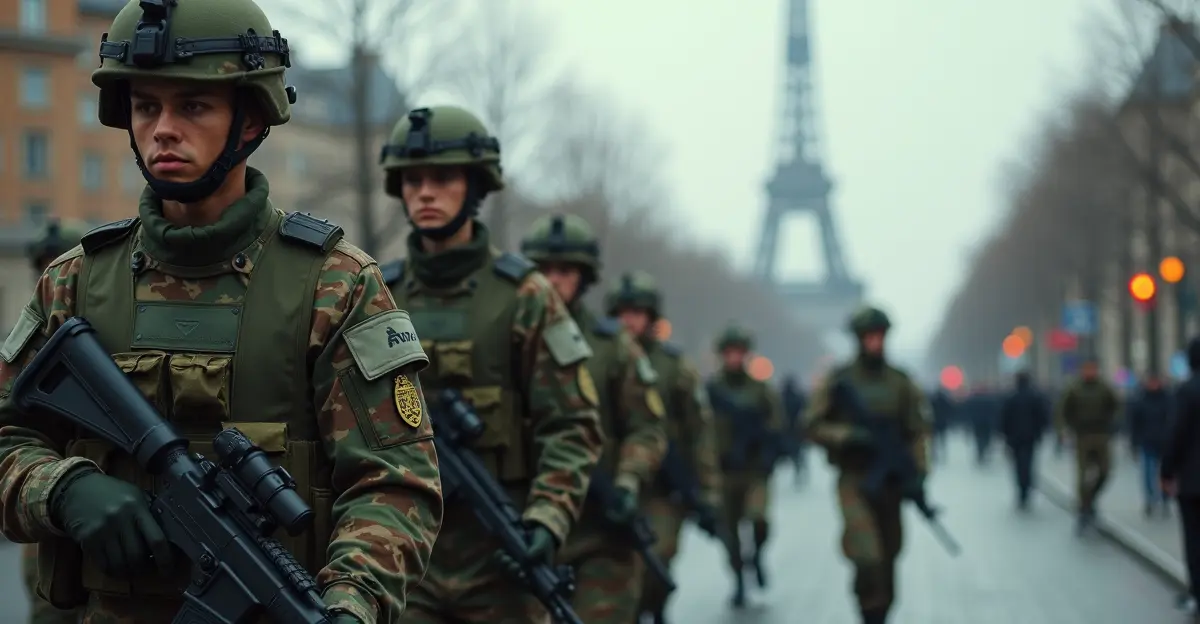
European NATO allies have embarked on the most dramatic peacetime military buildup in modern history, committing to a 3.5% GDP defense spending floor following the June 2025 Hague Summit. With combined defense budgets projected to reach approximately €800 billion annually and the EU's €150 billion SAFE loan program enabling joint procurement, 2026 marks the first full year of this synchronized rearmament. According to the Stockholm International Peace Research Institute (SIPRI), global military spending hit a record $2.89 trillion in 2025, with European spending surging 14% to $864 billion — the fastest growth for European NATO members since 1953. However, severe supply chain bottlenecks, labor shortages, and a fragmented industrial base threaten to limit the economic multiplier effects of this historic surge, raising strategic questions about long-term sustainability and the shifting transatlantic security architecture.
Context: The Hague Summit and the 3.5% Commitment
At the June 2025 NATO summit in The Hague, European allies agreed to a new defense spending benchmark of at least 3.5% of GDP for core defense expenditures, replacing the previous 2% target that had been in place since 2014. The decision reflected growing concerns over Russian aggression and uncertainty about the reliability of US security guarantees under the Trump administration. The NATO defense spending commitment now targets 5% of GDP by 2035 for some members, according to analysis from the Center for European Policy Analysis.
The Hague Summit's decision was underpinned by a broader European push for strategic autonomy. The EU's Security Action for Europe (SAFE) program, adopted by the Council on May 27, 2025, provides up to €150 billion in competitively priced, long-maturity loans to member states for urgent defense investments. As the first pillar of the European Commission's ReArm Europe Plan/Readiness 2030, SAFE aims to unlock over €800 billion in defense spending through joint procurement involving at least two member states, Ukraine, and EEA-EFTA countries.
The €800 Billion Defense Surge: Key Drivers and Numbers
Germany's Record €108 Billion Budget
Germany has emerged as the driving force behind Europe's rearmament. In July 2025, Chancellor Friedrich Merz's cabinet approved a record €108.2 billion defense budget for 2026, combining €82.7 billion from the regular Bundeswehr budget with €25.5 billion from the special 'Zeitenwende' fund established after Russia's 2022 invasion of Ukraine. Defense spending is projected to reach approximately 2.8% of GDP in 2026, up from barely meeting NATO's 2% target in 2024, with a goal of 3.5% by 2029. Major procurement includes up to 1,000 Leopard 2A8 tanks, 3,500 Boxer armored vehicles, 5,000 Patria trucks, 20 additional Eurofighter jets, and new air-defense systems. The budget also funds 10,000 new soldiers and 2,000 civilian posts, with roughly €8–9 billion earmarked for Ukraine assistance.
EU SAFE Loan Program: Joint Procurement in Action
The European Commission approved national defense investment plans for eight EU member states under SAFE in early 2026, with disbursements beginning in March 2026. Nineteen member states requested access, with five accounting for over two-thirds of the total: Poland (€43.7 billion), Romania (€16.7 billion), France (€16.2 billion), Hungary (€16.2 billion), and Italy (€14.9 billion). Eligible equipment includes ammunition, missiles, drones, air defense systems, and cyber capabilities, with a requirement that no more than 35% of component costs originate outside the EU, EEA-EFTA, or Ukraine. EU Commissioner Andrius Kubilius called it a 'big step forward for defence readiness,' stressing there is 'no time for the luxury of incremental improvement.'
European Defense Spending by the Numbers
According to McKinsey's European Defense Dashboard, core defense spending among European NATO countries has doubled since 2019. The Baltics, Germany, and the Nordics are moving fastest, while Southern Europe lags. Defense equity valuations have surged — an index of large European defense companies delivered 401% total shareholder return since 2022. Venture capital funding for European defense tech rose from €200 million in 2021 to €2.6 billion in 2025, though still three times lower than US levels. The European defense industry consolidation is accelerating as companies seek scale to meet surging demand.
Supply Chain Bottlenecks and Labor Shortages
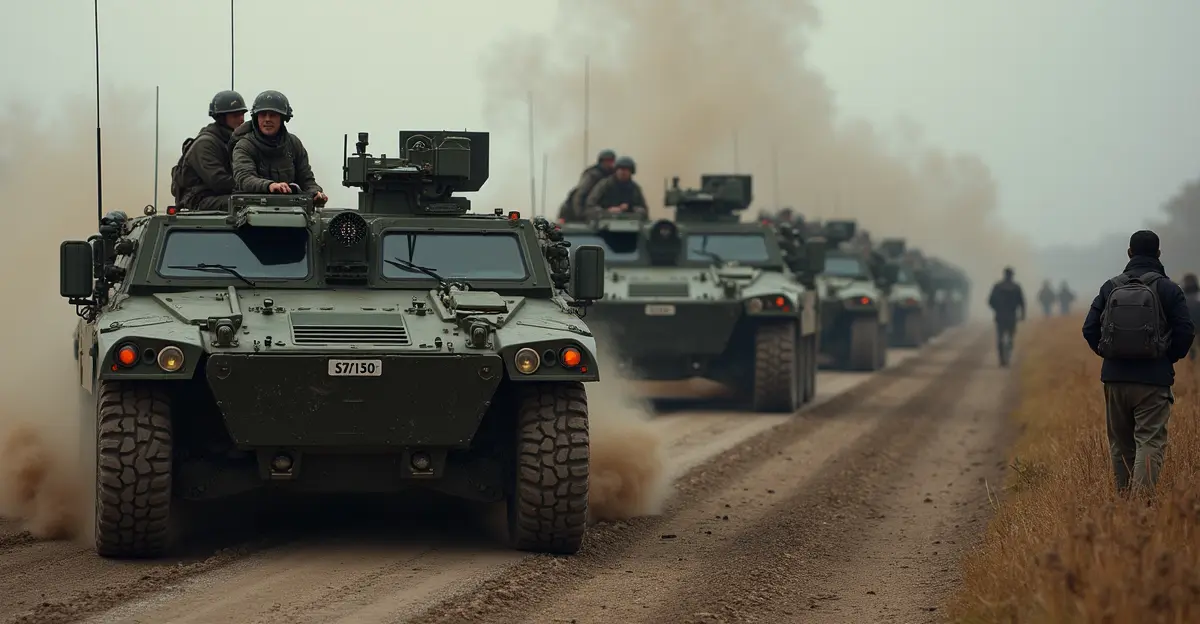
Despite the unprecedented financial commitment, Europe's defense industrial base faces severe structural constraints. The IISS Military Balance analysis from May 2026 identifies critical dependencies and bottlenecks in defense supply chains beyond critical raw materials, including single points of failure in manufacturing networks and strategic dependencies that could affect production timelines. European forces operate highly fragmented platforms — more than four times the fragmentation level of the US — challenging interoperability and logistics.
Labor shortages pose an equally pressing challenge. The EU has announced plans to retrain 600,000 workers for the defense sector to eliminate skills shortages, as reported by Euronews in November 2025. A workforce crisis is undermining Europe's defense ambitions, with shortages of skilled labor potentially delaying or downsizing orders for critical equipment such as tanks, air defense systems, and ammunition. In a worst-case scenario, some contracts may be outsourced to countries outside the EU, undermining the bloc's ambition to retain its defense industrial base.
The IMF Working Paper on the macroeconomic impacts of EU defense spending (March 2026) warns that given the larger and more synchronized nature of the current European buildup compared to past national episodes, multipliers might fall below historical estimates, especially if monetary policy is not accommodative. Equipment procurement has the strongest relative impact, but import intensity and fiscal space remain key variables. The macroeconomic effects of defense spending could be dampened if supply constraints persist.
Transatlantic Security Architecture Under Strain
The rearmament drive is unfolding against a backdrop of unprecedented transatlantic tension. Following Donald Trump's 2024 election victory, the US imposed unilateral tariffs on European imports (15% on EU goods, 50% on steel and aluminum) and triggered a major diplomatic crisis over Greenland. European leaders' initial strategy of diplomatic appeasement has yielded minimal returns, forcing a fundamental shift toward strategic autonomy. The US has begun treating NATO as an instrument of political coercion rather than collective defense, demonstrated by relocating troops from Germany to Poland.
Eastern European nations like Poland pursue bilateral deals with Washington, while Germany and France advocate for defense-industrial decoupling and enhanced EU security integration. The 2026 US National Defense Strategy marks the formalization of a trend: the United States no longer conceives of European security as its primary strategic obligation. This has accelerated Europe's transition from security consumer to independent provider in a post-American security landscape.
Expert Perspectives
Dr. Antonio Bhardwaj, in an analysis published by the Foundation for the Advancement of Freedom, describes the situation as 'the continental decoupling' — an escalating structural fragmentation of the transatlantic partnership. European leaders are now pursuing strategic autonomy not as an ideal but as a necessity.
McKinsey analysts note that while the spending surge creates enormous opportunities for defense companies, the fragmented nature of European procurement — with 27 different national defense markets — limits economies of scale. Consolidation through mergers, acquisitions, and cross-border collaboration is essential to strengthen Europe's competitive position against global players.
The IMF research team led by Furceri, Juarros, Mishra, Nguyen, Pessoa, and Sollaci finds that past national defense spending stimulated economic activity with sizable cross-border spillovers, but the synchronized nature of the current buildup may reduce multipliers. The economic impact of European rearmament will depend critically on how effectively supply constraints are addressed.
FAQ
What is the 3.5% NATO defense spending commitment?
At the June 2025 Hague Summit, European NATO allies agreed to a new defense spending floor of 3.5% of GDP for core defense expenditures, replacing the previous 2% target. Some members are targeting 5% by 2035.
How does the EU SAFE loan program work?
The Security Action for Europe (SAFE) program provides up to €150 billion in low-cost, long-maturity loans to EU member states for joint defense procurement. Eligible equipment must be European-made with no more than 35% of component costs from outside the EU, EEA-EFTA, or Ukraine.
What is Germany's 2026 defense budget?
Germany approved a record €108.2 billion defense budget for 2026, combining €82.7 billion from the regular Bundeswehr budget and €25.5 billion from the special 'Zeitenwende' fund. It is the largest military budget in Europe and the fourth highest globally.
What are the main challenges facing Europe's rearmament?
Key challenges include severe supply chain bottlenecks, labor shortages (the EU plans to retrain 600,000 workers), fragmented defense markets with 27 different national procurement systems, and the risk that synchronized spending may reduce economic multipliers.
How is the transatlantic relationship affecting European defense?
US policies under the Trump administration, including tariffs and troop relocations, have accelerated Europe's push for strategic autonomy. The 2026 US National Defense Strategy signals that Washington no longer prioritizes European security, forcing Europe to become an independent security provider.
Conclusion: A Historic but Uncertain Transformation
Europe's €800 billion rearmament represents the most ambitious military buildup since the Cold War, driven by the convergence of Russian aggression, US strategic disengagement, and a new institutional framework for joint procurement. However, the success of this transformation hinges on resolving deep-seated industrial and labor constraints. The IMF warns that multipliers may fall below historical estimates, while supply chain bottlenecks and workforce shortages could delay critical capabilities. As 2026 unfolds, the world is watching whether Europe can translate financial commitments into genuine military readiness — and whether the new defense industrial order will prove sustainable in the long term.




Follow Discussion