


 Deutsch
 English
 Español
 Français
 Nederlands
 Português


 Share
Share




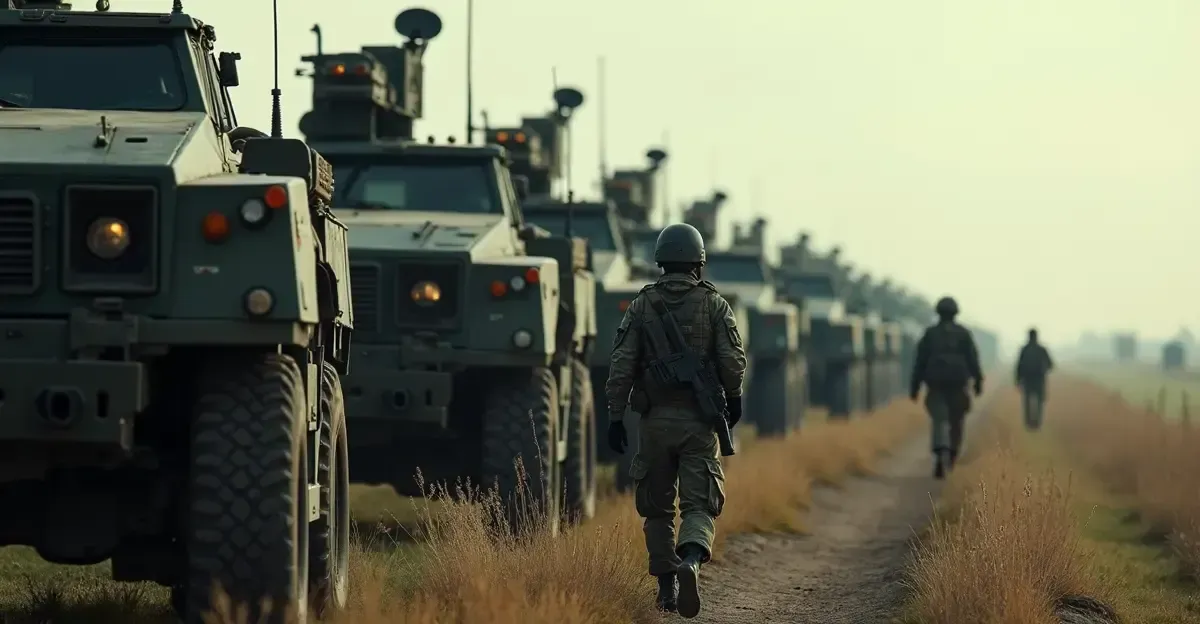
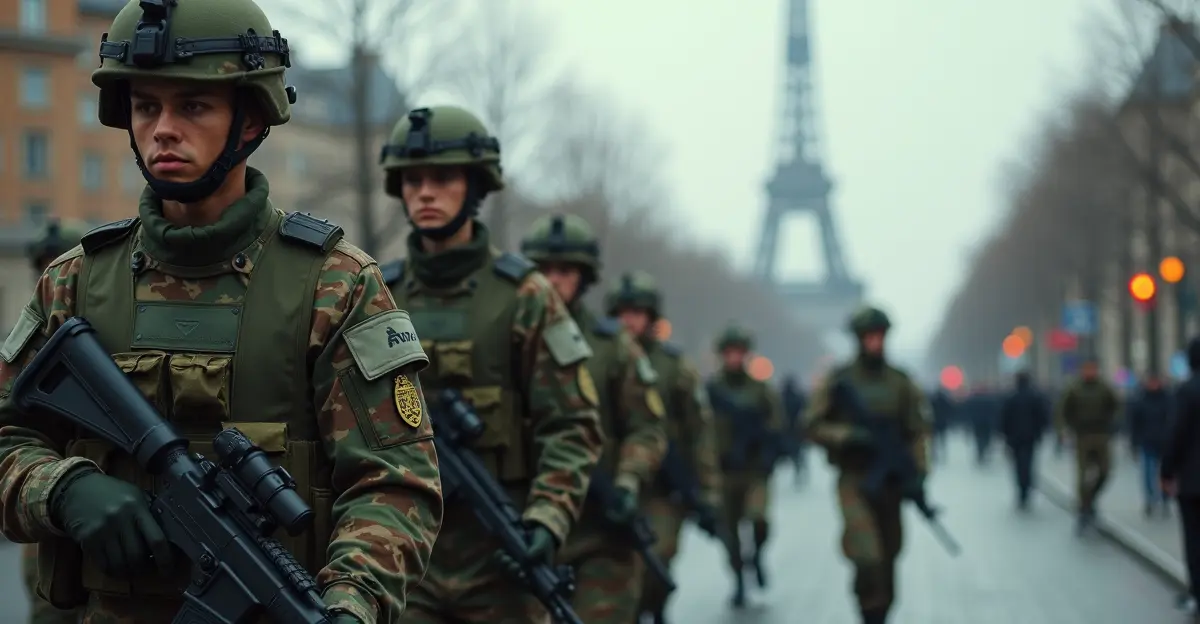
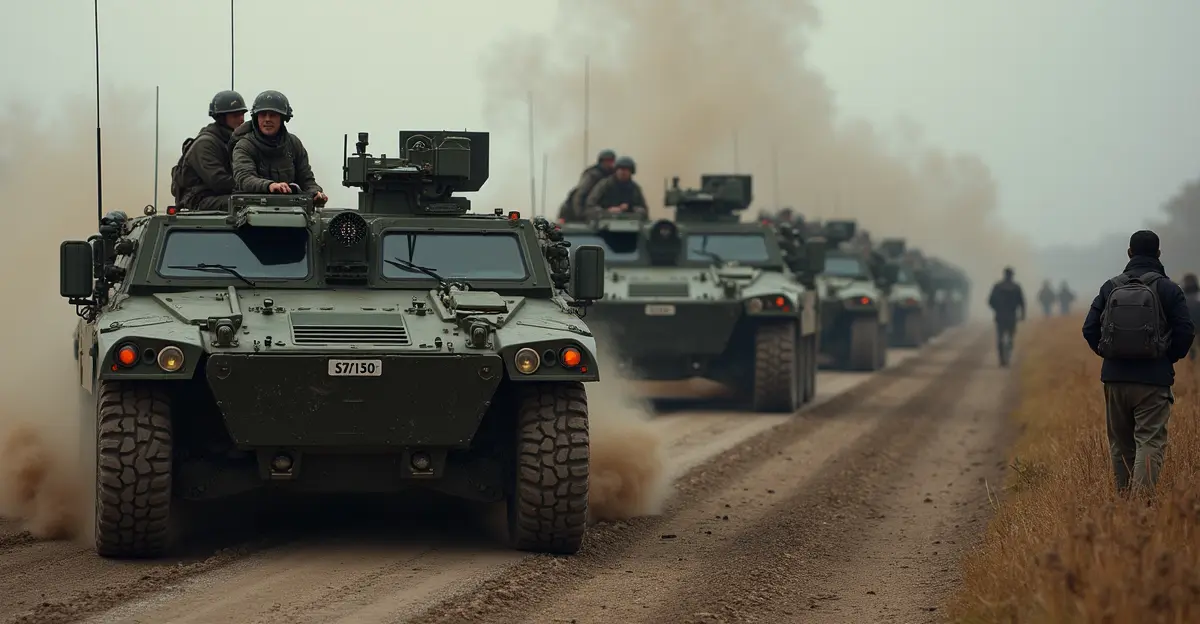
Europe is embarking on its most ambitious peacetime military buildup since the Cold War. Following NATO's June 2025 Hague Summit, where all 32 allies committed to a groundbreaking defense spending target of 5% of GDP by 2035—with at least 3.5% for core military capabilities—European defense budgets are projected to approach €800 billion annually by the end of the decade. This historic surge, driven by Russia's war in Ukraine and eroding confidence in US security guarantees, represents a defining strategic shift for a continent long accustomed to peace. But can Europe translate record spending into genuine military capability, or does it risk repeating a cycle of ambition without strategic coherence?
Context: The Strategic Drivers Behind Europe's Rearmament
The 2025 Hague Summit marked a watershed moment for NATO. Secretary General Mark Rutte, a former Dutch prime minister, described the new spending commitment as a "quantum leap" for collective defense. The target is split into two tiers: 3.5% of GDP for core military expenditures—personnel, operations, equipment, and maintenance—and up to 1.5% for security-related spending including cyber defense, critical infrastructure, and civil preparedness. National roadmaps are due by mid-2026, with a progress review scheduled for 2029.
Three factors have converged to make this rearmament imperative. First, Russia's full-scale invasion of Ukraine, now in its fourth year, has shattered Europe's post-Cold War security assumptions. Second, the US 2026 National Defense Strategy, published in January 2026, signals a hemisphere-first pivot that pressures allies to provide for their own defense. The strategy, which cites President Donald Trump 47 times, explicitly denounces earlier approaches and demands greater burden-sharing. Third, the election of Trump in 2024 injected urgency into European defense planning, with allies fearing potential US disengagement from NATO.
Germany has led from the front. In July 2025, Chancellor Friedrich Merz's cabinet approved a record €108.2 billion defense budget for 2026—combining a regular Bundeswehr allocation of €82.7 billion with a €25.5 billion contribution from the special "Zeitenwende" fund established after Russia's 2022 invasion. This pushes German defense spending to approximately 2.8% of GDP in 2026, with projections of 3.5% (roughly €162 billion) by 2029. Defense Minister Boris Pistorius declared that "security comes before budget constraints," signaling a long-term commitment to military buildup.
Industrial Bottlenecks: Can Europe's Defense Industry Deliver?
While the financial commitment is unprecedented, Europe's defense industrial base faces critical structural challenges that threaten to undermine the entire rearmament effort.
Fragmentation: 170 Weapon Systems vs. 40
Europe operates over 170 different weapon systems across its armed forces, compared to just 40 in the United States. This fragmentation drives up costs, complicates logistics, and undermines interoperability. The EU's SAFE loan program, formally adopted in May 2025, provides €150 billion in competitively priced, long-maturity loans to member states for joint procurement of European-made military equipment. The program requires that 65% of component costs originate within the EU, aiming to consolidate demand and rebuild domestic industrial capacity. However, critics warn that without deeper integration of national defense markets, even pooled procurement may fail to achieve economies of scale.
The Talent Crisis: A Generation of Engineers Nears Retirement
Perhaps the most daunting bottleneck is the severe shortage of skilled labor. According to Randstad CEO Sander van 't Noordende, Europe's defense industry needs to grow from 1 million to over 1.46 million direct jobs by 2030. Yet the EU faces a tech talent gap of up to 3.9 million people by 2027, with demand outpacing supply by a ratio of four to one. Critically, approximately 25% of defense engineers are nearing retirement age, threatening an institutional knowledge drain at the very moment when expertise is most needed.
Attrition in the EU defense sector stands at 13%—four times the US rate—as workers are drawn to adjacent industries offering 20% to 50% higher pay. Women hold only 20% of defense industry positions, representing a vast untapped talent pool. Van 't Noordende calls for three shifts: broadening talent sources from adjacent industries (17 million skilled professionals), investing in upskilling and vocational training, and modernizing the defense sector's employer brand to attract younger workers.
Supply Chain Constraints and Production Capacity
Europe's defense supply chains remain fragmented along national lines, with limited cross-border integration. The European Commission's White Paper for European Defence – Readiness 2030, published in 2025, aims to address this through regulatory simplification and the establishment of Capability Coalitions in nine key areas, including air and missile defense, artillery, drones, and cyber capabilities. Flagship initiatives include the European Drone Defence Initiative, Eastern Flank Watch, European Air Shield, and European Space Shield.
Yet production bottlenecks persist. Germany's 2026 budget allocates €15 billion specifically for ammunition, reflecting lessons from Ukraine where European artillery shell production initially struggled to meet demand. The IMF warns that the synchronized nature of this buildup may lower fiscal multipliers, as all countries compete for the same limited industrial capacity simultaneously.
Macroeconomic Implications: Stimulus or Overreach?
The IMF published a working paper in 2025 examining the macroeconomic consequences of Europe's defense surge. While defense spending can stimulate short-term economic activity through increased demand, the synchronized buildup across multiple countries may reduce the effectiveness of each euro spent. The EU's decision to activate the Stability and Growth Pact's national escape clause for defense investments provides fiscal flexibility, but questions remain about long-term debt sustainability.
Poland, already spending 4.7% of GDP on defense in 2025, received the largest share of SAFE loans at €43.7 billion. The Baltic states, Estonia, Latvia, and Lithuania, have also exceeded the 3.5% core threshold, reflecting their frontline position vis-à-vis Russia. However, Spain received an exemption from the 5% target, citing domestic budget constraints—highlighting the uneven political will across the alliance.
Expert Perspectives: Can Europe Deliver?
"The money is historic, but money alone doesn't buy capability," warns a senior NATO official who spoke on condition of anonymity. "Without addressing industrial fragmentation, workforce shortages, and the lack of strategic coherence, Europe risks building a paper tiger."
Others are more optimistic. The European Commission estimates that the ReArm Europe Plan, combined with the SAFE loan instrument, can mobilize €800 billion in defense investments. The plan includes expanding European Investment Bank lending to defense projects and simplifying regulations to accelerate capability development by 2030.
CSIS analysts note that the 2026 US National Defense Strategy, while demanding greater European self-reliance, also opens opportunities for transatlantic defense industrial cooperation. The NATO summit declaration explicitly calls for expanding such cooperation and eliminating trade barriers among allies.
FAQ: Europe's €800 Billion Rearmament
What was agreed at the 2025 NATO Hague Summit?
All 32 NATO members except Spain committed to raising defense spending to 5% of GDP by 2035, with at least 3.5% for core military expenditures and up to 1.5% for security-related areas like cyber defense and infrastructure. National implementation roadmaps are due by mid-2026.
How will Europe reach €800 billion in defense spending?
Combined European NATO allies' defense budgets are projected to approach €800 billion annually by the late 2020s, driven by the 3.5% GDP target. The EU's SAFE program provides €150 billion in loans for joint procurement, while Germany alone will spend over €108 billion in 2026.
What are the main bottlenecks to Europe's rearmament?
Industrial fragmentation (over 170 weapon systems), a severe skilled-labor shortage (25% of defense engineers near retirement, a tech talent gap of 3.9 million by 2027), and supply chain constraints are the primary obstacles. Attrition in EU defense is 13%, four times the US rate.
How does the US 2026 National Defense Strategy affect Europe?
The 2026 NDS signals a hemisphere-first pivot, pressuring European allies to provide for their own defense while opening opportunities for transatlantic industrial cooperation. The strategy cites President Trump 47 times and explicitly demands greater burden-sharing.
Can Europe's defense industry scale up fast enough?
The European Commission's Readiness 2030 plan aims to accelerate production through regulatory simplification, joint procurement, and capability coalitions. However, without addressing structural issues like workforce attrition and fragmented production, even record budgets may struggle to deliver real military capability.
Conclusion: A Defining Moment for European Sovereignty
Europe's €800 billion rearmament represents the continent's most significant strategic shift since the end of the Cold War. The financial commitment is real, the political will is unprecedented, and the strategic imperative is clear. Yet the gap between spending and capability remains vast. Whether Europe can bridge that gap—by consolidating its fragmented defense industries, solving its talent crisis, and maintaining political cohesion—will determine not only its ability to deter Russia but also the future of transatlantic relations and European sovereignty itself.
The next milestone comes in mid-2026, when NATO allies must submit their national roadmaps for reaching the 5% target. The 2029 progress review will provide the first real test of whether Europe's ambition can match its investment. For now, the continent built for peace is learning, slowly and expensively, how to deter.



Follow Discussion