


 Deutsch
 English
 Español
 Français
 Nederlands
 Português


 Share
Share




NATO's March 2026 annual report confirmed a historic 20% real-terms defense spending increase, with all European allies meeting the 2% GDP target for the first time. Yet the continent's ambitious commitment to a 3.5% GDP defense floor—with a 5% target by 2035—faces a stark reality: Europe's fragmented defense industry cannot scale fast enough to turn fiscal pledges into military hardware. The gap between financial commitment and industrial capacity is the defining strategic question of 2026.
The Numbers Behind the Ambition
European NATO allies have agreed to a minimum defense spending floor of 3.5% of GDP, pushing combined budgets toward €800 billion annually. Germany leads with a record €108.2 billion defense budget for 2026, while Poland allocates 4.5% of GDP. The EU's SAFE (Security Action for Europe) program, adopted in May 2025, provides up to €150 billion in competitively priced loans for urgent defense investments. Poland has already allocated €43.7 billion under SAFE, followed by Romania (€16.7 billion), Hungary (€16.2 billion), and France (€15.1 billion).
However, as NATO Secretary General Mark Rutte noted in his March 2026 annual report, "The shift in mindset is clear—European Allies are taking more responsibility for their own security. But responsibility must translate into capability." The EU defense industrial strategy acknowledges that of the €100 billion spent by member states between February 2022 and June 2023, eight out of every ten euros went outside the EU, with more than six out of ten spent in the United States.
The Industrial Bottlenecks
A Workforce Crisis
Europe's defense industry faces a critical talent shortage. According to industry estimates, 25% of defense engineers are nearing retirement, while attrition stands at 13%—four times the U.S. rate. The EU could face a tech talent gap of up to 3.9 million people by 2027, with demand for skilled workers outpacing supply by 4:1 in critical specialisms like ammunition manufacturing, naval engineering, and radar design. Randstad CEO Sander van 't Noordende warned in June 2025 that "Europe's rapid defense buildup faces a critical talent shortage that could undermine its momentum."
The sector is projected to grow from 1 million to 1.46 million direct jobs by 2030, but skilled trades like welders and aircraft technicians are retiring faster than replacements can be found. Defense firms like Rheinmetall are raising wages by 8-10% and creating in-house training schools, but the European defense workforce gap remains severe.
Production Lines at Capacity
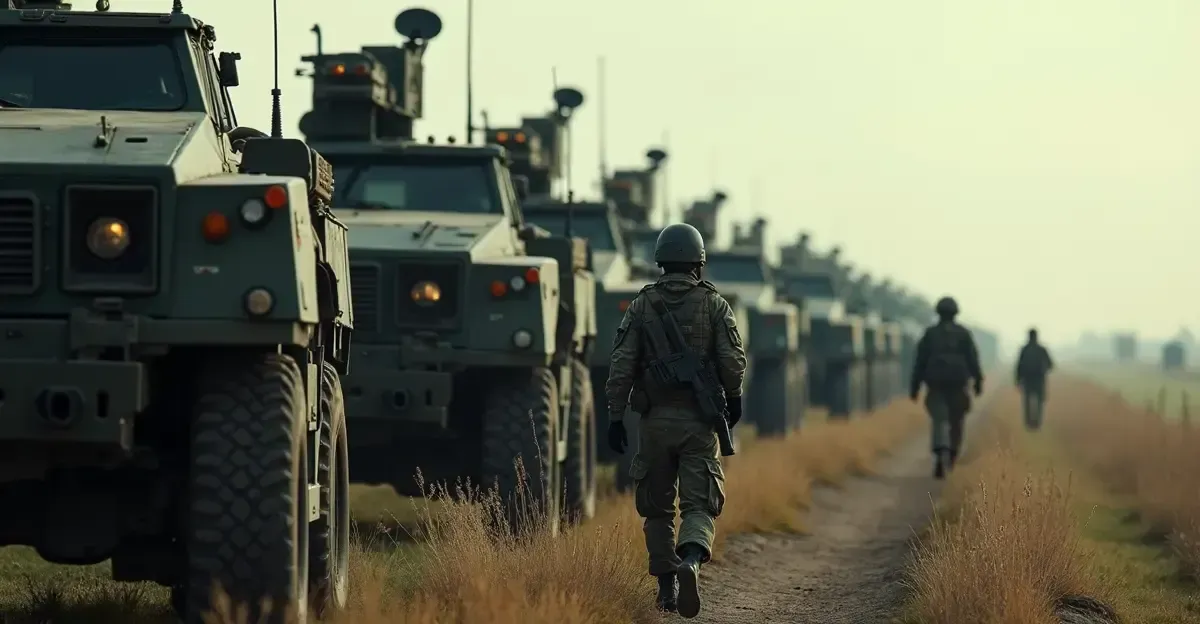
Europe's defense production capacity has tripled since Russia's 2022 invasion of Ukraine, with satellite imagery tracking approximately 7 million square meters of new industrial capacity across 150 facilities. BAE Systems has boosted artillery shell output 16-fold, Rheinmetall is expanding capacity, and Nammo has reopened a plant in Denmark. The EU's ASAP initiative aims to produce 2 million shells annually by end of 2025.
Yet Russia still produces an estimated 3-4 million artillery shells annually, relying heavily on North Korean imports. While NATO now produces more ammunition than Russia, according to Secretary General Rutte, the combined NATO output is estimated at no more than 3.2 million shells annually—insufficient for sustained high-intensity conflict. Bottlenecks in explosive materials like TNT and RDX persist, and single-source dependencies remain a vulnerability.
Fragmentation Across 27 Systems
Europe's defense industrial base remains fragmented across 27 national systems with over 150 different weapon types. The NATO industrial capacity expansion pledge from the 2024 Washington Summit sought to address interoperability, but progress has been slow. The EU's EDIS (European Defence Industrial Strategy) and EDIP (European Defence Industry Programme) allocated only €1.5 billion for 2025-2027—described as "modest" by Euronews and "not a lot of money" by Commission Vice-President Margrethe Vestager.
Can SAFE and German Rearmament Bridge the Gap?
The SAFE loan program represents the EU's most ambitious financial instrument for defense, but its impact depends on execution. At least 65% of component costs must originate from EU, EEA-EFTA, or Ukraine. While this promotes European sourcing, it also constrains procurement options. Germany's 2026 budget includes a new 'Bundeswehr Planning and Procurement Acceleration Act' expected in early 2026, aiming to streamline acquisitions. The country is investing heavily in a layered air defense shield combining Arrow 3, IRIS-T SLM, and Patriot systems, along with 20 new Eurofighter jets and 200 additional Puma infantry fighting vehicles.
However, as the German rearmament challenges illustrate, even with record budgets, production backlogs persist. Russian ammunition production still outpaces NATO rates, and industry lead times for complex systems like air defense and long-range strike capabilities remain measured in years, not months.
Capability Gaps and Strategic Dependence
Europe faces critical capability gaps in air and missile defense, space-based intelligence, surveillance, and reconnaissance (ISR), and long-range precision strike—areas where the U.S. leads by 5-10 years. The European Defence Industrial Strategy itself noted that "we don't have a Pentagon anywhere," as HRVP Josep Borrell put it. While European startups like Helsing are developing advanced drone systems and kamikaze loitering munitions, the continent remains dependent on U.S. capabilities for strategic enablers.
The Atlantic Council's NATO defense spending tracker, updated April 2026, shows European allies outpacing expectations, with Norway surpassing the United States in defense spending per capita for the first time. Yet the tracker also highlights that spending alone does not equal capability. The European strategic autonomy debate intensifies as Washington pivots toward the Indo-Pacific.
Expert Perspectives
Thierry Breton, former European Commissioner for Internal Market, argued in 2024 that "Europe must take greater responsibility for its own security, regardless of the outcome of our allies' elections every four years." Alain De Neve of the Royal Military School noted that the EU had not embarked on a war economy, despite rhetoric to the contrary. The IISS Military Balance 2025 analysis emphasized that NATO's new investment pledge requires structural reforms, not just financial commitments.
FAQ
What is NATO's new defense spending target?
NATO European allies committed to a minimum 3.5% GDP defense spending floor at The Hague Summit in 2025, with a 5% target by 2035. All allies met the previous 2% target for the first time in 2025.
What is the EU SAFE program?
SAFE (Security Action for Europe) is an EU financial instrument adopted in May 2025 that provides up to €150 billion in competitively priced loans to member states for urgent defense investments. It is the first pillar of the ReArm Europe Plan/Readiness 2030.
How many defense workers does Europe need?
Europe's defense industry needs up to 500,000 additional workers by 2030, according to industry estimates. The sector faces a tech talent gap of 3.9 million by 2027, with 25% of defense engineers nearing retirement.
Can Europe produce enough ammunition?
Europe has tripled artillery shell production since 2022 and aims for 2 million shells annually by end of 2025. However, Russia still produces 3-4 million shells per year, and NATO's combined output remains below sustained high-intensity conflict requirements.
Is Europe still dependent on the US for defense?
Yes, Europe remains dependent on U.S. capabilities in air defense, space-based ISR, and long-range precision strike, where the U.S. leads by 5-10 years. The EU's EDIS acknowledged that 60% of European defense spending from 2022-2023 went to U.S. suppliers.
Conclusion: Ambition vs. Reality
Europe's defense pivot represents the continent's largest peacetime military buildup since the Cold War. The financial commitment is unprecedented, with combined budgets approaching €800 billion annually. Yet the industrial bottlenecks—workforce shortages, production line constraints, fragmentation, and capability gaps—threaten to turn fiscal ambition into hollow commitments. The SAFE program and German rearmament are significant steps, but without addressing the structural constraints, Europe risks spending more for less. As the July 2026 Ankara NATO summit approaches, the question remains whether Europe can build the industrial base to match its strategic ambitions, or whether it will remain dependent on U.S. capabilities for the next decade.



Follow Discussion