


 Deutsch
 English
 Español
 Français
 Nederlands
 Português


 Share
Share




By Chloe Nowak
The February 2026 closure of the Strait of Hormuz, triggered by U.S.-Israeli military operations against Iran, has triggered the largest oil supply disruption since World War II. Nearly 20% of global oil supply disappeared from the market, sending Brent crude surging 65% to a peak of $126 per barrel. The International Monetary Fund now projects global growth dropping to 2% in adverse scenarios and inflation exceeding 6%, making this the defining economic event of 2026.
What Happened: The 2026 Strait of Hormuz Crisis
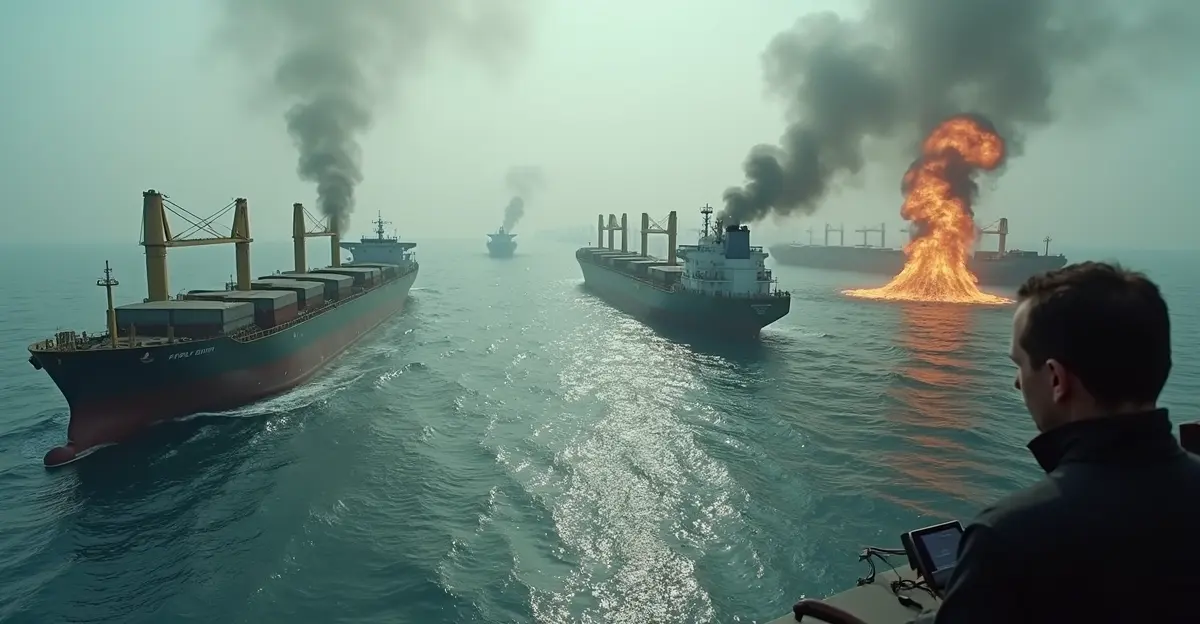
On February 28, 2026, U.S. and Israeli forces launched Operation Epic Fury against Iran, assassinating Supreme Leader Ali Khamenei. Iran retaliated by mining the strait and attacking tankers, effectively shutting the world's most critical energy chokepoint. Normally, about 20 million barrels per day (bpd) — 25% of global seaborne oil and 20% of LNG — transit the strait, with roughly 80% destined for Asia. The Middle East oil supply chains collapsed within days, and tanker traffic came to a standstill, according to the Federal Reserve Bank of Dallas.
Economic Fallout: Oil Prices, Inflation, and Central Bank Policy
The IMF's April 2026 World Economic Outlook lays out three scenarios. In its severe scenario, growth falls to 2.0% — near recession — with oil at $110–$125 per barrel and inflation above 6%. Chief Economist Pierre-Olivier Gourinchas warned that the world sits between the reference and adverse scenarios, drifting toward the latter. The Dallas Fed estimates a one-quarter closure would push WTI to $98 and cut annualized global real GDP growth by 2.9 percentage points. A two- to three-quarter closure could push prices to $115–$132, prolonging negative growth through 2026. The World Bank projects a 24% energy price surge, with fertilizer prices up 31% and as many as 45 million more people facing acute food insecurity. These cascading effects are testing central bank responses to oil shocks as policymakers weigh rate cuts against stubborn inflation.
Alternative Energy Routes and Geopolitical Realignment
Producers are scrambling to bypass Hormuz, but existing pipelines are woefully inadequate. Saudi Arabia's East-West Petroline can move up to 5 million bpd, and the UAE's Habshan–Fujairah line adds 1.5 million bpd — a combined 6.5 million bpd versus the 17 million bpd that previously transited the strait. That leaves a 10.5 million bpd gap, forcing tankers around the Cape of Good Hope, adding 10–14 days and $2–$4 per barrel in freight costs. Both pipelines have already been attacked, exposing the fragility of global energy security in 2026. Yet analysts argue Iran's leverage is weakening as exporters permanently re-route. The IEA's Fatih Birol called it the biggest energy security threat in history, urging route diversification. This crisis is accelerating a shift toward regional nearshoring and friendshoring, reshaping geopolitical alliances and trade routes.
What Comes Next: Scenarios and Outlook
The IEA cut its 2026 oil demand forecast by 1.6 million bpd, noting global inventories fell below 7.9 billion barrels in July — the lowest since April 2025. Despite signals of a possible Washington-Tehran agreement to reopen the waterway, a deal remains elusive. The IMF has already cut global growth to 3% from 3.3% since the war began. If the strait reopens after one quarter, Dallas Fed models show prices falling to $68 and growth recovering. A longer closure — now likely as of mid-2026 — keeps inflation elevated and risks a synchronized global downturn. The outcome hinges on Iran nuclear negotiations in 2026 and whether alternative corridors can be secured quickly enough.
Frequently Asked Questions
How much oil passes through the Strait of Hormuz?
About 20 million barrels per day — roughly 20% of global oil supply and 25% of seaborne oil trade — plus 20% of global LNG transit the strait annually.
Why did the Strait of Hormuz close in 2026?
Iran closed the strait in retaliation for U.S.-Israeli military strikes in February 2026, using sea mines and attacks on tankers to halt shipping.
What are the economic impacts of the 2026 oil shock?
Brent crude surged 65% to $126 per barrel, global growth is projected to fall to 2% in severe scenarios, inflation exceeds 6%, and fertilizer prices rose 31%.
Can alternative pipelines replace the Strait of Hormuz?
No. Saudi and UAE bypass pipelines offer only 6.5 million bpd combined versus the 17 million bpd previously shipped through Hormuz, leaving a major supply gap.
When will the Strait of Hormuz reopen?
As of mid-2026, the strait remains functionally closed. Diplomatic efforts continue, but no reopening agreement has been reached.

Follow Discussion