


 Deutsch
 English
 Español
 Français
 Nederlands
 Português


 Share
Share




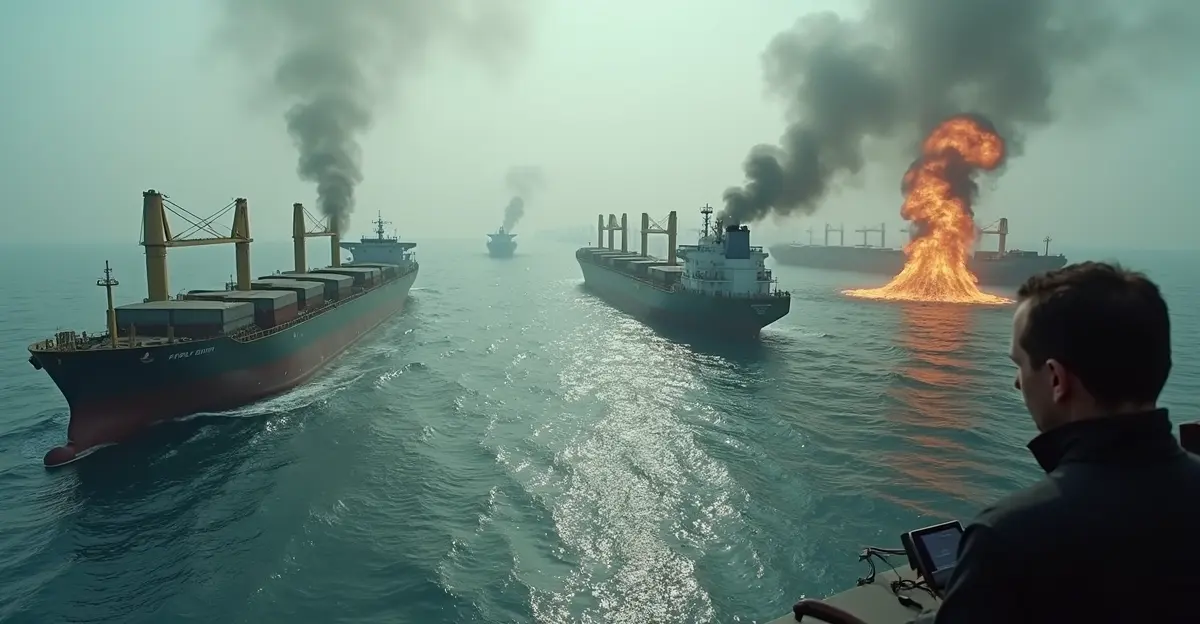
The Strait of Hormuz Shock of 2026 is reshaping global energy markets and economic stability after a military conflict involving Iran erupted in late February 2026. Attacks on Gulf oil infrastructure and shipping forced the closure of the strait, removing nearly 20% of global oil supplies and triggering the largest monthly oil price surge on record. Brent crude spiked about 65% by end-March before easing on a temporary ceasefire, while Dallas Fed models project West Texas Intermediate at $98 to $132 per barrel and global GDP growth contraction of up to 2.9 percentage points in Q2 2026.
What Is the Strait of Hormuz Shock?
The Strait of Hormuz is a narrow maritime chokepoint between Oman and Iran through which roughly one-fifth of the world's oil and much of its LNG pass daily. The 2026 Hormuz shock refers to the sudden closure and disruption of this route after military strikes on February 28, 2026. Unlike past shocks, this event removed supply three to five times larger than the 1973, 1979, 1980, and 1990 disruptions, according to the Federal Reserve Bank of Dallas. The shock has forced global oil supply chains to reassess reliance on a single maritime artery.
How the 2026 Hormuz Disruption Unfolded
The crisis escalated after military conflict between Iran, the United States, and Israel on February 28, 2026. Missile and drone strikes damaged Gulf export terminals and tankers, prompting war-risk insurers to suspend coverage and shipping lines to halt transits. The World Bank reports global oil supply crashed by 10.1 million barrels per day in March, with a projected 3.7 million barrel-per-day deficit in Q2 2026. The 2026 Iran war has produced repeated ceasefires and re-escalations, keeping risk premiums elevated.
Economic Impact: Oil Prices, Inflation, and GDP
The price response has been historic. Brent crude surged roughly 65% ($46 per barrel) by end-March, the highest monthly rise on record. Dallas Fed researchers estimate a one-quarter closure would push average WTI to $98 per barrel in Q2 2026 and reduce annualized global real GDP growth by 2.9 percentage points. Longer closures would drive WTI to $115 to $132 and extend the contraction.
- One-quarter closure: WTI $98, GDP -2.9 percentage points annualized
- Two-quarter closure: WTI $110 to $132, headline PCE inflation +0.35 to 0.79 points
- Three-quarter closure: WTI up to $167, inflation +1.47 points
Inflation and Central Bank Policy
A one-quarter closure would lift Q4-over-Q4 U.S. headline PCE inflation by 0.35 percentage points, while a two-quarter outage adds 0.79 points, according to a Dallas Fed working paper. Central banks face a stagflation dilemma: tightening to contain inflation risks deepening the slowdown, while easing could entrench price pressures. The central bank inflation response in 2026 has been cautious and data-dependent.
Asia's Energy Vulnerability
Asia bears the brunt. The region relies on the strait for roughly 80% of crude oil and 90% of LNG imports, with Japan, South Korea, and India especially exposed. The ECB Blog notes Gulf suppliers provide over 50% of energy imports for those economies, versus about 10% for the euro area, UK, and US. Potential output losses could reach 11% for South Korea, 8% for India, and 7% for Japan. The crisis has weakened Asian currencies and forced higher interest rates across Asian import-dependent economies.
Strategic Reshaping of Energy Supply Chains
The disruption is accelerating a structural realignment. China's state-owned shippers are deploying oil tankers outside the Gulf to avoid chokepoints, according to Reuters, while Gulf producers explore alternative export routes and storage hubs. Nations are diversifying away from Gulf transit chokepoints through energy supply chain diversification, accelerating investment in pipelines, strategic reserves, and non-Gulf suppliers.
Expert Perspectives
This disruption is three to five times larger than past oil supply shocks, removing nearly 20% of global oil supplies. — Federal Reserve Bank of Dallas economists
Frequently Asked Questions
What caused the 2026 Strait of Hormuz shock?
Military conflict between Iran, the United States, and Israel on February 28, 2026 led to attacks on Gulf oil infrastructure and shipping, forcing the closure of the strait and disrupting nearly 20% of global oil flows.
How much did oil prices rise in 2026?
Brent crude surged about 65% by the end of March 2026, the largest monthly oil price increase on record, before easing on a temporary ceasefire.
What is the Dallas Fed's WTI forecast for 2026?
The Dallas Fed projects average WTI prices of $98 per barrel for a one-quarter closure, rising to $115 to $132 for longer disruptions, with a three-quarter scenario reaching $167.
Which economies are most affected by the Hormuz shock?
Japan, South Korea, India, Pakistan, and Bangladesh are most exposed due to heavy reliance on Gulf oil and LNG imports, with potential output losses of 7% to 11% in severe scenarios.
How are countries responding to the energy supply chain disruption?
Governments and shippers are diversifying away from Gulf transit chokepoints, deploying tankers outside the region, expanding strategic reserves, and investing in alternative pipelines and suppliers.
Conclusion
As the Strait of Hormuz crisis evolves, economic and geopolitical consequences will depend on closure duration and the durability of ceasefires. Even if the strait reopens, the 2026 shock has already rewritten risk assessments for global energy security. Policymakers, importers, and investors now face a new era in which global energy security 2026 requires resilience beyond a single maritime artery.



Follow Discussion