


 Deutsch
 English
 Español
 Français
 Nederlands
 Português


 Share
Share




The February 2026 closure of the Strait of Hormuz triggered the largest disruption to global energy supply since the 1970s, with Brent crude peaking above $125 per barrel and LNG prices more than doubling. This crisis, sparked by U.S.-Israeli airstrikes on Iran and Iranian retaliatory mine-laying and vessel seizures, has removed roughly 20% of daily global oil supply and 25% of seaborne LNG from markets. While developed economies tap strategic reserves and accelerate diversification, developing nations in South Asia and Sub-Saharan Africa face a compounded crisis of energy poverty, fertilizer shortages, and fiscal instability. This article analyzes how the crisis is accelerating the global energy transition, reshaping alliance structures, and exposing the fragility of a world still dependent on maritime chokepoints for critical fuel supplies.
Background: The Largest Supply Disruption in History
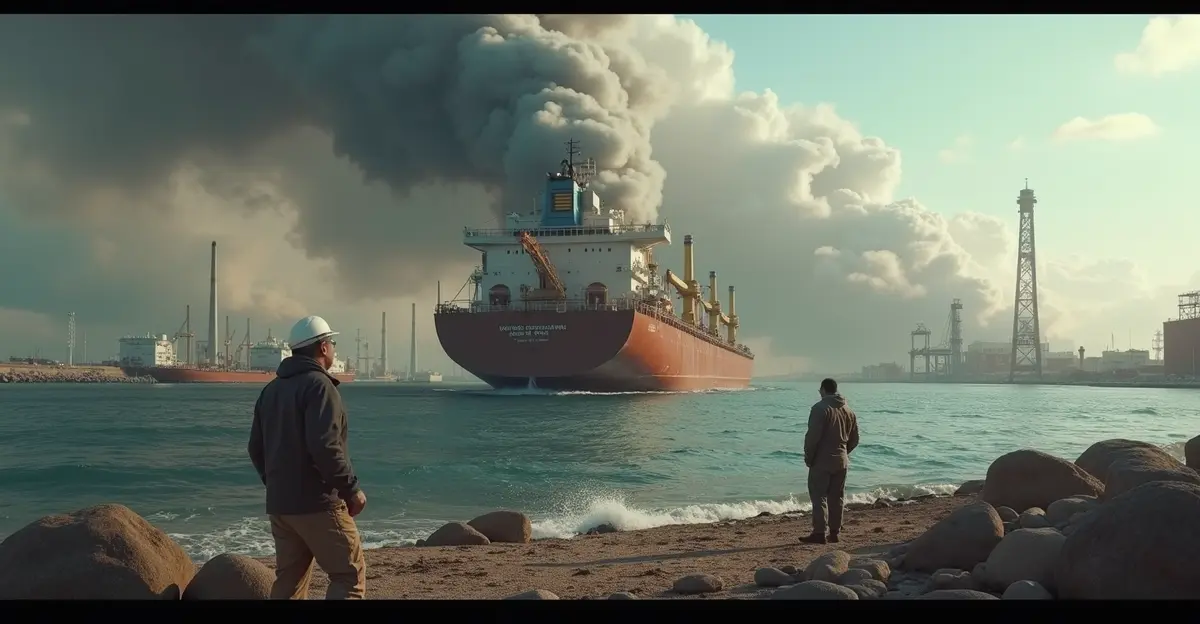
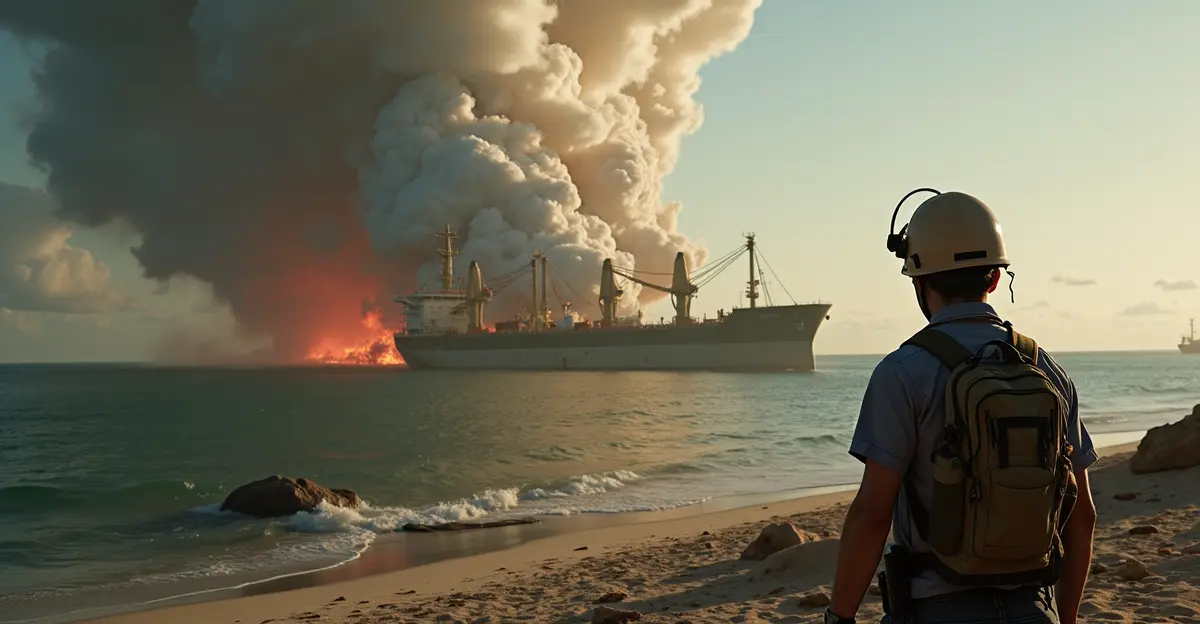
On February 28, 2026, the United States and Israel launched an air war against Iran, assassinating Supreme Leader Ali Khamenei. In response, Iran's Islamic Revolutionary Guard Corps (IRGC) effectively closed the Strait of Hormuz—a narrow waterway carrying about 20 million barrels per day of oil and 20% of global LNG trade. Ship transits collapsed from roughly 130 vessels per day to single digits, with over 800 vessels and 20,000 mariners stranded in the Persian Gulf by April. The 2026 Strait of Hormuz crisis became the largest oil supply disruption in history, dwarfing the 1973 Arab oil embargo and the 1990 Gulf War combined.
Brent crude surged from around $61 per barrel in early February to a peak of $126.41 on April 30, according to CNN. The U.S. Energy Information Administration (EIA) projected Brent would average $115 per barrel in Q2 2026. European and Asian natural gas prices more than doubled, with Asian LNG spot prices exceeding $30 per million British thermal units. The International Energy Agency (IEA) coordinated a record 400-million-barrel strategic reserve release—the largest in history—but that covered only about 16 days of lost Gulf flow.
Impact on Developed Economies: Strategic Reserves and Accelerated Diversification
OECD nations responded by drawing down strategic petroleum reserves and implementing emergency measures. The United States released crude from the Strategic Petroleum Reserve at rates not seen since the 2022 Russia-Ukraine crisis, while Japan—which imports over 90% of its crude via Hormuz—activated emergency stockpiles. The Dallas Federal Reserve estimated that a one-quarter closure would reduce global real GDP growth by an annualized 2.9 percentage points in Q2 2026, with WTI oil prices rising to $98 per barrel. A prolonged three-quarter closure could push oil to $132 per barrel and keep GDP below pre-crisis levels for years.
The crisis has dramatically accelerated energy diversification. The global energy transition acceleration is now a strategic imperative rather than a climate goal. Japan's Renewable Energy Institute released a report in June 2026 showing that Japan spent JPY 13.6 trillion ($95.2 billion) on energy subsidies between FY2022 and FY2025, arguing that structural transformation—not temporary subsidies—is the fundamental solution. The European Union fast-tracked permitting for offshore wind and solar projects, while the U.S. Department of Energy approved new LNG export licenses to supply allies. The World Economic Forum's Energy Transition Index 2026 noted that global clean energy investment reached a record $3.3 trillion in 2025, but warned that transition readiness declined for the first time in a decade due to geopolitical fragmentation.
The Developing World's Compounded Crisis
While developed economies can absorb price shocks through fiscal buffers and strategic reserves, developing nations face a far more severe crisis. According to UNCTAD's Trade and Development Foresights 2026 report, world merchandise trade growth is projected to fall to between 1.5% and 2.5% in 2026, down from 4.7% in 2025. Oil prices surged over 60% and gas prices more than doubled, triggering financial volatility across bond, equity, and currency markets. Emerging market equities fell over 12%, and currencies in energy-importing developing economies weakened sharply.
Energy Poverty and Fertilizer Shortages
The crisis extends far beyond oil. The Strait of Hormuz carries 46% of global seaborne fertilizer trade, a third of helium and methanol supplies, and half of sulfur exports. Qatar's helium plants—supplying 35% of global demand—shut down, threatening semiconductor manufacturing. The sulfur gap jeopardizes EV battery production. For developing countries, the fertilizer disruption is most acute. The region accounts for 13% of global nitrogen and 9% of phosphate fertilizer exports. UNCTAD warned that sustained disruptions could affect planting decisions, crop yields, and food availability worldwide. The UN Food and Agriculture Organization (FAO) cautioned in April 2026 that while current food prices remain stable due to existing stocks, a real supply crunch is imminent as farmers face rising fuel and fertilizer costs during planting season.
India is among the most vulnerable importers, with only 20–25 days of oil inventory cover, according to Zynergy Insights. South Asian and Sub-Saharan African nations—home to 3.4 billion people in debt-vulnerable countries—face a perfect storm of energy poverty, food insecurity, and fiscal instability. The IMF warned that the crisis could push tens of millions into poverty and trigger a global recession if the disruption persists. The developing countries energy crisis 2026 is compounding existing debt burdens, with many nations unable to afford emergency fuel imports or fertilizer subsidies.
Reshaping Alliance Structures and Geopolitical Alignments
The crisis is fundamentally reshaping global alliance structures. The U.S.-Iran conflict has created a dual blockade: Iran blockading the Gulf and the U.S. Navy blockading Iranian ports. The April 2026 Islamabad Talks failed, leading to Operation Project Freedom—a U.S. Navy mission to escort merchant ships out of the Gulf—which was paused in May due to tentative progress. A fragile ceasefire in June led to a memorandum of understanding between President Trump and Iranian President Masoud Pezeshkian, but the strait remains contested.
The crisis has exposed the fragility of a world dependent on maritime chokepoints. According to McKinsey data cited by Informed Clearly, 72% of executives now cite geopolitical instability as the biggest risk to global conditions. Saudi Arabia and the UAE are accelerating alternative pipeline routes to bypass Hormuz, while Qatar and Kuwait remain structurally exposed. The Atlantic Council's 2026 Global Energy Agenda notes that geopolitical tensions are now the dominant force disrupting energy systems, with roughly half of survey respondents citing conflict as the greatest driver of disruption in 2025.
The global energy alliance restructuring 2026 is seeing new partnerships emerge. China, which imports 38% of Hormuz oil, has deepened energy ties with Russia and Central Asian suppliers. India is pivoting toward U.S. LNG and African oil. European nations are accelerating the Mediterranean energy corridor. The crisis has also revived discussions about the International Maritime Organization's role in securing chokepoints and the need for a multilateral framework to guarantee freedom of navigation.
Expert Perspectives
The closure of the Strait of Hormuz is not just an energy crisis—it is a structural shock to the entire global economic system, said Dr. Fatima Al-Sayed, a geopolitical risk analyst at the Gulf Research Center. Developing economies are bearing the brunt because they lack the fiscal space and strategic reserves that wealthy nations take for granted.
Wood Mackenzie outlined three scenarios in a May 2026 report: 'Quick Peace' (strait reopens by June, Brent around $80/bbl by year-end), 'Summer Settlement' (reopens by September, global GDP below 2%), and 'Extended Disruption' (closed through end of 2026, global recession, oil near $200/bbl). The Dallas Fed's modeling supports the view that even after reopening, real GDP would remain below pre-closure levels for years.
FAQ
What caused the Strait of Hormuz closure in 2026?
The closure was triggered by U.S.-Israeli airstrikes on Iran on February 28, 2026, which assassinated Supreme Leader Ali Khamenei. In retaliation, Iran's IRGC mined the strait, boarded vessels, and issued warnings forbidding passage, effectively shutting the waterway to most commercial traffic.
How high did oil prices go during the crisis?
Brent crude peaked at $126.41 per barrel on April 30, 2026, according to CNN. The EIA projected a Q2 2026 average of $115 per barrel. In a worst-case scenario, Wood Mackenzie estimated oil could reach $200 per barrel if the disruption extended through end of 2026.
Which countries are most affected by the crisis?
Energy-importing developing economies in South Asia (especially India, with only 20–25 days of oil cover) and Sub-Saharan Africa are most vulnerable. Major oil importers China (38% of Hormuz oil), India (15%), South Korea (12%), and Japan (11%) face severe supply risks. Fertilizer-dependent nations like Brazil, Sudan, and Tanzania also face acute food security threats.
How is the crisis accelerating the energy transition?
The crisis has made energy security a strategic priority, accelerating investment in renewables, domestic production, and alternative supply routes. Japan, the EU, and India have fast-tracked clean energy projects. Global clean energy investment reached a record $3.3 trillion in 2025, and the crisis is expected to boost 2026 figures further.
What are the long-term geopolitical implications?
The crisis is reshaping alliances, with China deepening ties with Russia and Central Asia, India pivoting to U.S. LNG, and Europe accelerating Mediterranean energy corridors. It has exposed the fragility of maritime chokepoints and revived calls for multilateral frameworks to guarantee freedom of navigation. The Atlantic Council warns that geopolitical rivalry will define energy system risks through the decade.
Conclusion: A Defining Strategic Challenge
The Strait of Hormuz shock of 2026 is more than a temporary supply disruption—it is a watershed moment that is accelerating the global energy transition, reshaping alliance structures, and exposing the deep vulnerabilities of a world still dependent on a single maritime chokepoint for critical fuel supplies. With UNCTAD projecting global merchandise trade growth to fall below 2.5% and the IMF warning of reduced global GDP growth by 0.7–1.0 percentage points, the intersection of energy security, geopolitical confrontation, and developing-economy vulnerability represents the defining strategic challenge of the year. The 2026 energy crisis global impact will be felt for years to come, as nations race to build more resilient, diversified, and sovereign energy systems.

Follow Discussion