


 Deutsch
 English
 Español
 Français
 Nederlands
 Português


 Share
Share




The Largest Oil Supply Shock in History
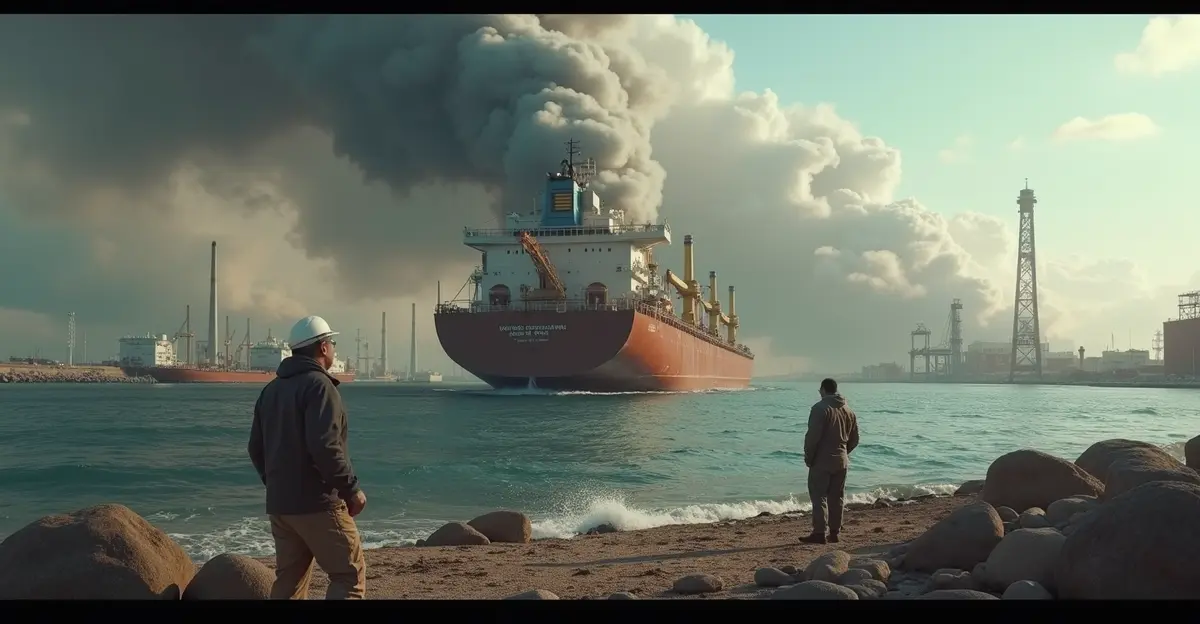
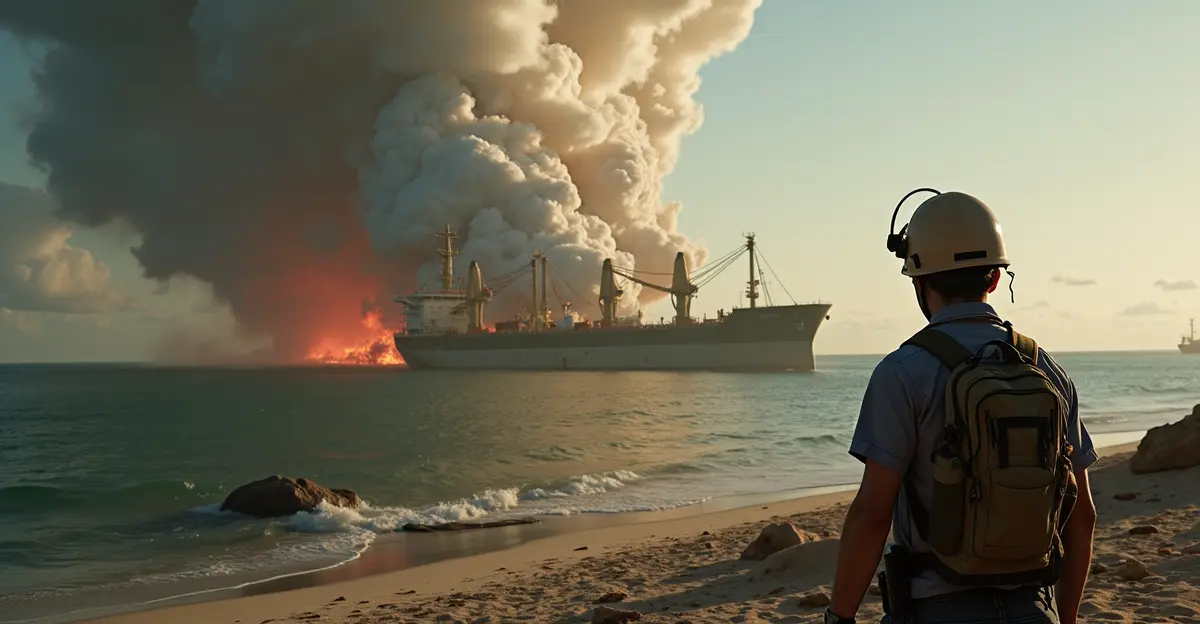
In early 2026, the Strait of Hormuz—a narrow waterway carrying 25% of the world's seaborne oil and 20% of its liquefied natural gas—became the epicenter of the most severe energy crisis since the 1973 Arab oil embargo. Following US-Israeli air strikes on Iran on February 28, 2026, tanker traffic through the strait collapsed from roughly 20 million barrels per day (mb/d) to a trickle, triggering what the World Bank has called the largest oil supply shock on record. Brent crude surged 65% ($46 per barrel) in March alone, reaching a monthly record high, while global oil supply crashed by 10.1 mb/d—a decline steeper than any single month during the COVID-19 pandemic.
The crisis unfolded with breathtaking speed. Within days, Gulf producers including Saudi Arabia, Iraq, Kuwait, and the UAE were forced to shut in production as export routes vanished. The International Energy Agency (IEA) reported that global oil supply would plunge by 8 mb/d in March alone, with output expected to fall 6.9 mb/d year-on-year in the second quarter of 2026—the largest quarterly decline since COVID-19. By April, the World Bank Commodity Markets Outlook confirmed a market deficit of 3.7 mb/d heading into Q2, the largest on record.
Emergency Reserves and Market Response
In an unprecedented move, the 32 member countries of the IEA agreed on March 11, 2026, to release 400 million barrels from strategic petroleum reserves—the largest coordinated emergency stock release in history. The United States alone committed 172 million barrels from its Strategic Petroleum Reserve. Yet even this historic intervention proved insufficient. By mid-May, only 164 million of the pledged 400 million barrels had physically reached markets, highlighting the gap between political commitments and logistical reality.
Despite the magnitude of the disruption, oil markets exhibited what analysts have called a "deceptive calm." Brent crude, which briefly touched $120 per barrel in early March, settled around $92 by late March—up roughly $20 from pre-crisis levels but far below worst-case scenarios. The IEA Oil Market Report March 2026 attributed this relative stability to rapid trade adjustments: the United States ramped up exports, China drew down strategic stockpiles, and longer shipping routes around the Cape of Good Hope partially compensated for lost Hormuz transit. However, the IEA warned that this balance was fragile, with global inventories declining rapidly and peak summer demand approaching.
Why Markets Stayed Surprisingly Calm
The relative calm masks structural changes in energy markets. First, the financialization of oil trading has decoupled paper barrels from physical flows to some extent. Second, demand destruction has already begun: global oil consumption fell 0.8 mb/d in March and is forecast to drop another 1.5 mb/d in Q2 2026 as airlines cancel flights and industries curb output. Third, non-OPEC producers, particularly the United States, Brazil, and Guyana, have increased output by about 0.5 mb/d, partially offsetting Gulf losses. Yet analysts warn this is a temporary reprieve. The World Bank projects Brent averaging $86 per barrel in 2026, with upside risks from renewed hostilities pushing prices to $95–$115 per barrel.
Catastrophic Spillover on Developing Economies
While developed nations have emergency reserves and fiscal buffers, developing economies face the brunt of the crisis. UNCTAD's Trade and Development Foresights 2026 report warns that global merchandise trade growth will slow from 4.7% in 2025 to just 1.5–2.5% in 2026, with developing countries hit hardest. The energy shock has triggered capital flight from emerging markets, with equity indices falling over 12% in some regions.
Food security has emerged as the most acute secondary crisis. The Strait of Hormuz disruption has choked off up to 30% of internationally traded fertilizers, sending prices soaring. The FAO reported that Middle East urea prices jumped 19% and Egyptian urea rose 28% within days of the strait's closure. The World Bank projects fertilizer prices will rise 31% in 2026, threatening up to 45 million additional people with acute hunger. Countries including Sri Lanka, Bangladesh, India, Egypt, Sudan, and several Sub-Saharan African nations are most vulnerable. The FAO Chief Economist's warning highlighted that if the crisis persists beyond three months, global planting decisions for the 2026 growing season will be severely affected, reducing yields for wheat, rice, and maize.
Accelerating the Energy Transition
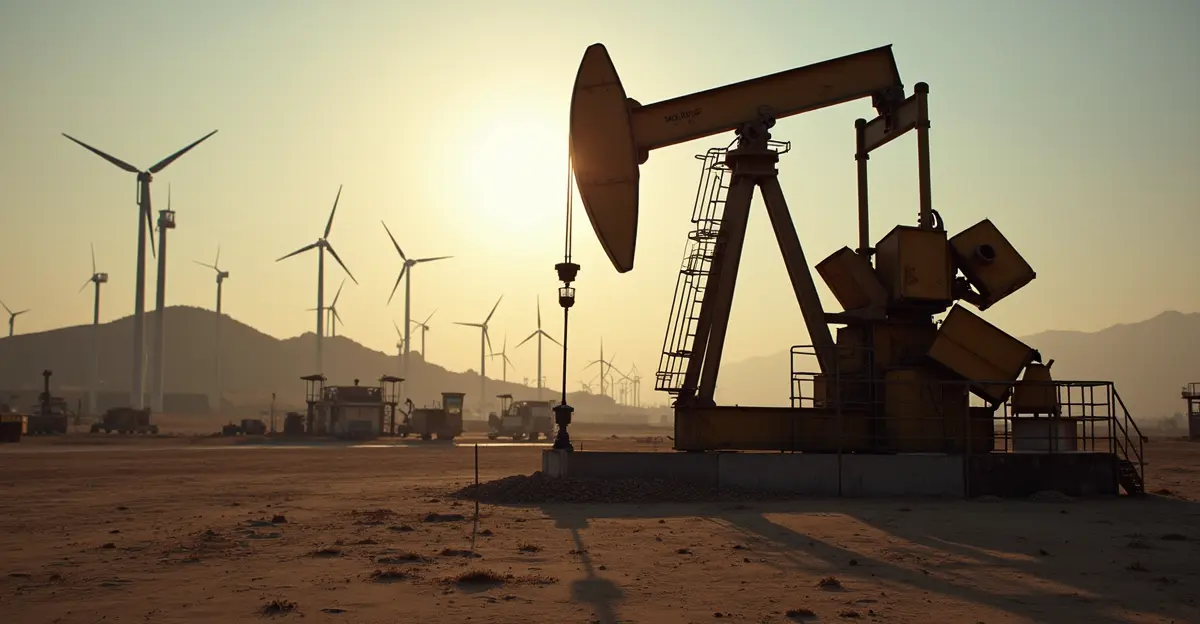
Paradoxically, the crisis has accelerated the pivot away from fossil fuels. Global renewable energy investment reached a record $2.2 trillion in 2025, and the 2026 shock has intensified pressure on governments to diversify energy sources. Asian nations, particularly Japan, South Korea, and India, are racing to expand solar, wind, and nuclear capacity. The EU's carbon pricing mechanism, already the world's most ambitious, has gained new legitimacy as a tool for reducing exposure to geopolitical supply shocks. Chatham House analysts argue that the crisis demonstrates precisely why carbon pricing is the right approach: it incentivizes the transition away from fossil fuels while strengthening energy security.
Yet the transition is not without contradictions. Despite record renewable investment, the crisis has paradoxically boosted coal demand as a stopgap, particularly in China and India, highlighting tensions between energy security and climate goals. The IEA's net-zero roadmap now faces headwinds as countries scramble for any available energy source.
Reshaping Emergency Reserve Strategies
The crisis has exposed fundamental flaws in the architecture of strategic petroleum reserves. The IEA's 400-million-barrel release, while historic, covered only a fraction of the estimated 15 mb/d net supply loss. Analysts calculate that even full drawdowns of all IEA member reserves—totaling 1.2 billion barrels—could offset only about 80 days of lost Hormuz flows. The crisis has prompted a rethinking of reserve strategies, with some nations exploring regional stockpile sharing agreements and others investing in alternative storage facilities outside the Gulf region.
The United States, which drew down its Strategic Petroleum Reserve to levels not seen since the 1980s, now faces the challenge of replenishment at higher prices. The Department of Energy has positioned the release within a broader effort to replace reserves over the following year, but the fiscal cost will be substantial.
Expert Perspectives
"This is not just an oil crisis—it is a systemic shock to the entire global energy architecture," said Dr. Fatima Al-Sayed, a senior energy analyst at the Oxford Institute for Energy Studies. "The fact that a single chokepoint can remove 10 million barrels per day from global markets overnight reveals the fragility of our just-in-time energy system."
Máximo Torero, Chief Economist of the FAO, warned: "The fertilizer price spike is already affecting planting decisions in developing countries. If the strait remains blocked through the northern hemisphere spring, we could see a food crisis that dwarfs the 2007–2008 spike."
Meanwhile, the World Bank's Commodity Markets Outlook notes that while the crisis is historic, it also presents an opportunity: "The current disruption underscores the urgent need for diversified energy sources, resilient supply chains, and accelerated investment in renewable energy and energy efficiency."
FAQ
What caused the Strait of Hormuz disruption in 2026?
The disruption followed US-Israeli air strikes on Iran on February 28, 2026, which led Iran to effectively close the strait to commercial shipping. Tanker traffic collapsed from ~20 mb/d to a trickle, triggering the largest oil supply shock in history.
How much did oil prices rise?
Brent crude surged 65% ($46/bbl) in March 2026, reaching a record monthly high. Prices briefly touched $120/bbl before settling around $92/bbl by late March. The World Bank forecasts Brent averaging $86/bbl in 2026.
How did the IEA respond?
The IEA coordinated the largest-ever emergency oil stock release of 400 million barrels on March 11, 2026. The US contributed 172 million barrels from its Strategic Petroleum Reserve. However, only 164 million barrels had been physically delivered by mid-May.
Which countries are most affected?
Developing economies are hardest hit, particularly those reliant on imported fuel and fertilizer. Countries at highest risk include Sri Lanka, Bangladesh, India, Egypt, Sudan, and several Sub-Saharan African nations. The World Bank projects 45 million additional people could face acute hunger.
Will this crisis accelerate the energy transition?
Yes. The crisis has intensified government efforts to diversify energy sources, with record investment in renewables. However, coal demand has also risen as a stopgap, creating tensions between energy security and climate goals.
Conclusion and Future Outlook
The Strait of Hormuz crisis of 2026 has redrawn global energy lines in ways that will reverberate for years. The immediate deficit of 3.7 mb/d is expected to ease if tensions subside by mid-2026, with the World Bank forecasting Brent dropping to $70/bbl in 2027 under a baseline scenario. But the structural lessons are clear: the world's reliance on a single maritime chokepoint for a quarter of its oil supply is an unacceptable vulnerability. The crisis has accelerated the search for alternative energy sources, reshaped emergency reserve strategies, and exposed the deep interconnectedness of energy, food, and financial systems. As the global energy transition gathers pace, the question is not whether the world will move away from fossil fuels, but whether it can do so quickly enough to prevent the next chokepoint crisis.
Sources
- World Bank, Commodity Markets Outlook, April 2026
- IEA, Oil Market Report, March 2026
- UNCTAD, Trade and Development Foresights 2026
- FAO, Chief Economist Warning on Strait of Hormuz, March 2026
- Chatham House, Strait of Hormuz Energy Crisis, April 2026
- IFDC, Fertilizer Crisis Response Bulletin #7, April 2026

Follow Discussion