


 Deutsch
 English
 Español
 Français
 Nederlands
 Português


 Share
Share




The February 2026 closure of the Strait of Hormuz following the outbreak of war between Iran and a US-Israel coalition has removed approximately 20% of global oil supplies from world markets, sending Brent crude above $120 per barrel and triggering the largest energy supply shock since the 1970s. As of April 2026, the strait remains effectively closed, with the International Energy Agency (IEA) and World Bank issuing urgent warnings that the crisis is rewriting the rules of global trade, energy security, and military alliances.
The Scale of the Disruption
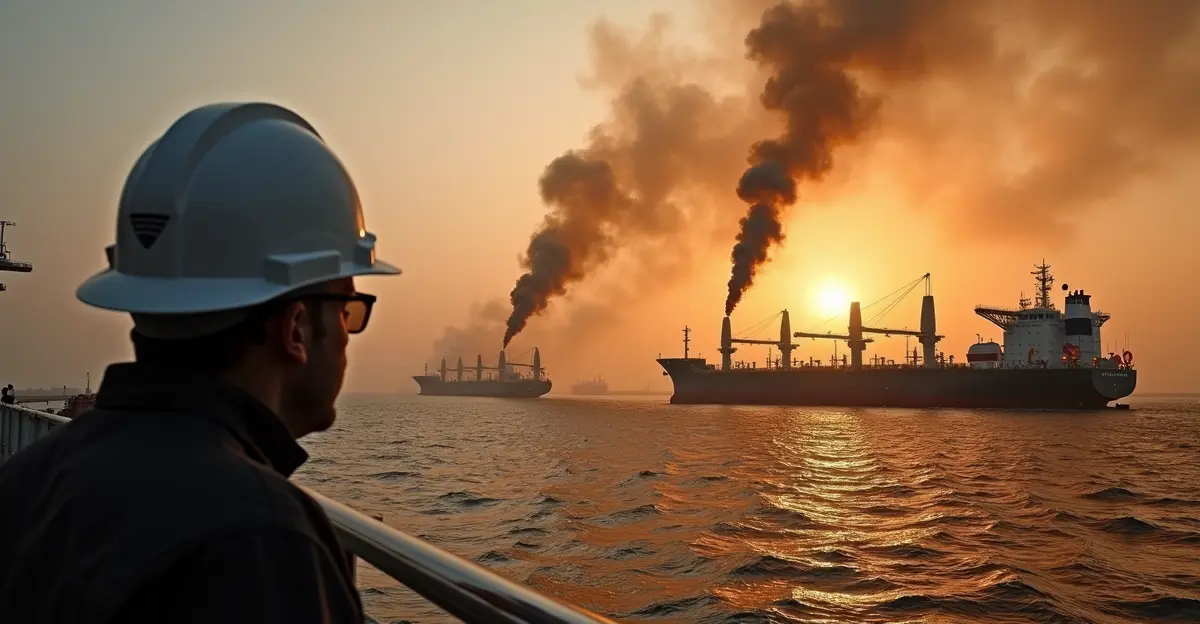
The Strait of Hormuz, a 34-kilometer-wide chokepoint between Iran and Oman, previously handled roughly 20 million barrels of oil per day—about 25% of global seaborne oil trade—along with 20% of the world's liquefied natural gas (LNG). Since Iran's Islamic Revolutionary Guard Corps (IRGC) began blocking the strait on February 28, 2026, tanker traffic has dropped by approximately 70%, with over 2,000 ships and 20,000 mariners stranded in the Persian Gulf, according to the International Maritime Organization. The 2026 Iran war fuel crisis has become the largest disruption to world energy supply in history.
Oil prices surged faster than during any other conflict in recent memory. Brent crude breached $100 per barrel on March 8 for the first time in four years, peaking at $126. The largest-ever monthly increase in oil prices occurred in March 2026. European natural gas futures rose 59%, while Asian LNG benchmark prices jumped 94% in March alone, according to the World Bank.
Macroeconomic Fallout: Inflation, Growth, and Commodity Spillovers
World Bank: Energy Prices to Surge 24%
The World Bank's Commodity Markets Outlook, released April 28, 2026, projects that energy prices will rise 24% in 2026, the biggest surge in four years. Overall commodity prices are forecast to increase 16%, driven by soaring energy and fertilizer costs. Fertilizer prices alone could jump 31%, threatening food security for up to 45 million additional people. The Bank's baseline scenario sees Brent crude averaging $86 per barrel in 2026, up from $69 in 2025, but a worst-case scenario could push oil to $115. "War is development in reverse," warned World Bank Chief Economist Indermit Gill. "The poorest people are being hit hardest."
IMF Slashes Global Growth Forecast
The International Monetary Fund downgraded its 2026 global growth forecast to 3.1% in April 2026, down from 3.3% projected in January. IMF Chief Economist Pierre-Olivier Gourinchas noted that without the Iran conflict, the IMF would have upgraded its forecast to 3.4%. Global inflation is now expected at 4.4%, up from 4.1% in 2025. The US growth forecast was trimmed to 2.3%, while the eurozone is expected to grow just 1.1%. Sub-Saharan Africa's outlook was lowered to 4.3%. The IMF's baseline assumes a short-lived conflict with a 19% rise in energy prices, but a severe scenario could see global growth drop to just 2%.
Emergency Responses and Market Interventions
In an unprecedented move on March 11, 2026, the IEA's 32 member countries unanimously agreed to release 400 million barrels of oil from emergency stockpiles—the largest such release in history. IEA Executive Director Fatih Birol warned of significant impacts on energy security, affordability, and the global economy. Japan announced it would release oil stockpiles as early as the following week.
Despite this intervention, oil prices remained extremely volatile, with Brent crude rallying to nearly $120 before settling around $90. The IEA emergency oil release 2026 provided only temporary relief as the fundamental supply gap persisted. Asian nations have been hit hardest: China halted fuel exports, South Korea implemented fuel price caps for the first time in 30 years, and Bangladesh closed universities to conserve power.
Supply Chain Rerouting and the Energy Transition
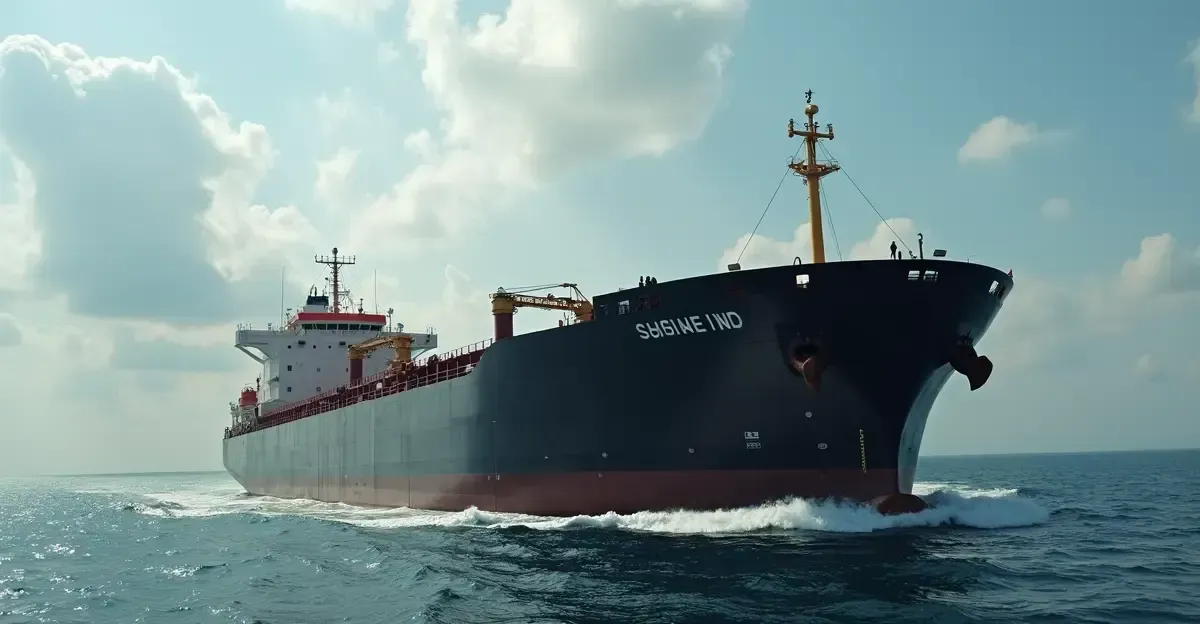
The crisis is forcing a structural re-routing of global supply chains. Shipping companies are diverting vessels around the Cape of Good Hope, adding 8 to 15 days to transit times and significantly increasing costs. Saudi Arabia and the UAE have activated bypass pipelines—the East-West and Habshan–Fujairah pipelines—but their combined capacity of 3.5 to 7 million barrels per day falls far short of the 20 million barrels per day that previously moved through the strait. These alternatives have also come under Iranian attack.
According to McKinsey data cited by analysts, 72% of executives now cite geopolitical instability as the biggest economic risk, up from 51% in late 2025. The crisis is accelerating the pivot to low-emissions energy sources as nations seek energy sovereignty. Wood Mackenzie's analysis warns that a prolonged disruption could accelerate structural changes, including faster electrification and diversification away from imported LNG. Under the worst-case "Extended Disruption" scenario—with the strait closed through end-2026—Brent crude could approach $200 per barrel, global GDP could contract by 0.4%, and the Middle East could see GDP fall by 10.7%.
Reshaping Military and Strategic Alliances
The crisis has fundamentally altered geopolitical alignments. The US launched Operation Project Freedom on May 4, 2026, a naval mission to escort merchant ships out of the Gulf, though it was paused on May 6 amid ceasefire negotiations. Several European nations and Japan initially declined US requests for military assistance, exposing fractures in traditional alliances. The 2026 Strait of Hormuz campaign has seen the US target Iranian naval vessels and drones, while Iran has attacked infrastructure in Saudi Arabia, the UAE, and Kuwait.
China, which imports nearly 90% of its oil via the Strait of Hormuz, faces immense pressure to cooperate with US-led efforts, with potential diplomatic consequences if it refuses. The crisis is also reshaping strategic calculations in the South China Sea, as nations reassess the security of critical maritime chokepoints. The dual blockade—the US Navy blockading Iranian ports while Iran blockades the Gulf—has created a unprecedented standoff that analysts say could persist for years.
FAQ
What caused the Strait of Hormuz closure in 2026?
The closure began on February 28, 2026, when the US and Israel launched an air war against Iran and assassinated its Supreme Leader, Ali Khamenei. In retaliation, Iran's IRGC blocked the strait by attacking merchant ships, laying sea mines, and issuing passage bans.
How much oil passes through the Strait of Hormuz?
Prior to the crisis, roughly 20 million barrels of oil per day—about 20% of global oil supply and 25% of seaborne oil trade—passed through the strait, along with 20% of the world's LNG.
What is the economic impact of the crisis?
The World Bank projects a 24% surge in energy prices and a 16% rise in overall commodity prices in 2026. The IMF has cut its global growth forecast to 3.1%, with inflation rising to 4.4%. Developing economies face inflation averaging 5.1% and growth downgraded to 3.6%.
How are countries responding to the supply disruption?
The IEA released a record 400 million barrels of oil from emergency stockpiles. Asian nations have implemented fuel rationing and price caps. Gulf states are scrambling to activate alternative pipeline routes, while shipping companies are rerouting via the Cape of Good Hope.
What are the long-term implications for energy and security?
The crisis is accelerating the global energy transition as nations seek to reduce dependence on fossil fuels. It is also reshaping military alliances, with traditional partners reassessing their commitments, and highlighting the vulnerability of critical maritime chokepoints.
Conclusion: A Defining Crisis for the Decade
The Strait of Hormuz shock of 2026 is not merely a temporary disruption—it is a watershed event that is rewriting the architecture of global trade, energy, and security. With the strait still effectively closed as of April 2026 and the IEA and World Bank issuing urgent warnings, the ramifications will persist for years. The crisis has exposed the fragility of a global economy built on just-in-time supply chains and concentrated energy chokepoints, and it is forcing a fundamental reassessment of how nations produce, transport, and consume energy. As the global energy supply chain restructuring accelerates, the world is entering a new era of energy security defined by redundancy, regionalization, and resilience.
Follow Discussion