


 Deutsch
 English
 Español
 Français
 Nederlands
 Português


 Share
Share




The global copper market is entering a structural deficit in 2026, marking the first sustained supply shortage since 2009. The International Copper Study Group (ICSG) now projects a 150,000-metric-ton deficit, while J.P. Morgan forecasts a steeper 330,000-ton shortfall. This copper chokepoint threatens to derail industrial policy goals across the United States, European Union, and China, as demand surges simultaneously from electrification infrastructure, AI data center buildout, electric vehicle production, and rising defense electronics needs. According to S&P Global's January 2026 study, Copper in the Age of AI, the supply gap could reach 10 million metric tons by 2040, with global mine production peaking as early as 2030.
Four Vectors of Demand Collide
Copper demand is accelerating across four concurrent vectors, creating unprecedented pressure on supply chains. The energy transition alone requires massive copper-intensive infrastructure: grid investments approached $400 billion in 2025, consuming approximately 12.5 million tonnes of copper. Electric vehicles use roughly four times more copper than conventional internal combustion engine vehicles, with EV-related demand expected to nearly double from 1.2 million tonnes in 2025 to 2.2 million tonnes by 2030.
AI data centers have emerged as a powerful new demand driver. A single hyperscale AI facility can require up to 50,000 tonnes of copper for power distribution, cooling systems, and networking infrastructure. J.P. Morgan estimates that AI data centers may consume approximately 475,000 metric tons of copper in 2026 alone. The global AI data center boom shows no signs of slowing, with major technology firms announcing record capital expenditure plans for 2026.
Defense spending adds a fourth vector. NATO's new 3.5% GDP defense spending target, adopted at the 2025 Hague summit and to be reviewed at the 2026 Ankara summit, is driving a surge in military electronics, radar systems, naval vessels, and munitions production—all heavily dependent on copper. European allies increased defense spending by 20% in 2025, with Norway becoming the first European ally to surpass the United States in defense spending per capita. The NATO defense spending surge is expected to channel hundreds of billions of euros into equipment over the next decade.
Structural Supply Constraints
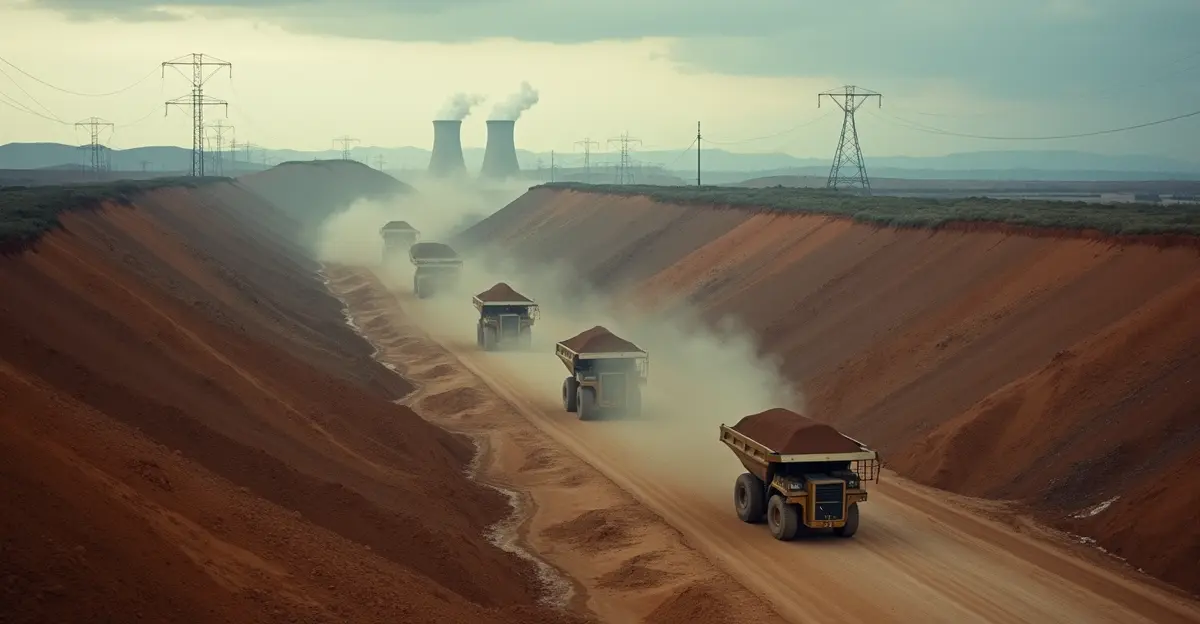
On the supply side, the copper industry faces deep structural challenges. Average ore grades have declined from 1.4–1.6% in 1990 to just 0.9% currently, meaning more rock must be processed to yield the same amount of copper. New mine development now takes an average of 16.3 years from discovery to production, with permitting timelines stretching 20–30 years in many jurisdictions. Exploration budgets remain at just $2.8 billion annually—only 28% of 2011 peak levels—creating a discovery pipeline deficit that will take 5–7 years to reverse.
Major supply disruptions have compounded the problem. The Grasberg Block Cave mine in Indonesia remains under force majeure until at least Q2 2026 following a fatal mud-inflow incident. Anglo American has downgraded output guidance from its Chilean operations. Refined production growth is projected to collapse to just 0.9% in 2026, down from 3.4% in 2025, as concentrate availability becomes a critical bottleneck.
China's dominance in copper processing adds geopolitical risk. The country now controls over 50% of global refined copper production, with its share projected to reach 57% by 2030. This concentration creates strategic vulnerabilities for Western nations pursuing critical mineral supply chain diversification.
Price Implications and Market Dynamics
Copper prices have already responded to the tightening fundamentals. The metal hit an all-time high above $14,500 per metric ton in January 2026, though prices have since retreated to around $13,000 amid geopolitical risk-off sentiment from the Iran conflict. Goldman Sachs has raised its year-end 2026 price forecast to $13,735 per ton and its 2027 average to $13,800, citing slower-than-expected mine supply growth and surging U.S. import demand.
The U.S. market faces particular strain. The country has a structural 500,000-ton annual copper deficit, with domestic refining capacity unable to meet demand. U.S. import duties have created a 30% premium between COMEX and London Metal Exchange pricing, further distorting global trade flows. The US copper import tariff impact is reshaping supply chains as buyers scramble for non-Chinese refined copper.
Strategic Responses: Recycling, Substitution, and New Capacity
Industry and policymakers are exploring three main pathways to alleviate the copper bottleneck. First, recycling offers significant potential: McKinsey estimates that increasing capture of post-consumer copper scrap could unlock substantial secondary supply while reducing emissions. The Copper Council's 2026 report highlights recycling as a risk mitigation strategy that localizes supply chains and reduces geopolitical vulnerabilities.
Second, substitution is gaining traction, though its impact remains limited. Aluminum can replace copper in some power transmission applications, but substitution currently displaces only about 1–2% of annual copper use. Advanced alternatives such as carbon nanotube fibers and high-temperature superconductors remain too expensive for broad deployment.
Third, investment in new mining capacity is essential but faces long lead times. S&P Global estimates that closing the projected 10-million-ton deficit by 2040 will require approximately $500 billion in mining investment through that year. New projects now require copper prices above $4.00 per pound to achieve 15% returns, and institutional investors are paying 15–25% valuation premiums for projects in politically stable jurisdictions.
IMF and Policy Implications
The IMF's April 2026 World Economic Outlook identifies the copper supply gap as a structural risk to global growth. The report notes that copper-intensive infrastructure is critical for both energy transition and digitalization goals, and that supply constraints could act as a brake on industrial policy ambitions. The IMF urges governments to streamline permitting for strategic mining projects while investing in recycling infrastructure and research into substitution technologies.
The IMF global growth copper risk assessment underscores the systemic nature of the challenge. Unlike previous commodity cycles, the current copper deficit is driven not by temporary demand spikes but by a fundamental mismatch between long-term structural demand and constrained supply. As the world races to electrify, digitize, and rearm, copper has become the critical chokepoint that could determine whether these ambitions are realized.
Expert Perspectives
We are witnessing a once-in-a-generation shift in the copper market, said Daniel Yergin, vice chairman of S&P Global and author of the study. The convergence of electrification, AI, and defense demand is creating a structural deficit that will require unprecedented investment in both primary production and recycling.
Analysts at J.P. Morgan caution that the deficit could deepen if economic growth remains resilient. Copper demand is highly sensitive to GDP growth, with a beta of 1.2 to global economic output, they note. Every 10% oil price rise is estimated to dampen global GDP by 0.16%, creating downside risk, but the structural demand drivers remain intact.
Frequently Asked Questions
What is causing the copper supply deficit in 2026?
The deficit is driven by surging demand from four sectors: energy transition infrastructure, AI data centers, electric vehicles, and defense electronics. Supply is constrained by declining ore grades, long permitting timelines, and operational disruptions at major mines.
How large is the projected copper deficit?
The ICSG forecasts a 150,000-ton deficit for 2026, while J.P. Morgan projects 330,000 tons. S&P Global warns the gap could reach 10 million metric tons by 2040 if supply does not accelerate.
What are the main solutions to the copper shortage?
Key solutions include scaling up copper recycling, developing substitution technologies (e.g., aluminum in some applications), and investing in new mining capacity, which requires $500 billion through 2040 according to S&P Global.
How does NATO's defense spending target affect copper demand?
NATO's new 3.5% GDP defense spending target drives demand for copper-intensive military electronics, radar, naval vessels, and munitions. European allies increased defense spending by 20% in 2025, adding a significant new demand vector.
What is the role of China in the copper market?
China controls over 50% of global refined copper production and accounts for about 58% of global copper usage. Its dominance creates strategic vulnerabilities for Western nations seeking supply chain diversification.
Conclusion and Future Outlook
The copper chokepoint of 2026 represents a systemic risk to global industrial policy goals. Without rapid scaling of recycling, meaningful substitution, and accelerated investment in new mines, the supply deficit will widen, potentially constraining economic growth and delaying the energy transition. Policymakers must treat copper as a strategic resource and act with urgency to secure supply chains for the electrified, digitized, and rearmed world of the 2030s.
Sources
- S&P Global, Copper in the Age of AI, January 2026
- International Copper Study Group (ICSG), 2026 Market Balance
- J.P. Morgan Global Research, Copper Outlook, April 2026
- IMF, World Economic Outlook, April 2026
- Goldman Sachs, Copper Price Forecast, 2026
- McKinsey & Company, Chasing the Lost Copper, 2025
- NATO Defense Spending Tracker, Atlantic Council, April 2026



Follow Discussion