


 Deutsch
 English
 Español
 Français
 Nederlands
 Português


 Share
Share




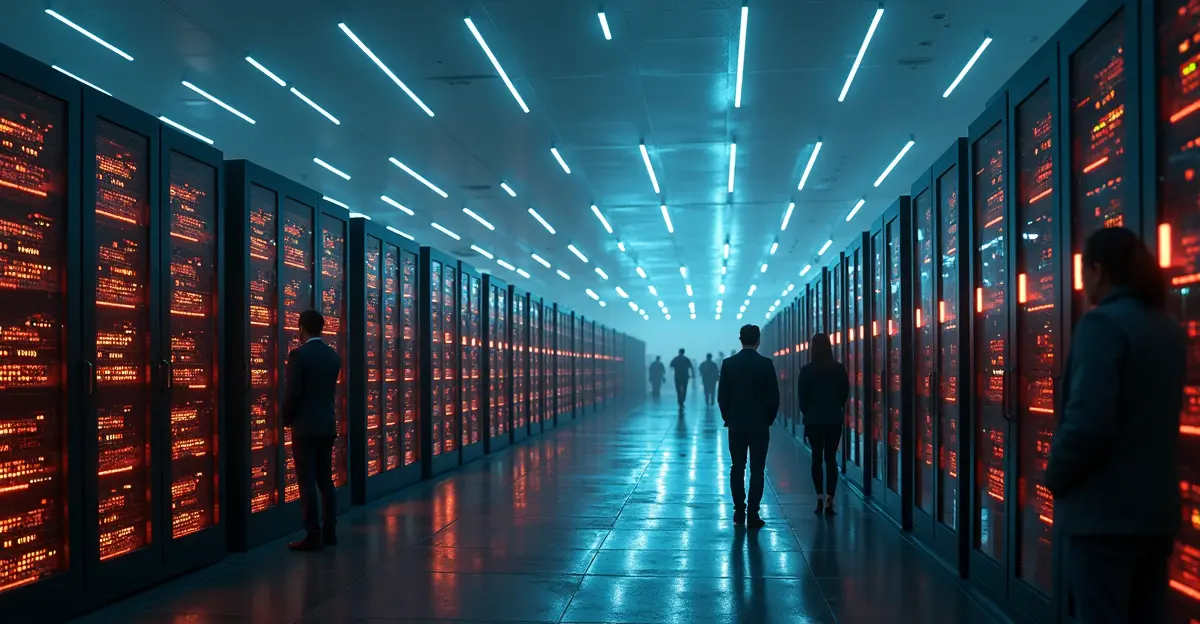
The global energy grid is facing an unprecedented crisis as artificial intelligence data centers are projected to consume 1,000 terawatt-hours (TWh) of electricity by 2026 — roughly equivalent to Japan's entire annual electricity usage. This explosive demand growth has created a structural mismatch between AI's insatiable energy appetite and aging, under-invested grid infrastructure, threatening to reshape tech strategy, energy policy, and geopolitical competition for years to come. The AI energy crisis 2026 is now the defining infrastructure story of our time.
The Scale of the Crisis
According to the International Energy Agency (IEA), global data center electricity consumption could double to over 1,000 TWh by 2026, representing approximately 3% of worldwide electricity use. Morgan Stanley forecasts that data center demand will require 126 gigawatts (GW) of new power generation capacity through 2028, with the United States alone facing a 49 GW generation shortfall. To put that in perspective, 49 GW is roughly equivalent to the entire power generation capacity of the United Kingdom.
The four largest tech companies — Amazon Web Services (95 TWh/year, up 41% year-over-year), Microsoft Azure (72 TWh/year, up 34%), Google Cloud (64 TWh/year, up 29%), and Meta AI (28 TWh/year, up 52%) — are driving this demand explosion. Despite ambitious renewable energy pledges, over 60% of data center power still comes from fossil fuels, with natural gas accounting for 38% and coal for 22%.
PJM's Capacity Market in Crisis
The PJM Interconnection, the largest power grid operator in the United States serving 67 million customers across 13 states and the District of Columbia, has become ground zero for this crisis. In its 2025 capacity auction for the 2025-2026 delivery year, PJM failed to meet its 20% installed reserve margin target for the first time in history. The auction procured 145,777 MW of capacity — falling approximately 6,625 MW short of the required reserve margin, a gap of 5.2 percentage points.
Capacity prices hit the record-high cap of $333.44 per megawatt-day, nearly ten times previous auction prices. Without a temporary price cap established with Pennsylvania Governor Josh Shapiro, prices would have reached nearly $530/MW-day. The total auction cost climbed to $16.4 billion, up 1.9% from the prior auction. The shortfall was driven almost entirely by a 5,250 MW increase in demand forecast, overwhelmingly from data centers. Gas-fired generation made up 43% of cleared capacity, followed by nuclear (21%) and coal (20%).
PJM is now anticipating future supply shortages due to expected 5% annual demand growth — compared to zero growth from 2005 to 2020 — driven by new data centers, combined with supply constraints from plant retirements and permitting difficulties for new generation. The PJM capacity auction failure has sent shockwaves through energy markets and tech boardrooms alike.
$31 Billion in Rate Hikes Hit Consumers
The cost of AI's energy appetite is being passed directly to residential customers. According to a PowerLines study, U.S. utilities requested a combined $31 billion in rate increases in 2025 — more than double the $15 billion sought in 2024. More than half of the 83 tracked cases have already been approved by state regulators, meaning millions of customers will see higher bills in 2026.
Southern states bore the heaviest burden, seeking over $14 billion in increases. Florida Power and Light alone received approval for nearly $9 billion. In Virginia — home to the world's largest data center hub in Northern Virginia — Dominion Energy residential customers face average increases of $13.60 per month by 2027. Nationwide, household electricity bills are projected to rise by $15 to $25 per month as a direct result of data center-driven grid investments.
Utilities plan $1.1 trillion in grid expansion through 2029, though some researchers warn of potential overbuilding based on inflated demand forecasts. The issue has drawn White House attention, with President Trump vowing to protect ratepayers and Microsoft pledging to "pay its own way" for electricity.
$64 Billion in Projects Blocked by Local Opposition
Community resistance has become a major financial risk for the data center industry. According to industry tracking, $64 billion worth of data center projects have been blocked or delayed since mid-2024. Project cancellations surged from just 2 in 2023 to 25 in 2025, with $18 billion in projects fully blocked and $46 billion delayed by six months or more.
At least 188 organized opposition groups now operate across 40 states, and 14 states have enacted or proposed moratoriums on data center development. Key community concerns include water consumption (cited in over 40% of contested projects), rising energy costs, and noise pollution. The opposition is bipartisan — 55% Republican, 45% Democratic. In Warrenton, Virginia, every council member who supported Amazon's data center project was voted out of office. Developers now face delays averaging 18 to 24 months, threatening project economics entirely.
Big Tech Turns to Nuclear Power
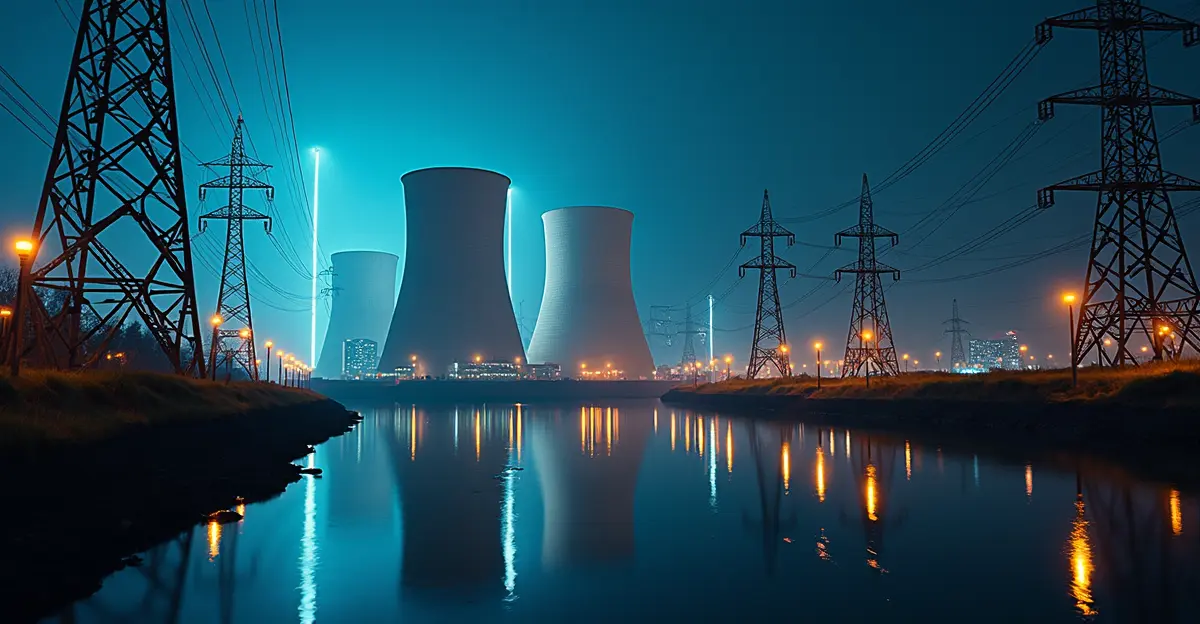
Facing grid constraints and community opposition, tech giants are pursuing nuclear energy with unprecedented urgency. Microsoft has signed a landmark 20-year power purchase agreement with Constellation Energy to restart Three Mile Island Unit 1 — rebranded as the Crane Clean Energy Center — in Pennsylvania. The 835-megawatt reactor, offline since 2019, will deliver carbon-free baseload power exclusively for Microsoft's AI data centers. The $1.6 billion revival project is backed by a $1 billion federal loan from the Department of Energy, approved in November 2025, and targets a return to service by late 2027.
Amazon, Google, and Oracle are investing in small modular reactors (SMRs), though none are commercially operational yet. The Big Tech nuclear power investments signal a broader nuclear renaissance, with two other shuttered U.S. nuclear plants — Palisades in Michigan and Duane Arnold in Iowa — also aiming to resume operations this decade.
The EU AI Act Adds Regulatory Pressure
Adding to the complexity, the European Union's AI Act becomes fully enforceable in August 2026, marking the world's first comprehensive AI regulation with binding legal force. High-risk AI systems used in critical infrastructure, including energy grid operations, must undergo conformity assessments, maintain documentation, and ensure human oversight. Penalties reach up to €35 million or 7% of global annual revenue.
For energy companies operating in or serving the EU market, this creates a new compliance burden. Many AI systems already used across exploration, production, power generation, and grid operations may fall within the high-risk category. The regulation has global reach through the "Brussels Effect," affecting any company deploying AI in EU markets regardless of location.
Expert Perspectives
"The AI-energy grid collision is the defining infrastructure story of 2026, and it is unfolding right now," says energy analyst Charles Hua, CEO of PowerLines. "This is the new politics of electricity — energy affordability is now a mainstream political concern across both parties."
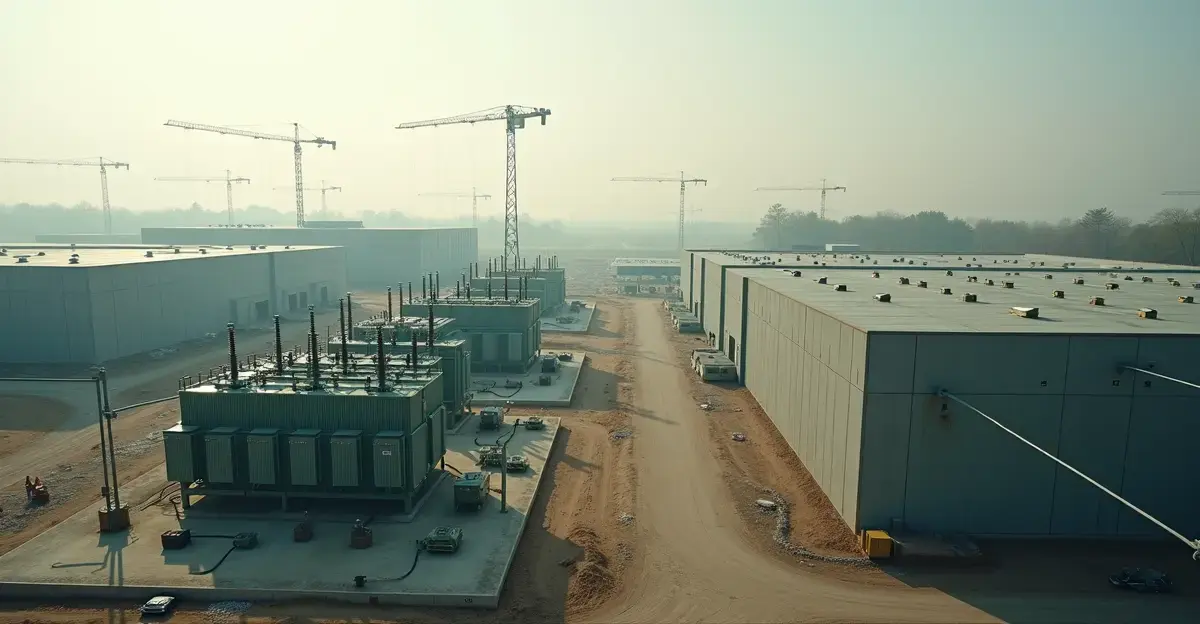
Industry experts warn that supply chain bottlenecks compound the crisis. Transformer lead times have stretched to 2-4 years, interconnection queues are backlogged, and permitting for new generation faces years of delays. The global energy infrastructure investment gap is now estimated in the trillions of dollars.
Frequently Asked Questions
How much electricity will AI data centers consume by 2026?
AI data centers are projected to consume over 1,000 TWh globally by 2026, equivalent to Japan's entire annual electricity consumption and about 3% of global electricity use.
Why did PJM's capacity auction fail in 2025?
PJM's 2025 capacity auction failed to meet its 20% reserve margin target for the first time ever, falling 6,625 MW short. The failure was driven almost entirely by a 5,250 MW increase in demand forecast from data centers, combined with plant retirements and interconnection delays.
How much are utility rates increasing due to AI data centers?
U.S. utilities requested $31 billion in rate increases in 2025 — double the prior year. Residential customers face average increases of $15-$25 per month, with some regions seeing much higher impacts.
Why are communities blocking data center projects?
Communities cite concerns over water consumption, rising energy costs, noise pollution, and strain on local infrastructure. At least 188 opposition groups operate across 40 states, and $64 billion in projects have been blocked or delayed.
What is Big Tech doing to secure power for AI?
Tech companies are signing nuclear power purchase agreements, restarting shuttered nuclear plants (e.g., Microsoft and Three Mile Island), investing in small modular reactors, and pledging to self-fund grid infrastructure to avoid passing costs to ratepayers.
Conclusion: A Defining Challenge for the Decade
The collision between AI's energy demands and aging grid infrastructure represents a systemic risk that will reshape technology strategy, energy policy, and geopolitical competition for years. With the EU AI Act taking full effect in August 2026, PJM's capacity market in crisis, and Big Tech restarting nuclear reactors, the AI-energy grid collision is the defining infrastructure story of 2026 — and it is unfolding right now. The $1 trillion power gap is not a future problem; it is a present crisis demanding immediate action from policymakers, utilities, and the tech industry alike.


Follow Discussion