


 Deutsch
 English
 Español
 Français
 Nederlands
 Português


 Share
Share




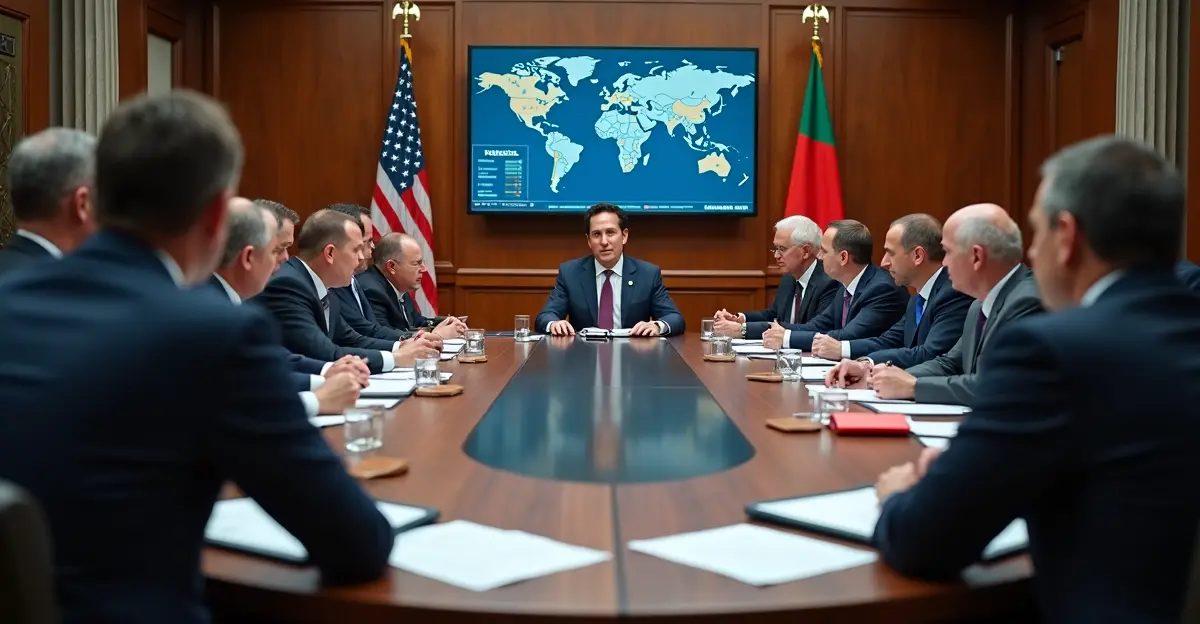
In February 2026, the rare earth race entered a decisive phase. When Secretary of State Marco Rubio welcomed delegates from 54 countries and the European Commission to Washington on February 4, the gathering produced 11 new bilateral critical minerals frameworks and launched FORGE, a trade-and-investment zone designed to break China's chokehold on minerals powering electric vehicles, defense systems, and AI. Control over lithium, cobalt, and rare earths is redrawing the geopolitical map.
The 2026 Critical Minerals Ministerial marked the year's most consequential strategic development in resource geopolitics. The United States signed new frameworks with Argentina, the Cook Islands, Ecuador, Guinea, Morocco, Paraguay, Peru, the Philippines, the UAE, the UK, and Uzbekistan, adding to 10 earlier agreements. Washington mobilized more than $30 billion in support within six months, according to the U.S. State Department.
What Are Critical Minerals and Why Do They Matter Now?
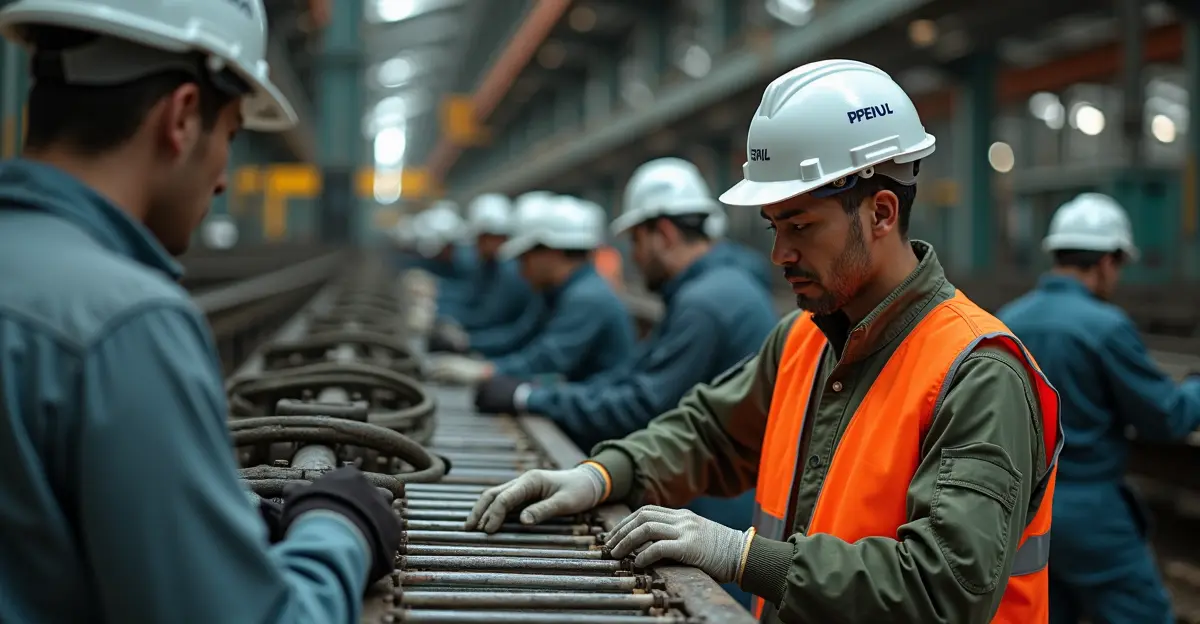
Critical minerals are raw materials essential to modern technology and defense that face supply-chain vulnerability. The U.S. Geological Survey's 2025 list includes all 60 minerals covered by the new strategic critical minerals reserve. Rare earths—17 elements used in magnets, lasers, and electronics—sit at the center of the contest. Rare earth processing remains the sharpest chokepoint: China refines roughly 90% of global output, 80% of tungsten, and 60% of antimony.
China's 15th Five-Year Plan and the 80% Chokepoint
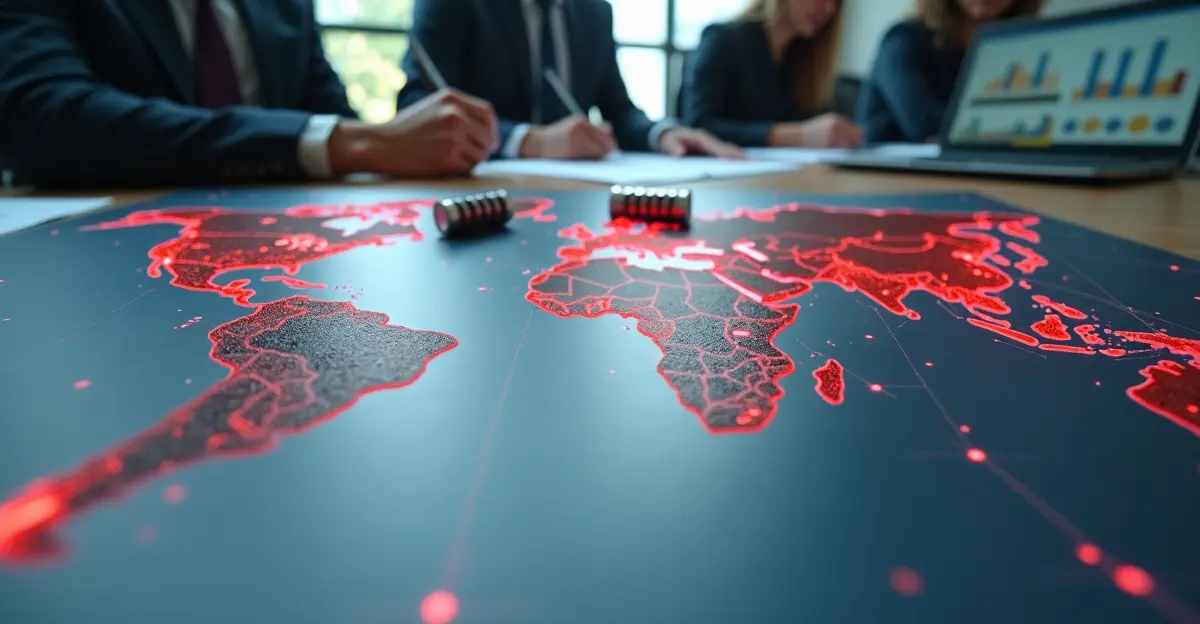
Beijing's 15th Five-Year Plan (2026–2030) is expected to cement control over about 60% of refined lithium and cobalt and roughly 80% of battery-grade graphite and rare earths by 2035. China began exercising leverage in April 2025, when the Ministry of Commerce required export licenses for seven rare earth elements; October 2025 controls added extraterritorial reach. The result was a sixfold gap between European and Chinese prices, with dysprosium oxide nearly doubling to over $189 per kilogram by early 2026.
The Western Counteroffensive: FORGE, Project Vault, and ReSourceEU
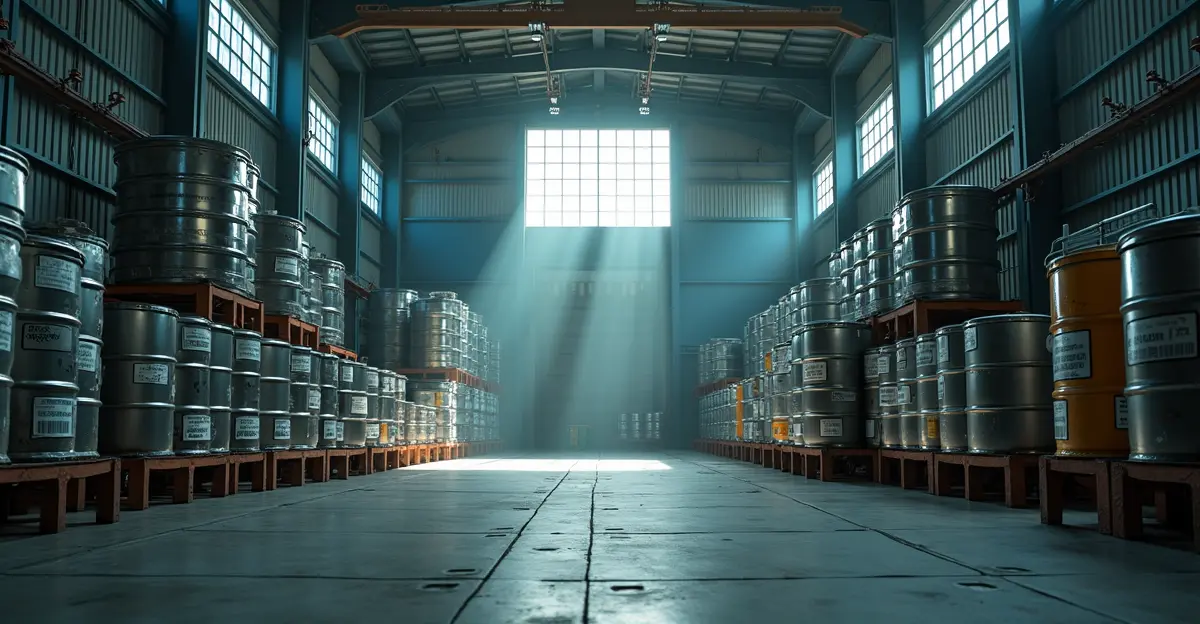
The United States responded with two instruments. FORGE—the Forum on Resource Geostrategic Engagement—replaces the Minerals Security Partnership and is chaired by the Republic of Korea through June. Project Vault is a $10 billion Export-Import Bank-backed strategic critical minerals reserve operated as a public-private partnership with manufacturers including Boeing, GE Vernova, and Western Digital.
The European Union, still dependent on China for 98% of its rare earths, adopted the €3 billion ReSourceEU plan in December 2025 and selected 60 Strategic Projects under the EU Critical Raw Materials Act. Emergency powers known as IMERA take effect May 29, 2026.
Bilateral Mining Deals From Australia to the DRC
Beyond multilateral forums, Washington is striking country-level deals. The U.S.–Ukraine Economic Partnership Framework, signed in early 2026, creates a $50 billion reconstruction fund and gives American firms first option on Ukrainian titanium, lithium, and graphite—Ukraine holds about 20% of the world's titanium and Europe's largest lithium deposits. In the DRC, which produces 73% of global cobalt, the Orion Critical Mineral Consortium and Glencore agreed in February 2026 to a roughly $9 billion deal giving the U.S.-backed group a 40% stake in the Mutanda and Kamoto copper-cobalt mines.
Impact on Alliances and Industrial Economies
The scramble is reshaping alliance structures and testing the strategic autonomy of industrial economies. Gulf states, including Saudi Arabia and the UAE, have pledged more than $100 billion to become neutral processing hubs. Analysts at CSIS describe Project Vault as a 'minerals security backstop,' while critics warn that preferential deals risk a new era of resource imperialism.
Expert Perspectives
A market vulnerable to political coercion was how U.S. officials framed the challenge at the February ministerial. The European Commission has been blunter: Europe's dependence on a single supplier for critical minerals is no longer sustainable. One Brussels analyst put the window bluntly: the West has 12 to 18 months to build alternatives before dependence becomes irreversible.
Frequently Asked Questions
Why is the rare earth race intensifying in 2026? China's export controls and 15th Five-Year Plan targets, plus the February 2026 U.S. ministerial, have turned mineral supply chains into a direct arena of great-power competition.
How much of rare earth processing does China control? Roughly 90% of global rare earth processing, plus about 80% of tungsten and 60% of antimony, with projections of 80% battery-grade graphite control by 2035.
What is Project Vault? A $10 billion EXIM-financed U.S. Strategic Critical Minerals Reserve storing all 60 USGS critical minerals, operated as a public-private partnership.
Which countries signed new U.S. frameworks in February 2026? Argentina, the Cook Islands, Ecuador, Guinea, Morocco, Paraguay, Peru, the Philippines, the UAE, the UK, and Uzbekistan.
Conclusion
The rare earth race of 2026 is no longer about geology but who refines, controls, and finances the energy transition. As FORGE, Project Vault, and ReSourceEU take shape, the next 18 months will determine whether the West achieves genuine diversification—or trades one dependency for another.

Follow Discussion