


 Deutsch
 English
 Español
 Français
 Nederlands
 Português


 Share
Share




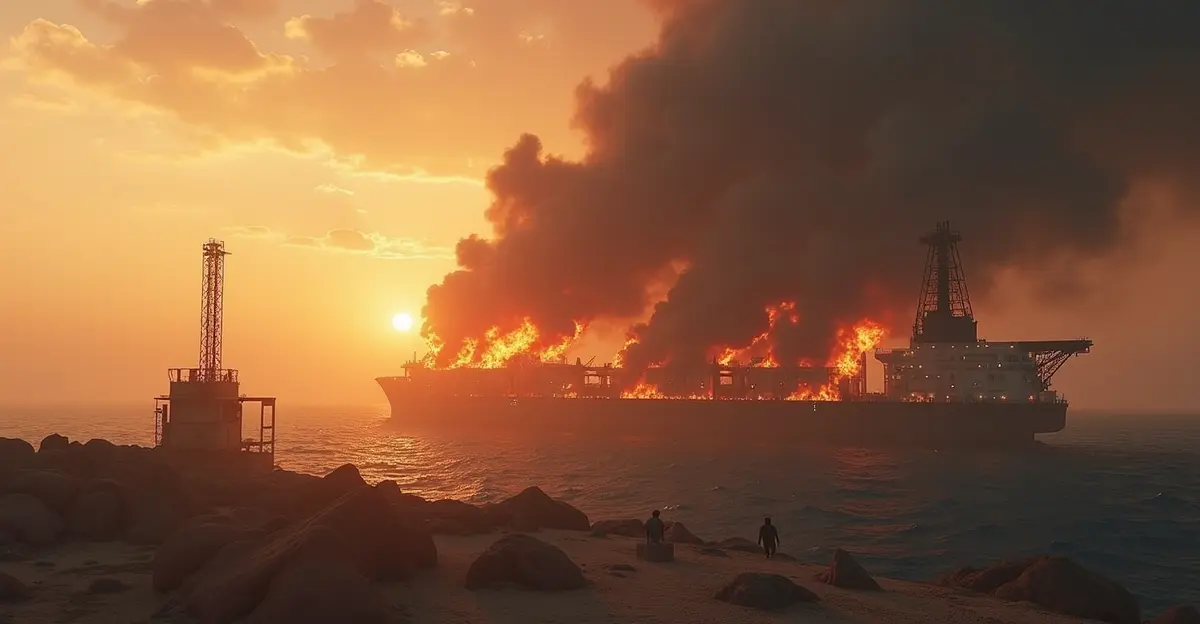
More than six months after the outbreak of the Iran war, approximately 400 ships remain stranded in the Persian Gulf while Iran claims full control of the Strait of Hormuz. The International Maritime Organization (IMO) reported on August 29, 2026, that around 6,000 crew members are also still stuck on board, underscoring the unresolved maritime crisis at one of the world's most critical oil chokepoints.
Background: The 2026 Strait of Hormuz Crisis
The crisis began on February 28, 2026, when US and Israeli military operations against Iran triggered swift retaliation. The Iranian Revolutionary Guard Corps (IRGC) forbade passage through the strait, boarded and attacked merchant ships, and laid sea mines. Before the war, roughly 20 percent of global oil trade passed through the narrow waterway. The 2026 Iran war timeline has seen repeated ceasefire attempts collapse, leaving shipping traffic far below pre-war levels.
Current Situation: 400 Ships and 6,000 Crew Stranded
According to the IMO, the situation in the Strait of Hormuz remains unresolved six months into the conflict. "Six months after the start of the conflict in the Middle East, the situation in the Strait of Hormuz is still unresolved," said IMO Secretary-General Arsenio Dominguez. He warned that the global economic impact from disrupted trade flows of oil, fertilizer, and other raw materials is severe. Since the conflict began, the IMO has recorded at least 70 attacks on international shipping, resulting in 19 deaths.
Last month, the IMO Council adopted a resolution calling for a "coordinated and sustainable return to unimpeded navigation through the Strait of Hormuz." Yet the number of vessels passing daily remains a fraction of normal. The UK Maritime Trade Operations (UKMTO) reported an average of just 29 cargo ships per day through the strait over the past week, compared with up to 130 ships per day before the war.
Iran Claims Full Control, US Disputes
Overnight, the IRGC claimed on Telegram that Iran has full control over the Strait of Hormuz. Iran says ships passing without permission will be stopped and dismisses the US assertion that the strait is open as a "flagrant lie." In contrast, Commander Brown of the US military command for the Middle East said Thursday that the entire strait had been made mine-free and international shipping could pass freely.
Shipping data tells a mixed story. While traffic has recovered from near zero in the first weeks of the war, most transits now use a US-backed Omani route or travel with transponders switched off. The Red Sea shipping disruption has further complicated global logistics, forcing many operators to reroute around the Cape of Good Hope at enormous cost.
Economic and Humanitarian Impact
The prolonged blockade of the Strait of Hormuz has pushed oil prices well above pre-war levels, disrupted fertilizer exports, and left thousands of seafarers stranded for months. Washington is pressuring Iran with an economic war, threatening to punish countries and companies that continue doing business with Tehran. Iran has announced retaliation and insists the US fulfill obligations from the now-expired June peace intention declaration. Three weeks ago, Tehran set new demands for reopening the strait, but no breakthrough has been reached.
For the 6,000 crew members still aboard anchored vessels, the humanitarian toll is mounting. Many ships are running low on supplies, and crew rotations have been impossible. The global oil price shock continues to reverberate through energy markets, with Brent crude remaining elevated as uncertainty persists.
FAQ
Why are 400 ships stuck in the Persian Gulf?
Iran's blockade of the Strait of Hormuz, ongoing since late February 2026, has prevented normal passage. Attacks, mines, and conflicting control claims have left hundreds of vessels stranded or rerouted, with about 400 still unable to leave the Persian Gulf.
Who controls the Strait of Hormuz now?
Iran claims full control and says it will stop unauthorized ships. The United States insists the strait is mine-free and open under American protection. Independent shipping data shows neither side fully controls the waterway, with most transits using a US-backed Omani route or sailing dark.
How many attacks have occurred in the Strait of Hormuz?
The IMO has recorded at least 70 attacks on international shipping since the conflict began, with 19 deaths. Attacks have included projectiles, boardings, and sea mines.
What is the economic impact of the Hormuz blockade?
The strait carried about 20 percent of global oil trade before the war. Its disruption has raised oil prices, reduced fertilizer exports, and increased shipping costs dramatically, with some VLCC transits costing up to $20 million.


Follow Discussion