


 Deutsch
 English
 Español
 Français
 Nederlands
 Português


 Share
Share




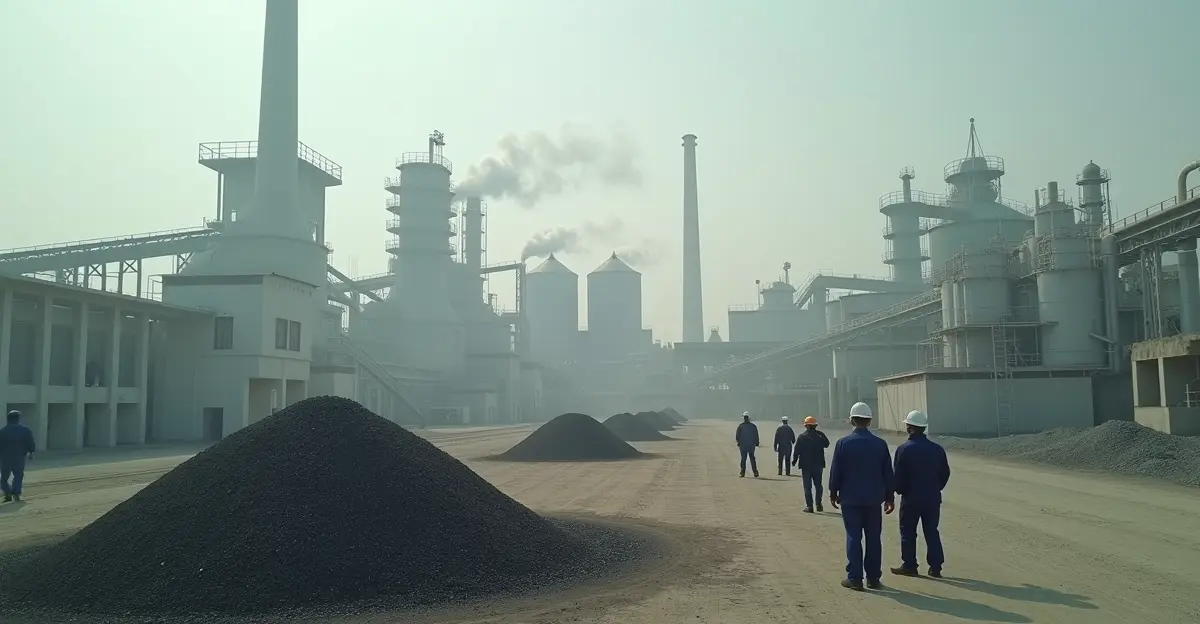
Beijing's tightened export controls on rare earths and critical minerals, implemented in early 2026, have sent shockwaves through global supply chains, triggering price spikes of up to sixfold and slashing European licensing approval rates below 25%. With China controlling roughly 90% of global rare earth processing, 80% of tungsten, and 60% of antimony, the new non-automatic licensing system has exposed a profound strategic vulnerability for Western economies reliant on these materials for defense, green energy, and advanced technology.
Context: The 2026 Export Control Regime
In early 2026, China introduced a tightened non-automatic licensing system for critical minerals, building on export restrictions first signaled in 2025. The measures require exporters to obtain specific licenses for each shipment, with approvals subject to opaque criteria. According to a multi-institutional analysis, the licensing approval rate for European firms has fallen below 25%, effectively creating a de facto export ban for many downstream users. The rare earth supply chain has been particularly affected, with prices for neodymium and dysprosium — essential for permanent magnets in EVs and wind turbines — surging sixfold since the controls took effect.
Analysts argue that Beijing is not weaponizing scarcity but rather control. By maintaining temporary, reversible restrictions, China can exert pricing power and extract strategic concessions while discouraging Western investment in alternative supply chains. Over 80% of European companies remain dependent on Chinese supply chains for critical minerals, leaving them exposed to sudden disruptions.
Western Response: FORGE Alliance and $30 Billion Push
In response, the United States launched the FORGE (Forum on Resource Geostrategic Engagement) alliance at the 2026 Critical Minerals Ministerial in Washington, D.C., on February 4, 2026. Led by Secretary of State Marco Rubio and Vice President JD Vance, FORGE brings together 54 nations and the European Commission to create a preferential trade-and-investment zone for critical minerals. The initiative succeeds the Minerals Security Partnership and is chaired by South Korea through June 2026.
The U.S. government has mobilized over $30 billion in federal financing for critical mineral supply chain projects, including $10 billion for Project Vault, a domestic strategic reserve modeled after the Strategic Petroleum Reserve. Vice President Vance has emphasized the use of adjustable tariffs to maintain reference prices across production stages, aiming to stabilize long-term mining investments. Since January 2026, the U.S. has signed 21 bilateral critical minerals framework agreements with countries including Argentina (lithium), Morocco, Peru, the Philippines, the UAE, and the UK. The FORGE alliance critical minerals framework aims to cover two-thirds of the global economy, though operational details remain unclear.
EU's Critical Raw Materials Act: Ambitious Targets, Long Timelines
The European Union has advanced its Critical Raw Materials Act (CRMA), which sets binding benchmarks for 2030: at least 10% of annual consumption from domestic extraction, 40% from processing within the EU, and 25% from recycling. The Act also mandates that no more than 65% of any strategic raw material come from a single third country. To date, the EU has designated 60 Strategic Projects across 13 member states, covering lithium, cobalt, rare earths, and nickel.
However, the CRMA faces significant hurdles. Permitting processes remain slow, and domestic mining projects often encounter local opposition. The Act's recycling targets are ambitious given current infrastructure limitations. Moreover, the EU Critical Raw Materials Act does not directly address the processing bottleneck, where China's dominance is most entrenched. Analysts warn that even with accelerated efforts, rebuilding independent processing capacity could take 20 to 30 years — far exceeding the current geopolitical window.
Impact on Defense, Green Energy, and Tech Supply Chains
The cascading effects of China's export controls are already being felt across multiple sectors. In defense, rare earths are essential for permanent magnets in precision-guided munitions, radar systems, and jet engines. The U.S. Department of Defense has flagged critical mineral supply as a national security risk, with some weapons systems facing production delays due to material shortages.
In green energy, the price surge in neodymium and dysprosium has increased costs for wind turbine manufacturers and electric vehicle producers. Several European wind farm projects have been postponed or scaled back, while automakers are scrambling to secure alternative magnet supplies. The green energy supply chain risks are particularly acute for Europe, which relies heavily on Chinese rare earth magnets for its offshore wind ambitions.
In the technology sector, rare earths are used in hard drives, speakers, and fiber optics. The semiconductor industry also depends on critical minerals like gallium and germanium, for which China controls 80% and 60% of global production, respectively. Price volatility and supply uncertainty are prompting companies to build buffer inventories, but analysts warn that stockpiling is only a temporary fix.
Expert Perspectives: A Narrow Window of Opportunity
"China is not weaponizing scarcity but control — using temporary, reversible restrictions to maintain pricing power and extract strategic concessions while discouraging Western investment in alternatives," notes a recent multi-institutional analysis. The report warns that Western nations face a narrowing 12- to 18-month window to act decisively or face prolonged vulnerability.
Other experts caution that the FORGE alliance and CRMA, while ambitious, may not be enough. "Rebuilding independent processing capacity is a generational project," says Dr. Elena Rossi, a supply chain analyst at the Center for Strategic and International Studies. "The West needs to invest not just in mining but in the entire value chain — from refining to magnet manufacturing — and that requires sustained political will and capital."
FAQ: China's Critical Minerals Export Controls
What are China's 2026 export controls on critical minerals?
China introduced a tightened non-automatic licensing system for rare earths and critical minerals in early 2026, requiring exporters to obtain specific licenses for each shipment. Approval rates for European firms have fallen below 25%, effectively restricting supply.
Why does China dominate critical mineral processing?
China controls roughly 90% of global rare earth processing, 80% of tungsten, and 60% of antimony due to decades of strategic investment in refining infrastructure, lower environmental standards, and state-backed financing.
What is the FORGE alliance?
FORGE (Forum on Resource Geostrategic Engagement) is a U.S.-led plurilateral coalition of 54 nations and the European Commission launched in February 2026 to create a preferential trade-and-investment zone for critical minerals, backed by over $30 billion in federal financing.
How is the EU responding?
The EU's Critical Raw Materials Act sets 2030 targets for domestic extraction (10%), processing (40%), and recycling (25%), and limits single-country dependency to 65%. The EU has designated 60 Strategic Projects across 13 member states.
How long will it take to rebuild supply chains?
Analysts estimate that rebuilding independent processing capacity could take 20 to 30 years, far exceeding the current 12- to 18-month geopolitical window for decisive action.
Conclusion: The Race Against Time
China's 2026 export controls have laid bare the West's strategic vulnerability in critical minerals. While the FORGE alliance and EU's CRMA represent significant steps, the gap between ambition and execution remains vast. The next 12 to 18 months will be decisive: if Western nations fail to accelerate investment in domestic processing and diversify supply sources, they risk a prolonged period of dependency on Beijing's terms. The critical minerals geopolitical race is not just about resources — it is about the future of defense, green energy, and technological sovereignty.
Follow Discussion