


 Deutsch
 English
 Español
 Français
 Nederlands
 Português


 Share
Share




China's sweeping export controls on rare earths, tungsten, and antimony, tightened in early 2026, have triggered price spikes of up to sixfold and slashed licensing approval rates for European firms below 25%, exposing a critical vulnerability in Western defense and green energy supply chains. With Beijing controlling roughly 90% of global rare earth processing, 80% of tungsten refining, and 60% of antimony production, the measures represent a strategic weaponization of industrial dominance that is rewriting global supply chain dynamics.
Context: China's Industrial Chokehold
China's dominance in critical minerals is not accidental but the result of decades of state-directed investment. According to the International Energy Agency, China accounted for about 91% of global rare earth separation and refining in 2024, and 94% of sintered permanent magnet production. The United States Geological Survey's February 2026 Mineral Commodity Summaries reported China holds 44 million tonnes of rare earth oxide reserves — the world's largest. Beyond rare earths, China controls 80% of tungsten processing and 60% of antimony refining, materials essential for defense electronics, electric vehicle motors, and wind turbine generators.
The EU Critical Raw Materials Act aims to reduce this dependency by setting 2030 benchmarks of 10% domestic extraction, 40% domestic processing, and 25% recycling of the EU's annual needs. However, current realities are stark: over 80% of European companies depend on Chinese supply chains for these minerals, and rebuilding independent processing capacity is estimated to take 20–30 years.
Price Spikes and Licensing Collapse
The impact of China's 2025–2026 export controls has been immediate and severe. Spot prices for dysprosium reached $931 per kilogram in early 2026, a 105% increase, while terbium hit $4,029 per kilogram, up 103%. Antimony prices surged from $1,400 per ton to $51,500 per ton — a 36-fold increase — and tungsten prices rose over 200%. Western markets now pay premiums of 62% to 366% compared to Chinese domestic prices.
Licensing approval rates for European firms seeking export permits from Beijing have fallen below 25% in some sectors, according to a multi-institutional analysis drawing on data from the European Parliament Research Service, OECD, and CSIS. The analysis argues that China is weaponizing control — not scarcity — using temporary, reversible restrictions to maintain pricing power and extract strategic concessions while discouraging large-scale Western alternative investment.
Western Responses: FORGE, Project Vault, and the EU Action Plan
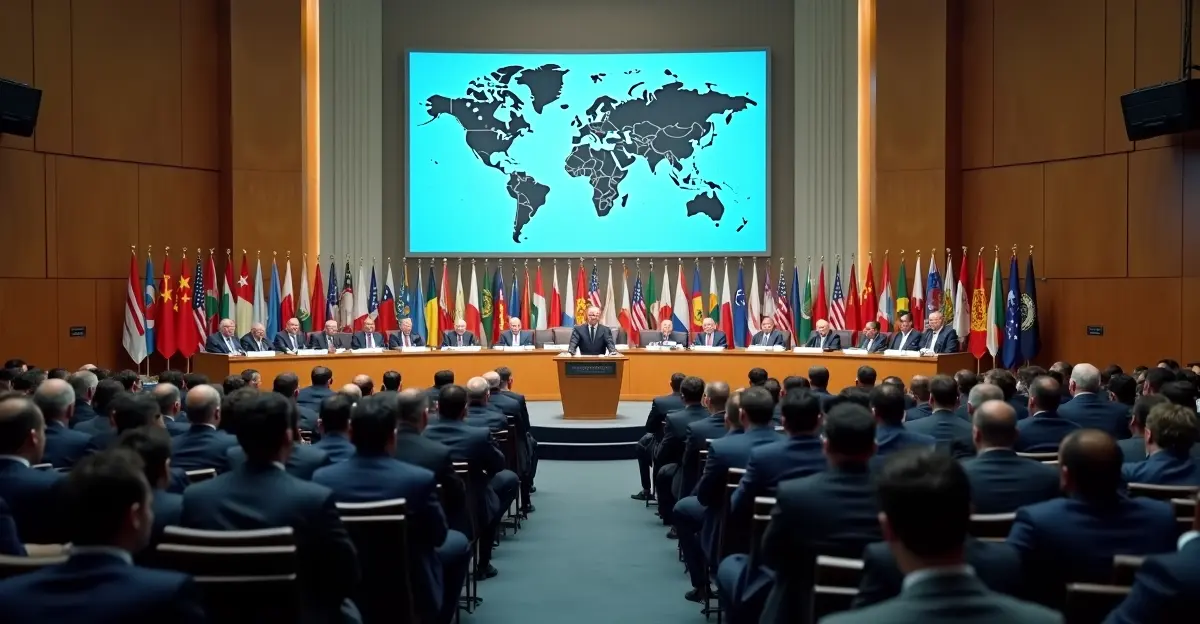
In response, the United States hosted the 2026 Critical Minerals Ministerial on February 4–5, 2026, bringing together 54 countries and the European Commission. Led by Secretary of State Marco Rubio and Vice President JD Vance, the ministerial launched the Forum on Resource Geostrategic Engagement (FORGE) as the successor to the Minerals Security Partnership, mobilizing over $30 billion in U.S. government financing for strategic minerals projects. Eleven new bilateral critical minerals frameworks were signed with countries including Argentina, Morocco, the Philippines, and the United Arab Emirates.
The U.S. also announced Project Vault, a $10–12 billion initiative backed by the Export-Import Bank to establish a Strategic Critical Minerals Reserve. Private-sector collaboration through Pax Silica partnerships aims to secure end-to-end supply chains for artificial intelligence, batteries, and advanced manufacturing. The FORGE alliance 2026 represents the most ambitious multilateral effort to date to break China's grip on critical mineral supply chains.
EU Accelerates Critical Raw Materials Strategy
The European Commission adopted the RESourceEU Action Plan in December 2025, providing €3 billion in EU funding over twelve months for critical mineral projects. A European Critical Raw Materials Centre launched in early 2026 to provide market intelligence, finance strategic projects, and manage joint purchasing and stockpiling. The EU is also streamlining mining permitting to maximum approval timelines of 27 months for extraction and 15 months for processing, while granting 'overriding public interest' status to strategic projects.
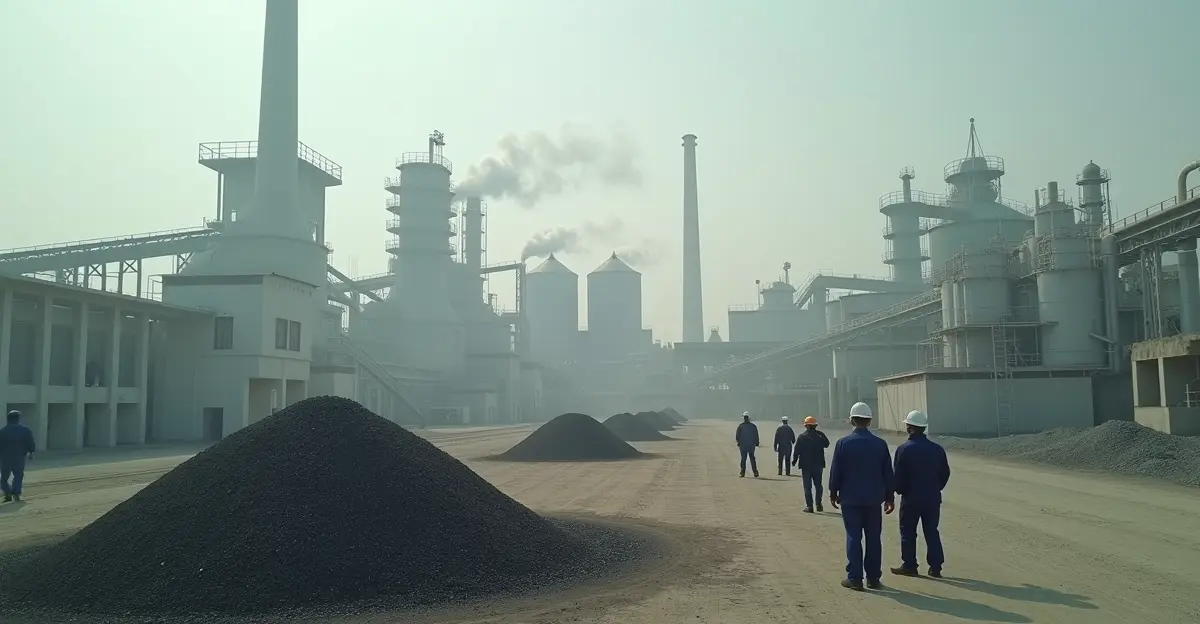
However, analysts warn that these efforts face a narrowing window. The midstream separation and refining stage — where China's 91% dominance is most entrenched — remains the critical bottleneck. Western rare earth processing capacity is virtually non-existent at commercial scale, and building it requires not just capital but specialized expertise that China has cultivated for decades.
Strategic Implications for Defense and Green Energy
The stakes extend across multiple sectors. Each F-35 fighter jet requires approximately 400 kilograms of rare earth materials. Electric vehicle motors depend on neodymium and dysprosium permanent magnets, while wind turbines use similar magnets for direct-drive generators. The defense supply chain vulnerability has become a top national security concern for NATO allies.
Non-Chinese EV manufacturers are already feeling the pinch: price spikes have added roughly $500 to the cost of each vehicle produced outside China, undermining competitiveness in a market where margins are already thin. Renewable energy projects face delays as turbine manufacturers struggle to secure magnet supplies.
Expert Perspectives: A 12–18 Month Window
The window for decisive action is narrowing rapidly, said a senior analyst at the Center for Strategic and International Studies (CSIS) who contributed to the multi-institutional report. If Western nations do not commit to large-scale processing investments within the next 12 to 18 months, China's control will become effectively irreversible for a generation.
The report outlines three strategic pathways for Western nations: accept managed dependence on China, pursue costly full independence, or adopt a hybrid model combining strategic stockpiles, allied supply chains, and targeted domestic processing. Most experts favor the hybrid approach, noting that full independence would require 20–30 years and trillions of dollars in investment.
FAQ
What critical minerals does China control?
China controls approximately 90% of global rare earth processing, 80% of tungsten refining, and 60% of antimony production. These materials are essential for defense electronics, electric vehicles, renewable energy, and advanced manufacturing.
How have China's 2026 export controls affected prices?
Prices have spiked up to sixfold, with dysprosium rising 105% to $931/kg, terbium up 103% to $4,029/kg, and antimony surging 36-fold from $1,400/ton to $51,500/ton. Western markets pay premiums of 62–366% over Chinese domestic prices.
What is the FORGE alliance?
The Forum on Resource Geostrategic Engagement (FORGE) is a 54-nation coalition launched in February 2026 as the successor to the Minerals Security Partnership. It has mobilized over $30 billion in financing for critical mineral projects and signed 11 new bilateral frameworks.
Can the West build independent supply chains quickly?
Analysts estimate full supply chain independence would take 20–30 years. The critical bottleneck is midstream separation and refining, where China's 91% dominance is strongest. Experts warn of a narrowing 12–18 month window to make decisive investments.
What is Project Vault?
Project Vault is a $10–12 billion U.S. initiative to establish a Strategic Critical Minerals Reserve, backed by the Export-Import Bank. It aims to stockpile essential minerals and reduce dependence on Chinese supply chains.
Conclusion: The Race Against Time
China's 2026 export controls have transformed critical minerals from a commercial commodity into a strategic weapon. The West's response — through FORGE, Project Vault, and the EU Critical Raw Materials Act — represents an unprecedented mobilization of resources and diplomatic capital. Yet the fundamental challenge remains: breaking China's industrial chokehold requires not just money but time, expertise, and political will. With a window of just 12 to 18 months to act decisively, the coming year will determine whether the West can secure its strategic autonomy or remain dependent on Beijing's terms.

Follow Discussion