


 Deutsch
 English
 Español
 Français
 Nederlands
 Português


 Share
Share




The global race for critical minerals—lithium, cobalt, rare earths, and copper—has long been framed as a story of scarcity. Governments in Washington, Brussels, and Beijing have poured billions into securing access to these essential inputs for electric vehicles, wind turbines, and defense systems. But a growing body of analysis, including the UNCTAD Global Trade Update (June 2026) and the ODI's 2026 critical minerals analysis, now points to an emerging oversupply of several key minerals by late 2026. This glut could depress prices, strain new processing facilities, and paradoxically deepen the world's reliance on China's state-subsidized refining capacity. The strategic question is whether consuming nations can use this window to build diversified supply chains—or whether the price collapse will stall investment and hand Beijing even greater long-term leverage.
From Scarcity to Surplus: The Supply Wave
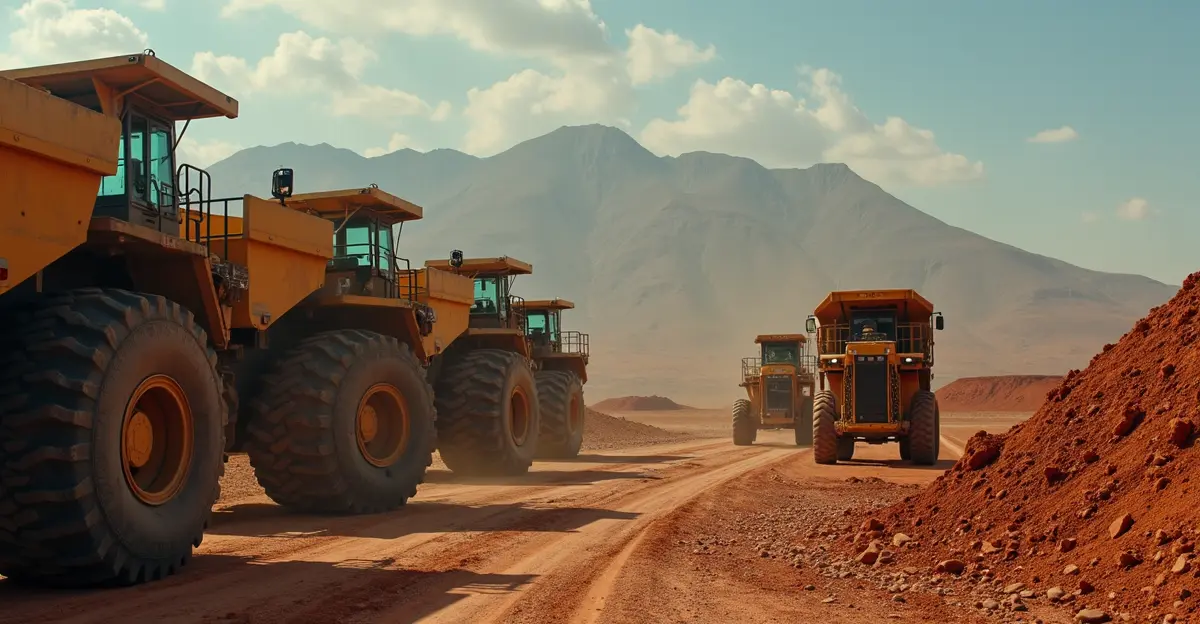
After years of underinvestment, a wave of new mining projects is coming online simultaneously. In lithium, Australian spodumene operations, Chilean brine expansions, and new African projects are flooding a market already softened by slower-than-expected EV adoption in Europe and China. Lithium carbonate prices, which peaked at over $80,000 per tonne in late 2022, have stabilized in the $13,000–$17,000 range through 2025–2026, according to industry trackers. Analysts at Skillings.net project that 2026 will be the year the clearing price finally stabilizes, but only after significant production cuts and inventory drawdowns.
For cobalt, the picture is more complex. The Democratic Republic of Congo (DRC), which produced 74.5% of global cobalt in 2024, imposed an export ban in February 2025, later transitioning to a quota system capping annual exports at 96,600 tonnes for 2026–2027. This has driven cobalt prices from a low of ~$20,000/tonne in early 2025 to over $56,000/tonne by May 2026. However, Indonesia's high-pressure acid leach (HPAL) facilities are ramping up fast, with output forecast to grow 39% to 53,318 tonnes in 2026. The global cobalt supply chain is thus caught between Congolese supply constraints and Indonesian expansion, creating a projected 10,700-tonne structural deficit for 2026.
Rare earths present a different dynamic. China controls roughly 70% of global rare earth production and nearly 90% of processing capacity. In 2025, Beijing imposed export controls on key elements like samarium, dysprosium, and terbium in response to U.S. tariffs, triggering sixfold price spikes and licensing approval rates below 25% for European firms. Yet new projects outside China—including the Wicheeda project in British Columbia and the Quad Critical Minerals Initiative Framework announced in May 2026—are beginning to materialize. The Quad partners (Australia, India, Japan, and the U.S.) have pledged up to $20 billion in government and private support to strengthen supply chains.
The Price Paradox: Low Prices, High Dependency
The oversupply dynamic is most acute for lithium and, to a lesser extent, nickel. Low prices are squeezing margins for miners outside China, many of which rely on higher-cost operations. In Australia, several lithium mines have curtailed production or deferred expansions. In Canada and the U.S., junior miners are struggling to secure financing as investor appetite wanes. This creates a vicious cycle: low prices discourage new investment, which in turn prolongs dependence on Chinese processing.
China's dominance in refining is staggering. According to the ODI analysis, China is projected to supply over 60% of refined lithium and cobalt, and roughly 80% of battery-grade graphite and rare earths by 2035. Beijing's state subsidies allow its processors to operate at lower margins than Western competitors, meaning a price collapse hits non-Chinese players hardest. As one industry executive told Informed Clearly: 'When prices fall, the Chinese state-owned enterprises can weather the storm. Private Western companies cannot.'
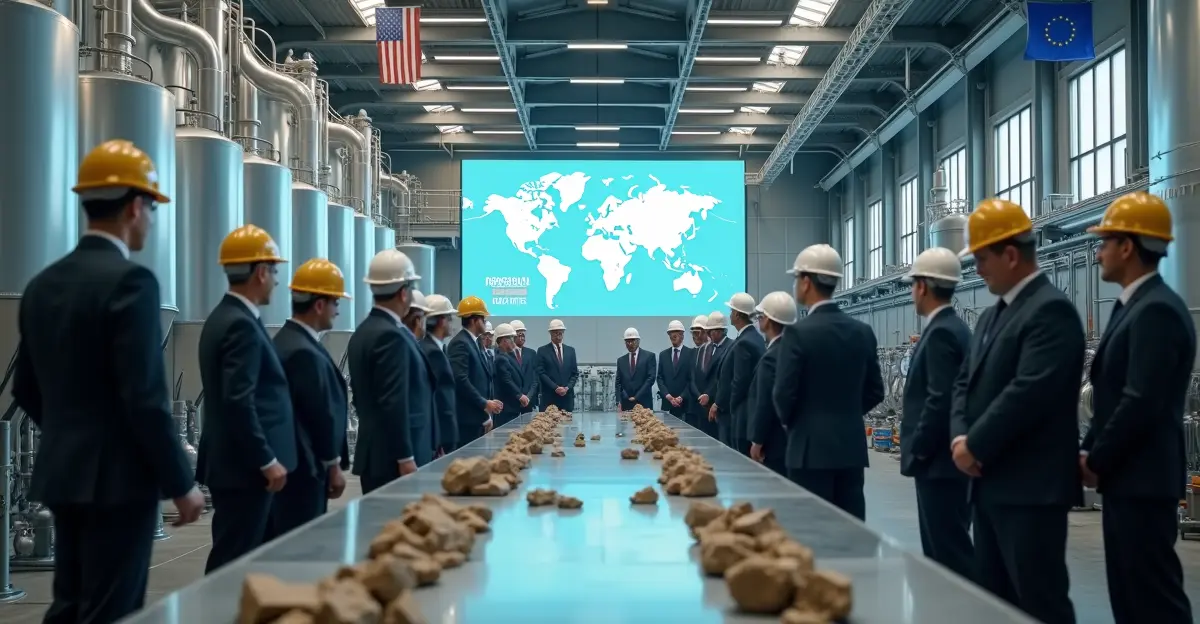
The EU Critical Raw Materials Act sets targets of 10% domestic extraction and 40% domestic processing by 2030, with €3 billion allocated. But current funding falls short, and the low-price environment makes it harder to attract private capital. The U.S. has mobilized over $30 billion through initiatives like FORGE (Forum on Resource Geostrategic Engagement) and Project Vault, a $10 billion domestic strategic reserve. Yet these efforts face headwinds: U.S. tariffs under Section 232 aim to boost domestic processing but raise costs for Western miners, further compressing margins.
Geopolitical Implications: A Narrow Window
The strategic stakes could not be higher. Critical minerals are essential not only for green technology but also for defense systems—from F-35 fighter jets to missile guidance systems. The World Economic Forum ranks geoeconomic confrontation as the top global risk for 2026. Analysts at the ODI and RUSI warn of a narrow 12-to-18-month window for Western nations to diversify supply chains before dependencies become structurally entrenched.
New actors are entering the fray. Gulf states like Saudi Arabia and the UAE are deploying over $100 billion to secure mineral assets, pivoting from oil to mineral leverage. The UAE signed a critical minerals framework with the U.S. in February 2026. Meanwhile, resource-rich nations like Indonesia, Chile, and the DRC are leveraging resource nationalism, imposing export bans, quotas, and local processing requirements.
The 2025–2026 trade war escalation has further complicated the landscape. China's export controls on rare earths and gallium have demonstrated Beijing's willingness to weaponize its processing dominance. The U.S. response—including 11 new bilateral critical minerals frameworks and the creation of FORGE—signals a recognition that business-as-usual is no longer viable. But as the UNCTAD report notes, trade in critical minerals is being reshaped by 'strong industrial policy and geopolitical competition,' not market forces alone.
Expert Perspectives
Dr. Sarah Ladislaw, a senior fellow at the Center for Strategic and International Studies, argues that the oversupply creates both risk and opportunity. 'Low prices are a double-edged sword. They make inputs cheaper for manufacturers, which is good for the energy transition. But they also undermine the business case for new mines and refineries outside China. Governments need to use this window to provide stable, long-term demand signals and de-risk investments through offtake agreements and loan guarantees.'
On the other side, Chinese analysts see the glut as a temporary hiccup. A report from the Chinese Academy of Social Sciences projects that global demand for lithium will quadruple by 2040, and for rare earths by sixfold. In this view, the current oversupply is merely a correction before a structural deficit re-emerges. China's 15th Five-Year Plan, due in 2026, is expected to double down on domestic processing capacity and overseas resource acquisitions.
FAQ: Critical Minerals and the 2026 Supply Glut
What is the critical minerals paradox?
The paradox refers to the situation where a potential oversupply of critical minerals like lithium and cobalt could lower prices, discouraging investment in new mines and processing facilities outside China, thereby increasing long-term dependence on Chinese refining capacity.
Which minerals are most affected by the 2026 oversupply?
Lithium and nickel are experiencing the most pronounced oversupply, with lithium prices stabilizing at $13,000–$17,000/tonne. Cobalt faces a mixed picture due to DRC export quotas, while rare earths remain tightly controlled by China. Copper is expected to face a deficit rather than a glut.
How is China responding to the oversupply?
China is using its state-subsidized processing capacity to maintain market share, while also imposing export controls on rare earths and other critical minerals to exert geopolitical leverage. Its 15th Five-Year Plan will likely reinforce its dominance in refining.
What are the US and EU doing to diversify supply chains?
The U.S. has launched FORGE (a 55-nation coalition) and Project Vault ($10 billion reserve), mobilizing over $30 billion. The EU's Critical Raw Materials Act sets 2030 targets for domestic extraction and processing, with €3 billion allocated. Both are pursuing bilateral agreements with resource-rich countries.
Is there still time to reduce dependence on China?
Analysts warn of a narrow 12-to-18-month window. Building competitive processing capacity outside China could take a decade or more, but strategic investments now—including offtake agreements, loan guarantees, and recycling infrastructure—could begin to shift the balance.
Conclusion: A Pivotal Moment
The critical minerals paradox of 2026 presents both a warning and an opportunity. The oversupply could lull policymakers into complacency, allowing China to consolidate its grip on the processing stage of the supply chain. Alternatively, it could provide a window for strategic stockpiling, targeted investment, and the construction of diversified, resilient supply chains. The decisions made in the next 18 months will determine whether the energy transition empowers a multipolar world or entrenches a new form of resource dependency. As UNCTAD's report makes clear, the shifting dynamics of critical minerals trade are not just an economic story—they are a geopolitical inflection point.




Follow Discussion