


 Deutsch
 English
 Español
 Français
 Nederlands
 Português


 Share
Share




The global critical minerals market in 2026 is caught in a deepening paradox: while demand for lithium, cobalt, and rare earths is projected to surge four- to sixfold by 2040, an unexpected oversupply is depressing prices and threatening the viability of new mines outside China. This glut, driven by rapid capacity additions in China, Australia, and new entrants like Saudi Arabia and the UAE, creates a strategic dilemma for Western nations racing to diversify supply chains. Low prices discourage investment in non-Chinese mining and processing capacity, risking long-term dependence on Beijing just as the window for diversification narrows.
Oversupply Amid Surging Demand: A Market Mismatch
According to UNCTAD's June 2026 Global Trade Update, lithium demand is projected to rise by over 350% by 2040, and graphite by more than 130%. Yet in 2026, lithium prices have stabilized at $13,000–$17,000 per tonne after a sharp decline from 2022 peaks, while cobalt prices are forecast at $26.20/lb (+57% YoY) but remain volatile due to DRC export disruptions. The oversupply is most acute in rare earths: S&P Global reports that despite 150+ ex-China greenfield projects and exploration budgets up 200% since 2020, China still controls 69% of mined supply, 91% of processing, and 94% of magnet production. The rare earth supply chain concentration remains the most strategically constrained segment.
Industry consultancy Project Blue warns that several rare earth markets are already heading toward surplus. The nickel market, flooded by Indonesian output, exemplifies the risk: aggressive state-backed investment created a glut that crushed prices and undermined the very industries governments sought to build. Similar dynamics now threaten lithium and cobalt markets as new supply from Australia, Chile, and Gulf entrants comes online faster than demand can absorb it.
The Geopolitical Scramble: Western Diversification vs. Chinese Dominance
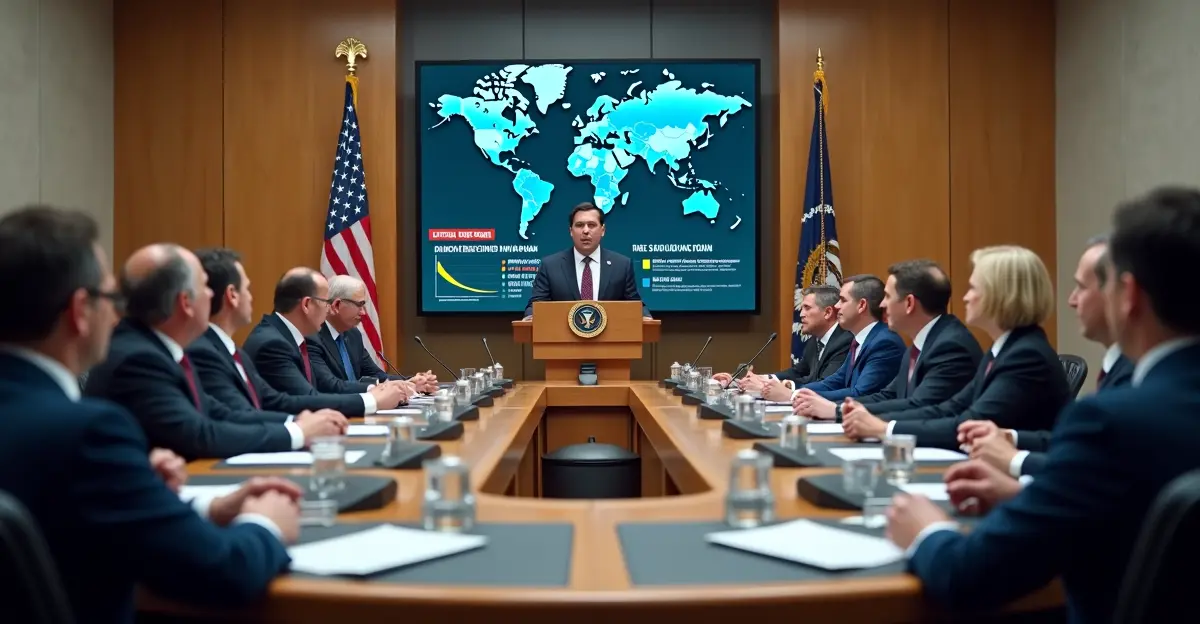
The urgency to diversify supply chains has never been greater. In February 2026, the U.S. hosted the 2026 Critical Minerals Ministerial, where Secretary of State Marco Rubio launched FORGE (Forum on Resource Geostrategic Engagement) as the successor to the Minerals Security Partnership, with 54 countries attending. The U.S. mobilized over $30 billion in letters of interest, investments, and loans for critical mineral projects, including the $10 billion Project Vault initiative to establish a Strategic Critical Minerals Reserve. Meanwhile, the EU's Critical Raw Materials Act (CRMA) selected 60 Strategic Projects from nearly 170 proposals, but financing remains insufficient. The European Commission's ReSourceEU Action Plan allocates up to €3 billion for 2026, but ODI analysis warns that current investment volumes fall short of diversification goals.
Yet China's 15th Five-Year Plan critical minerals strategy is solidifying its dominance. The plan, launched in 2026, emphasizes supply chain autonomy and higher-value processing. Projections show China supplying over 60% of refined lithium and cobalt, 80% of battery-grade graphite, and 94% of rare earth magnets by 2035. As ODI notes, the 12-18 month window for Western diversification identified by analysts is narrowing rapidly.
New Entrants: Saudi Arabia and the UAE
Adding to the complexity, Gulf states are deploying over $100 billion to secure lithium, copper, and rare earth assets. Saudi Arabia and the UAE are reshaping global supply chains, leveraging petrodollars to acquire stakes in mines from Africa to Latin America. While this increases competition and could accelerate diversification, it also risks further oversupply and raises questions about the geopolitical alignment of these new players.
US Tariff Policy and Trade Fragmentation
In January 2026, President Biden issued a proclamation under Section 232 adjusting imports of Processed Critical Minerals and Their Derivative Products (PCMDPs), citing national security threats from reliance on foreign processing. The U.S. is 100% net-import reliant for 12 critical minerals and over 50% reliant for 29 others. McKinsey's March 2026 trade update notes that US tariffs have reached their highest level since WWII, reshaping global supply chains. US-China trade fell by approximately 30%, with the US replacing about two-thirds of the gap with imports from other sellers. However, the impact of tariffs on critical mineral supply chains is double-edged: while intended to boost domestic processing, tariffs also raise costs for Western miners and processors, further discouraging investment during a price downturn.
Expert Perspectives: A Narrowing Window
The paradox is that low prices today could lock in high dependence tomorrow, says a senior ODI analyst. Without sustained policy support and financing, the diversification window will close before 2030. UNCTAD warns that fragmented trade policies could raise costs and complicate investments, calling for a more coordinated approach. Since 2020, nearly 100 export-related measures—licenses, taxes, bans—have been introduced on critical minerals, further distorting markets.
FAQ: Critical Minerals Paradox in 2026
What is the critical minerals paradox?
The paradox refers to the situation where oversupply and low prices in 2026 discourage investment in new mining and processing capacity outside China, even as long-term demand is projected to surge, risking greater dependence on Chinese supply chains.
Why is there an oversupply of critical minerals in 2026?
Rapid capacity additions in China, Australia, and new entrants like Saudi Arabia and the UAE have brought new supply online faster than demand growth, particularly for lithium, cobalt, and rare earths, depressing prices.
How does China's 15th Five-Year Plan affect critical minerals?
The plan reinforces China's dominance by prioritizing supply chain autonomy and higher-value processing. Projections show China supplying over 60% of refined lithium and cobalt by 2035, narrowing the window for Western diversification.
What is the EU doing to secure critical minerals?
The EU's Critical Raw Materials Act has selected 60 Strategic Projects and launched the ReSourceEU Action Plan with €3 billion for 2026, but financing remains insufficient to meet diversification targets.
How are US tariffs impacting critical mineral supply chains?
US tariffs under Section 232 aim to boost domestic processing but also raise costs for Western miners, potentially discouraging investment during the current price downturn, complicating diversification efforts.
Conclusion: A Race Against Time
The critical minerals paradox of 2026 underscores the tension between short-term market dynamics and long-term strategic imperatives. Without coordinated international action—combining financing, streamlined permitting, and trade policies that incentivize rather than discourage investment—the window for diversifying away from Chinese dominance may close. As UNCTAD, ODI, and McKinsey reports confirm, the next 12-18 months are decisive. The future of critical mineral supply chains hinges on whether governments can navigate this paradox before it becomes a trap.
Sources
- UNCTAD Global Trade Update, June 2026
- ODI, Critical Minerals Geopolitics in 2026
- McKinsey Global Institute, Geopolitics and the Geometry of Global Trade: 2026 Update, March 2026
- S&P Global Metals Price Outlook 2026
- European Commission, ReSourceEU Action Plan, 2026
- U.S. Department of State, 2026 Critical Minerals Ministerial
- White House, Proclamation on Adjusting Imports of PCMDPs, January 2026





Follow Discussion