


 Deutsch
 English
 Español
 Français
 Nederlands
 Português


 Share
Share




The global competition for critical minerals—lithium, cobalt, rare earth elements, and other materials essential for batteries, semiconductors, and defense technologies—has intensified dramatically in 2026, creating a new geopolitical fault line that threatens to reshape international alliances and supply chains. With China controlling roughly 90% of global rare earth processing and over 80% of battery-grade graphite, Western nations are racing to build alternative supply chains before strategic vulnerabilities become structurally entrenched. The gap between critical mineral demand and diversified supply has reached a tipping point, with new export controls, mining deals in the Global South, and G7 emergency coordination plans making this the defining resource conflict of the decade.
China's Strategic Chokehold
China's dominance in critical mineral processing is not accidental but the result of decades of strategic industrial policy. According to a multi-institutional analysis published in early 2026, China controls 90% of global rare earth processing, 80% of tungsten, and 60% of antimony—materials essential for defense electronics, electric vehicle motors, and wind turbine magnets. The 15th Five-Year Plan projects that by 2035, China will supply over 60% of refined lithium and cobalt and approximately 80% of battery-grade graphite and rare earths.
In October 2025, Beijing expanded its export control regime by adding five rare earths critical to magnets and defense applications: erbium, europium, holmium, thulium, and ytterbium. The impact was immediate and severe. Licensing approval rates for European firms fell below 25%, while prices outside China spiked sixfold—antimony reaching $59,750 per tonne from $10,000. Rather than imposing outright bans, China has employed what analysts call "weaponization of control" through temporary, reversible restrictions that maintain pricing power and extract strategic concessions while discouraging Western investment in alternative capacity.
Western Countermeasures: The U.S. and EU Response
United States: Defense Production Act and Project Vault
The United States has mobilized over $30 billion in support for critical mineral projects over the past six months. On March 20, 2025, President Trump signed a critical minerals executive order expanding the definition of "minerals" to include copper, uranium, gold, and potash, allowing them to benefit from government incentives. The order invoked the Defense Production Act (DPA), a Korean War-era law granting the president broad authority to direct private industry to prioritize production of critical materials for national defense.
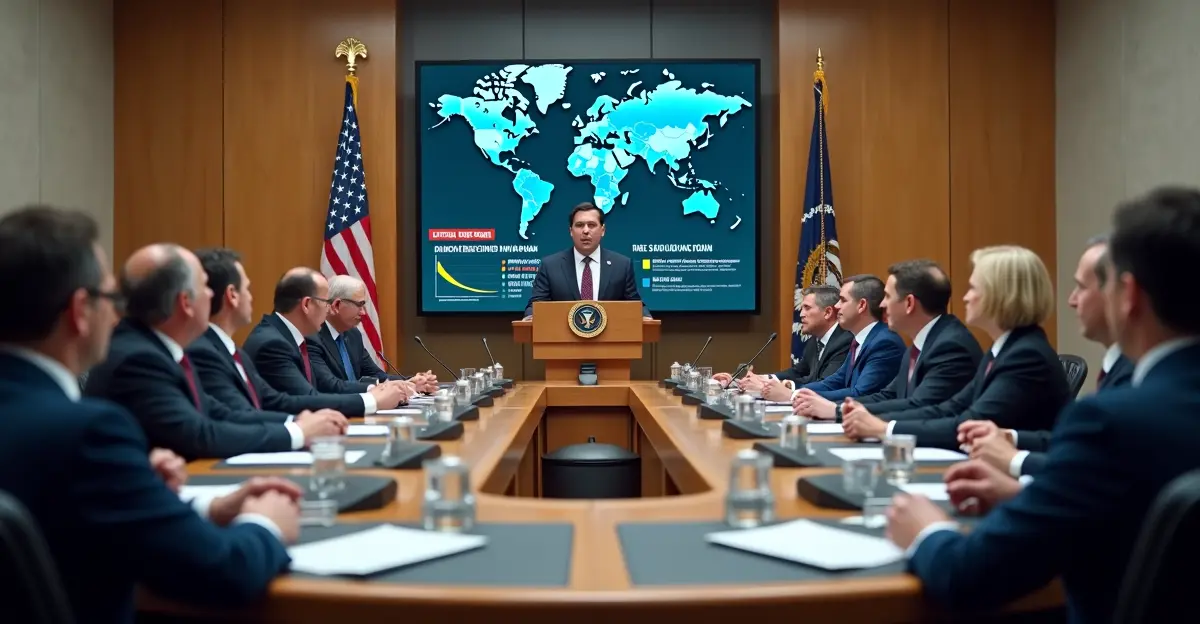
On January 14, 2026, President Trump issued a proclamation adjusting imports of processed critical minerals under Section 232 of the Trade Expansion Act, citing that the U.S. is 100% net-import reliant for 12 critical minerals and 50%+ reliant for 29 others. The centerpiece of the U.S. strategy is Project Vault—a $10 billion Export-Import Bank initiative to establish a domestic strategic reserve for critical minerals. The February 2026 Critical Minerals Ministerial, hosted by the U.S. and attended by 54 countries, launched FORGE (Forum on Resource Geostrategic Engagement) as the successor to the Minerals Security Partnership, chaired by the Republic of Korea. The U.S. also signed 11 new bilateral critical minerals frameworks with countries including Argentina, Morocco, the Philippines, and the UAE.
European Union: Critical Raw Materials Act
The EU's Critical Raw Materials Act (CRMA), which came into effect in May 2024, set ambitious 2030 benchmarks: 10% extraction, 40% processing, and 25% recycling of EU consumption domestically, with no more than 65% from any single third country. On March 25, 2025, the European Commission announced 47 Strategic Projects under the CRMA, spanning 13 EU Member States and covering 25 extraction, 24 processing, 10 recycling, and 2 substitution projects. Key raw materials addressed include lithium (22 projects), nickel (12), graphite (11), cobalt (10), and manganese (7).
However, the EU struggles to scale financing. The RESourceEU Action Plan targets €3 billion by 2029—still far short of the estimated €22.5 billion in capital investment needs. Over 80% of European companies remain dependent on Chinese supply chains for critical minerals, and rebuilding independent alternatives is estimated to require 20-30 years. The EU Critical Raw Materials Act faces a credibility test as member states grapple with permitting delays and financing gaps.
The Global South: New Battleground for Mining Deals
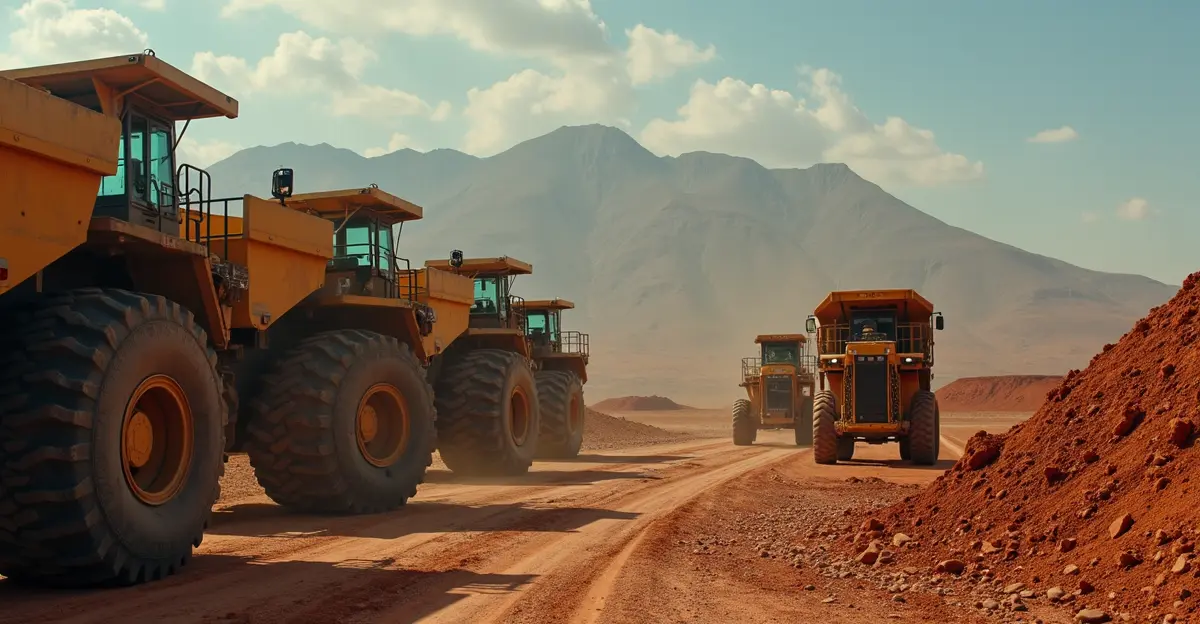
As Western nations scramble to secure supply, the Global South has emerged as a strategic battleground. Africa and Latin America hold vast reserves of critical minerals: the Democratic Republic of Congo dominates cobalt production, Chile and Argentina control the world's largest lithium reserves, and Brazil and Peru hold significant rare earth deposits. In 2026, competition for access to these resources has intensified, with China, the U.S., and the EU all pursuing bilateral mining deals and infrastructure investments.
The U.S. has signed new MOUs with Argentina, Morocco, and the Philippines, while China continues to lock in long-term offtake agreements across Africa. New actors such as Saudi Arabia and the UAE are also entering the market, increasing competitive pressure on Western diversification efforts. The mining deals in the Global South raise critical questions about resource nationalism, environmental standards, and the potential for a new wave of neocolonial extraction dynamics.
G7 Emergency Coordination and the 12-18 Month Window
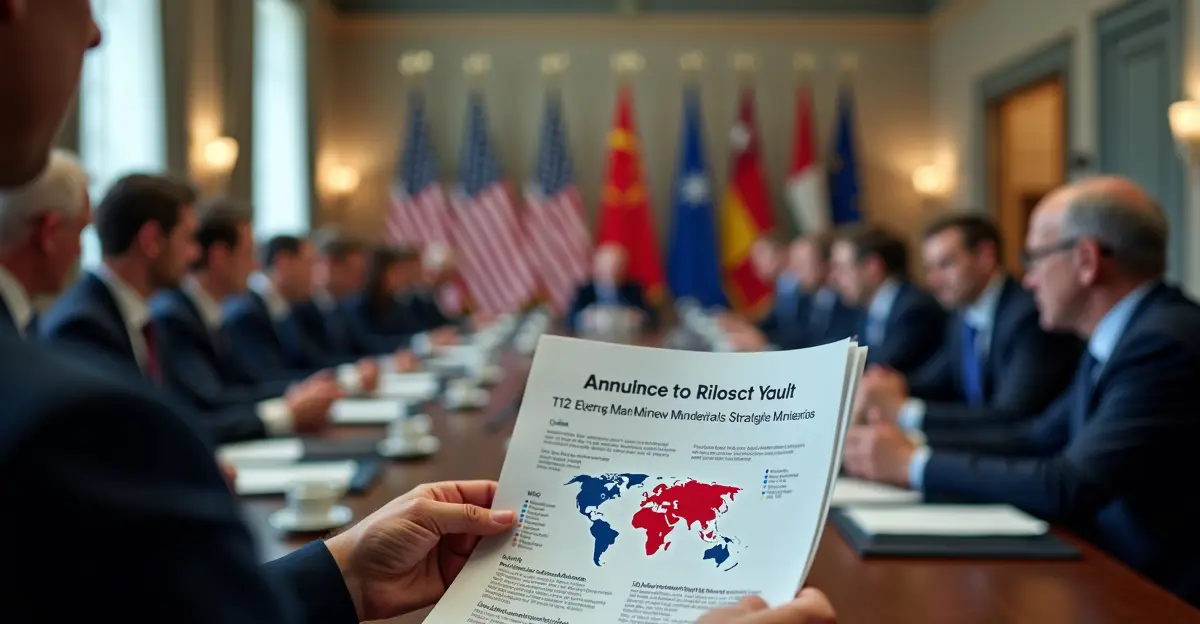
In May 2026, the G7 began negotiations to establish a permanent Critical Minerals Secretariat to address the governance gap caused by the rotating presidency model, which disrupts multi-decade supply chain diversification efforts. Two institutional candidates are under consideration: the IEA (focused on technical execution and stockpiling) and the OECD (focused on regulatory standards), with a potential hybrid model. The IEA recently convened a Brussels workshop on stockpiling with governments and companies including GM, Glencore, and Umicore.
However, internal G7 fault lines remain. European nations have rejected a shared stockpile in favor of nationally controlled reserves, while the U.S. pushes for a more coordinated approach. Experts warn of a narrowing 12-18 month window to build independent processing capacity before Chinese dominance becomes structurally entrenched. The G7 critical minerals coordination efforts represent a recognition that the status quo is unsustainable, but translating political will into tangible supply chain diversification remains the central challenge.
Demand Drivers: AI, Net-Zero, and Defense
Three key drivers are fueling the surge in critical mineral demand. First, artificial intelligence and data centers are projected to account for nearly 9% of U.S. electricity demand by 2035, requiring massive expansions in copper and rare earths for power infrastructure. Second, the global energy transition—with COP28 commitments to triple renewable capacity by 2030—requires vast quantities of lithium, cobalt, nickel, and rare earths for batteries, wind turbines, and solar panels. J.P. Morgan forecasts global lithium demand to grow 16% year-over-year in 2026, with 58% from EVs and 30% from energy storage systems. Third, increased defense spending across NATO countries has heightened demand for rare earths used in precision-guided munitions, radar systems, and night-vision equipment.
The convergence of these demand drivers with concentrated supply chains creates what experts call "strategic choke points." The IEA's Critical Minerals Data Explorer projects that under current policies, supply gaps for lithium, cobalt, and rare earths will persist through 2030, potentially derailing net-zero targets and defense modernization plans.
Expert Perspectives
"China is not just controlling supply—it is controlling the processing infrastructure that turns raw ore into usable materials. That is a far more powerful lever than mining alone," said a senior analyst at the Center for Strategic and International Studies (CSIS). "The West has a 12-to-18-month window to make irreversible investments in processing capacity. After that, the cost of independence becomes prohibitive."
European Commission Vice President for Interinstitutional Relations Maroš Šefčovič noted: "We have the regulatory framework with the Critical Raw Materials Act, but we need to move from project selection to actual production. Permitting timelines of 27 months for extraction projects are still too long when our competitors move in months."
FAQ
What are critical minerals?
Critical minerals are raw materials designated by governments as essential for national economies and security, with vulnerable supply chains. They include lithium, cobalt, nickel, rare earth elements, graphite, and others needed for batteries, semiconductors, defense technologies, and renewable energy systems.
Why does China dominate critical mineral processing?
China invested decades in building processing infrastructure through industrial policy, state-owned enterprises, and strategic acquisitions. It now controls approximately 90% of global rare earth processing and over 80% of battery-grade graphite, creating strategic choke points in global supply chains.
What is the U.S. doing to reduce dependence on China?
The U.S. has invoked the Defense Production Act, launched Project Vault ($10 billion strategic reserve), signed 11 bilateral critical minerals frameworks, and created FORGE (Forum on Resource Geostrategic Engagement) with 54 partner countries, mobilizing over $30 billion in total support.
Can the EU meet its 2030 critical minerals targets?
The EU's Critical Raw Materials Act targets 10% domestic extraction, 40% processing, and 25% recycling by 2030. While 47 Strategic Projects have been selected, financing gaps (€22.5 billion needed vs. €3 billion planned) and permitting delays raise doubts about achieving these benchmarks on time.
What is the G7 Critical Minerals Secretariat?
Proposed in May 2026, the permanent secretariat would coordinate critical minerals policy among G7 nations, addressing governance gaps caused by the rotating presidency model. It would oversee stockpiling, investment coordination, and regulatory standards, though member states disagree on shared vs. national reserves.
Conclusion: A Race Against Time
The scramble for critical minerals in 2026 represents a defining geopolitical challenge of the decade. Western nations have recognized the strategic vulnerability of concentrated supply chains and have begun mobilizing unprecedented resources—over $30 billion from the U.S., 47 Strategic Projects from the EU, and new G7 coordination mechanisms. Yet the gap between ambition and execution remains vast. China's processing dominance, built over decades, cannot be replicated in years. The 12-18 month window for decisive action is narrowing, and the consequences of failure extend beyond economic competitiveness to national security and climate goals. The outcome of this resource competition will determine not only who powers the green transition but who controls the technologies that define 21st-century power.


Follow Discussion