

 Deutsch
 English
 Español
 Français
 Nederlands
 Português

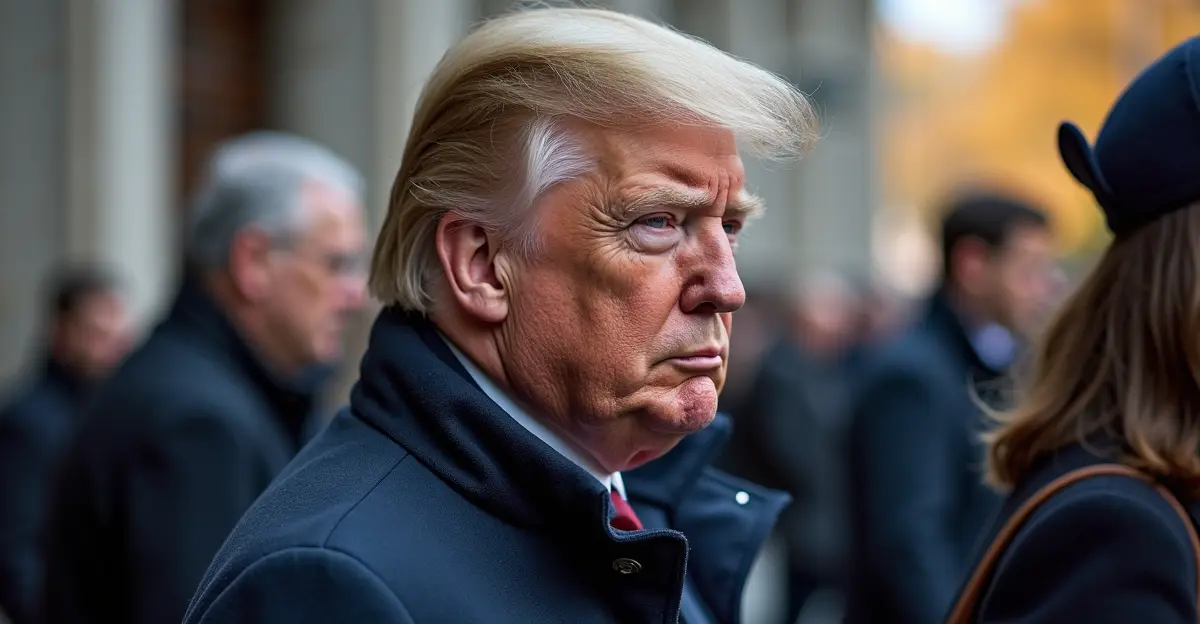





Europe's Trust in US Security Guarantees Collapses to Historic Low
A major new opinion poll by the European Council on Foreign Relations (ECFR) reveals that Europeans have fundamentally shifted away from relying on the United States for their security. The survey, titled 'Home Alone: Europeans Are Ready to Defend Themselves,' polled 19,481 respondents across 15 European countries in May 2026 and shows that only 11% of Europeans now view the US as an ally — down from 22% in November 2024 and a dramatic collapse from 35% in 2022.
According to the ECFR poll, half of Europeans (50%) now consider the US a 'necessary partner' rather than a trusted ally, while 25% view America as a rival or adversary. The findings represent a seismic shift in transatlantic relations, with majorities in every polled country expressing doubt that the US would come to their aid if attacked.
What the ECFR Poll Reveals About European Public Opinion
Conducted in May 2026 across EU member states including Germany, France, Italy, Poland, Spain, and the Netherlands, as well as Switzerland and the United Kingdom, the poll paints a stark picture of European sentiment. The report's authors, Ivan Krastev and Mark Leonard, argue that US President Donald Trump's second term — marked by threats to NATO, plans to annex Greenland, and military strikes on Iran without European consultation — has fundamentally shattered European confidence in American protection.
Michal van der Toorn, European affairs correspondent, explains the report's central metaphor: 'The comparison is crystal clear: the EU is Kevin and the US are the parents. Because home alone — that's what we are as Europe.' The reference to the 1990 film 'Home Alone' underscores the sense of abandonment Europeans feel.
Key Findings at a Glance
- Trust collapse: Only 11% of Europeans see the US as an ally; 25% see it as a rival or adversary.
- Defense spending: 50% on average support higher national defense budgets, with support growing 4% since late 2025.
- European weapons: Strong majorities favor buying European-made military equipment over US imports.
- Joint EU borrowing: 47% back collective EU loans to finance defense investments.
- Nuclear deterrence: 54% support developing an alternative European nuclear deterrent independent of the US.
- NATO vs. EU defense: Only 29% favor replacing NATO with a purely EU defense body; most still trust NATO more.
Europe's Defense Awakening: Spending and Strategic Autonomy
The poll shows that Europeans are not just losing trust — they are ready to act. Support for increased defense spending has risen across the continent, with Poland already spending over 4% of GDP on defense and Baltic states exceeding 2.5-3.5%. Germany reached NATO's 2% threshold in 2025, and the European defense industrial strategy aims for 50% EU-sourced procurement by 2030.
However, challenges remain. Europe's defense industrial base currently produces only about 500,000 artillery shells annually, far below wartime consumption rates. New production lines take 2-5 years to build, meaning investments made in 2022-2023 will only yield material improvements around 2027-2028. The IMF warns that given the large and synchronized nature of the current European defense buildup, spending multipliers may fall below historical estimates.
The Debate Over EU Joint Defense Borrowing
A key finding is that 47% of Europeans support joint EU borrowing to fund defense — a deeply controversial issue that divides member states. France, Italy, Spain, and Poland lead the pro-borrowing camp, while Germany, the Netherlands, and other fiscally conservative 'frugal' states resist. The European Defence Industrial Strategy, backed by the European Commission, targets deeper integration but faces political headwinds from far-left parties concerned about social spending cuts and far-right factions split on the issue.
Ukraine: Support with Limits
On Ukraine, European public opinion is nuanced. Most Europeans continue to support Ukraine in its war against Russia and view the country as a partner. However, that support has boundaries. The poll reveals that a majority of Europeans oppose sending European troops to Ukraine after a ceasefire is reached, and there is no broad support for rapid EU accession for Ukraine. Citizens fear the economic and security consequences of enlargement at this time.
The European Parliament recently approved a €90 billion Ukraine support loan package for 2026-2027, with €60 billion for defense capabilities and €30 billion for macro-financial assistance. However, the EU's Ukraine enlargement debate remains contentious, with citizens expressing caution about the timing and scale of integration.
Energy Independence: No Return to Russian Gas
The energy dimension of the poll is unequivocal: despite rising energy prices, strong majorities across Europe oppose resuming imports of Russian oil and gas. Europeans have learned from past dependency on Russia and instead prioritize European energy production, especially renewable sources like wind and solar. The EU's REPowerEU plan has already reduced Russian gas imports by 65% since 2021, with a target to phase out all Russian fossil fuels by 2027. Over 47% of EU electricity now comes from renewables, and the European Investment Bank has committed €115 billion in energy investments.
The poll confirms that European renewable energy transition enjoys strong public backing, even as households face higher energy costs. Citizens prefer investing in domestic clean energy over returning to reliance on Russian supplies.
Implications for Transatlantic Relations
The ECFR researchers conclude that European citizens have become starkly realistic. 'They understand that the world has become more dangerous and that Europe must take more responsibility for its own security and energy supply,' says Van der Toorn. 'At the same time, they don't want to take reckless steps. They support Ukraine, but not unconditionally. They want more defense, but also expect their standard of living to be protected.'
Despite the collapse in trust, most Europeans still hope the transatlantic relationship will improve once Donald Trump leaves office. The poll suggests European leaders have public backing to pursue a pragmatic path: building strategic autonomy without completely severing ties with Washington. The challenge will be maintaining this balancing act as major European elections approach in 2027.
Frequently Asked Questions
What is the ECFR 'Home Alone' poll?
The ECFR 'Home Alone' poll is a major survey of 19,481 respondents across 15 European countries conducted in May 2026 by the European Council on Foreign Relations. It measures European public opinion on security, defense, transatlantic relations, Ukraine, and energy policy.
Why do Europeans no longer trust the US for security?
Trust has eroded due to US President Donald Trump's second-term actions, including threats to NATO, plans to annex Greenland, military strikes on Iran without European consultation, and perceived abandonment of traditional alliance commitments. Only 11% of Europeans now view the US as an ally.
Do Europeans support higher defense spending?
Yes, 50% on average support higher national defense budgets. Support is strongest in Poland and the Baltic states, where defense spending already exceeds 3% of GDP. Additionally, 47% back joint EU borrowing to finance defense investments.
What do Europeans think about Ukraine joining the EU?
European support for Ukraine remains strong, but citizens are cautious about rapid EU enlargement. A majority opposes sending European troops to Ukraine after a ceasefire and believes that now is not the right time for Ukraine's EU accession due to economic and security concerns.
Will Europeans buy Russian energy again?
No. Strong majorities across Europe oppose resuming Russian oil and gas imports despite rising energy prices. Europeans prefer investing in domestic renewable energy production and maintaining the REPowerEU plan to phase out all Russian fossil fuels by 2027.
Sources
- ECFR: Home Alone — Europeans Are Ready to Defend Themselves
- The Guardian: Only one in 10 Europeans now see US as an ally
- CBS News: Only 1 in 10 Europeans see US as an ally, poll finds
- Euractiv: Europeans back higher defence spending and more EU-made weapons
- European Parliament: €90 billion Ukraine support loan package






Follow Discussion