


 Deutsch
 English
 Español
 Français
 Nederlands
 Português


 Share
Share




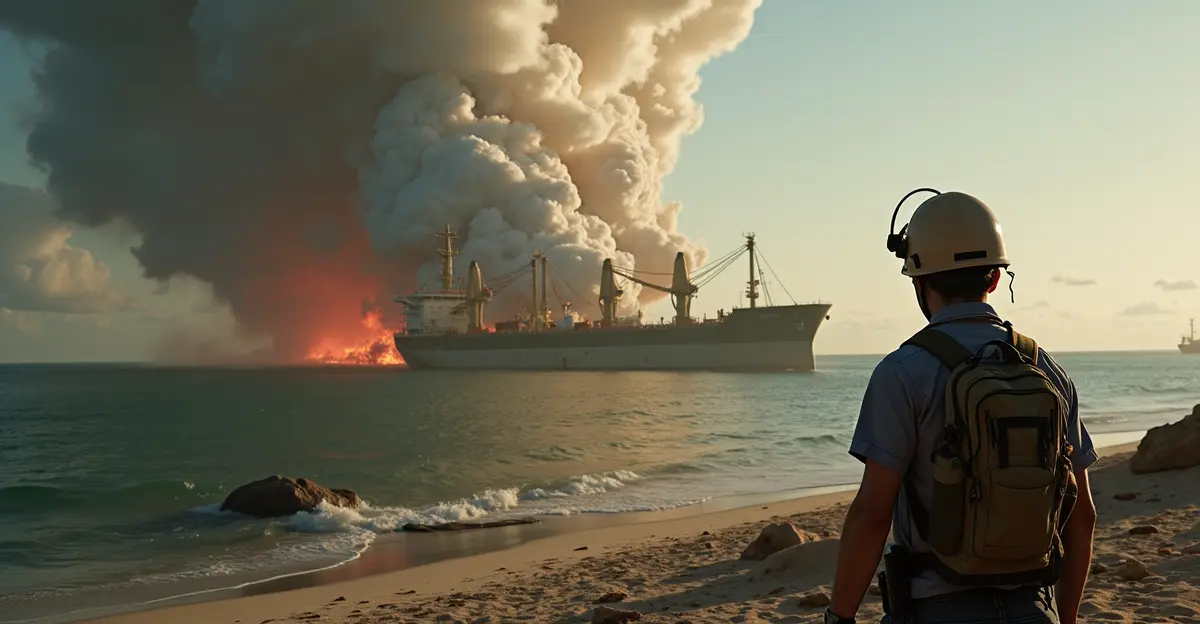
The war that erupted across the Middle East in late February 2026 and escalated within the past two months has triggered the largest oil supply cut since Russia's 2022 invasion of Ukraine, removing roughly 10 million barrels per day (mb/d) from global markets and sending Brent crude on a record 64% monthly surge. According to the World Bank's April 2026 Commodity Markets Outlook, energy prices are now projected to jump 24% in 2026, the biggest increase since 2022. The shock is concentrated at the Strait of Hormuz, which handles about 35% of global seaborne crude trade, and its ripple effects are already hitting fertilizer, food security, and metals.
What Is the Middle East War Oil Supply Shock?
The Middle East war oil supply shock refers to the abrupt removal of about 10 million barrels per day of crude and product exports from the Gulf region after infrastructure attacks and the disruption of maritime transit through the Strait of Hormuz. Unlike past production losses, this is a transit shock: the Strait of Hormuz crisis has compromised both the primary sea route and key bypass pipelines, leaving little spare capacity. The International Energy Agency (IEA) estimates more than 10 mb/d of Gulf output was shut in during the first weeks of the conflict. The Brent crude price forecast from major institutions now averages $86 per barrel for 2026, up from $69 in 2025, with a potential spike to $115 under a severe escalation scenario.
Asymmetric Consequences Across the Global Economy
The shock is not evenly distributed. Energy importers face higher import bills, while a handful of exporters benefit from windfall revenues. The World Bank projects developing-economy inflation to average 5.1% in 2026, with growth revised down to 3.6%.
Energy Importers vs Exporters: A Comparison
- Net importers (Japan, India, South Korea, most of Europe): Soaring crude and LNG costs widen current account deficits and fuel inflation; Japan, which sources 91% of its crude from Hormuz economies, saw imports drop 64%.
- Net exporters (Gulf states outside the conflict zone, some African producers): Higher prices boost fiscal revenues but also increase domestic subsidy burdens and geopolitical risk.
This divergence is redefining global fault lines, as countries with energy supply diversification and large strategic reserves fare better than those locked into single-chokepoint dependence.
Fertilizer, Food Security, and Metals
The energy shock is cascading into agriculture and industrial commodities. The World Bank expects fertilizer prices to jump 31% in 2026 because natural gas, a key input for nitrogen fertilizers, has surged. That could push up to 45 million additional people into acute food insecurity, according to UN agencies. Meanwhile, global fertilizer prices are rising alongside base and precious metals, which are projected to climb 42% and hit record highs as energy-intensive smelting and mining costs rise.
How Governments Are Responding
Governments are drawing on strategic petroleum reserves and accelerating supply diversification. The United States, Japan, and several European countries have announced coordinated releases from emergency stockpiles, while importers are seeking alternative suppliers via the Cape of Good Hope, which adds roughly 15 days and up to $1 million per voyage. The IMF's April 2026 World Economic Outlook warns that the war threatens global growth and disinflation, urging targeted support for vulnerable economies.
Worst-Case Escalation: What $115 Brent Would Mean
Under the World Bank's severe scenario, Brent crude reaching $115 per barrel would push global inflation higher and could tip several developing economies into recession. Global financial stability would face stress from widening current account deficits, capital outflows, and currency depreciation. The IMF and World Bank have both called for contingency planning and multilateral cooperation to cushion the blow.
Expert Perspectives
World Bank Chief Economist Indermit Gill captured the human cost bluntly: "War is development in reverse, and this conflict is hitting the poorest hardest." Analysts note that the 2026 shock differs from 2022 because spare capacity is thinner and the chokepoint risk is structural, not just political.
Frequently Asked Questions
What caused the Middle East war oil supply cut?
The conflict that began in late February 2026 damaged Gulf energy infrastructure and disrupted the Strait of Hormuz, cutting roughly 10 million barrels per day of crude and product exports.
How much has Brent crude risen?
Brent crude posted a record 64% monthly jump in March 2026 and is forecast to average $86 per barrel in 2026, up from $69 in 2025.
How does this affect food and fertilizer prices?
Fertilizer prices are projected to rise 31% in 2026, and up to 45 million additional people could face acute food insecurity due to higher energy and fertilizer costs.
Which countries are most exposed?
Energy importers with heavy dependence on Hormuz-sourced crude, such as Japan and India, and low-income developing economies with limited fiscal space are most vulnerable.
What is the worst-case scenario?
If Brent reaches $115 per barrel, developing-economy inflation could exceed 6%, growth could fall further, and financial stability risks would rise sharply.
Conclusion
The Middle East war's oil supply shock is rewiring energy markets and global economic fault lines. With the Strait of Hormuz disruption ongoing and no quick diplomatic resolution, governments and institutions must prepare for a prolonged period of high prices, supply diversification, and food-security stress.



Follow Discussion