


 Deutsch
 English
 Español
 Français
 Nederlands
 Português


 Share
Share




The Hormuz Shock: How the 2026 Middle East Crisis Reshapes Global Energy, Trade and Financial Stability
On February 28, 2026, the United States and Israel launched coordinated airstrikes against Iran, assassinating Supreme Leader Ali Khamenei and triggering a cascade of retaliatory actions that have effectively closed the Strait of Hormuz — the world's most critical energy chokepoint. Through this narrow waterway, approximately 21% of global oil supply and 20% of liquefied natural gas (LNG) production previously transited daily. The resulting Hormuz shock has sent oil prices surging over 60%, more than doubled European gas prices, and prompted the World Bank to declare it the largest oil market disruption in history. As the full macroeconomic and trade impacts are now being quantified by the World Bank, UNCTAD, and the World Economic Forum, this article analyzes the strategic, economic and financial systemic risks emerging from the crisis and the structural vulnerabilities it exposes in global supply chains.
Context: The February 28 Escalation and Immediate Fallout
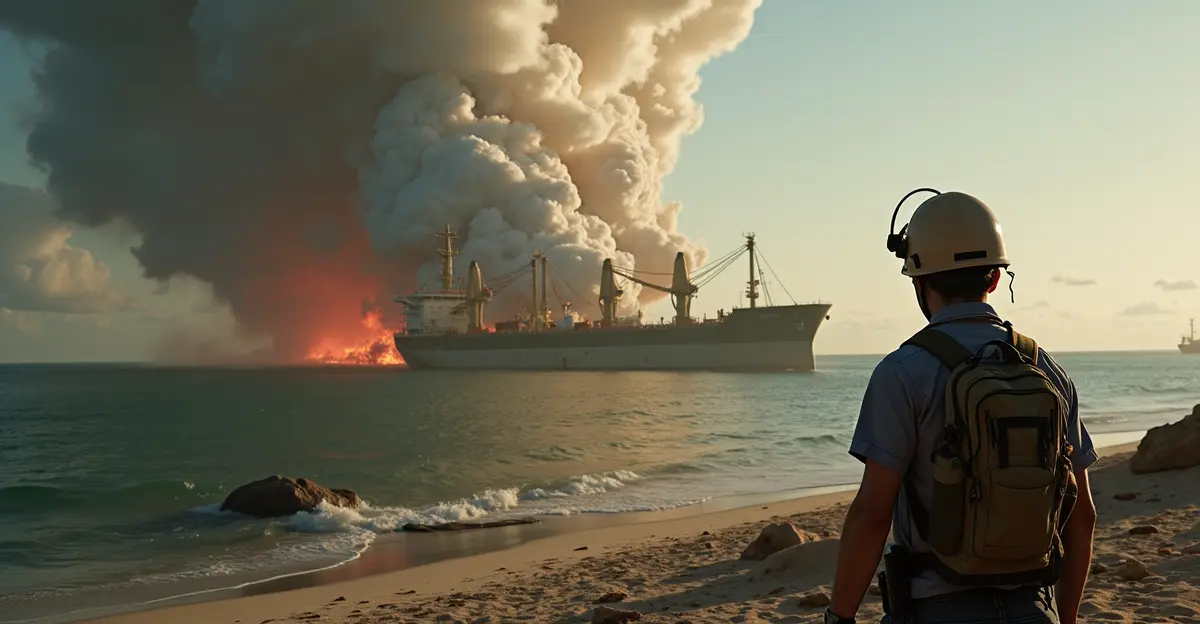
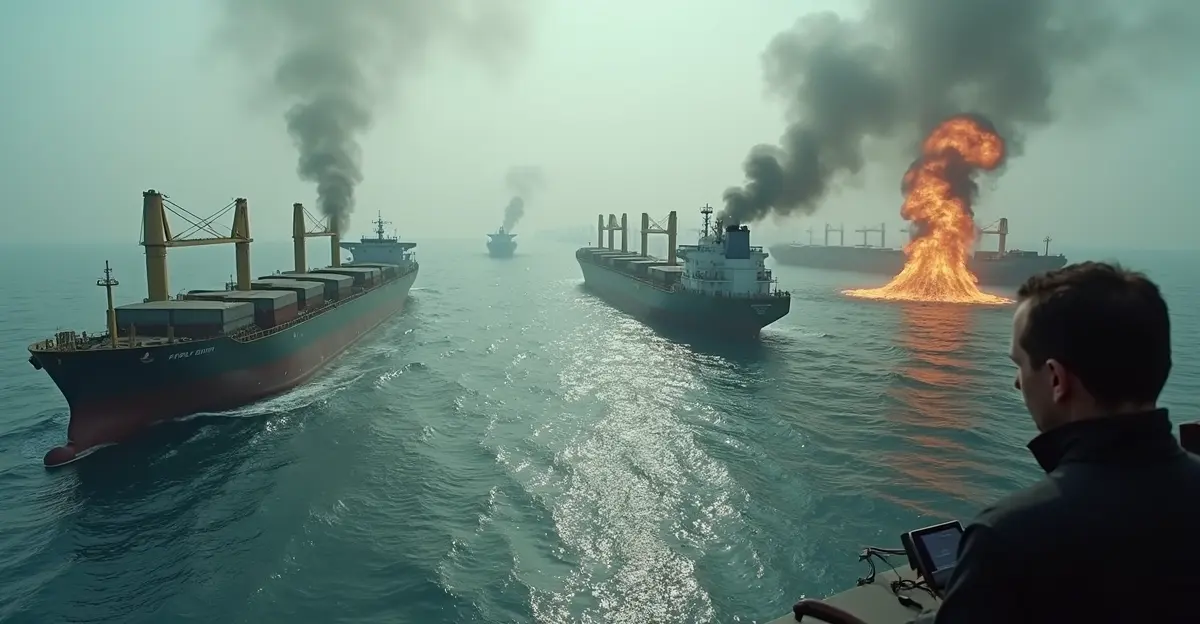
The US-Israeli strikes targeted Iran's nuclear and military infrastructure. In retaliation, Iran's Islamic Revolutionary Guard Corps (IRGC) issued warnings forbidding passage through the Strait of Hormuz, boarded and attacked merchant ships, and laid sea mines. Within days, tanker traffic dropped by over 70%, and more than 150 vessels anchored outside the strait to avoid risks. By March 10, ship transits had plummeted by 97% — from 129 to just 4 ships per day, according to UNCTAD. The 2026 Iran war had effectively shut the world's most vital energy artery.
Brent crude oil surpassed $100 per barrel on March 8 for the first time in four years, peaking at $126 per barrel. The World Bank's April 2026 Commodity Markets Outlook recorded the largest monthly oil price increase ever — roughly 65% ($46/bbl) in March alone. Global oil supply crashed by 10.1 million barrels per day (mb/d) in March, with a projected 6.9 mb/d year-on-year decline in Q2 2026 — the steepest since the COVID-19 pandemic. The market now faces a projected 3.7 mb/d deficit in Q2 2026.
Global Energy Markets: The Largest Shock Since the 1970s
Oil: A Market Under Siege
The World Bank forecasts Brent crude averaging $86/bbl in 2026, dropping to $70/bbl in 2027 if disruptions ease. However, major upside risks — including re-escalation of hostilities — could push prices to $95-$115/bbl. Oil demand destruction is already emerging, with consumption estimated to have fallen 0.8 mb/d in March and forecast to drop another 1.5 mb/d in Q2. The International Energy Agency announced the largest coordinated release in history — 400 million barrels — to help absorb the shock.
Natural Gas: Europe's Fragility Exposed
European gas prices nearly doubled in the immediate aftermath of the crisis, according to Euronews. Research from the Stockholm Institute of Transition Economics (SITE) highlights that while the EU reduced reliance on Russian gas after 2022, it replaced one dependency with another — relying on globally traded LNG vulnerable to fragile shipping routes. The concept of 'decarbonization fragility' emerges: price spikes push producers toward coal, raise emissions, and weaken political support for climate action. Asian LNG prices also spiked, with Japan and South Korea facing severe price shocks even without outright shortages.
Trade Disruption: From 4.7% Growth to Near-Stagnation
UNCTAD's Trade and Development Foresights 2026 report projects global merchandise trade growth will crash from 4.7% in 2025 to between 1.5% and 2.5% in 2026 — a decline of up to 3.2 percentage points. This would be the lowest growth since 2023's 0.9%. The global trade slowdown 2026 is driven by soaring energy costs, disrupted shipping routes, and heightened policy uncertainty. Developing economies bear the heaviest burden due to their dependence on imported fuel and food.
The crisis has also disrupted fertilizer markets: the Strait previously carried 20-30% of global fertilizer exports. Urea fertilizer prices have surged 20-60%, threatening future crop yields. The World Economic Forum warns of a looming global food crisis, with FAO Chief Economist Máximo Torero stating: 'This regional geopolitical crisis is causing cascading shocks across interconnected energy, fertilizer, and food markets.'
Financial Stability: Systemic Risks Mount
The World Economic Forum's May 2026 Chief Economists' Outlook paints a grim picture: 89% of chief economists expect global growth to weaken over the next 12 months, and 94% predict global inflation will rise. Developing countries face the most acute pressures: higher import costs, weakening currencies, tighter financial conditions, and rising borrowing costs. UNCTAD warns that 3.4 billion people already spend more on debt servicing than on health or education — a situation now worsening dramatically.
The financial systemic risks 2026 are compounded by the fact that many developing nations have limited fiscal space to respond. Global GDP growth is expected to drop from 2.9% to 2.6% in 2026 per UN DESA, with developing economies facing inflation rising from 4.2% (2025) to 5.2% (2026).
Strategic Implications: A Multipolar Crisis
The crisis has exposed deep structural vulnerabilities in the global economic architecture. The concentration of energy production in geopolitically volatile regions, the fragility of maritime chokepoints, and the interconnectedness of energy, fertilizer, and food markets create a systemic risk profile that traditional risk management tools struggle to address. The global supply chain vulnerabilities highlighted by this crisis extend well beyond energy into critical minerals, semiconductors, and agricultural commodities.
UNCTAD's rapid assessment warns that if disruptions persist, the situation could evolve into a cascading crisis with far-reaching consequences for development. The World Bank notes that while Saudi Arabia and the UAE can divert some oil via pipelines bypassing Hormuz, spare capacity elsewhere is insufficient to replace the lost supply.
Expert Perspectives
Chloé Le Coq and Elena Paltseva of SITE argue that the solution lies in faster deployment of domestic clean energy, stronger electricity grids, and a coordinated EU industrial strategy: 'Reducing fossil-fuel demand at home is both a climate goal and the most durable foundation for energy security.'
FAO Chief Economist Máximo Torero urges immediate action: protecting vulnerable populations through targeted support programs, securing alternative trade corridors, avoiding export restrictions, and providing rapid financing to farmers. Long-term recommendations include improving fertilizer efficiency and building strategic reserves.
FAQ
What is the Strait of Hormuz and why is it important?
The Strait of Hormuz is a narrow waterway between the Persian Gulf and the Gulf of Oman, through which about 21% of global oil and 20% of LNG transits daily. It is the only sea passage from the Persian Gulf to the open ocean, making it the world's most strategically important energy chokepoint.
How did the 2026 crisis start?
On February 28, 2026, the US and Israel launched coordinated airstrikes against Iran, assassinating Supreme Leader Ali Khamenei. Iran retaliated by blocking the Strait of Hormuz, attacking ships, and laying mines, effectively closing the waterway to commercial traffic.
How much did oil prices rise?
Brent crude surged over 60% in March 2026 — the largest monthly increase in history — peaking at $126 per barrel. The World Bank forecasts Brent averaging $86/bbl in 2026, with upside risks potentially pushing prices to $95-$115/bbl.
Which countries are most affected?
Developing economies in Asia and Africa are most vulnerable due to their dependence on imported fuel, food, and fertilizer. India, Pakistan, Bangladesh, and Sri Lanka face acute energy and food security risks. Europe faces stagflation risks, while China has some buffer from strategic stockpiles.
What is being done to mitigate the crisis?
The IEA released 400 million barrels from strategic reserves — the largest such move in history. The US Navy launched Operation Project Freedom to escort ships, though it was paused amid ceasefire negotiations. The UN and World Bank are urging diplomatic solutions and targeted support for vulnerable populations.
Conclusion: A Watershed Moment for Global Economic Governance
The Hormuz shock of 2026 represents a watershed moment for global economic governance. It has laid bare the fragility of a system built on concentrated energy production, vulnerable maritime chokepoints, and deeply interconnected commodity markets. The crisis is accelerating calls for diversification of energy sources, reshoring of critical supply chains, and investment in renewable energy and domestic resilience. As the World Economic Forum's Chief Economists' Outlook concludes, the global economy is being reordered by conflict, supply-chain stress, and energy insecurity. The path forward requires not just crisis management, but fundamental structural reform.
Follow Discussion