


 Deutsch
 English
 Español
 Français
 Nederlands
 Português


 Share
Share




Breaking: The Largest Oil Supply Disruption in History
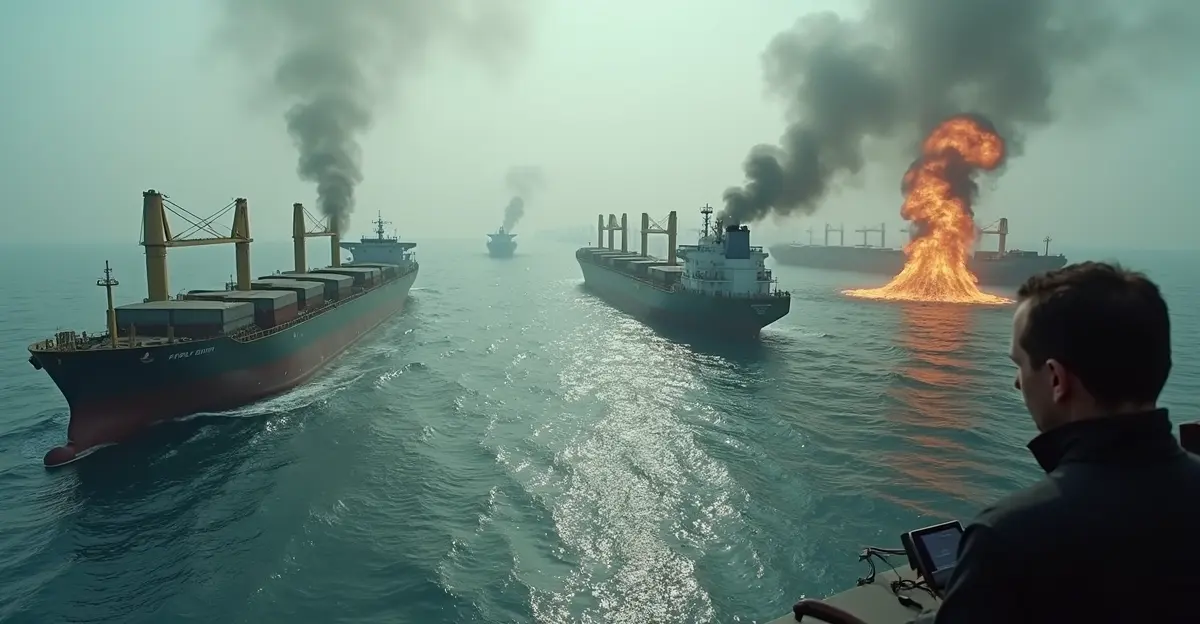
The 2026 Strait of Hormuz crisis has triggered the most severe oil market disruption on record, with Brent crude surging over 65% in March alone to exceed $138 per barrel. The crisis, which began on February 28, 2026, after U.S.-led airstrikes on Iran prompted the Islamic Revolutionary Guard Corps (IRGC) to blockade the strategic waterway, has removed roughly 20% of global oil supply from markets and sent shockwaves through the world economy.
According to a detailed analysis by energy journalist Raj Deshmukh, the blockade has slashed daily tanker traffic through the strait by approximately 70%, crippling the flow of crude oil, liquefied natural gas (LNG), and critical commodities. The Dallas Federal Reserve estimates this shock is three to five times larger than the 1973 oil embargo, with global GDP growth projected to fall by up to 2.9 percentage points. The 2026 global energy crisis is now forcing governments and corporations to rethink supply chain security at an unprecedented pace.
How the Strait of Hormuz Blockade Unfolded
Timeline of Events
The crisis escalated rapidly. On February 28, 2026, following U.S. and Israeli airstrikes on Iranian military facilities, the IRGC announced the closure of the Strait of Hormuz to all shipping. Within days, the U.S. Navy deployed over 12 warships and 100 aircraft to enforce a blockade of Iranian ports, intercepting 42 vessels including the Iranian-flagged tanker Touska. By early March, Brent crude had crossed $126 per barrel, and the World Bank declared the situation the largest oil supply disruption in history.
Key Statistics at a Glance
- Oil supply loss: 10.1 million barrels per day (mb/d) in March 2026
- Brent crude peak: Over $138/barrel (65% monthly increase)
- Global oil output drop: 6.6% year-on-year in Q2 2026 (sharpest since COVID-19)
- Market deficit: Projected 3.7 mb/d in Q2 2026
- Global GDP impact: Up to 2.9 percentage points shaved off growth
Global Economic Fallout
The crisis is not limited to oil markets. Nine critical commodities face severe disruption, including fertilizers (46% of global urea trade passes through Hormuz), sulfur, methanol, and aluminum. The World Bank projects energy prices will rise 24% in 2026, with fertilizer prices surging 31%. This threatens food security for up to 45 million additional people, particularly in South Asia and Africa. The 2026 food security crisis is being exacerbated by the fertilizer shortage, with the next planting season at risk.
Asian economies are hit hardest, receiving 89% of strait oil exports. India, Pakistan, Bangladesh, Japan, South Korea, and China face immediate physical shortages or severe price inflation. The IMF has cut global growth projections to 3.1%, warning that developing economies face inflation rates of 5.1%.
Supply Chain Transformation
The crisis is accelerating a structural shift from 'just-in-time' to 'just-in-case' supply chain models. According to Raj Deshmukh's report, 51% of companies are accelerating nearshoring efforts, and safety stock levels have increased by 35%. Over 20,000 mariners remain stranded in the Persian Gulf, and diplomatic efforts have so far failed to resolve the standoff.
'This is not merely an oil price spike — it is a systemic shock that will reshape global trade, energy security, and geopolitical alliances for years to come,' Deshmukh writes in his analysis for Informed Clearly.
Market Outlook and Scenarios
The World Bank's baseline forecast sees Brent averaging $86/barrel in 2026, dropping to $70/barrel in 2027 if supply stabilizes. However, if hostilities re-escalate, prices could range from $95 to $115/barrel. The Iran-US military escalation 2026 remains the key variable, with no diplomatic resolution in sight as of June 2026.
Frequently Asked Questions
What caused the 2026 Strait of Hormuz crisis?
The crisis began on February 28, 2026, after U.S.-led airstrikes on Iran prompted the IRGC to blockade the Strait of Hormuz, the world's most critical oil chokepoint.
How much has the oil price increased?
Brent crude surged approximately 65% in March 2026, reaching over $138 per barrel — the largest monthly increase on record.
Which countries are most affected?
Asian economies are the hardest hit, receiving 89% of strait oil exports. India, China, Japan, South Korea, Pakistan, and Bangladesh face severe disruptions.
How does this compare to past oil shocks?
The Dallas Federal Reserve estimates this shock is three to five times larger than the 1973 oil embargo, making it the largest oil supply disruption in history.
What is the outlook for prices and growth?
Brent is forecast to average $86/barrel in 2026 under baseline scenarios, but could reach $115 if conflict escalates. Global GDP growth may be reduced by up to 2.9 percentage points.
Follow Discussion