


 Deutsch
 English
 Español
 Français
 Nederlands
 Português


 Share
Share




The Largest Oil Supply Disruption in History
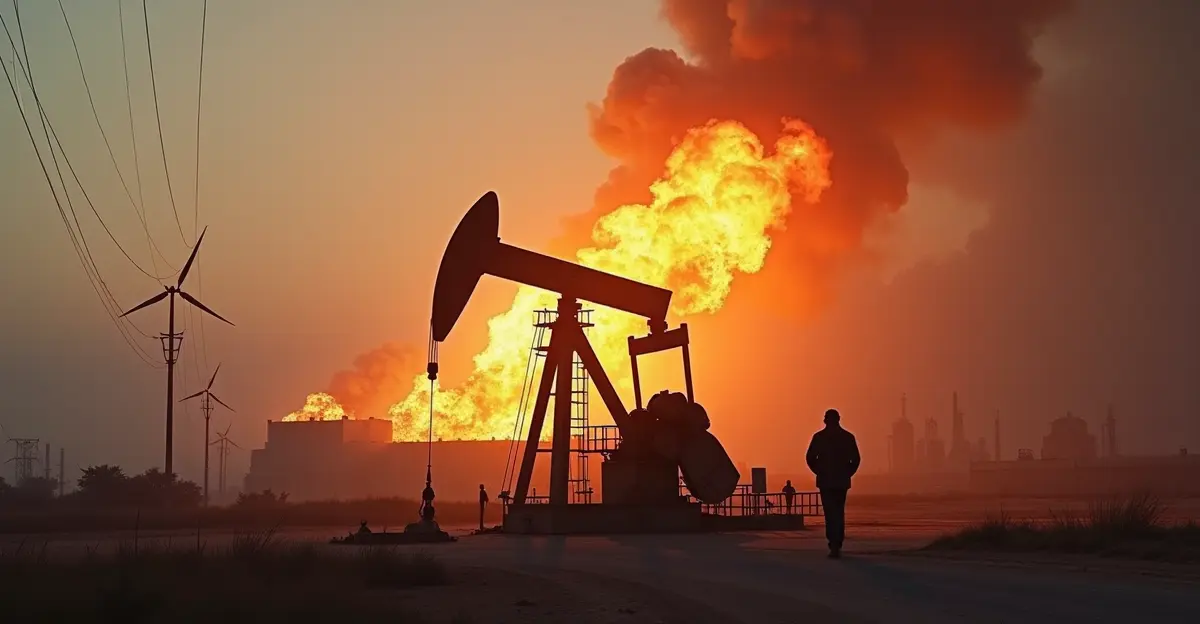
In February 2026, the closure of the Strait of Hormuz following US-Israeli strikes on Iran triggered the largest oil supply disruption in history, removing 10.1 million barrels per day from global markets and sending Brent crude above $126 per barrel. The World Bank's April 2026 Commodity Markets Outlook calls this the biggest oil market shock ever recorded, with global oil output expected to fall by 6.9 million barrels per day year-on-year in Q2 2026—the steepest quarterly decline since the COVID-19 pandemic. The crisis has cascading effects far beyond energy, threatening food security and forcing a strategic recalibration of global supply chains away from maritime chokepoints.
Background: How the Strait Became a Flashpoint
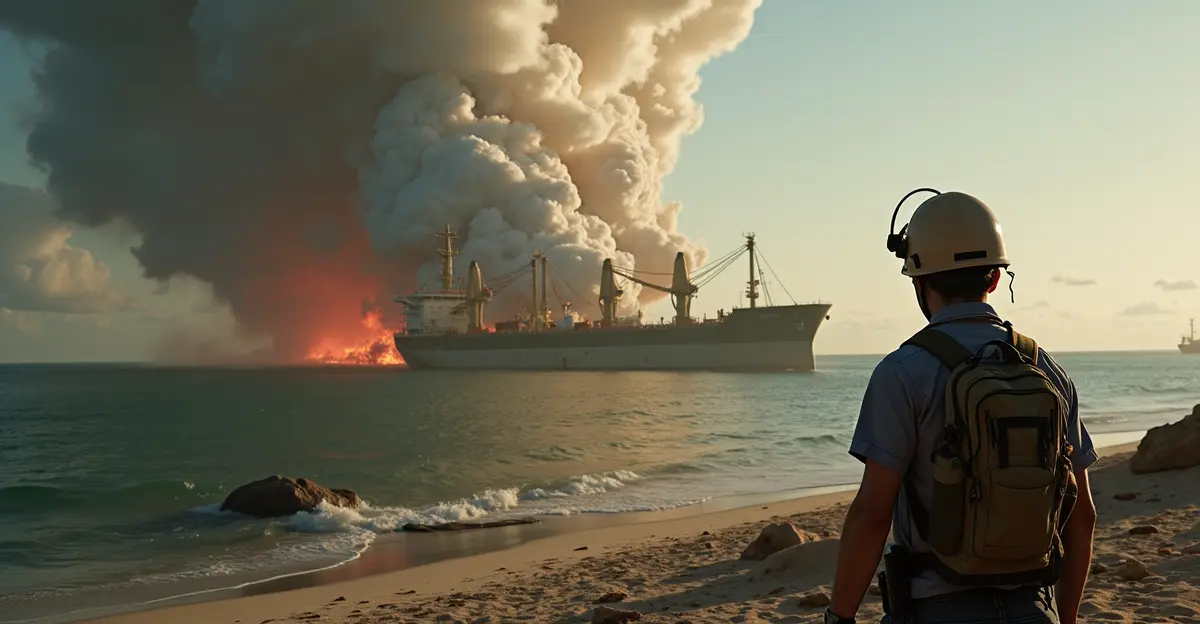
The Strait of Hormuz, a narrow waterway between the Persian Gulf and the Indian Ocean, handles about one-fifth of the world's oil and petroleum product shipments. In 2025, approximately 16.7 million barrels of crude oil passed through daily, along with significant liquefied natural gas (LNG) from Qatar. The strait is critical for Saudi Arabia, Iraq, Kuwait, the UAE, and Iran itself. On February 28, 2026, the United States and Israel launched Operation Epic Fury—nearly 900 joint strikes in 12 hours targeting Iranian missiles, air defenses, and military infrastructure. Iran retaliated by closing the strait, using naval patrols, missile threats, and GPS jamming to halt tanker traffic. By early March, daily transits fell from over 120 to just a handful.
The 2026 Iran war has been described by the UN as the most disruptive geopolitical event for global trade since the 1973 oil embargo. The conflict followed years of escalating tensions, including the 2025 Twelve-Day War between Iran and Israel, and the collapse of nuclear negotiations. The closure of the strait was not merely a blockade but a deliberate weaponization of a global chokepoint.
Energy Market Shock: Prices, Supply, and Demand
Brent Crude Above $126
Brent crude oil prices surged about 65% ($46 per barrel) by the end of March 2026, marking the highest monthly rise ever recorded. On April 7, Brent hit an intraday high of $138.21 before settling at $126.41 on April 30. The World Bank projects Brent will average $86 per barrel in 2026, but warns that in a worst-case scenario—where critical oil and gas facilities suffer more damage and export volumes recover slowly—prices could reach $95–$115 per barrel. The IMF's April 2026 Regional Economic Outlook for the Middle East and Central Asia warns that the crisis could push the global economy into recession if disruptions persist beyond October.
Supply Deficit and Demand Destruction
The global oil market faces a 3.7 million barrels per day deficit in Q2 2026. Oil demand fell by 0.8 million barrels per day in March alone, and is forecast to drop further as high prices destroy consumption. The IEA's Global Energy Review 2026 notes that oil demand growth had already slowed to 0.7% in 2025, but the crisis has accelerated a structural shift. The global energy supply chain is being fundamentally reshaped, with countries scrambling to secure alternative sources.
Cascading Effects on Food Security
Beyond oil, the crisis has triggered a surge in fertilizer prices. The World Bank's fertilizer price index rose over 12% in Q1 2026, reaching its highest level since October 2022. Urea prices climbed above $850 per metric ton in April—an 80% increase since February. Before the conflict, roughly 30% of global fertilizer exports transited the Strait of Hormuz. The FAO's chief economist, Máximo Torero, warns that fertilizer prices are projected to rise 31% in 2026, threatening up to 45 million additional people with acute hunger. Unlike the 2022 energy crisis, this disruption simultaneously hits supply and demand, with no alternative supply response available in the short term.
Farmers face difficult choices: reduce fertilizer use (lowering yields), switch to less nitrogen-intensive crops, or absorb rising costs. FAO models show cereal producers could face income losses of up to 5% in 2026, with lasting impacts through 2030. The global food security crisis is compounding existing vulnerabilities from climate change and conflict.
Strategic Recalibration: Reshoring and Energy Diversification
Accelerated Reshoring
The crisis is forcing a strategic recalibration of global supply chains away from maritime chokepoints. The World Economic Forum reports that global energy investment likely surpassed $3.3 trillion in 2025, with $2.2 trillion flowing into clean energy technologies. However, the language around energy has shifted from climate idealism to security and affordability. Countries are accelerating reshoring of critical industries, particularly energy-intensive manufacturing and fertilizer production. The IEA's State of Energy Policy 2026 notes that energy has been elevated to a core issue of national and economic security, with supply chain disruptions after COVID-19, Russia's invasion of Ukraine, and now the Hormuz crisis creating a new paradigm.
Regional Energy Diversification
Gulf states are rapidly diversifying their energy export routes. Saudi Arabia is expanding its East-West pipeline capacity to bypass the strait, while the UAE is investing in overland corridors to Oman and the Red Sea. The Middle East energy diversification efforts are being supported by international financing, with the World Bank and IMF providing technical assistance for alternative trade routes.
The Paradoxical Turn to Coal
Despite record investment in renewables—solar PV added a record 600 TWh in 2025, and global renewable generation investment exceeded $2.2 trillion—the crisis has paradoxically boosted coal demand. Countries facing gas shortages are turning to coal as a stopgap. The IEA reports that coal demand rose by only 0.4% in 2025, but the Hormuz disruption is expected to increase coal consumption in 2026, particularly in Asia. However, the long-term trend remains toward renewables, with solar and wind investment now double that of coal. The financial death of thermal coal is driven by stranded asset risk, but the crisis highlights the tension between energy security and climate goals.
Expert Perspectives
"The Strait of Hormuz crisis has exposed structural vulnerabilities that will reshape the global economic landscape for years to come," says the IMF's April 2026 Regional Economic Outlook. "The world is navigating between a painful slowdown and a full-blown recession, with the outcome dependent on the duration of the conflict and the effectiveness of policy responses."
Máximo Torero, FAO Chief Economist, warns: "Unlike the 2022 energy crisis, this disruption simultaneously hits supply and demand with no alternative supply response. Farmers face impossible choices, and the consequences will be felt for years."
FAQ
What caused the Strait of Hormuz crisis in 2026?
The crisis began on February 28, 2026, when the US and Israel launched airstrikes on Iran (Operation Epic Fury). Iran retaliated by closing the Strait of Hormuz to tanker traffic, disrupting global oil and gas shipments.
How much oil supply was lost?
The disruption removed 10.1 million barrels per day from global markets, the largest single supply loss in history. Global oil output is expected to fall by 6.9 million barrels per day year-on-year in Q2 2026.
What is the impact on food prices?
Fertilizer prices are projected to rise 31% in 2026, threatening up to 45 million additional people with acute hunger. Urea prices surged 80% since February 2026.
How is the crisis affecting renewable energy investment?
While the crisis has boosted coal demand in the short term, renewable investment continues to grow. Global clean energy investment reached $2.2 trillion in 2025, and solar PV remains the largest source of new power capacity.
What are the long-term implications for global trade?
The crisis is accelerating reshoring, regional energy diversification, and investment in alternative trade routes. Countries are prioritizing energy security over cost efficiency, fundamentally reshaping global supply chains.
Conclusion
The Strait of Hormuz crisis of 2026 is a watershed moment for global energy markets and trade architecture. The World Bank and IMF assessments confirm that the shock is unprecedented in scale and scope, with effects cascading from oil to food to finance. While the immediate crisis may ease if the strait reopens, the strategic recalibration it has triggered—reshoring, diversification, and the paradoxical turn to coal—will define global economic policy for years. The window for coordinated action to mitigate the worst impacts on food security and energy access is rapidly closing.



Follow Discussion