


 Deutsch
 English
 Español
 Français
 Nederlands
 Português


 Share
Share




What is Putin's Gas Threat to Europe?
Russian President Vladimir Putin has issued a stark warning that Russia may completely halt natural gas supplies to European markets, exploiting the energy crisis created by the US-Israel war against Iran. This threat comes as the Strait of Hormuz closure has already disrupted 20% of global oil and gas shipments, creating what Putin calls a 'business opportunity' to redirect Russian gas to alternative markets. The EU energy security strategy faces its most severe test since the 2022 Ukraine invasion, with European gas prices surging over 50% in recent days.
Background: The Perfect Storm for European Energy
The current energy crisis represents a convergence of multiple geopolitical factors. First, the European Union adopted legislation in December 2025 to phase out Russian gas imports by late 2027, banning spot-market Russian LNG starting in early 2026. Second, the US-Israel military campaign against Iran that began on February 28, 2026, resulted in the effective closure of the Strait of Hormuz - a critical waterway that typically handles 20% of global oil production and 20% of liquefied natural gas shipments. Third, Russia's gas exports to Europe have already declined dramatically from nearly 50% of European supply before the Ukraine war to just 13% today, but this remaining portion remains crucial for European energy security.
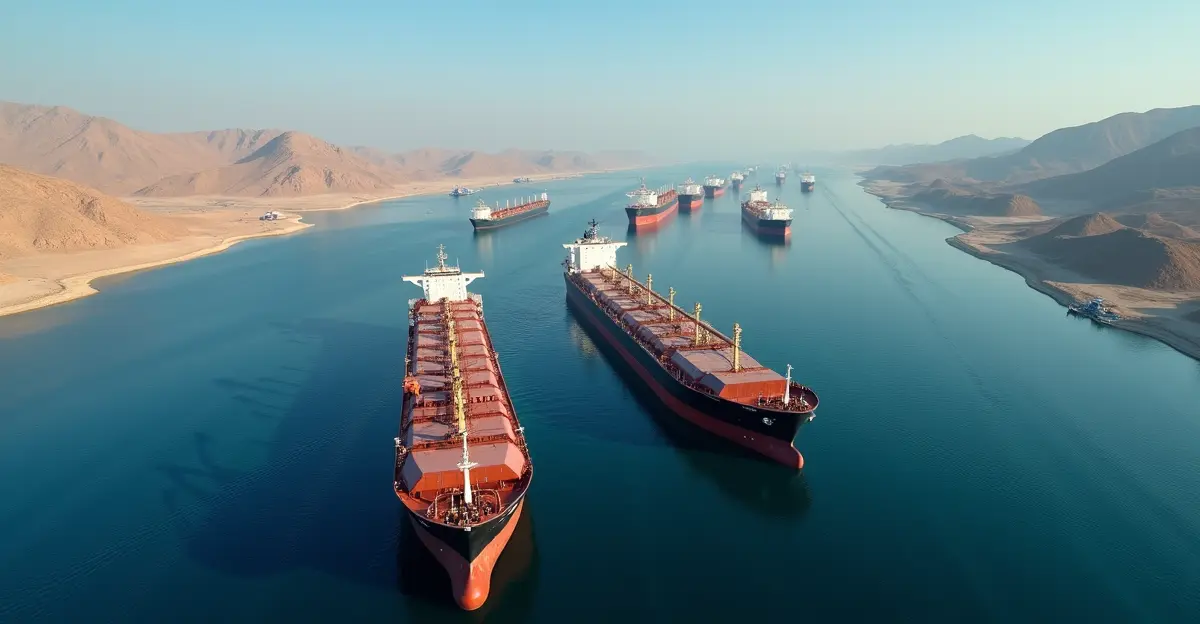
The Strait of Hormuz Crisis: A Global Energy Chokepoint
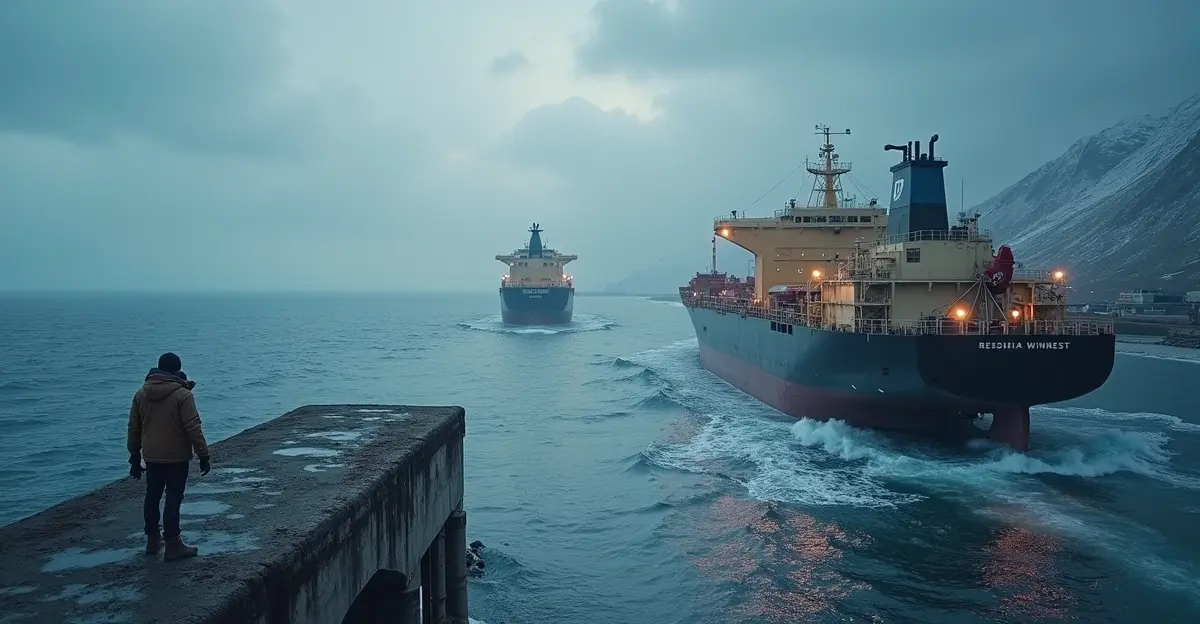
The Strait of Hormuz crisis began on February 28, 2026, when Iran's Revolutionary Guards began warning vessels not to pass through the strategic waterway following joint US-Israel strikes that killed Supreme Leader Ali Khamenei. Tanker traffic dropped by approximately 70% initially and then to near zero, disrupting about 20% of the world's daily oil supply. Brent crude oil prices surged 7% to $83 per barrel, while European natural gas futures jumped 30% and LNG tanker rates increased over 40%. Qatar halted LNG production after attacks on its facilities, impacting global gas supplies significantly.
Putin's Calculated Business Move
Putin framed his threat as purely commercial rather than political. 'Maybe it would make sense for us to stop supply of gas to European markets right now,' Putin stated, while clarifying this was not a final decision but him 'thinking out loud.' He emphasized, 'This is normal; there is nothing going on here, there is no political agenda - it's just business.' The Russian president noted that Europeans were planning new restrictions on Russian energy but said 'other markets are opening' where customers are willing to pay higher prices due to Middle East disruptions.
Europe's Vulnerability and Response
Europe faces a dual energy crisis: the immediate disruption from the Strait of Hormuz closure and the potential loss of remaining Russian supplies. The EU remains significantly dependent on Russian LNG, with France, Spain and Belgium among top buyers. European gas storage levels were already under scrutiny before the crisis, and Qatar's decision to halt LNG flows has added further pressure. The global LNG market dynamics have shifted dramatically, with insurance costs skyrocketing as war risk protections are withdrawn from the region.
EU's 2027 Phase-Out Plan vs. Immediate Crisis
The European Parliament adopted legislation in December 2025 to phase out Russian gas imports by September 30, 2027, with spot-market Russian LNG banned starting in early 2026. This historic shift in EU energy policy was adopted with strong support (500 votes to 120, with 32 abstentions). However, Putin's threat accelerates this timeline dramatically, potentially forcing Europe to implement its diversification strategy years ahead of schedule. The legislation also establishes harmonized penalties for infringements and requires stricter documentation to prevent circumvention.
Global Energy Market Implications
The combined impact of the Strait of Hormuz closure and Putin's gas threat creates the most severe energy crisis since the 1970s oil embargo. Key implications include:
- Price Volatility: European natural gas prices have surged over 50%, with further increases likely if Russian supplies are cut
- Supply Diversification: Europe must accelerate alternative sourcing from the US, Norway, and North Africa
- Energy Security: The crisis exposes Europe's continued vulnerability despite diversification efforts since 2022
- Economic Impact: Higher energy costs will affect European industries and consumer prices
- Geopolitical Realignment: Russia may redirect gas to Asian markets, particularly China, which faces its own supply disruptions
China's Energy Dilemma
China faces significant challenges from the energy crisis, as the country depends partly on Qatari gas that transits the Strait of Hormuz. Putin specifically mentioned that 'other markets are opening' and that 'it would be more profitable for us to stop supplying the European market now' to establish footholds in emerging markets. This suggests Russia may prioritize Asian markets where demand remains strong and prices are rising due to Middle East disruptions.
FAQ: Putin's Gas Threat and European Energy Crisis
What exactly did Putin threaten?
Putin suggested Russia might halt all gas supplies to European markets, stating 'Maybe it would make sense for us to stop supply of gas to European markets right now' while clarifying this was not a final decision.
Why is the Strait of Hormuz closure significant?
The Strait of Hormuz handles 20% of global oil production and 20% of LNG shipments. Its closure has disrupted global energy markets, causing oil prices to rise 7% and European gas prices to jump 30%.
When does the EU plan to phase out Russian gas?
The EU adopted legislation to ban spot-market Russian LNG starting early 2026 and phase out all Russian gas imports by September 30, 2027.
How dependent is Europe on Russian gas today?
Russian gas accounted for nearly 50% of European supply before the Ukraine war but has declined to just 13% today. However, this remaining portion remains crucial for European energy security.
What are the alternatives for Europe?
Europe must accelerate diversification to US LNG, Norwegian pipeline gas, and North African supplies while increasing renewable energy deployment and energy efficiency measures.
Follow Discussion