


 Deutsch
 English
 Español
 Français
 Nederlands
 Português


 Share
Share




Europe faces its most severe energy security challenge since the 1970s as the convergence of the Strait of Hormuz closure and the EU's Russian LNG embargo creates a supply gap of up to 20 billion cubic meters (bcm) heading into winter 2026-2027. With European gas storage at critically low levels and global LNG markets under unprecedented strain, governments are scrambling to balance energy security against climate commitments and geopolitical objectives.
The Perfect Storm: Two Supply Shocks Collide
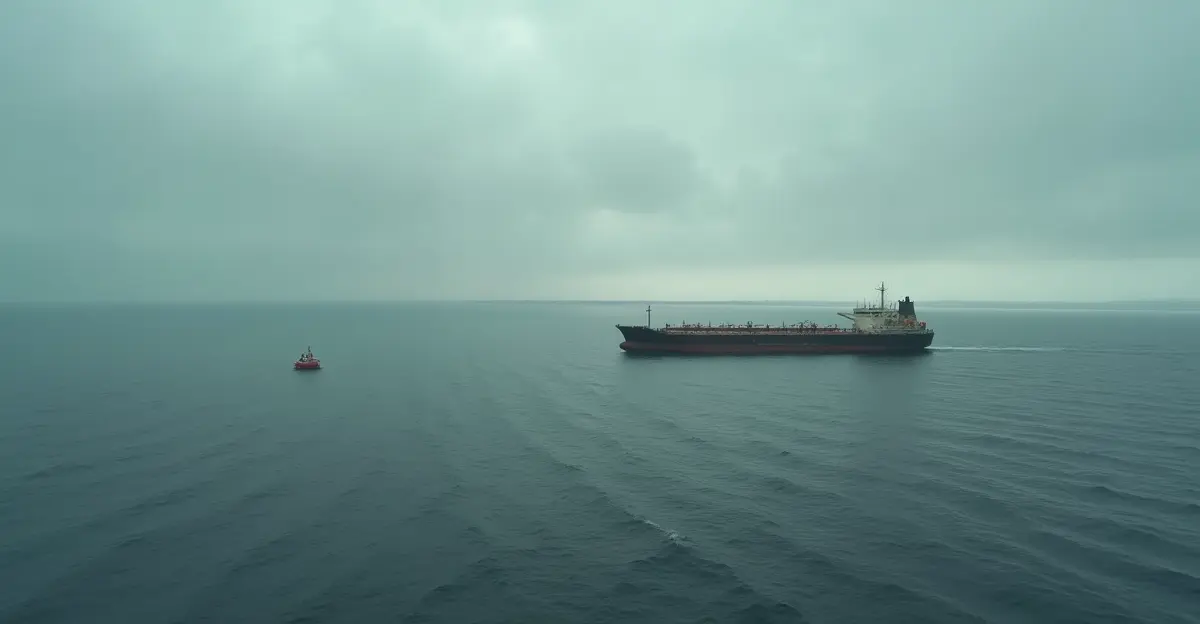
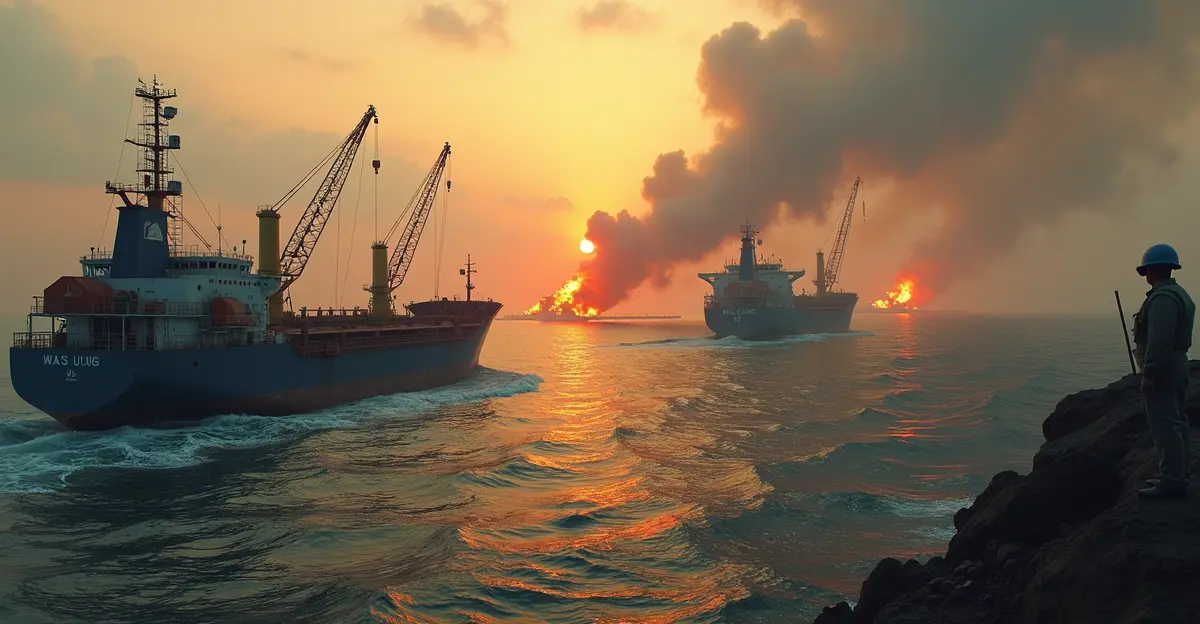
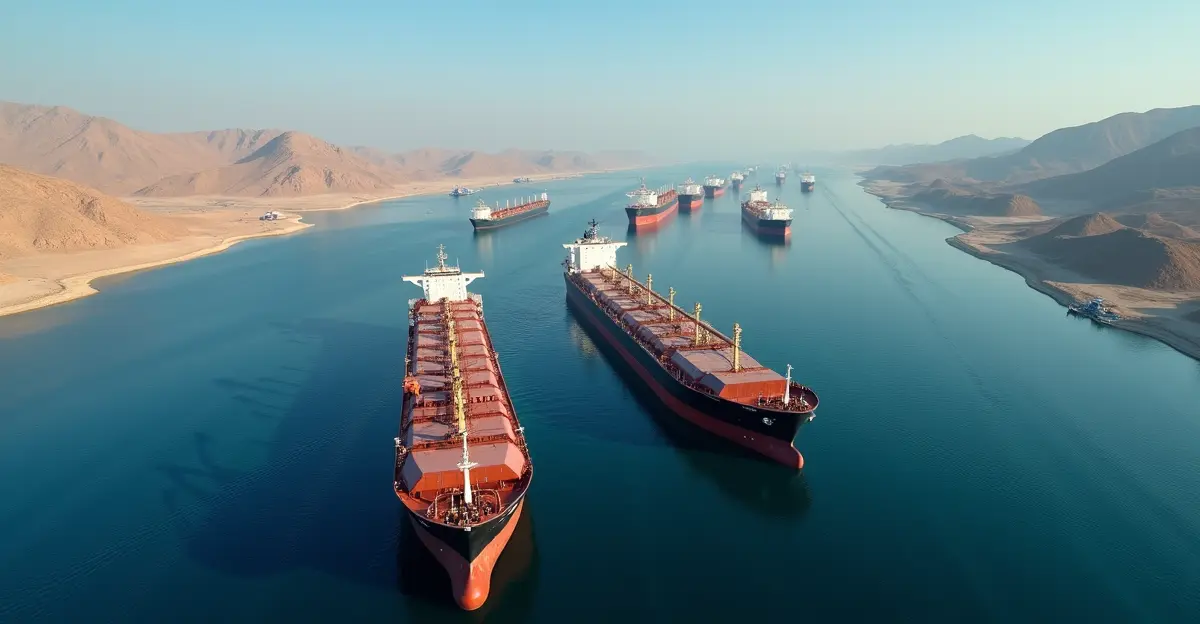
The crisis began on February 28, 2026, when Iran's Revolutionary Guard effectively closed the Strait of Hormuz — through which 20% of the world's LNG and 25% of seaborne oil transit — in retaliation for the US-Israeli air war against Iran. Tanker traffic dropped by 70% within days, with over 150 ships stranded outside the strait. Brent crude surged past $100 per barrel for the first time in four years, peaking at $126, while Asian and European gas prices hit levels not seen since the 2022-23 energy crisis.
Just two months later, on April 25, 2026, the EU's long-planned embargo on Russian LNG spot contracts took effect under the REPowerEU regulation. This phased ban — part of the 19th sanctions package adopted in October 2025 — prohibits short-term LNG contracts concluded before June 17, 2025. Pipeline gas under short-term contracts follows on June 17, with a full LNG ban by December 31, 2026, and pipeline gas under long-term contracts ending by September-October 2027.
The EU's energy independence strategy has reduced Russian gas dependency from 45% before the war to about 12% in 2025, but the simultaneous loss of Middle Eastern LNG creates a supply gap that alternative producers cannot easily fill. Qatar, which supplied roughly 5 bcm annually to Europe, halted all LNG exports indefinitely due to the Hormuz disruption. Global spare LNG liquefaction capacity stands at less than 5% of total capacity, concentrated in the US and Australia.
Storage at Breaking Point
European gas storage — the continent's primary winter buffer — entered the 2026 injection season at its lowest level since 2018. According to Columbia University's Center on Global Energy Policy, storage held just 31 bcm as of April 2026, compared to a working capacity of 110 bcm. Gas Infrastructure Europe (GIE) reported that EU storage stood at approximately 28% (314 TWh) on April 1, 2026, significantly below the previous three years.
The EU is now considering lowering its storage filling target from 90% to 80% capacity to avoid a desperate bidding war for limited LNG cargoes. Achieving even 80% would require 57 bcm of injections — a daunting target given current supply constraints. The Gas Coordination Group, meeting on March 26, 2026, encouraged member states to use flexibility provisions and consider the reduced target early in the filling season.
Germany and the Netherlands face the greatest shortfall risks. Germany's storage stood at roughly 30% capacity by mid-March, while the Netherlands — Europe's largest gas producer after Norway — saw levels drop to a critical 23.5%. Italy and France have managed better through stricter national policies: Italy uses state-guaranteed profit margins for storage operators, while France mandates suppliers cover at least 50% of historical residential winter consumption.
The European gas storage crisis is compounded by weak market signals. GIE warns that low summer-winter price spreads are not incentivizing early injections, creating a risk that Europe will enter winter with insufficient reserves.
Price Shock and Economic Fallout
TTF natural gas prices — the European benchmark — remain elevated at approximately €49.95/MWh, with the European Central Bank revising 2026 price projections upward by 57%. Households face bill increases of 30-40% above 2021 levels, while energy-intensive industries — already struggling with competitiveness — confront potential production cuts.
The IEA's Q2-2026 Gas Market Report highlights that global LNG markets are structurally tighter than at any point since the 2022 crisis. Asian buyers, particularly China and India, are competing fiercely for spot cargoes. China halted fuel exports in March, while South Korea imposed fuel price caps for the first time in 30 years. Bangladesh shut universities to conserve power and fuel.
US LNG exports have become the critical marginal supply source. Cheniere Energy and other US exporters are ramping up production, but new liquefaction capacity — including expansions at Corpus Christi and Plaquemines — will not come fully online until late 2026 or early 2027. The IEA released a record 400 million barrels from emergency oil reserves, but no equivalent mechanism exists for gas.
Geopolitical Dimensions and Policy Responses
The crisis has exposed deep tensions within the EU. Hungary and Slovakia, which still import Russian gas via TurkStream, submitted diversification plans but face binding end-dates under the sanctions regime. The 20th sanctions package, adopted April 23, 2026, complements the LNG ban with restrictions on tanker sales, maintenance services for Russian LNG vessels, and a prohibition on providing Russian LNG terminal services from 2027.
A permanent ban on Russian oil imports was delayed after the Strait of Hormuz closure tightened global oil supply, highlighting the trade-offs between sanctions policy and energy security. The EU's geopolitical balancing act between punishing Russia and securing affordable energy is becoming increasingly untenable.
The Strait of Hormuz crisis ended on June 17, 2026, with the signing of a US-Iran memorandum of understanding at the G7 summit, brokered by Pakistan. Iran agreed to reopen the strait, and the US lifted its naval blockade. However, the damage to global energy markets will take months to repair. Shipping routes must be cleared of mines, insurance premiums remain elevated, and trust in the strait's reliability has been shattered.
Can Europe Avoid a Severe Winter Crunch?
The outlook for winter 2026-2027 remains precarious. Even with the Hormuz strait reopened, LNG cargoes that were diverted to Asia during the closure will take time to rebalance. European storage injections are running at about +0.30 percentage points per day as of mid-June — below the pace needed to reach even 80% by November.
Several factors could mitigate the crisis:
- Mild winter weather: A warmer-than-average winter would reduce heating demand, as occurred in 2022-23.
- Increased Norwegian production: Norway, Europe's largest gas supplier, could boost exports if maintenance schedules are adjusted.
- Demand reduction measures: EU governments are preparing voluntary and mandatory demand reduction plans, including industrial curtailments and public building temperature limits.
- New LNG capacity: US LNG export expansions at Corpus Christi Stage 3 and Plaquemines could add 15-20 bcm of annual capacity by early 2027.
However, the risk of a severe crunch remains real. The 2026 global energy crisis has fundamentally altered the risk calculus for European policymakers. As one EU energy official told reporters: "We are in uncharted territory. The margin for error this winter is razor-thin."
FAQ: Europe's Winter Energy Crisis
What caused the 2026 energy crisis?
The crisis stems from two simultaneous supply shocks: Iran's closure of the Strait of Hormuz (February-June 2026), which removed ~20% of global LNG supply, and the EU's embargo on Russian LNG spot contracts (effective April 25, 2026), which eliminated an additional ~20 bcm of annual supply.
How low are European gas storage levels?
As of April 2026, EU gas storage stood at approximately 31 bcm (28% of capacity) — the lowest level since 2018 and well below the five-year seasonal norm. Achieving even 80% capacity by November would require record injection rates.
Will Europe face gas rationing this winter?
Rationing remains a possibility if a prolonged cold spell coincides with supply disruptions. EU governments have prepared demand reduction plans, but the risk is elevated. A mild winter could avert the worst outcomes.
How are high energy prices affecting households?
European households face bill increases of 30-40% above 2021 levels. Governments have implemented price caps, subsidies, and income support measures, but affordability remains a major concern, particularly in Central and Eastern Europe.
What is the outlook for LNG supply?
Global LNG markets remain structurally tight. US export capacity is expanding, but new liquefaction plants will not reach full output until 2027. Competition with Asian buyers, especially China and India, will keep prices elevated.
Conclusion: A Defining Test for European Energy Security
The winter of 2026-2027 represents a defining test for Europe's energy security architecture. The simultaneous loss of Middle Eastern and Russian gas supplies has exposed the fragility of a system that relied on global LNG markets as a safety valve. While the reopening of the Strait of Hormuz in June 2026 provides some relief, the structural supply gap created by the Russian LNG embargo will persist for years.
European governments are now pursuing a dual strategy: accelerating renewable energy deployment and energy efficiency measures while securing alternative gas supplies through long-term contracts with US, African, and Australian producers. The crisis has also revived debates about nuclear power expansion and the role of natural gas in the energy transition.
As the injection season progresses, all eyes will be on storage fill rates, LNG cargo arrivals, and weather forecasts. The margin for error is minimal, and the consequences of failure — economic contraction, industrial shutdowns, and social unrest — are severe. Europe's ability to navigate this crisis will shape its energy policy for decades to come.
Follow Discussion