


 Deutsch
 English
 Español
 Français
 Nederlands
 Português


 Share
Share




What is Operation Epic Fury?
Operation Epic Fury is a comprehensive U.S. military campaign launched on February 28, 2026, targeting Iran's military infrastructure, nuclear capabilities, and ballistic missile arsenal. According to U.S. Central Command (CENTCOM) updates, American forces have struck more than 1,700 targets across Iran in the first 72 hours of the operation, employing a massive array of military assets including strategic bombers, fighter jets, aircraft carriers, and missile defense systems. The operation represents the most significant military escalation between the U.S. and Iran in decades and follows years of diplomatic tensions over Iran's nuclear program and regional activities.
Military Operations and Targets
The U.S. military has employed an unprecedented range of assets in Operation Epic Fury, including B-1, B-2, and B-52 strategic bombers flying missions from the continental United States, along with F-15, F-16, F-18, F-22, and F-35 fighter jets operating from regional bases and aircraft carriers. Two aircraft carriers, the USS Abraham Lincoln and USS Thomas Hudner, are participating in the operation alongside numerous support vessels.
Targets struck include:
- Islamic Revolutionary Guard Corps (IRGC) command and control facilities
- Ballistic missile launch sites and production facilities
- Air defense systems and military airfields
- Naval assets including ships and submarines
- Drone manufacturing and launch capabilities
- Military communication networks
According to CENTCOM, the operation began at 1:15 AM EST on February 28 with a synchronized wave of attacks from hundreds of aircraft, sea platforms, and unmanned systems. The initial 24 hours saw over 1,000 targets hit, with the total reaching 1,700+ by March 2. The operation has involved 40,000-50,000 U.S. service members repositioned across the region in preparation for the campaign.
Friendly Fire Incident in Kuwait
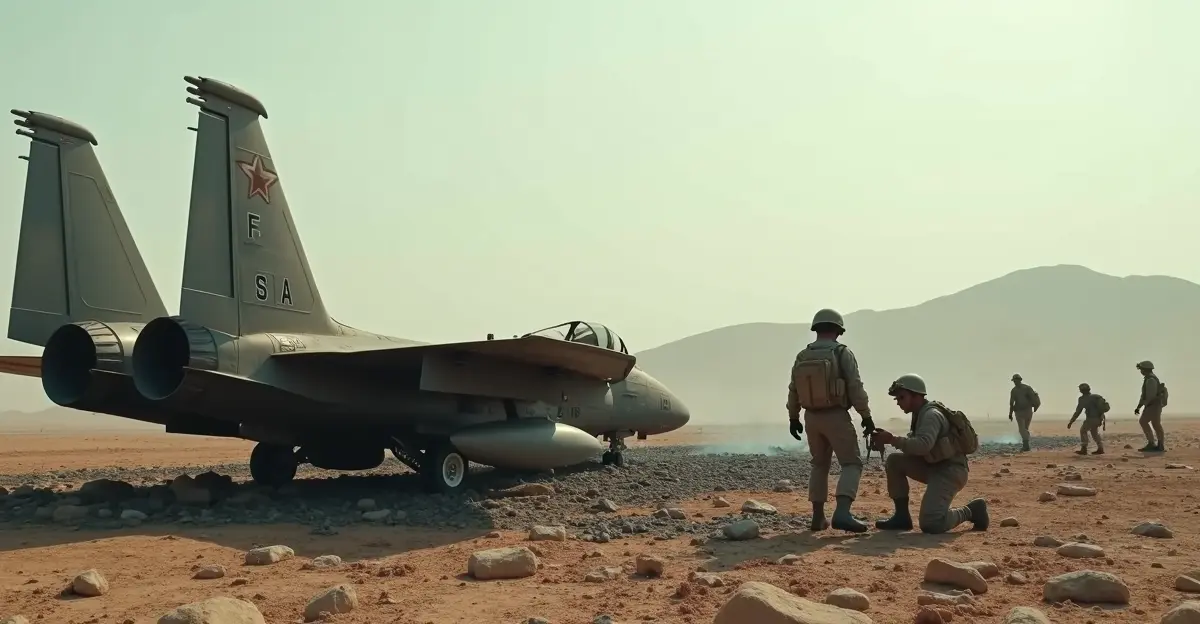
On March 1, 2026, three U.S. F-15E Strike Eagles were mistakenly shot down by Kuwaiti air defenses during combat operations supporting Operation Epic Fury. The friendly fire incident occurred over Kuwait at 11:03 PM ET while the aircraft were defending against Iranian attacks. All six aircrew members successfully ejected and were recovered in stable condition. Kuwait has acknowledged responsibility for the incident, which is currently under investigation. This highlights the complex coordination challenges in congested airspace during rapid wartime operations, similar to issues seen in the 2025 Middle East conflict escalation.
Iran's Military Challenges and Underground Arsenal
Iran presents unique military challenges due to its sophisticated underground infrastructure and dispersed production capabilities. The country maintains approximately 2,500 ballistic missiles with ranges of 2,000-2,500 kilometers, capable of reaching Israel and U.S. bases across the region. These missiles are stored in deeply buried 'missile cities' up to 500 meters underground in mountain ranges, making conventional airstrikes largely ineffective.
Key Iranian capabilities include:
- Mobile truck-mounted launchers that can emerge from tunnels, launch within minutes, and retreat before counterstrikes
- Dispersed manufacturing components across multiple sites
- Hypersonic missile variants and mass-produced Shahed-136 drones
- Solid-fuel technology allowing for quicker launches
Defense experts note that Iran's military strategy has evolved significantly since the Iran nuclear deal collapse in 2018, with increased emphasis on asymmetric warfare and hardened infrastructure. 'That ruwe gebergte, daar staan ook de mobiele lanceerinrichtingen voor raketten in grotten en bunkers,' says Peter Wijninga, defense expert at The Hague Centre for Strategic Studies. 'Het is erg lastig die allemaal op te sporen en uit te schakelen, want die vuren een raket af en verdwijnen weer in een ravijn of bunker, uit het zicht.'
U.S. Objectives and Timeline
President Donald Trump has indicated that Operation Epic Fury could continue for four to five weeks, though the exact duration depends on achieving specific objectives. According to White House statements, the operation aims to:
- Eliminate Iran's imminent nuclear threat
- Cripple Iran's ballistic missile capabilities
- Dismantle proxy terror networks
- Neutralize naval threats in the Persian Gulf
However, defense analysts question whether these objectives are achievable within the stated timeframe. 'Ik vraag me af of dit type operatie voldoet aan de Amerikaanse doelstellingen,' says Bart van den Berg, defense expert at Clingendael Institute. 'De Amerikanen hebben zelf aangedragen dat het draait om het stoppen van de ontwikkeling van een kernwapen. Dat hebben ze vorig jaar ook al geprobeerd, en dat is niet gelukt.'
The operation has received bipartisan support from U.S. lawmakers including Senators Tom Cotton, Lindsey Graham, and Ted Cruz, who praised it as a decisive move to enhance American security. However, questions remain about whether the campaign seeks 'regime change' in Iran, which would require significantly more extensive military operations against the Revolutionary Guard and security apparatus.
Regional Implications and Casualties
Operation Epic Fury has resulted in significant casualties on both sides. At least 48 top Iranian leaders have been killed, including Supreme Leader Ayatollah Ali Khamenei, according to U.S. reports. Six U.S. service members have been killed in the operation, with hundreds of civilian casualties reported in Iran.
The operation has triggered broader regional tensions, with France reportedly sending an aircraft carrier to the Mediterranean and other nations repositioning military assets. The strikes represent a significant escalation in the Middle East security dynamics that could have lasting implications for regional stability and global energy markets.
Frequently Asked Questions
What is Operation Epic Fury?
Operation Epic Fury is a U.S. military campaign launched on February 28, 2026, targeting Iran's military infrastructure, nuclear capabilities, and ballistic missile arsenal with over 1,700 targets struck in the first 72 hours.
How long will Operation Epic Fury last?
President Trump has indicated the operation could continue for four to five weeks, though the exact duration depends on achieving specific military objectives against Iran's capabilities.
What types of targets are being hit?
Targets include IRGC command centers, ballistic missile sites, air defense systems, naval assets, drone facilities, and military communication networks across Iran.
Has there been friendly fire in the operation?
Yes, on March 1, 2026, three U.S. F-15E Strike Eagles were mistakenly shot down by Kuwaiti air defenses. All six crew members ejected safely and were recovered in stable condition.
What are Iran's main military advantages?
Iran's main advantages include deeply buried underground missile facilities, mobile launch systems, dispersed production capabilities, and approximately 2,500 ballistic missiles with ranges up to 2,500 kilometers.

Follow Discussion