


 Deutsch
 English
 Español
 Français
 Nederlands
 Português


 Share
Share




China's 2026 export controls on rare earths and critical minerals have triggered sixfold price spikes and cut European licensing approval rates below 25%. With Beijing controlling 90% of global processing capacity, the West's FORGE alliance and $30 billion counter-response face a narrowing 12-to-18-month window to diversify supply chains before dependence becomes irreversible. This strategic chokehold on materials essential for defense, EVs, and renewable energy represents a fundamental restructuring of global industrial power dynamics.
Context: The Escalation of Export Controls
On April 4, 2025, China introduced export controls on seven heavy rare earth elements, causing immediate supply disruptions for carmakers in the US and Europe. By October 9, 2025, the controls expanded to include parts, components, and assemblies containing Chinese-sourced rare earths—applied to internationally-made products from December 1, 2025. Five additional rare earth elements were also added. The rare earth export restrictions now cover a broad range of materials critical to defense, semiconductors, aerospace, industrial motors, and AI data centers.
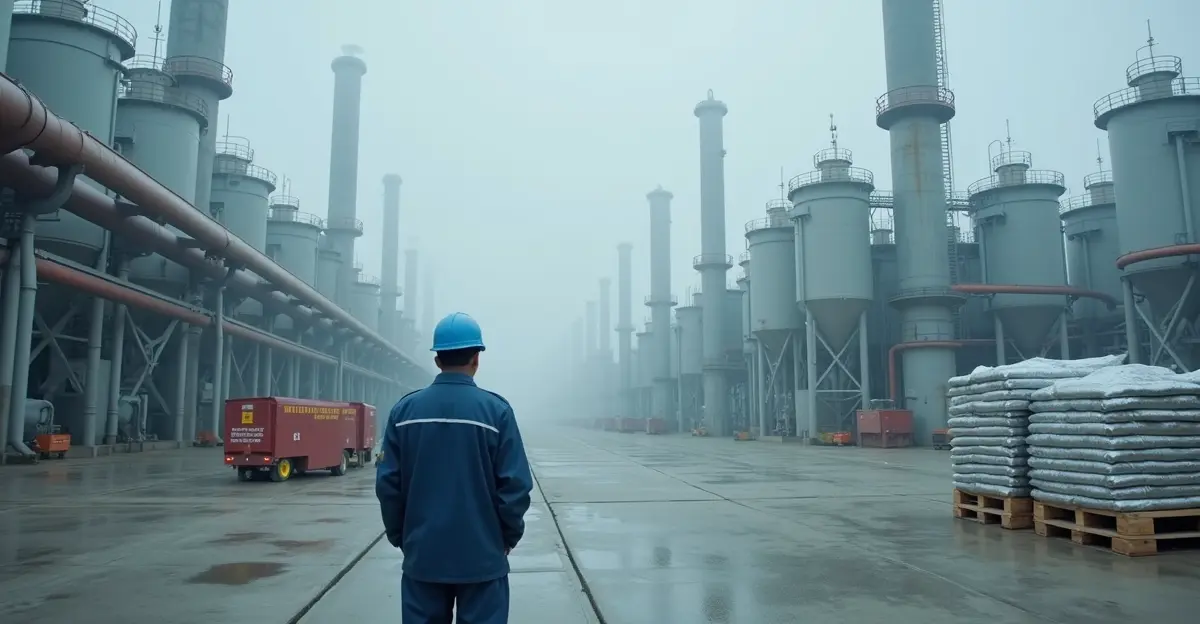
The stated legal basis is the dual-use military-civilian designation under China's national security framework. In practice, the controls represent a direct geopolitical response to Western semiconductor export restrictions, leveraging China's dominant processing positions as supply chain pressure. According to the International Energy Agency (IEA), China dominates the refining of 19 out of 20 strategic minerals, with an average 70% market share. In rare earths specifically, China controls 91% of global refining and 94% of permanent magnet production.
Market Impact: Sixfold Price Spikes and Licensing Collapse
The immediate market reaction has been severe. Prices for key heavy rare earth elements such as dysprosium and terbium have surged sixfold since early 2025. European companies seeking export licenses from Chinese authorities now face approval rates below 25%, effectively cutting off supply for many manufacturers. The critical minerals price surge 2025 has forced automakers and defense contractors to scramble for alternative sources.
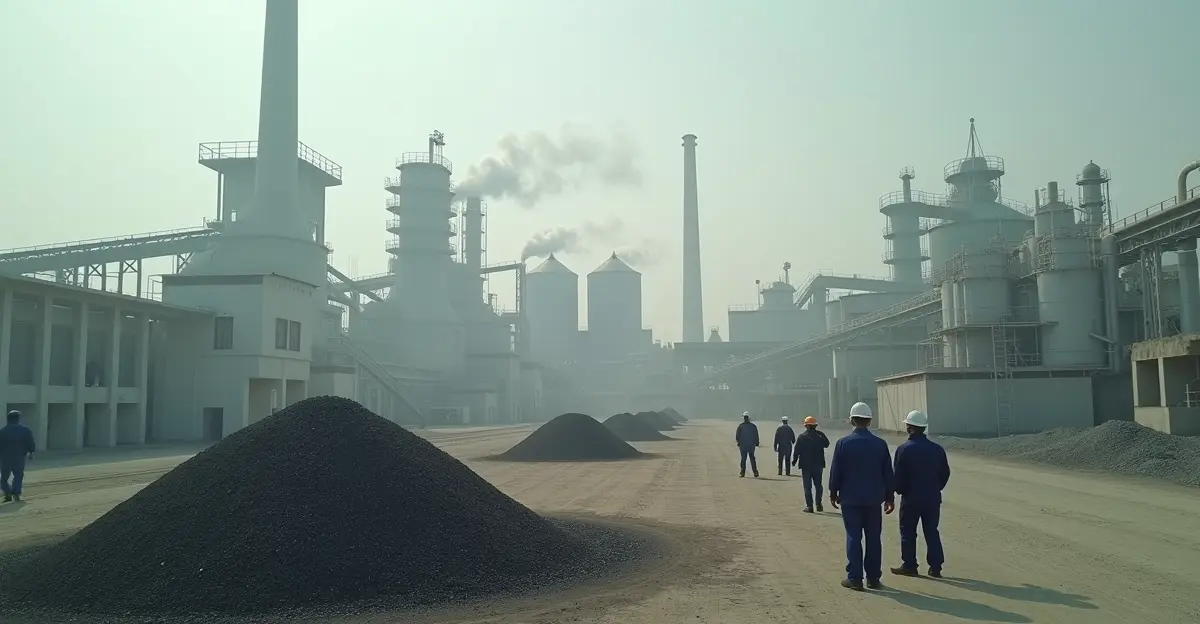
China's control extends beyond mining to processing: the country processes nearly 90% of global rare earths, strengthening its control across the value chain. The US and Australia are the world's second-largest and third-largest producers, accounting for 13.1% and 7.4% of global production in 2025, respectively. However, without domestic processing capacity, raw materials from these countries still often end up being shipped to China for refining.
The West's Counter-Response: FORGE Alliance and $30 Billion Push
In February 2026, the United States launched the Forum on Resource Geostrategic Engagement (FORGE) with 54 nations and $30 billion in financing to break China's rare earth monopoly. South Korea chairs the alliance. The initiative includes a $12 billion strategic reserve and coordinated investment in mining, processing, and recycling projects across allied nations.
The FORGE alliance represents a decisive shift in Western strategy. However, the timeline for tangible results remains uncertain. Analysts estimate that China's market share could drop from ~90% to ~75% by 2028 if current projects succeed, but the FORGE alliance critical minerals initiative faces significant hurdles, including permitting delays, technical expertise gaps, and the high cost of building processing facilities from scratch.
Key Players in Diversification
Outside China, Lynas Rare Earths leads as the principal non-Chinese producer, operating the Mt Weld mine in Australia and a Malaysia separation facility, supplying 5,000-6,000 tonnes/year of NdPr oxide. In the U.S., MP Materials has restarted Mountain Pass operations and produced 1,300 tonnes of NdPr oxide in 2024, with a Texas magnet plant targeting 1,000 t/y capacity. Other emerging players include South Korea's SEONG-AN, Japan's expanding recycling efforts, and Europe's Neo Performance.
Strategic Implications: A Narrowing Window
The West faces a narrowing 12-to-18-month window to build independent alternatives or accept managed dependence. If diversification efforts fail to deliver within this timeframe, China's stranglehold could become irreversible. The critical minerals supply chain diversification challenge is compounded by the fact that China has already locked in long-term supply agreements with many developing nations that hold raw mineral reserves.
For defense applications, the stakes are particularly high. Rare earths are essential for permanent magnets in missile guidance systems, jet engines, and naval vessels. The European Union has designated rare earths as critical raw materials and is stockpiling reserves, but domestic processing capacity remains negligible.
Expert Perspectives
"China's export controls are not just about trade—they are a strategic weapon designed to reshape global industrial power dynamics," says Dr. Sarah Chen, a geopolitical analyst at the Center for Strategic and International Studies. "The West has underestimated the time and capital required to build alternative supply chains. We are now in a race against time."
Tae-Yoon Kim of the IEA notes that "these escalating restrictions threaten strategic sectors including energy, automotive, defence, semiconductors, aerospace, industrial motors, and AI data centres, while undermining international diversification efforts."
FAQ
What are China's 2026 critical minerals export controls?
China's 2026 export controls restrict the export of seven heavy rare earth elements and later expanded to include parts and assemblies containing Chinese-sourced rare earths, requiring government licenses that are increasingly denied to foreign buyers.
How much does China control global rare earth processing?
China controls approximately 90% of global rare earth refining capacity, including a near-monopoly on heavy rare earth elements like dysprosium and terbium.
What is the FORGE alliance?
The Forum on Resource Geostrategic Engagement (FORGE) is a U.S.-led alliance of 54 nations launched in February 2026 with $30 billion in financing to build alternative critical mineral supply chains outside China.
How have prices been affected?
Prices for key heavy rare earth elements have surged sixfold since early 2025, and European licensing approval rates have fallen below 25%.
Can the West diversify in time?
Analysts estimate a 12-to-18-month window to build viable alternatives. If current projects succeed, China's market share could drop to ~75% by 2028, but significant hurdles remain.
Conclusion
China's 2026 export controls on critical minerals have triggered a fundamental restructuring of global supply chains. The West's $30 billion FORGE alliance response faces a narrowing window to achieve diversification before dependence becomes irreversible. The outcome of this strategic contest will shape industrial power dynamics for decades to come.



Follow Discussion