


 Deutsch
 English
 Español
 Français
 Nederlands
 Português


 Share
Share




In 2025-2026, China escalated its export controls on rare earth elements and critical minerals, leveraging its dominance of roughly 90% of global processing capacity to trigger price spikes of up to sixfold abroad and reduce licensing approval rates for European buyers below 25%. This strategic crisis now directly threatens Western defense production, electric vehicle (EV) manufacturing, and AI data center buildout, as Beijing's October 2025 expansion extended controls to components and assemblies manufactured internationally using Chinese-origin materials. With a narrow 12-to-18-month window to act, Western nations face three strategic paths: managed dependence, costly independence, or a hybrid model.
Context: China's Dominance and the 2025-2026 Escalation
China controls approximately 90% of global rare earth processing, 80% of tungsten refining, and 60% of antimony production, according to the International Energy Agency (IEA). For 19 out of 20 strategic minerals, China is the leading refiner with an average 70% market share. In rare earth elements specifically, China controls roughly 91% of global refining and 94% of permanent magnet production. This concentration gives Beijing unprecedented leverage over industries ranging from precision-guided munitions to wind turbines and EV motors.
In April 2025, China introduced export controls on seven heavy rare earth elements, causing carmakers in the US and Europe to struggle obtaining magnets, with European prices reaching up to six times those in China. Then on October 9, 2025, via MOFCOM Announcements Nos. 55-62, Beijing dramatically expanded controls to cover extraction, processing, magnet production, and technology transfers, adding five new rare earth elements (holmium, erbium, thulium, europium, ytterbium) and extending extraterritorial jurisdiction to products made abroad using Chinese materials or technologies. This brought the total controlled rare earth elements to 12 out of 17. The EU critical minerals strategy has been particularly affected, as over 80% of European companies depend on Chinese supply chains for materials essential to defense, EVs, and renewable energy.
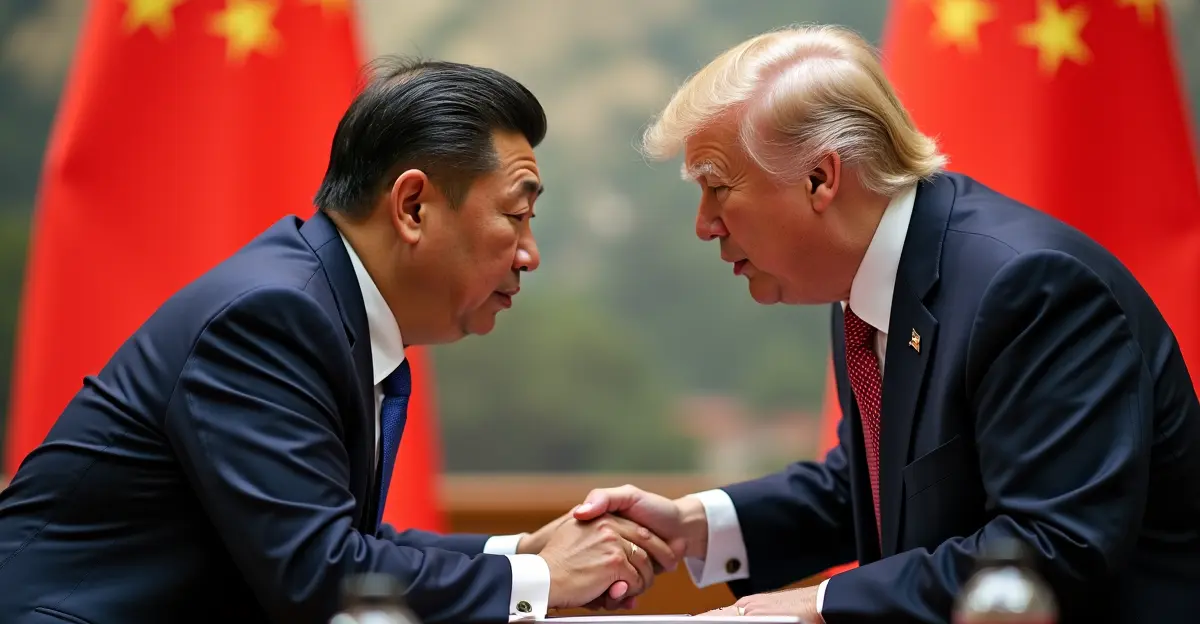
However, in November 2025, China agreed to suspend these latest controls for one year (until November 2026) as part of a trade agreement with the US following the Xi-Trump meeting. The suspension covers the October expansion and extraterritorial rules, but earlier controls from April 2025 on seven rare earth elements remain in effect, requiring export licenses from MOFCOM. This temporary easing followed U.S.-China trade negotiations in Kuala Lumpur, where the US also agreed to suspend its '50% ownership' Entity List Affiliates Rule for one year. Yet China's legal framework remains intact, and companies continue mapping Chinese-origin content in supply chains, preparing for possible re-activation.
Three Strategic Paths for Western Nations
Path 1: Managed Dependence
The first path involves accepting continued reliance on Chinese supply chains while negotiating for more favorable terms. This approach includes strategic stockpiling, diplomatic engagement, and temporary waivers. NATO defense stockpiles are currently sufficient for only 6-9 months of high-intensity conflict, according to defense analysts. The EU has published a list of 47 strategic CRM projects under the Critical Raw Materials Act, while firms like Rheinmetall and MBDA are acquiring upstream control. However, this path risks permanent vulnerability, as China can reimpose restrictions at any time. The US-China trade war 2025 demonstrated that Beijing is willing to use mineral leverage as a geopolitical tool, particularly amid tensions over Taiwan and technology disputes.
Path 2: Costly Independence
The second path requires building fully independent Western supply chains from mining through processing to manufacturing. The IISS warns that onshoring will significantly increase costs, requiring sustained government and industry coordination. Rebuilding independent alternatives could take 20-30 years, far beyond the current geopolitical window. The US became the largest shareholder in the country's only operating rare-earths mine in 2025, and the EU's RESourceEU Action Plan allocated €3 billion in funding. Alternative supply chains are emerging in Australia (Lynas expansion), Ukraine (despite war-related challenges), and the DRC (cobalt agreements), but meaningful non-Chinese processing capacity is unlikely before 2028-2030. This path demands massive capital expenditure—estimated at over $30 billion for the US alone—and faces significant technical hurdles in rebuilding refining expertise that China has cultivated over decades.
Path 3: Hybrid Model
The third path combines elements of both approaches: maintaining some dependence while strategically investing in alternative capacity for the most critical materials. This hybrid model includes the FORGE alliance critical minerals initiative launched by the US in February 2026. The Forum on Resource Geostrategic Engagement (FORGE) brings together 54 nations and the European Commission, chaired by South Korea, with over $30 billion in committed financing. This includes EXIM's $12 billion Project Vault for a US Strategic Critical Minerals Reserve. FORGE signed 11 new bilateral framework agreements with countries including Argentina, Morocco, the Philippines, Peru, and the UAE, totaling 21 deals. The initiative creates a preferential trade-and-investment zone with coordinated price floors backed by adjustable tariffs to prevent market manipulation.
Impact on Defense, EV, and AI Industries
The immediate impact of China's controls has been severe across multiple sectors. In defense, delays in precision-guided munitions production have been reported, as neodymium and dysprosium are essential for sensors, guidance systems, and propulsion. At the June 2025 NATO Summit Defence Industry Forum, twelve nations launched a High Visibility Project on joint acquisition, transportation, and recycling of defense-critical materials. The NATO rare earth stockpile strategy has become a priority as allies recognize the vulnerability of relying on Chinese supplies for weapons systems.
In the EV sector, motor supply bottlenecks have emerged, with European automakers struggling to secure permanent magnets. Prices for dysprosium surged from approximately $150/kg to over $900/kg, while terbium prices saw similar spikes. The renewable energy sector faces disruptions in wind turbine production, which requires large quantities of rare earth magnets for generators. AI data center buildout is also threatened, as advanced computing infrastructure relies on specialized magnets and cooling systems containing critical minerals.
China's strategy is not about weaponizing scarcity but about weaponizing control. By using temporary, reversible restrictions, Beijing maintains pricing power and extracts strategic concessions while discouraging Western investment in alternative supply chains. The October 2025 expansion specifically targeted semiconductor users, adding extra scrutiny for chip manufacturers who rely on rare earths for polishing compounds and specialty alloys.
Expert Perspectives
China's export control architecture has transformed into a flexible geopolitical tool. The framework uses control lists, temporary controls, and catch-all provisions, with Article 49 of the 2024 regulations introducing extraterritorial reach similar to the US Foreign Direct Product Rule, notes an analysis from the Andersen Institute. However, China's leverage comes primarily from its physical resource control and refining concentration rather than broad legal jurisdiction.
Tae-Yoon Kim and colleagues at the IEA commented in October 2025: These restrictions threaten supply chains across energy, automotive, defense, semiconductors, aerospace, and AI data centers, while undermining efforts to diversify supply chains. The IEA warns that the window for meaningful diversification is narrowing rapidly.
A multi-institutional analysis published by Rare Earth Exchanges concludes: Rather than weaponizing scarcity, China weaponizes control through temporary, reversible restrictions that maintain pricing power and extract strategic concessions while discouraging Western alternative investment. The analysis gives Western nations a narrow 12-18 month window to act decisively or face prolonged vulnerability.
FAQ
What critical minerals does China control?
China controls approximately 90% of global rare earth processing, 80% of tungsten refining, and 60% of antimony production. For 19 out of 20 strategic minerals, China is the leading refiner with an average 70% market share.
How did China's export controls change in October 2025?
On October 9, 2025, China expanded controls to cover extraction, processing, magnet production, and technology transfers, adding five new rare earth elements and extending extraterritorial jurisdiction to products made abroad using Chinese materials or technologies. This brought the total controlled rare earth elements to 12 out of 17.
What is the FORGE alliance?
The Forum on Resource Geostrategic Engagement (FORGE) is a US-led plurilateral initiative launched in February 2026, bringing together 54 nations and the European Commission to counter China's dominance over critical mineral supply chains. It is backed by over $30 billion in financing and chaired by South Korea.
How long do Western nations have to act?
Analysts estimate a narrow 12-to-18-month window to make decisive investments in alternative supply chains before China's grip becomes effectively permanent. Building meaningful non-Chinese processing capacity is unlikely before 2028-2030.
What are the three strategic paths for Western nations?
The three paths are: managed dependence (accepting reliance while stockpiling and negotiating), costly independence (building fully Western supply chains at high cost over 20-30 years), and a hybrid model (combining dependence with targeted investment in critical alternatives, as pursued by FORGE).
Conclusion: The Narrow Window
The critical minerals crisis represents one of the most significant strategic challenges for Western nations since the Cold War. China's calibrated use of export controls—temporary, reversible, and precisely targeted—has created a situation where the global supply chain for essential technologies is held hostage to Beijing's geopolitical calculations. The 12-to-18-month window for action is rapidly closing, and the choice between managed dependence, costly independence, or a hybrid model will define Western industrial competitiveness and national security for decades to come. The FORGE alliance represents the most coordinated response to date, but its success depends on sustained political will, massive capital investment, and the ability to overcome technical hurdles in rebuilding refining capacity that China has spent decades perfecting.




Follow Discussion