


 Deutsch
 English
 Español
 Français
 Nederlands
 Português


 Share
Share




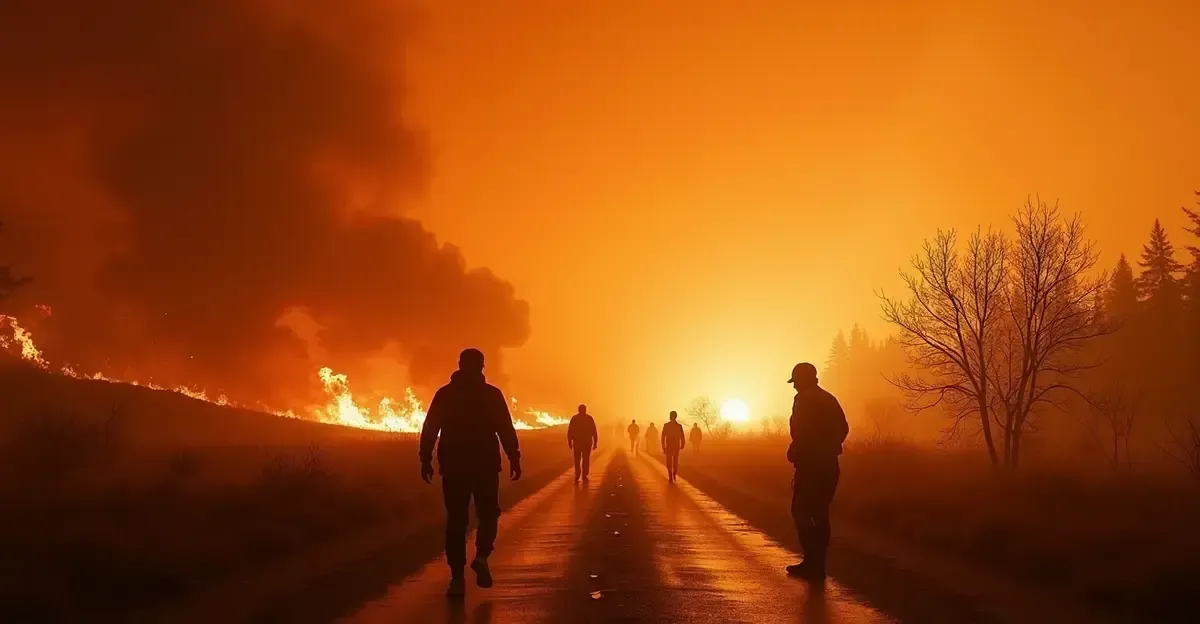
A severe heatwave is gripping Europe in June 2026, with France, Spain, Germany, Italy, and the United Kingdom experiencing extreme temperatures. France has placed 35 departments under the highest-level red alert, with forecasts suggesting Monday, June 22, could become the hottest day ever recorded in the country. The heatwave, the second to hit Europe in under a month, is disrupting daily life, closing schools, canceling public events, and straining infrastructure.
France on Red Alert: 'Warmste Dag Ooit' Predicted
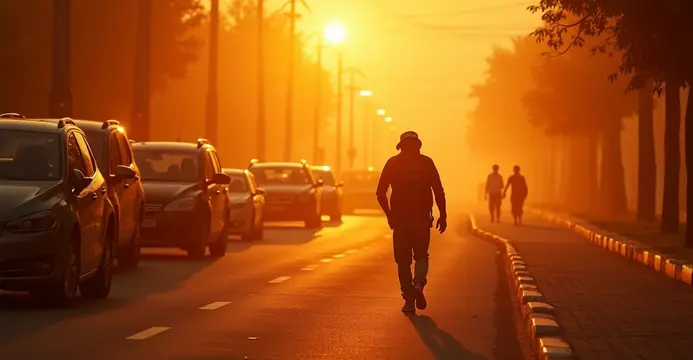
Météo-France has issued code red warnings for 35 departments, covering approximately 35 million people. An additional 14 departments will be placed under red alert from Monday afternoon. According to the French weather institute, 'Monday could be the warmest day ever measured in France, regardless of the month.' Temperatures have already reached 41°C (105.8°F) in some areas, and Paris is expected to see thermometers exceed 40°C for the first time in June.
The heatwave is driven by a powerful heat dome — a high-pressure system trapping hot air from North Africa over Western Europe. This phenomenon has made the event comparable in intensity to the deadly August 2003 heatwave that killed an estimated 15,000 people in France.
Widespread Disruption: Schools, Transport, and Events
School Closures and Exam Adjustments
Hundreds of schools across France will remain closed on Monday. In the Île-de-France region, which includes Paris, authorities have allocated €1 million in subsidies for the purchase of air conditioning units and fans at examination venues. Students sitting final exams are being moved to cooler rooms where possible.
Transport Cancellations
The head of French national railway SNCF has advised vulnerable people to avoid train travel during the heatwave. Dozens of long-distance trains have been canceled through Monday to prevent air-conditioning failures. Speed restrictions are also in place on several rail lines to prevent track deformation.
Fête de la Musique and Alcohol Ban
France's annual Fête de la Musique, a nationwide music festival held on June 21, saw significant disruptions. Authorities imposed an alcohol ban in public spaces within red alert zones to reduce pressure on emergency services. 'We need to relieve emergency services and allow medical personnel to focus on caring for the most vulnerable,' the French government stated.
In Spain, a public screening of a World Cup match between Spain and Saudi Arabia in Madrid was canceled due to temperatures reaching 39°C. The Spanish football federation deemed it unsafe for fans to gather in the fan zone.
Spain: Red Alert in Basque Country
Spain issued its first red heat alerts of summer 2026, with the Basque Country in the northwest facing an 'extraordinary risk' to life as temperatures reach 40°C. AEMET, the state weather agency, placed 13 of Spain's 17 regions under orange alert. The climate change impacts on Europe are becoming increasingly evident as northern regions like the Basque Country, which rarely see 40°C heat, endure extreme conditions due to southerly winds funneling hot air into the Cantabrian region. Authorities warn of increased wildfire risks and advise vulnerable populations to avoid prolonged sun exposure.
Heat-Related Deaths and Drownings
The heatwave has already claimed lives across Europe. In France, a 30-year-old man died after collapsing on an athletics track near Paris. Seven heat-related deaths have been reported in France during the June heatwave, following 101 heat-related deaths recorded in Spain during May — the highest monthly figure since records began in 2015.
Drowning incidents have also risen sharply. In northeastern Spain, three boys aged 12 and 13 died after jumping from rocks into the sea and being unable to return due to strong waves. In Germany, three swimmers are missing after swimming in the Rhine, and a 23-year-old man drowned in a lake near Karlsruhe. In France, a 17-year-old boy died after being swept away by the current of the Dordogne River.
Germany, Italy, and the UK Also Affected
Germany has issued widespread heat warnings, with temperatures nearing 38°C. Power prices surged 29% due to increased cooling demand. Italy placed several major cities, including Rome, Florence, Bologna, and Turin, under red alert. The UK is bracing for temperatures well into the 30s, with health authorities urging the public to stay hydrated and check on elderly neighbors.
Experts warn that the frequency of European heatwaves is accelerating due to climate change. Europe is warming at twice the global average since the 1980s, making such extreme events more likely and more intense.
Climate Change Link
Climate scientists have attributed the intensity and early timing of the 2026 heatwaves to human-induced climate change. According to a ClimaMeter analysis, meteorological conditions similar to those causing the May heatwave are up to 2.5°C warmer than in the past. The extreme heat has exposed approximately 124 million people and $5.9 trillion worth of economic activity to dangerous conditions.
Peter Thorne, director of the ICARUS Climate Research Centre at Maynooth University, stated: 'This heatwave has a very large climate change component. Europe is warming faster than any other continent due to rapid Arctic warming, reduced atmospheric particulates, and increasingly frequent heat dome events.' He emphasized that nighttime heat, which prevents the body from recovering, is particularly dangerous for the medically vulnerable, the elderly, and young children.
The World Health Organization reported that more than 200,000 lives have been lost to heat in Europe since 2022, calling extreme heat a 'silent killer.' The global response to climate emergencies remains a pressing concern as heatwaves become more frequent and severe.
FAQ: Europe Heatwave 2026
What is causing the 2026 European heatwave?
The heatwave is caused by a persistent heat dome — a high-pressure system that traps hot air from North Africa over Western Europe. Climate change is amplifying the intensity and frequency of such events.
Which countries are affected by the heatwave?
France, Spain, Germany, Italy, the United Kingdom, Portugal, Belgium, the Netherlands, Switzerland, and Austria are among the most affected countries.
How hot will it get in France?
Temperatures are expected to reach 41°C (105.8°F) in some areas, with Paris possibly exceeding 40°C for the first time in June. Monday, June 22, could be the hottest day ever recorded in France.
What safety measures are in place?
France has activated red alerts in 35 departments, closed hundreds of schools, canceled trains, and banned alcohol in public spaces. Spain has closed fan zones and issued red alerts for the Basque Country. Germany and Italy have issued nationwide heat warnings.
How many deaths have been attributed to the heatwave?
At least 11 direct heat-related deaths have been reported in France, with 101 heat-related deaths recorded in Spain during May. Drowning incidents have also increased across Europe.
How long will the heatwave last?
The heatwave is expected to persist until at least Thursday, June 25, with some forecasts suggesting it could continue into the following week.
Sources
This article is based on reporting from NOS, Météo-France, AEMET, France 24, RFI, the French government, the World Health Organization, ClimaMeter, and interviews with climate scientists.



Follow Discussion