


 Deutsch
 English
 Español
 Français
 Nederlands
 Português


 Share
Share




One year after President Trump's April 2, 2025 'liberation day' tariff announcement, the 2026 trade war is fundamentally reshaping global supply chains. Companies across retail, automotive, and pharmaceuticals have absorbed roughly 80-85% of tariff costs domestically while racing to diversify sourcing across multiple regions, according to AlixPartners supply chain expert Venky Ramesh.
What Is the 2026 Trade War?
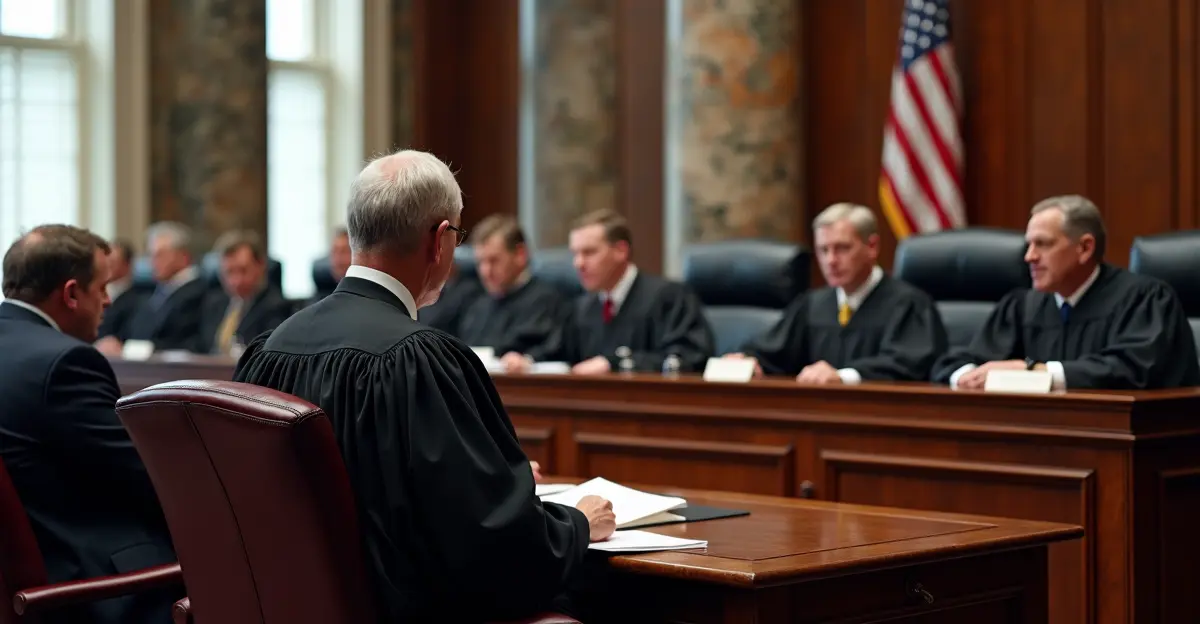
The 2026 trade war represents a structural shift in U.S. trade policy triggered by the Supreme Court's February 20, 2026 ruling in Learning Resources, Inc. v. Trump. The 6-3 decision struck down tariffs imposed under the International Emergency Economic Powers Act (IEEPA), with Chief Justice John Roberts writing that 'the power to regulate is not the power to tax.' Within hours, President Trump imposed a 10% global tariff under Section 122 of the Trade Act of 1974, later raised to 15%, which expires on July 24, 2026. This new legal framework has replaced the IEEPA tariff regime with a more fragile statutory basis.
How Companies Are Absorbing Tariff Costs
Venky Ramesh of AlixPartners told CNBC that companies absorbed or passed on 80-85% of costs, and are now diversifying supply chains and building resilience. Retail giants like Walmart fared well while smaller firms struggled; Home Depot now caps any single foreign country at 10% of purchases. The automotive sector remains hardest hit: Toyota faces a $9.5 billion impact, while GM, Ford, and Stellantis absorbed $6 billion combined last year. Meanwhile, pharmaceutical manufacturers announced massive U.S. reshoring investments—Lilly ($27B), Merck ($70B), and J&J ($55B)—totaling $370–480 billion for 2025–2030. These figures illustrate how tariff cost absorption has become a core corporate strategy.
Nearshoring and Supply Chain Diversification
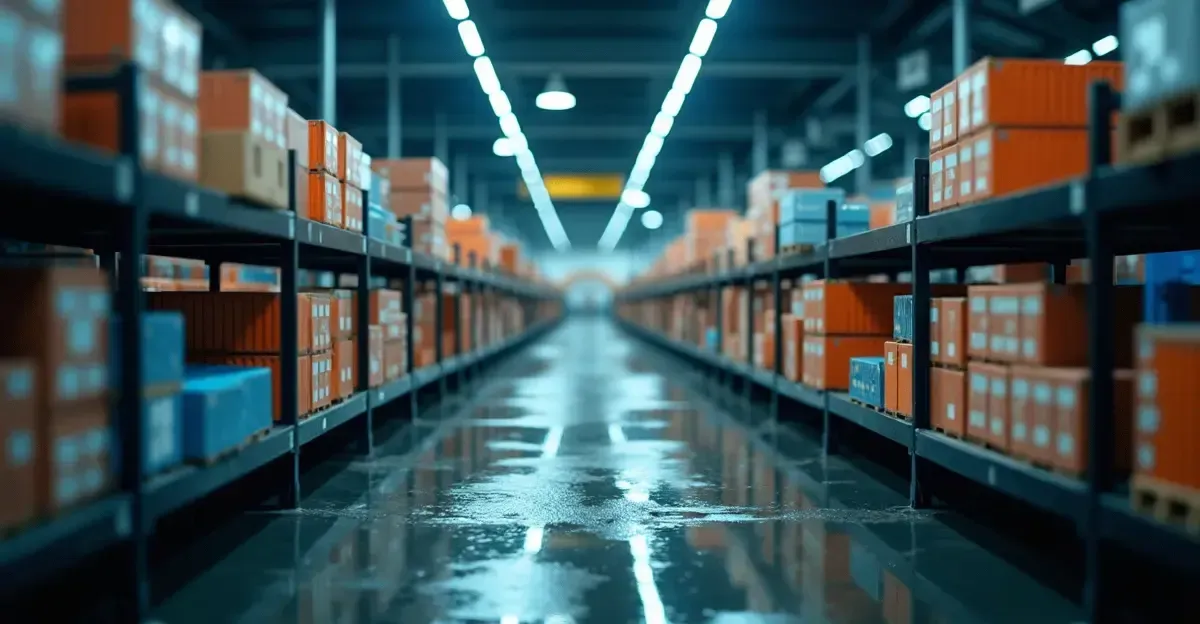
The shift from just-in-time to resilience-first supply chains is accelerating nearshoring, with projections that 7-10% of critical manufacturing will move to allied nations by 2028. Mexico absorbed $18.2 billion in FDI redirects, a 340% year-over-year jump in nearshoring announcements, while Vietnam captured $9.7 billion. Poland and the Czech Republic have become Europe's default production nodes. Relocation payoff periods compressed from five years to just 18 months. However, the World Bank cautions that only 12% of announced Mexican projects are operational, and infrastructure gaps could delay ramp-up by 18–24 months. This global nearshoring trend is creating new winners and losers in the global economy.
Impact on Key Industries
US-China bilateral trade fell roughly 30%, with effective U.S. tariffs on Chinese imports averaging around 33%—up to 110-145% on EVs and batteries. Southeast Asia emerged as a clear winner: Vietnam's U.S. imports rose 21.5%, and Thailand, Malaysia, and Indonesia captured diverted trade. The automotive supply chain faces the steepest adjustment, while pharmaceutical supply chains are bifurcating between onshore and offshore production. AI-related semiconductor trade now drives roughly half of merchandise trade growth, concentrating leverage in the U.S., Taiwan, and South Korea.
Expert Perspectives
'Companies absorbed or passed on 80-85% of costs and are now diversifying supply chains and building resilience,' Ramesh said. Chief Justice Roberts' opinion emphasized constitutional limits on executive tariff power. Legal experts note the Section 122 tariff's 150-day limit makes it vulnerable to challenge, and HMTX Industries v. United States pending before the Court could further reshape the trade policy landscape.
FAQ
What did the Supreme Court rule in February 2026?
The Court ruled 6-3 in Learning Resources, Inc. v. Trump that IEEPA does not authorize the president to impose tariffs, striking down emergency tariffs on Canada, Mexico, China, and others.
What are Section 122 tariffs?
Section 122 of the Trade Act of 1974 allows temporary tariffs to address balance-of-payments deficits. President Trump imposed a 10% global tariff (later 15%) under this authority, effective February 24, 2026, expiring July 24, 2026.
How much of tariff costs are companies absorbing?
According to AlixPartners, companies absorbed or passed on 80-85% of tariff costs, while also diversifying supply chains and building resilience.
Which countries are winning from nearshoring?
Mexico, Vietnam, Poland, and the Czech Republic are major beneficiaries, with Mexico capturing $18.2 billion in FDI redirects and Vietnam $9.7 billion.
What happens after Section 122 expires on July 24, 2026?
Legal experts expect further litigation and possible congressional action, as Section 122 tariffs face vulnerability due to their 150-day limit and balance-of-payments mismatch.
Conclusion: A Permanent Shift to Resilience-First Supply Chains
The 2026 trade war has permanently altered global trade architecture. The combination of the Supreme Court's IEEPA ruling and Section 122 tariffs has forced companies to abandon just-in-time models for resilience-first strategies, with nearshoring projected to relocate 7-10% of critical manufacturing to allied nations by 2028. As Congress and courts continue to define executive tariff authority, the global trade architecture will be shaped by this new legal and economic reality.


Follow Discussion