


 Deutsch
 English
 Español
 Français
 Nederlands
 Português


 Share
Share




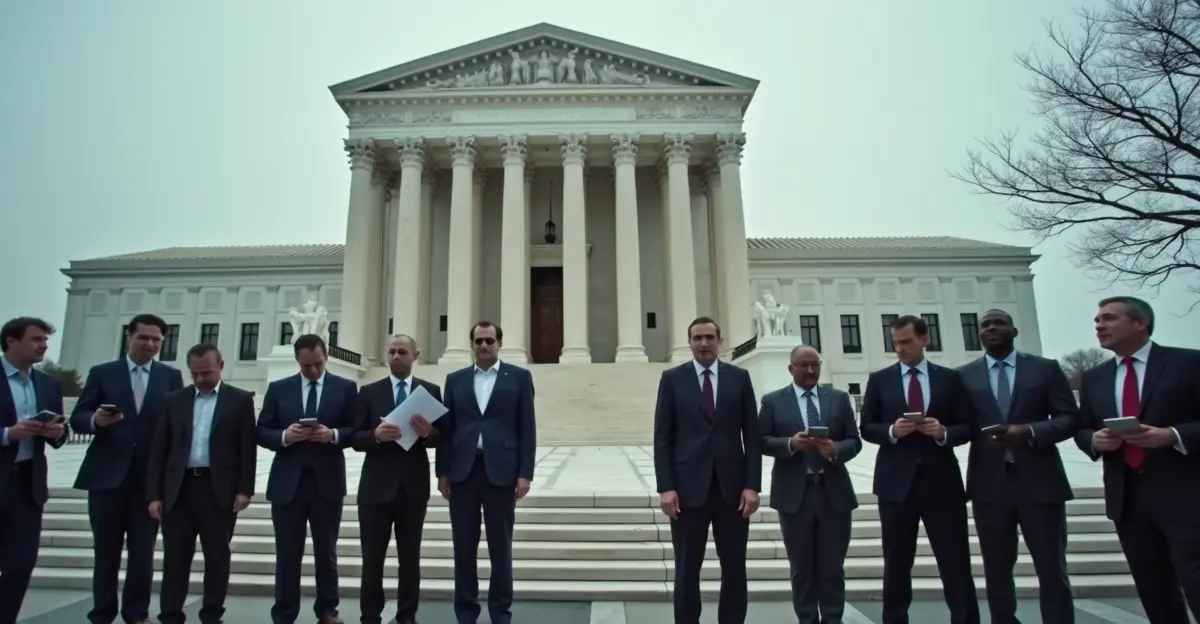
In a landmark 6-3 decision on February 20, 2026, the U.S. Supreme Court struck down executive tariffs imposed under the International Emergency Economic Powers Act (IEEPA), triggering a fundamental restructuring of global trade architecture. The ruling in Learning Resources, Inc. v. Trump found that IEEPA does not authorize the president to impose tariffs, applying the major questions doctrine to invalidate duties that had generated approximately $164.7 billion in cumulative revenue between January 2025 and January 2026. With over $175 billion in tariff payments now in legal limbo and new tariffs rapidly enacted under alternative authorities, multinational corporations face unprecedented regulatory complexity in 2026.
The Supreme Court Decision and Its Immediate Aftermath
Chief Justice John Roberts, joined by Justices Gorsuch and Barrett, wrote that IEEPA contains "no reference to tariffs or duties" and that Congress would not delegate the "core congressional power of the purse" through ambiguous language. The ruling invalidated tariffs on China, Canada, and Mexico originally justified over fentanyl trafficking, as well as broader "reciprocal" tariffs on dozens of nations. Justice Kavanaugh's dissent warned the decision could require billions in refunds and create uncertainty in trade deals worth trillions.
On March 4, 2026, the Court of International Trade ordered refunds, and by May 2026, importers began receiving payments through the Customs Automated Payment Exchange (CAPE) system. The administration has signaled intent to appeal the universal refund order, though Customs and Border Protection has already refunded approximately $85 billion under its own authorities. The Penn Wharton Budget Model projects total refunds could reach up to $175 billion, representing roughly half of all U.S. customs duties collected during the IEEPA tariff period.
Alternative Tariff Authorities: The New Regulatory Landscape
Within hours of the ruling, President Trump implemented alternative tariff measures under Section 122 and Section 301 of the Trade Act of 1974, ensuring that the decision would not materially alter current trade policy. The resulting multi-layered tariff system now includes:
- Section 301 tariffs on Chinese goods: 7.5-25% generally, with 100% on electric vehicles and 50% on semiconductors
- Section 232 tariffs: 25% on steel and aluminum, expanded in January 2026 to include semiconductors at 25%
- Section 122 surcharge: Up to 15% on most imports, expiring July 24, 2026 unless renewed
- Sector-specific duties: 50% on solar cells, 100% on EVs, and new semiconductor tariffs effective January 15, 2026
The effective tariff on most Chinese consumer goods now stands at approximately 35%, down from 45% under the IEEPA regime but still historically high. A new USTR investigation launched March 11, 2026 targets Chinese "excess capacity" that could raise rates further. The de minimis $800 exemption for e-commerce shipments from China was eliminated on May 2, 2025, impacting platforms like Temu and Shein.
Supply Chain Fragmentation into Regional Blocs
The Supreme Court ruling has accelerated the fragmentation of global trade into competing regional blocs. The USMCA sunset clause review beginning July 1, 2026 represents a critical juncture for North American trade, governing over $1.8 trillion in annual trilateral commerce. Under Article 34.7, the agreement faces mandatory reviews every six years, with potential outcomes ranging from clean extension to withdrawal into bilateral agreements.
Mexico has surpassed China as the U.S.'s largest trade partner for the third consecutive year, with U.S.-Mexico trade reaching approximately $872.8 billion in 2025 versus China's $427 billion. Mexico attracted a record $40.8 billion in foreign direct investment in 2025, driven by nearshoring trends. Cross-border trucking grows 8-12% annually, while industrial vacancy rates in key hubs like Monterrey fall below 2.1%.
The friend-shoring strategy has shifted supply chain priorities from efficiency to resilience, with companies accepting 15-25% higher costs for geopolitical security. Emerging hubs include Southeast Asia (Vietnam, Thailand), Eastern Europe (Poland, Czech Republic), and North Africa (Morocco, Tunisia). The transition from "just-in-time" to "just-in-case" manufacturing now incorporates Total Cost of Ownership analysis that accounts for geopolitical risk, compliance costs, and sustainability factors.
Critical Sectors: Semiconductors and Critical Minerals
On January 14, 2026, President Trump issued two proclamations under Section 232 targeting semiconductors and critical minerals. The first imposes a 25% tariff on semiconductor imports with a two-phase approach: Phase One applies immediately to certain advanced integrated circuits and manufacturing equipment, while Phase Two may impose "significant" tariffs depending on negotiations with South Korea, Taiwan, and Japan, which must report by April 14, 2026.
The second proclamation directs negotiations on processed critical minerals and derivative products (PCMDPs) to secure supply chains, without immediately imposing tariffs but reserving the right to do so. This follows China's October 2025 export restrictions on such minerals. The semiconductor supply chain faces particular disruption, as the new tariffs apply to products entering Foreign Trade Zones and prohibit Duty Drawback, while exempting U.S. data centers, R&D, startups, and consumer electronics through end-use certifications.
U.S.-EU Trade Dynamics: A Tale of Two Agreements
The EU-US trade deal agreed in July 2025 at Turnberry, Scotland, entered into force on July 1, 2026, providing a counterpoint to the broader tariff escalation. Key outcomes include a U.S. tariff ceiling of 15% for most EU exports (covering cars, semiconductors, pharmaceuticals), zero or near-zero tariffs for aircraft parts and generic pharmaceuticals, and improved market access saving EU importers €5 billion annually. EU goods exports to the U.S. rose by 3.5% to €555 billion, while U.S. exports to the EU increased by 5.4% to €356 billion.
However, the EU has maintained retaliatory counter-tariffs on American agricultural products, machinery, and chemicals in response to Section 232 steel and aluminum tariffs. Key impacted sectors include automotive (steel/aluminum cost pressures), agriculture (wines, spirits, dairy), manufacturing, and technology. While de-escalation pathways exist through sector-specific agreements, progress remains slow.
Expert Perspectives
"The Supreme Court ruling has fundamentally altered the legal architecture of U.S. trade policy," said Professor Sarah Williams of the Peterson Institute for International Economics. "We are now in a period of unprecedented regulatory complexity where companies must navigate overlapping tariff layers under different statutory authorities, each with its own legal challenges and sunset provisions."
"The refund process alone will take years to resolve," noted trade attorney Michael Chen of Ropes & Gray. "Importers should review all affected imports, consider filing timely protests to preserve refund claims, and monitor potential legislative responses or alternative trade actions from Congress."
Frequently Asked Questions
What did the Supreme Court rule on IEEPA tariffs?
On February 20, 2026, the Supreme Court ruled 6-3 that the International Emergency Economic Powers Act does not authorize the president to impose tariffs, finding that the challenged tariffs exceeded delegated statutory authority. The ruling applied the major questions doctrine, requiring clear congressional authorization for such sweeping trade measures.
How much tariff revenue is subject to refund?
The Penn Wharton Budget Model projects up to $175 billion in potential refunds. IEEPA tariffs generated approximately $164.7 billion in cumulative revenue from January 2025 to January 2026, representing about half of all U.S. customs duties collected during that period.
What tariffs remain in effect after the ruling?
Tariffs under Section 301 (up to 25% on Chinese goods, 100% on EVs), Section 232 (25% on steel, aluminum, and semiconductors), and Section 122 (up to 15% global surcharge) remain fully in force. The effective tariff on most Chinese consumer goods is approximately 35%.
How does the ruling affect the USMCA review?
The USMCA's first mandatory joint review begins July 1, 2026, under Article 34.7. The ruling has increased uncertainty around North American trade integration, with the automotive sector most exposed to potential changes in regional value content requirements.
What should importers do now?
Importers should assess eligibility for IEEPA duty refunds through the CAPE system, review supply chain contracts for force majeure or cost adjustment clauses, conduct HTS audits to verify correct tariff classification under the new multi-layered system, and monitor the Section 122 expiration and potential Section 301 expansion.
Conclusion: A New Era of Trade Complexity
The Supreme Court's tariff ruling marks a watershed moment for global trade, accelerating the fragmentation of supply chains into regional blocs and forcing multinational corporations to navigate an increasingly complex regulatory environment. With the USMCA review, semiconductor tariff negotiations, and potential Section 301 expansion all unfolding in 2026, businesses face a strategic recalibration that will define trade patterns for years to come. The shift from efficiency-driven globalization to resilience-focused regionalization appears irreversible, with the future of global trade now defined by geopolitical alignment rather than comparative advantage.





Follow Discussion