


 Deutsch
 English
 Español
 Français
 Nederlands
 Português


 Share
Share




The convergence of the Supreme Court's landmark February 2026 ruling striking down IEEPA-based tariffs, the impending July 24 expiration of the Section 122 surcharge, and the looming November 2026 deadline for suspended reciprocal tariffs on China has created an unprecedented period of uncertainty for global trade. This cascading series of legal and legislative deadlines is forcing multinational supply chains to restructure under the most volatile trade policy environment in decades, with trillions of dollars in trade flows hanging in the balance.
The SCOTUS Earthquake: IEEPA Tariffs Struck Down
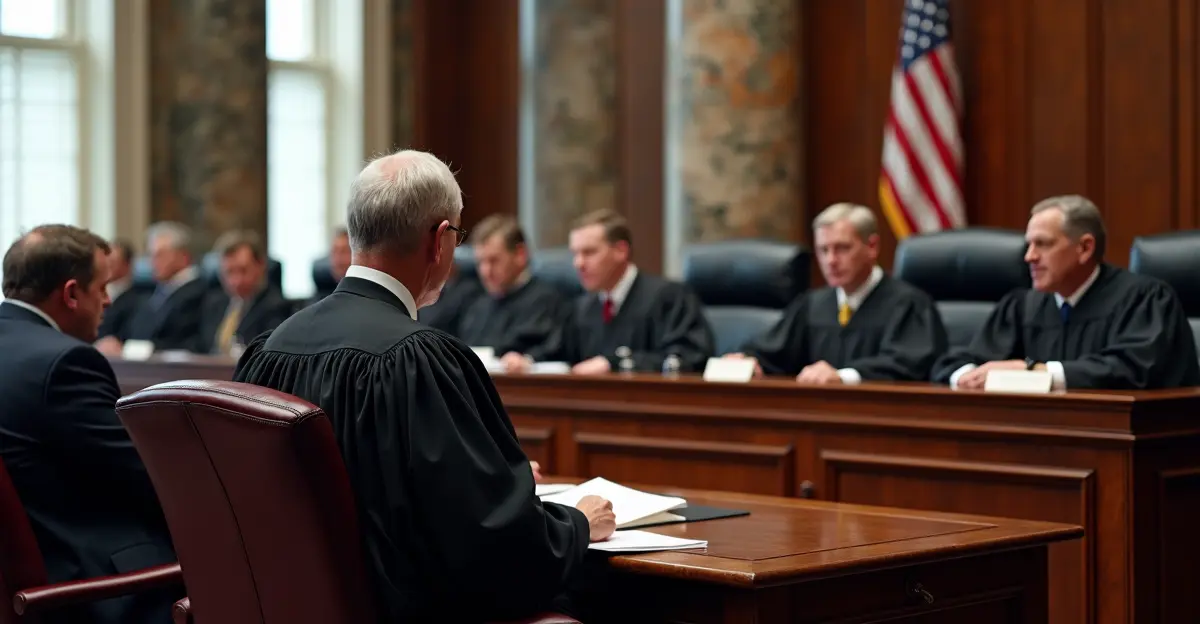
On February 20, 2026, the Supreme Court ruled 6-3 in Learning Resources, Inc. v. Trump that the International Emergency Economic Powers Act (IEEPA) does not authorize the president to impose tariffs. Chief Justice John Roberts, writing for the majority, held that IEEPA's language allowing the president to 'regulate…importation' cannot bear the weight of imposing tariffs, noting the law contains 'no reference to tariffs or duties.' The ruling voided the entire 'Liberation Day' tariff architecture from April 2025, which had raised the average effective U.S. tariff rate from 2.5% to 27% — the highest in over a century.
The decision triggered an unprecedented customs reversal: over $166 billion in duties collected from more than 330,000 importers must now be refunded by U.S. Customs and Border Protection. Justice Kavanaugh's dissent warned the ruling could require refunds of over $200 billion and create uncertainty for trade deals worth trillions with nations including China, the UK, and Japan. The SCOTUS IEEPA ruling impact fundamentally shifted the balance of trade authority from the executive to Congress.
The Section 122 Clock: Expiration on July 24, 2026
Hours after the Supreme Court decision, the administration pivoted to Section 122 of the Trade Act of 1974, which explicitly allows tariff surcharges but with a hard 150-day limit and a maximum 10% rate. The 10% universal tariff took effect on February 24, 2026, and is set to expire at 12:01 AM EDT on July 24, 2026. Critically, the president cannot extend it unilaterally — only Congress can pass legislation to extend or replace the authority.
As of late May 2026, no Congressional extension bill has cleared committee, and two lawsuits at the Court of International Trade are challenging the surcharge's validity. The Yale Budget Lab estimates that a 15% Section 122 tariff could generate over $73 billion annually, but the statutory cap and time limit constrain its longevity. Importers face three scenarios: Congress extends the tariff (potentially up to 15%), the administration replaces it with Section 232 or Section 301 tariffs, or the tariff simply lapses, eliminating the 10% surcharge on non-USMCA, non-Section 232 goods.
Products most affected include consumer electronics, apparel, footwear, home goods, and food products from China, Vietnam, India, and Bangladesh. The Section 122 tariff expiration scenarios are being closely monitored by trade professionals worldwide.
The November 2026 China Deadline: Suspension at Risk
The November 2026 deadline stems from the U.S.-China trade deal announced on November 1, 2025, following President Trump's meeting with President Xi Jinping in South Korea. Under the agreement, the U.S. agreed to suspend heightened reciprocal tariffs on Chinese imports — keeping them at a baseline 10% — and reduce the fentanyl-related tariff from 20% to 10%. These suspensions are set to expire on November 10, 2026.
In exchange, China committed to halting fentanyl precursor shipments, eliminating export controls on rare earth elements and critical minerals, ending retaliation against U.S. semiconductor companies, and purchasing at least 12 million metric tons of U.S. soybeans in late 2025 and 25 MMT annually from 2026 through 2028. If China fails to meet its obligations, the White House has signaled that further executive action — including a potential re-escalation of tariffs — may be taken.
The expiration of this suspension could trigger a renewed tariff escalation between the world's two largest economies, with rates potentially returning to the 145% levels seen in April 2025. The US-China trade deal November 2025 provided temporary relief, but the underlying tensions remain unresolved.
Supply Chain Restructuring Under Uncertainty
The cascading deadlines are forcing multinational corporations to fundamentally rethink their supply chain strategies. According to the 2026 Thomson Reuters Global Trade Report, 72% of trade professionals identify U.S. tariff volatility as the most impactful change — up from 41% the prior year. Supply chain concerns have nearly doubled year-over-year, cited by 68% of professionals as the dominant strategic priority.
In response, 65% of companies are changing sourcing patterns, 57% renegotiating supplier contracts, and 51% nearshoring production. Technology adoption is accelerating dramatically, with 40% of firms exploring AI or blockchain for trade compliance — up from just 6% in 2024. The World Economic Forum's January 2026 report outlines five strategic shifts: supply chain restructuring toward regionalized 'local-for-local' configurations, capital expenditure reallocation toward the U.S., Southeast Asia, and India, M&A strategy reimagined for resilience, enterprise risk management moving to scenario planning, and corporate governance evolution where boards take a more active role in navigating geopolitical uncertainty.
The supply chain restructuring 2026 tariffs trend is reshaping global trade corridors, with Southeast Asia and India emerging as key beneficiaries of the shift away from China-centric supply chains.
Geopolitical Stakes: Washington vs. Beijing
The tariff deadlines are not merely technical trade issues — they are central to the broader geopolitical competition between the United States and China. The SCOTUS ruling has shifted the locus of trade authority from the executive to Congress, raising the stakes for legislative action. If Congress fails to extend Section 122 or provide alternative authority, the U.S. could face a tariff vacuum that would significantly reduce tariff revenue and weaken Washington's leverage in trade negotiations.
China, meanwhile, is watching closely. Beijing has already signaled that its commitments under the November 2025 deal are conditional on U.S. compliance. If the U.S. re-escalates tariffs in November 2026, China could resume retaliatory tariffs, reinstate export controls on rare earths and critical minerals, and restart investigations targeting U.S. semiconductor companies. The potential for a renewed trade war — one that could be even more damaging than the 2018-2020 conflict — is very real.
Experts at the geopolitical trade analysis 2026 McKinsey Global Institute note that the geometry of global trade is being reshaped by these tensions, with security concerns increasingly intersecting with economic interdependence.
Possible Scenarios: From Extension to Constitutional Confrontation
Trade analysts have outlined several possible scenarios for the coming months:
- Congressional Extension (Low-Moderate Probability): Congress passes legislation to extend Section 122 authority, potentially raising the cap to 15%. This would provide temporary stability but faces political headwinds in a divided Congress.
- Section 232 Sectoral Coverage (Moderate-High Probability): The administration expands Section 232 national security tariffs to cover pharmaceuticals, semiconductors, and other sectors, creating a patchwork of tariffs that partially replaces the universal surcharge.
- Full Tariff Vacuum (Low-Moderate Probability): Section 122 expires without replacement, and most imports revert to Most Favored Nation (MFN) rates. This would significantly reduce tariff revenue and create a sudden cost relief for importers — but also risk a constitutional confrontation if the administration attempts to reimpose tariffs without congressional approval.
- Renewed China Escalation (Moderate Probability): The November 2026 suspension expires without renewal, and tariffs on Chinese imports return to elevated levels, potentially triggering a new phase of the trade war.
FAQ
What did the Supreme Court rule on IEEPA tariffs in February 2026?
The Supreme Court ruled 6-3 in Learning Resources, Inc. v. Trump that the International Emergency Economic Powers Act does not authorize the president to impose tariffs, striking down the entire IEEPA-based tariff regime and requiring refunds of over $166 billion in collected duties.
When does the Section 122 tariff expire?
The 10% Section 122 universal tariff expires on July 24, 2026, at 12:01 AM EDT. The president cannot extend it unilaterally; only Congress can pass legislation to extend or replace the authority.
What happens to China tariffs in November 2026?
The suspension of heightened reciprocal tariffs on Chinese imports, agreed under the November 2025 U.S.-China trade deal, expires on November 10, 2026. If not renewed, tariffs could return to elevated levels, potentially triggering a renewed trade war.
How are companies responding to tariff uncertainty?
According to the 2026 Thomson Reuters Global Trade Report, 65% of companies are changing sourcing patterns, 57% renegotiating supplier contracts, and 51% nearshoring production. Technology adoption, including AI and blockchain for trade compliance, is accelerating rapidly.
What are the main scenarios for trade policy after July 2026?
The main scenarios include Congressional extension of Section 122, expansion of Section 232 sectoral tariffs, a full tariff vacuum if no replacement is enacted, or renewed escalation with China if the November 2026 deadline passes without agreement.
Conclusion: A Defining Moment for Global Trade
The convergence of the July 24 Section 122 expiration, the November 2026 reciprocal tariff deadline on China, and the aftermath of the landmark SCOTUS IEEPA ruling make this the defining trade and geopolitical story of mid-2026. With trillions of dollars in global trade flows at stake, businesses, policymakers, and investors are watching closely as the countdown continues. The decisions made in the coming weeks and months will determine not only the trajectory of U.S. trade policy but also the shape of the global economic order for years to come.




Follow Discussion