


 Deutsch
 English
 Español
 Français
 Nederlands
 Português


 Share
Share




The February 2026 Supreme Court decision striking down tariffs imposed under the International Emergency Economic Powers Act (IEEPA) has fundamentally reshaped global trade, forcing the U.S. administration into a fragmented, legally contested tariff landscape. The ruling, which found that IEEPA does not authorize tariffs, triggered an immediate pivot to Section 122, 301, and 232 authorities, creating a complex multi-tier tariff regime that is accelerating supply chain reconfiguration worldwide.
Context: The Supreme Court's Landmark Ruling
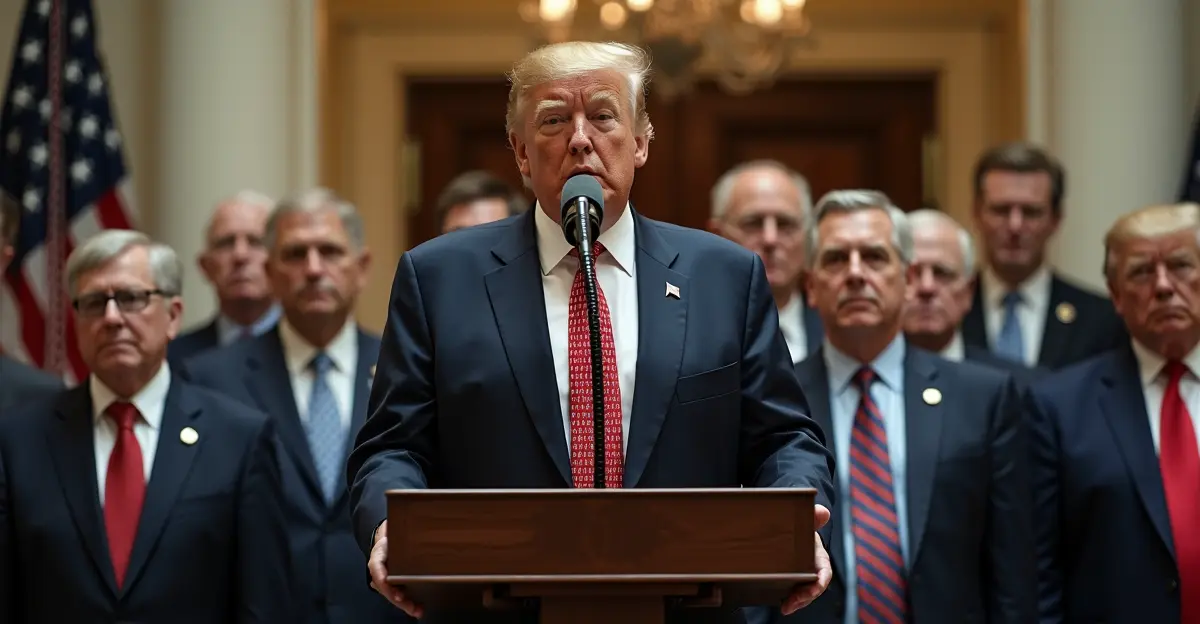
On February 20, 2026, the U.S. Supreme Court ruled 6-3 that President Donald Trump's sweeping tariffs on China, Canada, Mexico, and other nations exceeded the powers granted by Congress under the 1977 International Emergency Economic Powers Act. Chief Justice John Roberts, writing for the majority, stated that IEEPA contains "no reference to tariffs or duties" and that the words "regulate" and "importation" cannot bear the weight of authorizing unbounded tariffs. A plurality applied the "major questions" doctrine, noting Congress would not delegate such "highly consequential power" through ambiguous language. Justice Kavanaugh's dissent warned the government may need to refund billions and that the decision could create uncertainty regarding trade deals worth trillions of dollars.
The Fragmented Post-Ruling Tariff Landscape
Within hours of the ruling, the White House invoked Section 122 of the Trade Act of 1974, a never-before-used provision allowing up to 15% import surcharges for 150 days to address balance-of-payments deficits. The administration imposed a flat 10% surcharge on most U.S. imports, raised to 15% on February 22, effective February 24, 2026. The trade-weighted average U.S. tariff rate under Section 122 at 15% stands at 13.0%, compared with 11.4% at 10%, 15.3% before the ruling, and 8.1% if no replacement had been enacted.
Section 122 Exemptions and Stacking Rules
The Section 122 surcharge does not stack with Section 232 tariffs on steel, aluminum, automobiles, copper, and lumber, nor does it apply to USMCA duty-free entries or CAFTA-DR textiles. However, finished products containing those exempted components still face the full 15% surcharge on their total value. Products from USMCA countries (Mexico, Canada) and CAFTA-DR countries for specific goods are exempt. Apparel, footwear, and consumer electronics from Asia face the full 15% on top of existing duties. A four-day gap between the Court's ruling and Section 122's effective date created confusion for importers of in-transit goods.
Legal Challenges to Section 122
In May 2026, the U.S. Court of International Trade held Section 122 tariffs unlawful in a separate ruling, raising the possibility that U.S. importers will be entitled to refunds of duties already paid. The U.S. Trade Representative may expedite Section 301 investigations to impose new tariffs as the Section 122 measure expires on July 24, 2026, unless Congress extends it. This ongoing legal uncertainty compounds the challenges for businesses trying to navigate the post-tariff trade environment.
Supply Chain Reconfiguration: From Lean to Resilient
McKinsey's June 2026 update on global trade geometry confirms a fundamental shift in supply chain design. Despite predictions of contraction, global goods trade grew approximately 6.5% in 2025, but composition shifted dramatically. U.S.-China trade shrank roughly 30%, with $165 billion redirected to other regions. ASEAN thrived as a manufacturing hub, while the EU faced pressure from diverted Chinese goods.
Regionalization and Friend-Shoring
Companies are moving from lean, China-centric models to regionalized, friend-shored networks spanning ASEAN, Mexico, and India. The McKinsey report highlights five key strategic implications: geopolitical alignment is now a supply chain design criterion; AI hardware (semiconductors, servers) accounted for roughly one-third of global trade growth; China's upstream pivot toward industrial components creates hidden exposure in tier-2 supply chains; the EU faces a structural squeeze from diverted Chinese goods; and emerging markets like India, ASEAN, and Mexico offer new growth arenas. The friend-shoring supply chain shift is now a permanent structural feature of global commerce.
Impact on Key Economies and Industries
Countries that faced steep IEEPA surcharges saw large reductions in their tariff burden: Brazil -13.6 percentage points, China -7.1 pp, India -5.6 pp. Conversely, lightly taxed countries now pay more: United Kingdom +2.1 pp, Italy +1.7 pp, Singapore +1.1 pp. The non-stacking provision of Section 122 requires manual entry checks, creating risks for small importers without customs brokers.
AI and Semiconductor Trade
AI infrastructure components carry strategic dependency risks concentrated through Taiwan and South Korea. The McKinsey analysis notes that static contracts and fragmented governance are no longer fit for purpose in this volatile environment. The semiconductor supply chain risks have become a central concern for procurement professionals.
Expert Perspectives
"The Supreme Court's ruling has fundamentally altered the calculus for global supply chain managers," says a senior trade analyst at the Peterson Institute. "Resilience and geopolitical alignment now outweigh pure cost efficiency as the primary drivers of trade strategy." The Thomson Reuters 2026 Global Trade Report echoes this, noting that companies are now designing supply chains for volatility rather than stability.
FAQ
What did the Supreme Court rule on IEEPA tariffs?
The Supreme Court ruled 6-3 on February 20, 2026, that tariffs imposed under the International Emergency Economic Powers Act were unlawful because IEEPA does not authorize tariffs. The decision applied the "major questions" doctrine.
What is Section 122 of the Trade Act of 1974?
Section 122 is a never-before-used provision that allows the President to impose up to 15% import surcharges for 150 days to address balance-of-payments deficits. It was invoked immediately after the Supreme Court ruling and expires July 24, 2026.
How are supply chains changing in 2026?
Supply chains are shifting from lean, China-centric models to regionalized, friend-shored networks spanning ASEAN, Mexico, and India. Resilience and geopolitical alignment now outweigh cost efficiency as primary drivers.
Will importers get refunds on Section 122 tariffs?
Possibly. In May 2026, the U.S. Court of International Trade held Section 122 tariffs unlawful, raising the possibility that importers may be entitled to refunds of duties already paid.
What happens after Section 122 expires?
The U.S. Trade Representative may expedite Section 301 investigations to impose new tariffs, or Congress could extend Section 122. The legal and political landscape remains highly uncertain.
Conclusion: A Permanent Structural Shift
The post-tariff regime represents a permanent structural shift in global commerce. The global trade policy uncertainty is likely to persist as legal appeals over Section 122 continue and the administration explores new tariff authorities. For businesses, the core message is clear: static contracts and fragmented governance are no longer fit for purpose. The era of cost-optimized, centralized global supply chains has given way to a new paradigm defined by resilience, regionalization, and geopolitical alignment.

Follow Discussion