


 English
 Nederlands
 Deutsch
 Français
 Español
 Português

Daily News Summary – 2026-06-09 – en

Today's news highlights a period of intense geopolitical and economic realignment. A federal judge blocked the Trump administration's $100,000 H-1B visa fee, while Iran's downing of a US Apache helicopter near the Strait of Hormuz threatens a fragile ceasefire. India deported nearly 5,000 Bangladeshi nationals amid a crackdown on undocumented migrants. The EU's AI Act enters full enforcement, and NASA named its Artemis III crew including the first European astronaut. Meanwhile, the dollar's reserve share fell below 57%, and critical minerals supply chains remain a key battleground between the West and China.
Top Stories
Federal Judge Strikes Down Controversial H-1B Visa Fee Hike

A federal judge in Boston permanently blocked the Trump administration's plan to impose a $100,000 fee on new H-1B visas for highly skilled foreign workers, ruling that the steep fee constituted an unlawful tax. The decision, which restores the previous fee structure, is a relief for thousands of U.S. employers in tech, healthcare, and education.
India's Mass Deportation of Bangladeshi Nationals Since BJP Election Win

India has deported nearly 5,000 people to Bangladesh since the BJP swept to power in West Bengal in May 2026, drawing sharp criticism from human rights groups. The deportations, part of a promise to 'detect, delete and deport' illegal migrants, have strained bilateral relations with Dhaka.
Trump Confirms Iran Downed US Apache Near Strait of Hormuz

President Donald Trump announced that Iranian forces shot down a US Army AH-64 Apache attack helicopter patrolling the Strait of Hormuz, vowing a response. The two pilots were rescued safely by a US Navy drone boat, marking the first rescue of US military personnel by an uncrewed surface drone.
NASA Names Crew for Historic Artemis III Mission with European Astronaut

NASA announced the four-person crew for Artemis III, scheduled for 2027, including Italian ESA astronaut Luca Parmitano as pilot. The mission will test docking with commercial lunar landers in Earth orbit, paving the way for the first crewed lunar landing in over 50 years.
Strait of Hormuz Crisis: Largest Oil Disruption in History
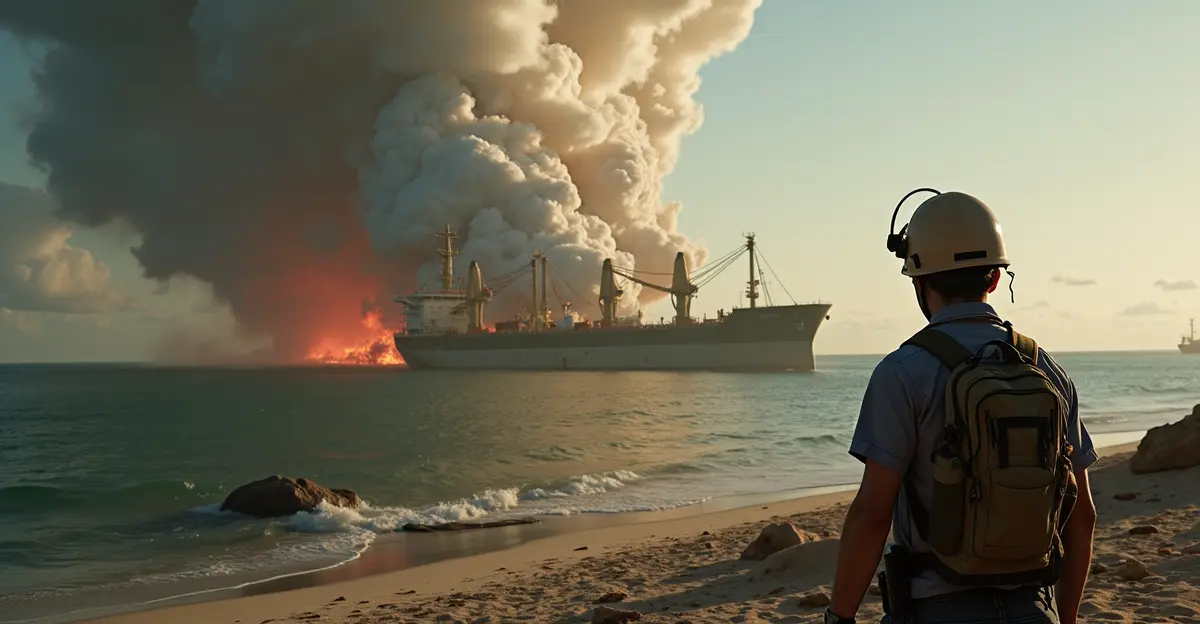
The 2026 Iran conflict and the closure of the Strait of Hormuz have blocked approximately 20 million barrels per day, triggering the largest oil supply disruption in history. Iran has begun demanding transit fees of up to $2 million per vessel, and the crisis is accelerating global energy diversification.
Also Notable
Economy
US Dollar Reserve Share Dips Below 57% for the First Time

For the first time since 1995, the US dollar's share of global foreign exchange reserves has fallen below 57%, reaching 56.3% in Q1 2026, according to IMF COFER data. The decline is driven by BRICS+ de-dollarization efforts and record central bank gold purchases.
De-Dollarization Accelerates as BRICS+ Build Alternative Systems

The dollar's share of global reserves fell below 57% in Q4 2025, extending eight consecutive quarters of decline. BRICS+ nations now conduct 67% of intra-bloc trade in local currencies, and a gold-backed digital settlement instrument is advancing.
Dollar Reserve Share Falls Below 57%: A Historic Shift

The U.S. dollar's share of global reserves has dipped below 57% for the first time since 1995, reaching 56.3%. The decline is structurally driven by sanctions weaponization and the rise of alternative payment systems like CIPS.
Geopolitics
China's Rare Earth Export Controls Trigger Sixfold Price Spikes

In early 2026, China's sweeping export controls on rare earths, tungsten, and antimony have driven sixfold price spikes outside the country, exposing a critical strategic vulnerability in Western defense and green energy supply chains.
WEF Report: Geoeconomic Confrontation Top Risk as Critical Minerals Battle Rages

The World Economic Forum's 2026 Global Risks Report ranks geoeconomic confrontation as the top risk. With China controlling over 90% of rare-earth processing, the West is racing to build alternative supply chains through initiatives like FORGE.
Critical Minerals Supply Chains: A 12-to-18-Month Window for the West

Analysts warn that Western nations have a narrowing 12-to-18-month window to diversify critical mineral supply chains before China's structural dominance becomes irreversible. The US Project Vault and EU Critical Raw Materials Act are key responses.
Trade War
US Launches FORGE Alliance to Counter China's Critical Mineral Dominance
In February 2026, the United States launched the FORGE alliance, a 54-nation coalition with over $30 billion in financing to counter China's critical mineral leverage. Meanwhile, China's export controls have slashed Western licensing approval rates below 25%.
Technology
EU AI Act Enters Full Enforcement: The Brussels Effect Reshapes Global AI

On August 2, 2026, the EU AI Act enters its most consequential enforcement phase, imposing transparency rules and fines up to 7% of global turnover. The Act's extraterritorial reach is forcing global tech firms to align with European standards.
AI
EU AI Act Enforcement: What Tech Companies Need to Know

The EU AI Act becomes fully enforceable on August 2, 2026, with penalties reaching €35 million or 7% of global annual turnover. Companies must now comply with strict rules on high-risk AI systems and generative models.
Crypto
CBDC Divergence: US, EU, China Take Different Paths in 2026

As 134 countries explore CBDCs, the US, EU, and China are adopting divergent strategies. China's e-CNY leads in adoption, the EU prepares a digital euro with a €3,000 holding limit, and the US bans a retail CBDC in favor of regulated stablecoins.
 Share this article



