


 Deutsch
 English
 Español
 Français
 Nederlands
 Português


 Share
Share




Federal Judge Strikes Down Controversial H-1B Visa Fee Hike
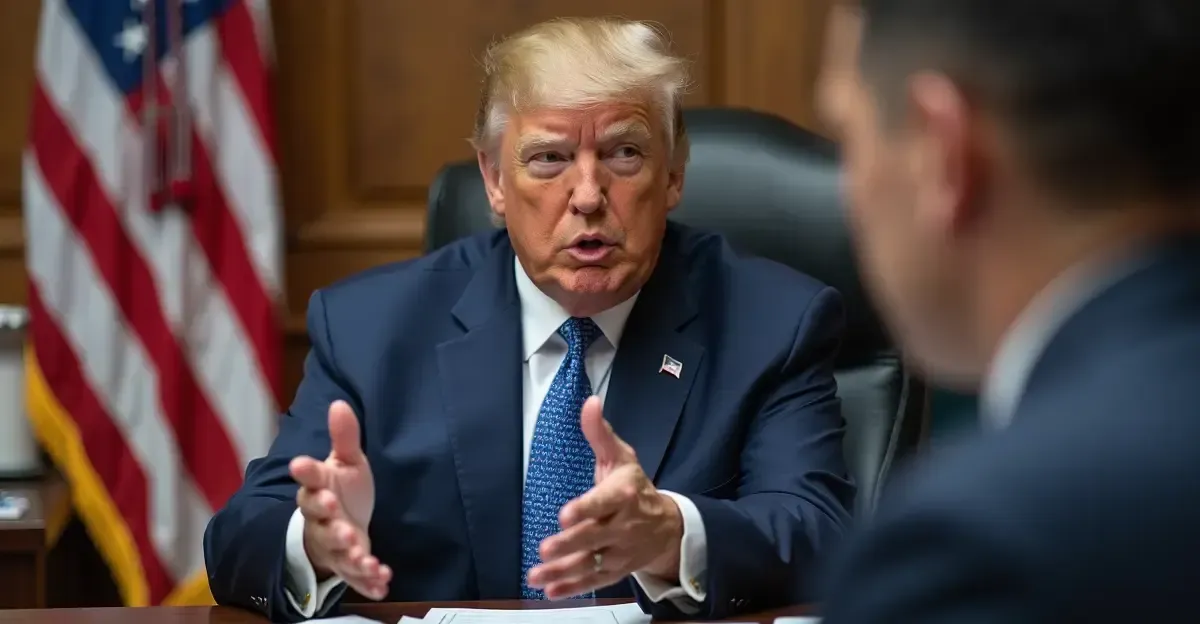
A federal judge in Boston has permanently blocked the Trump administration's plan to impose a $100,000 fee on new H-1B visas for highly skilled foreign workers, dealing a significant blow to one of the president's key immigration policies. U.S. District Judge Leo Sorokin ruled on June 8, 2026, that the steep fee constituted an unlawful tax that Congress had never authorized the executive branch to impose. The ruling comes after twenty U.S. states, led by Democratic attorneys general, along with the U.S. Chamber of Commerce, filed a lawsuit challenging the policy.
The H-1B visa program, established in 1990, allows U.S. employers to temporarily hire foreign workers in specialty occupations that require at least a bachelor's degree. Each year, 85,000 visas are distributed through a lottery system, with 65,000 for regular applicants and 20,000 for those holding advanced degrees from U.S. institutions. Tech giants such as Amazon, Meta, and Microsoft collectively employ roughly 22,000 H-1B workers, while approximately 70% of visas go to Indian nationals and 11% to Chinese workers.
Background: Trump's Immigration Crackdown
President Trump announced the $100,000 fee in September 2025 via a presidential proclamation, arguing that American companies should prioritize hiring U.S. graduates over foreign talent. Previously, H-1B visa application fees ranged from approximately $1,500 to $7,595, depending on employer size and other factors. The dramatic increase to $100,000 was intended to discourage employers from using the program and to fund domestic workforce training initiatives. The Trump immigration policy 2026 has been a central theme of his administration, with similar restrictions on other visa categories.
However, critics argued the fee would cripple industries reliant on foreign expertise, including healthcare, education, and technology. The policy had already caused a sharp decline in applications, with only 85 employers paying the $100,000 fee by mid-February 2026, according to court documents.
Court Ruling: Why the Fee Was Blocked
In a 42-page ruling, Judge Sorokin concluded that the $100,000 fee was not a legitimate visa processing charge but rather a tax designed to raise revenue and influence employer behavior. Under the U.S. Constitution, only Congress has the power to levy taxes. The judge cited a recent Supreme Court decision on Trump's 'reciprocal' tariffs as precedent, reinforcing that the president cannot impose taxes without explicit congressional authorization.
"The payment required by the Proclamation is a tax, not a fee," Sorokin wrote. "Congress has not delegated to the President the authority to impose such a tax on H-1B visa applicants." The ruling vacated the policy nationwide, restoring the previous fee structure. The Trump administration immediately announced plans to appeal, with a White House spokesperson expressing confidence that the decision would be overturned.
The H-1B visa program explained in detail shows that the program has long been a target of immigration hardliners, but also a vital tool for U.S. competitiveness.
Impact on Tech, Healthcare, and Education
The blocked fee is a relief for thousands of U.S. employers who rely on H-1B workers to fill critical shortages. In the tech sector, companies like Google, Apple, and Microsoft have long argued that the program is essential for accessing global talent in artificial intelligence, software engineering, and data science. Beyond tech, the healthcare industry employs thousands of H-1B doctors and nurses, particularly in rural and underserved areas. Public universities also depend on the program to recruit international faculty and researchers.
New York Attorney General Letitia James, who helped lead the lawsuit, praised the ruling: 'This decision protects our schools, hospitals, and businesses from a reckless policy that would have devastated our workforce. Thousands of H-1B visa holders serve as doctors, teachers, and skilled workers who strengthen our communities.'
The ruling also has implications for the broader debate over US skilled worker visa reform, which remains a contentious issue in Congress.
What Happens Next?
With the fee blocked, the H-1B program reverts to its previous fee schedule, which typically costs employers between $2,000 and $5,000 per application. However, the legal battle is not over. The Trump administration is expected to file an appeal with the First Circuit Court of Appeals, and the case could ultimately reach the Supreme Court. Meanwhile, the annual H-1B cap for fiscal year 2027 is expected to open in March 2027, and employers are already preparing for a surge in applications.
For now, the ruling provides certainty for businesses and foreign workers alike. The drop in registrations seen in FY 2026 — down to 343,981 from 470,342 the previous year — may reverse as confidence in the program returns. The selection rate had improved to 35.3% under the beneficiary-centric lottery system, but the fee uncertainty had dampened participation.
Frequently Asked Questions
What is the H-1B visa?
The H-1B visa is a nonimmigrant visa that allows U.S. employers to temporarily employ foreign workers in specialty occupations requiring theoretical or technical expertise. It was created by the Immigration Act of 1990.
How much did the H-1B visa fee increase under Trump?
Trump proposed raising the fee to $100,000 per application, up from the previous range of roughly $1,500 to $7,595. The fee was blocked by a federal judge in June 2026.
Why did the judge block the $100,000 fee?
Judge Leo Sorokin ruled that the fee was an unconstitutional tax that Congress had not authorized the president to impose. He vacated the policy nationwide.
Who opposed the H-1B fee hike?
Twenty U.S. states, led by Democratic attorneys general, along with the U.S. Chamber of Commerce, filed a lawsuit challenging the policy. They argued it would harm businesses, schools, and hospitals.
What happens to H-1B visa applications now?
The previous fee structure is restored. Employers can apply for H-1B visas at the standard rates. The Trump administration plans to appeal the ruling.

Follow Discussion