


 Deutsch
 English
 Español
 Français
 Nederlands
 Português


 Share
Share




Trump Confirms Iran Downed US Apache Near Strait of Hormuz
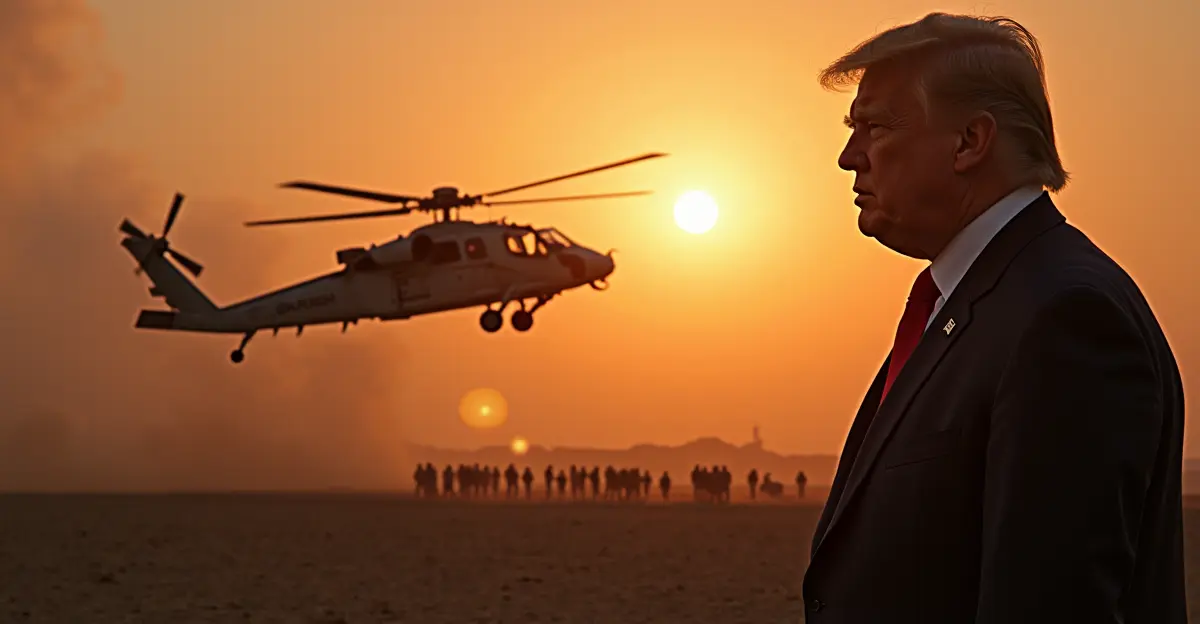
President Donald Trump announced on Monday that Iranian forces shot down a US Army AH-64 Apache attack helicopter patrolling the Strait of Hormuz, vowing that the United States "must, of necessity, respond to this attack." The incident marks a significant escalation in the ongoing conflict between the US and Iran, threatening a fragile ceasefire that has been in place since April 8, 2026.
The two pilots aboard the Apache were rescued safely within two hours by a US Navy Corsair unmanned surface vessel operated by Task Force 59 of the US Fifth Fleet. Military officials confirmed this marks the first-ever rescue of US military personnel by an uncrewed surface drone in the Middle East. The soldiers are in stable condition and uninjured.
Context: The 2026 US-Iran War
The shootdown comes amid a broader conflict that began on February 28, 2026, when the United States and Israel launched Operation Epic Fury against Iran, targeting its nuclear program, ballistic missile infrastructure, and military leadership. The opening strikes killed Iran's Supreme Leader Ali Khamenei and dozens of senior officials. Iran retaliated with hundreds of missiles and thousands of drones targeting US and allied assets across the Middle East.
The war has caused thousands of casualties — with estimates ranging from 8,000 to over 17,000 dead across all parties — and has severely disrupted global energy markets. The Strait of Hormuz, through which approximately 20% of the world's oil and 25% of LNG passes, has been effectively closed by Iranian naval forces, triggering a global fuel crisis and driving Brent crude above $120 per barrel. The 2026 Iran war fuel crisis has led to the largest supply disruption in the history of the global oil market, according to the International Energy Agency.
Details of the Attack
According to US officials, the Apache was conducting a patrol mission over the Strait of Hormuz off the coast of Oman when it was struck by an Iranian Shahed drone. Two US officials told CNN that it remains unclear whether the strike was intentional or inadvertent. The helicopter was part of operations to enforce a US naval blockade on Iranian ports, aimed at pressuring Tehran to agree to a nuclear deal.
President Trump took to Truth Social to announce the incident, writing: "Iran has shot down one of our very advanced Apache helicopters. The pilots are safe, but the United States must, of necessity, respond to this attack. We will have more to say shortly." He did not specify the form of retaliation.
First-Ever Drone Rescue
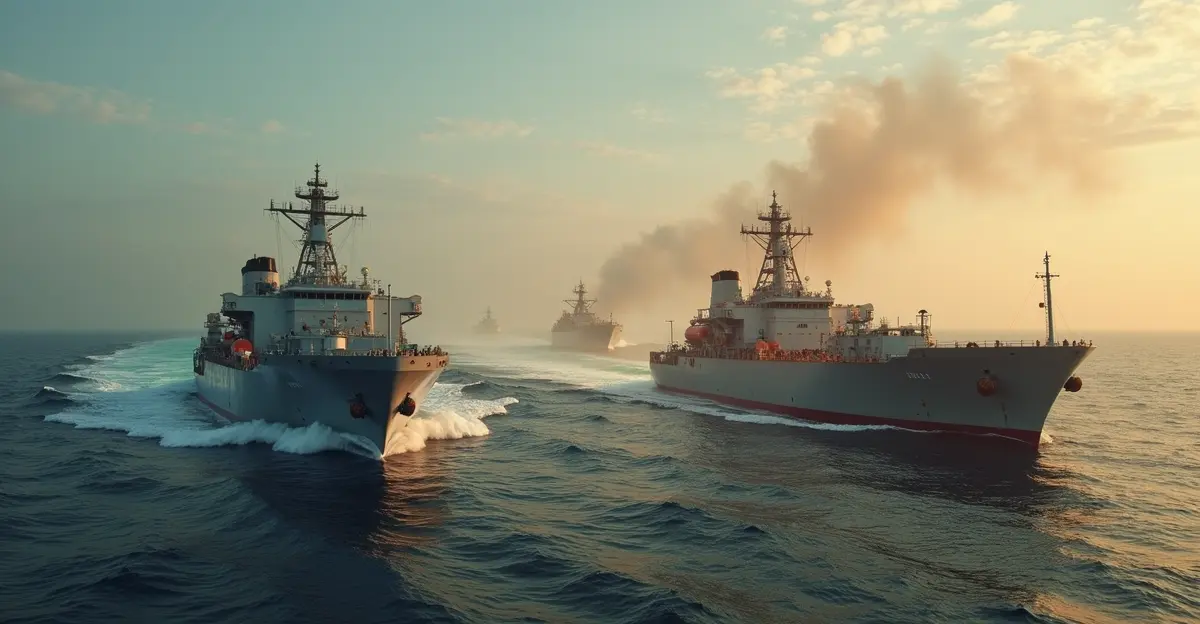
The rescue operation involved a Corsair unmanned surface vessel, a 24-foot autonomous boat developed by Saronic Technologies. The drone boat picked up the two pilots from the water after their helicopter went down and delivered them to a point where they could be hoisted to a waiting helicopter. The 82nd Airborne Division also participated in the rescue. This marks a milestone in the US military's integration of uncrewed systems for combat search and rescue missions, potentially paving the way for future operations in the Pacific theater.
Military experts note that the use of drone boats for rescue operations represents a paradigm shift in naval tactics, reducing risk to human rescuers in hostile environments.
Iranian and International Reactions
Iran has not officially claimed responsibility for the shootdown. However, Iranian Foreign Minister Abbas Araghchi issued a stern warning, stating that "foreign forces in proximity to our territory are at constant risk" and urged them to leave the region. "We prefer the language of diplomacy but speak other languages too," Araghchi added. Iran's parliamentary speaker warned that Tehran would respond firmly to any US action.
The incident comes despite Trump's repeated claims that a peace deal with Iran is imminent. On May 23, the president announced that a deal to reopen the Strait of Hormuz was "largely negotiated," and on Monday he claimed a nuclear agreement could be reached "in two or three days." However, no deal has materialized, and Iran's Fars news agency dismissed Trump's announcements as "incomplete and inconsistent with reality."
Separately, the US Navy reported that an F/A-18 Super Hornet disabled an oil tanker attempting to run the blockade of Iranian ports on the same day, further underscoring the volatility of the situation.
Impact on Ceasefire and Regional Stability
The fragile ceasefire between Iran, the US, and Israel — which has been violated multiple times since April — now hangs in the balance. The downing of the Apache is the first loss of an American helicopter since the war began, adding to a growing list of US aircraft losses including fighter jets, refueling aircraft, and drones. Over the weekend, Iran and Israel exchanged reciprocal missile attacks, further eroding the truce.
According to the New York Post, Trump told reporters that while the US could easily bomb Iran, such action would result in casualties and close the strait for months. Privately, he has reportedly said he will not abandon the ceasefire unless US troops are killed. With no US fatalities in this incident, the scope of retaliation remains uncertain. The ceasefire violations between Iran and Israel have become increasingly frequent, with both sides accusing each other of bad faith.
The crisis has also strained relations between Trump and Israeli Prime Minister Benjamin Netanyahu, who are reportedly at odds over the direction of the war. The US Senate has advanced a war powers resolution seeking to limit the conflict, reflecting growing domestic opposition to military engagement in the Middle East.
FAQ
What happened to the US Apache helicopter near the Strait of Hormuz?
An American AH-64 Apache attack helicopter was shot down by Iranian forces on June 8, 2026, while patrolling the Strait of Hormuz. Both pilots were rescued safely by a US Navy drone boat.
Did Iran intentionally shoot down the US helicopter?
It remains unclear whether the strike was deliberate or accidental. US officials confirmed the Apache was hit by an Iranian Shahed drone, but the investigation by US Central Command is ongoing.
How will the US respond to the attack?
President Trump has stated that the US "must respond" but has not specified the form of retaliation. Options range from diplomatic measures to military strikes, though Trump has indicated he prefers not to escalate if US troops are not killed.
What is the status of the ceasefire between the US and Iran?
A ceasefire has been in place since April 8, 2026, but it has been repeatedly violated by all parties. The Apache shootdown is the most serious breach since the truce began, and its survival is now in question.
How has the war affected global oil prices?
The conflict has driven Brent crude above $120 per barrel due to the effective closure of the Strait of Hormuz, through which 20% of global oil passes. The IEA has called it the largest supply disruption in history.
Sources
Information for this article was gathered from reports by the Associated Press, CNN, CNBC, the New York Post, CBS News, Ars Technica, and official statements from the White House and US Central Command. Additional context from Wikipedia and the Strait of Hormuz Monitor was used.
Follow Discussion