


 Deutsch
 English
 Español
 Français
 Nederlands
 Português


 Share
Share




NASA Names Crew for Historic Artemis III Mission with European Astronaut
NASA has announced the four-person crew for Artemis III, a highly complex test mission scheduled for 2027 that will for the first time include a European Space Agency (ESA) astronaut. Italian astronaut Luca Parmitano will serve as pilot, making him the first European crew member on an Artemis mission. The announcement marks a significant milestone in international cooperation for lunar exploration.
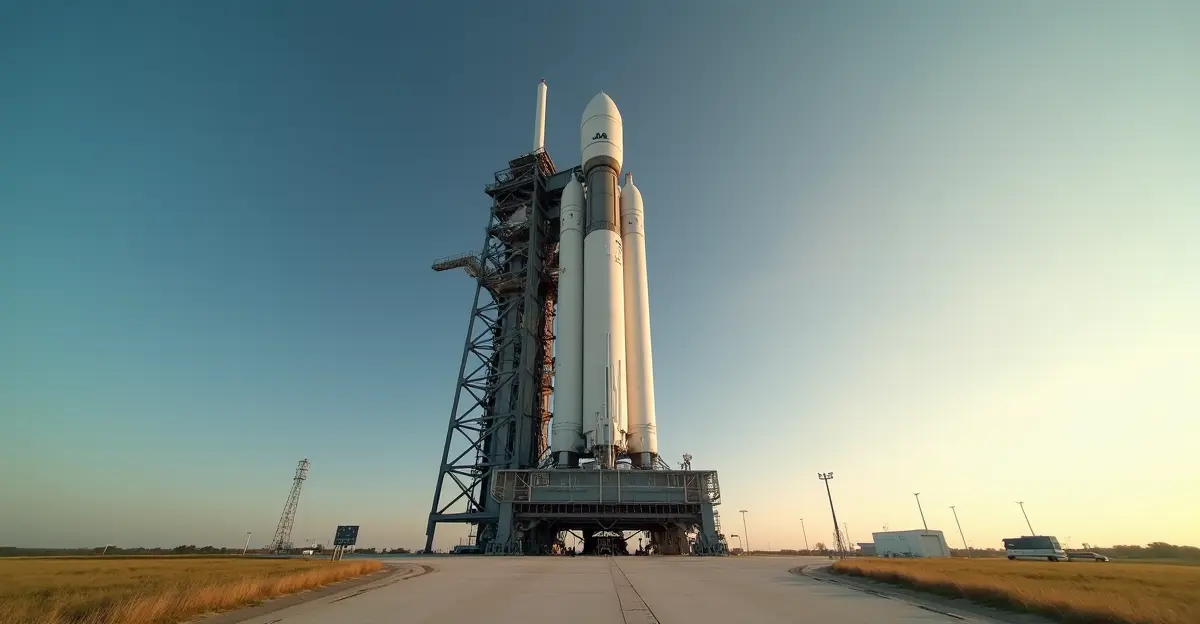
The Artemis III crew consists of Commander Randy Bresnik (NASA), Pilot Luca Parmitano (ESA), and Mission Specialists Andre Douglas and Frank Rubio (both NASA). NASA astronaut Bob Hines was named as backup. The mission will launch aboard the Space Launch System (SLS) rocket carrying the Orion spacecraft from Kennedy Space Center's Launch Complex 39B.
Mission Profile: A Crucial Test in Earth Orbit
Unlike the original plan for a lunar surface landing, Artemis III has been redesigned as a crewed test flight in low Earth orbit (LEO) at approximately 463 kilometers altitude. The mission is broadly comparable to Apollo 9 in the Apollo program, which tested lunar module systems in Earth orbit before the actual landing.
During the approximately two-week mission, the crew will practice rendezvous and docking operations with test versions of commercial human landing systems developed by SpaceX (Starship HLS) and Blue Origin (Blue Moon Mark 2). These landers will be launched separately in a multi-launch campaign. The astronauts will enter the landers, test life-support systems, propulsion, and communications interfaces, and rehearse surface-mission workflows.
NASA describes Artemis III as 'one of the most highly complex missions NASA has undertaken in recent history.' The mission will also evaluate the new Axiom Extravehicular Mobility Unit (AxEMU) spacesuit, designed for lunar surface activities.
Luca Parmitano: From ISS Commander to Artemis Pilot
The 49-year-old Parmitano, born in Sicily, Italy, brings extensive spaceflight experience to the mission. A former Italian Air Force test pilot with over 2,000 flight hours on more than 20 military aircraft types, he was selected as an ESA astronaut in May 2009. Interestingly, he initially studied political science at the University of Naples before pursuing aerospace.
Parmitano has spent 366 days in space across two International Space Station (ISS) missions and performed six spacewalks totaling 33 hours. He made history in 2019 as the first Italian and third European to command the ISS during Expedition 61. His experience includes handling a near-fatal spacewalk emergency in 2013 when his helmet filled with water, demonstrating extraordinary composure under pressure.
The inclusion of a European astronaut reflects ESA's deepening partnership in the Artemis program. ESA is also providing its third European Service Module (ESM) for Artemis III, which serves as Orion's powerhouse, providing propulsion, power, thermal control, air, and water.
Paving the Way for Lunar Return
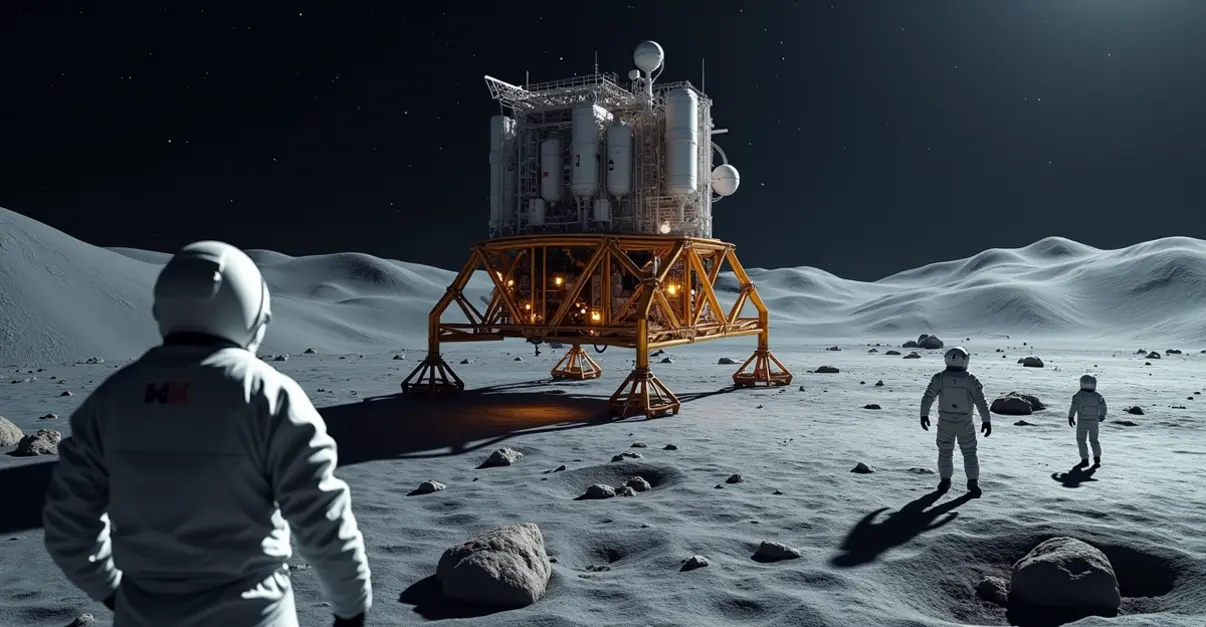
Artemis III is a critical stepping stone toward Artemis IV, now targeted for early 2028, which aims to land astronauts on the lunar South Pole for the first time since Apollo 17 in 1972. Two crew members will descend to the surface aboard a Human Landing System for approximately one week of scientific research, sample collection, and moonwalks.
NASA has identified nine candidate landing regions near the lunar South Pole for Artemis IV. The South Pole is strategically vital due to potential water ice in permanently shadowed craters, which could be converted into drinking water, oxygen, and rocket fuel for future missions. The Artemis lunar base program aims to establish a sustained human presence on the Moon by the 2030s, ultimately serving as a staging point for crewed missions to Mars.
Geopolitical Context: The New Space Race
The Artemis timeline is partly driven by competition with China's space program, which aims to land astronauts on the Moon by 2030. NASA Administrator Jared Isaacman has characterized this as a 'great competition' with China. China has developed the Mengzhou crew capsule and Lanyue lunar lander, with plans for a two-launch mission architecture similar to Artemis.
The mission also comes after Blue Origin's New Glenn rocket exploded during a ground test in May 2026, though company officials expressed confidence in meeting the 2027 timeline. The commercial lunar lander competition between SpaceX and Blue Origin is a central feature of Artemis III, with both companies' vehicles undergoing critical tests.
Artemis II Success Sets the Stage
Artemis III follows the successful Artemis II mission in April 2026, which carried four astronauts around the Moon and back in a 9-day flight. Artemis II set a distance record of 406,771 km from Earth, breaking Apollo 13's record, and tested Orion's systems in deep space. The crew returned safely on April 10, 2026, paving the way for the more complex Artemis III mission.
Frequently Asked Questions
What is Artemis III?
Artemis III is a NASA crewed test mission scheduled for 2027 that will fly four astronauts in low Earth orbit to practice rendezvous and docking with commercial lunar landers from SpaceX and Blue Origin. It is a preparation for the first crewed lunar landing in over 50 years.
Who is the first European astronaut on Artemis?
Italian ESA astronaut Luca Parmitano is the first European to be assigned to an Artemis mission. He will serve as pilot for Artemis III, bringing experience as a former ISS commander and test pilot.
When will Artemis III launch?
Artemis III is targeted for launch in late 2027. The exact date will depend on readiness of the SLS rocket, Orion spacecraft, and commercial landers.
Will Artemis III land on the Moon?
No. Artemis III was redesigned as an Earth orbit test mission. The first crewed lunar landing is now planned for Artemis IV in early 2028.
Why is Artemis III important?
Artemis III will test critical docking and life-support systems needed for lunar landings, validate commercial lander interfaces, and demonstrate international partnership under the Artemis Accords. It sets the foundation for returning humans to the Moon and eventually sending astronauts to Mars.




Follow Discussion