


 Deutsch
 English
 Español
 Français
 Nederlands
 Português


 Share
Share




Lunar Science Payload Contracts 2026: Complete Guide to NASA's Commercial Moon Strategy
NASA's Commercial Lunar Payload Services (CLPS) initiative has fundamentally transformed how the United States approaches lunar exploration, with recent contracts worth up to $2.6 billion through 2028 creating a sustainable commercial market for Moon deliveries. The Artemis program represents humanity's return to the Moon, but the CLPS framework represents an equally revolutionary shift in procurement strategy that has implications for policy, markets, and scientific communities worldwide. As of 2026, NASA has contracted with 13 American companies to deliver over 60 scientific instruments to the lunar surface and orbit, marking a decisive move away from traditional government-led missions toward a commercial service model.
What is NASA's Commercial Lunar Payload Services (CLPS) Initiative?
The Commercial Lunar Payload Services program represents NASA's innovative approach to purchasing lunar delivery services from American commercial providers rather than developing and operating missions internally. Established in 2018, CLPS enables NASA to contract with private companies for end-to-end services including payload integration, launch, transit, and lunar landing operations. This 'shots on goal' philosophy accepts calculated risks through multiple lower-cost missions ($47-199.5 million each) rather than single billion-dollar government missions, creating a more resilient and cost-effective exploration strategy.
According to NASA's official documentation, the program has 13 eligible American companies on indefinite delivery contracts with a combined maximum value of $2.6 billion through November 2028. To date, 11 lunar deliveries have been awarded to five vendors carrying more than 50 payloads, with 15 planned lunar deliveries scheduled through the end of the decade. This commercial model directly supports the Artemis campaign by testing technologies and gathering scientific data essential for future crewed missions.
Key 2026 Lunar Science Missions and Contracts
The 2026 lunar exploration calendar features several critical CLPS missions that demonstrate the program's maturation and expanding capabilities:
Firefly Aerospace's Blue Ghost Mission 2 (2026)
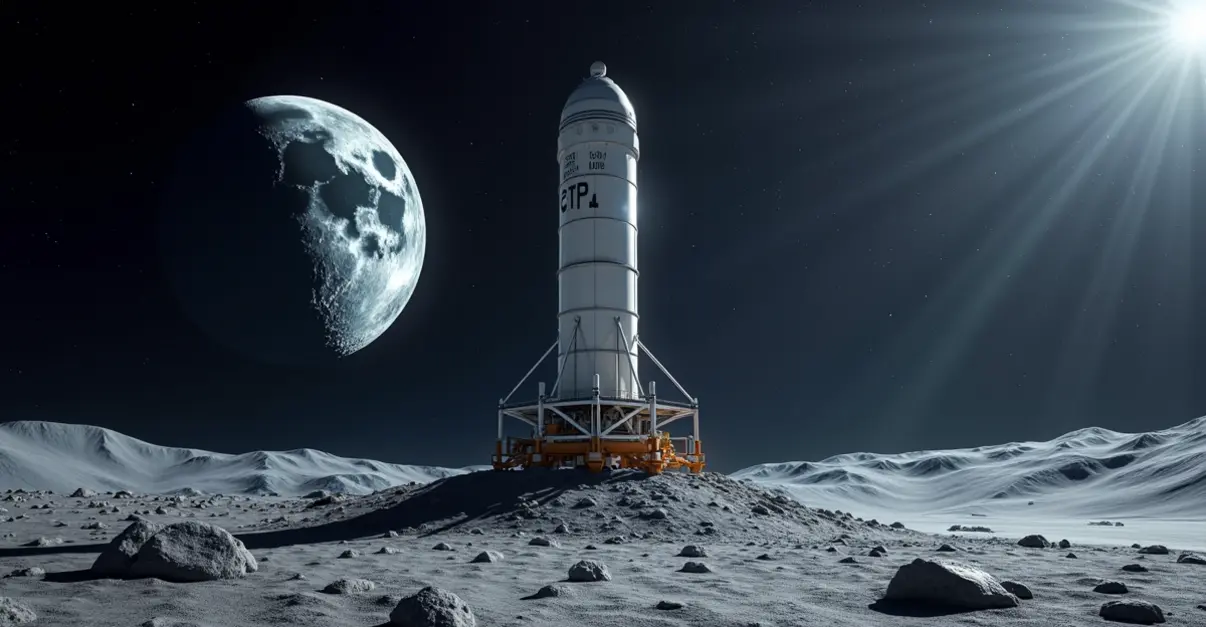
Scheduled for launch in 2026, Firefly Aerospace's Blue Ghost Mission 2 will target the Moon's resource-rich south pole region. This mission carries NASA payloads designed to assess lunar volatiles, measure radiation environments, and test navigation technologies essential for future human exploration. The contract exemplifies how commercial providers handle complex scientific objectives while managing end-to-end mission operations.
Intuitive Machines' IM-3 Mission (2026)
Building on the success of their IM-1 mission, Intuitive Machines' IM-3 will explore the lunar far side, carrying instruments to study lunar geology, thermal properties, and communications capabilities. This mission demonstrates how commercial providers can rapidly iterate and improve their systems based on previous flight experience, a key advantage of the CLPS model.
Draper's SERIES-2 Mission (2027)
While scheduled for 2027, Draper's SERIES-2 mission represents the forward-looking nature of CLPS contracts, focusing on advanced technology demonstrations and resource utilization experiments that will inform sustainable lunar operations.
Policy Implications and Regulatory Challenges
The rapid expansion of commercial lunar activities has created significant policy challenges that governments and international bodies are now addressing. The United Nations Office for Outer Space Affairs (UNOOSA) is organizing a Conference on the Commercial Lunar Landscape and Policy Needs in November 2025 specifically to address these emerging issues.
Key Policy Questions Facing Lunar Operations:
- Property Rights and Resource Utilization: Current international space law lacks clear frameworks for mining operations and resource extraction on the Moon
- Safety Zones and Operational Coordination: No established standards exist for safety zones around lunar operations despite Artemis Accords principles
- International Governance: The absence of China from the Artemis Accords complicates global coordination efforts
- Legal Frameworks: Establishing clear liability, insurance, and regulatory standards for commercial lunar activities
According to policy experts, these regulatory gaps represent both challenges and opportunities for establishing sustainable space governance frameworks that balance commercial innovation with responsible exploration.
Market Transformation and Economic Impact
The CLPS initiative has catalyzed a fundamental transformation in the space economy, creating new market segments and investment opportunities. A Q4 2025 PitchBook Analyst Note titled 'Moonshot: The Next Stage of the Lunar Space Economy' highlights how commercial lunar services have become a viable investment category.
Market Evolution Timeline:
| Timeframe | Market Focus | Key Activities |
|---|---|---|
| Near-term (2024-2030) | Science instruments & demonstrations | CLPS deliveries, technology validation |
| Mid-term (2030-2035) | Regular cargo delivery | Infrastructure development, resource assessment |
| Long-term (2035+) | Sustained operations | Commercial habitats, mining operations, tourism |
The analysis identifies nine interlocking market areas including transportation, communications, power systems, habitation, resource utilization, and cross-cutting services. Government spending through programs like CLPS serves as the primary demand driver in the near term, creating anchor customers that enable private market development.
Scientific Community Benefits and Challenges
For the scientific community, the CLPS program represents both unprecedented opportunity and new challenges. The increased flight frequency enables more experiments to reach the Moon, but scientists must adapt to commercial timelines, cost constraints, and risk profiles different from traditional government missions.
Benefits to Scientific Research:
- Increased Access: More frequent missions mean more opportunities for lunar science
- Diverse Landing Sites: Commercial providers can target scientifically valuable locations
- Technology Innovation: Commercial competition drives instrument miniaturization and capability improvements
- International Collaboration: Commercial platforms enable broader international participation
However, scientists must navigate the 'shots on goal' philosophy that accepts higher mission failure rates in exchange for lower costs and increased frequency. This requires designing more resilient experiments and developing redundancy strategies not typically needed in traditional government missions.
Expert Perspectives on Commercial Lunar Strategy
Space policy analysts emphasize that NASA's commercial approach represents a strategic evolution in how space agencies conduct exploration. 'The CLPS model isn't just about saving money—it's about creating a sustainable ecosystem where commercial providers can develop capabilities that serve both government and private customers,' explains Dr. Sarah Chen, space policy analyst at the Space Policy Institute.
Industry leaders highlight how the program has transformed their business models. 'Before CLPS, lunar delivery was something only governments could attempt. Now we're building repeatable, scalable systems that can serve multiple customers,' says Marcus Johnson, CEO of Firefly Aerospace.
Future Outlook and 2028 Horizon
Looking toward 2028, the CLPS program faces several critical milestones and challenges. The program must demonstrate consistent mission success rates while continuing to drive down costs and increase capabilities. Key developments to watch include:
- International Partnerships: How commercial providers integrate international payloads and partners
- Technology Maturation: Advancement of in-situ resource utilization (ISRU) technologies
- Market Expansion: Growth of non-NASA customers for lunar delivery services
- Regulatory Evolution: Development of international frameworks for commercial lunar activities
The success of the CLPS initiative will significantly influence how humanity approaches not just lunar exploration, but future missions to Mars and beyond. By creating a commercial market for space transportation, NASA is laying the groundwork for a sustainable space economy that extends beyond government programs.
Frequently Asked Questions (FAQ)
What is the total value of NASA's CLPS contracts?
NASA's Commercial Lunar Payload Services contracts have a combined maximum value of $2.6 billion through November 2028, involving 13 American companies.
How many payloads will CLPS deliver to the Moon?
The program aims to deliver over 60 scientific instruments to the Moon's surface and orbit by 2028, with more than 50 payloads already scheduled on awarded missions.
What are the main policy challenges for commercial lunar activities?
Key challenges include unclear property rights for mining operations, lack of safety zone standards, international coordination gaps, and establishing legal frameworks for liability and insurance.
How does CLPS support NASA's Artemis program?
CLPS missions test technologies, gather scientific data, and demonstrate systems essential for future crewed Artemis missions, particularly in understanding lunar environments and resource availability.
What companies are involved in CLPS contracts?
Thirteen American companies are eligible for CLPS contracts, with five vendors (including Intuitive Machines and Firefly Aerospace) having been awarded 11 lunar delivery missions to date.


Follow Discussion