


 Deutsch
 English
 Español
 Français
 Nederlands
 Português


 Share
Share




What Are Commercial Lunar Science Payload Contracts?
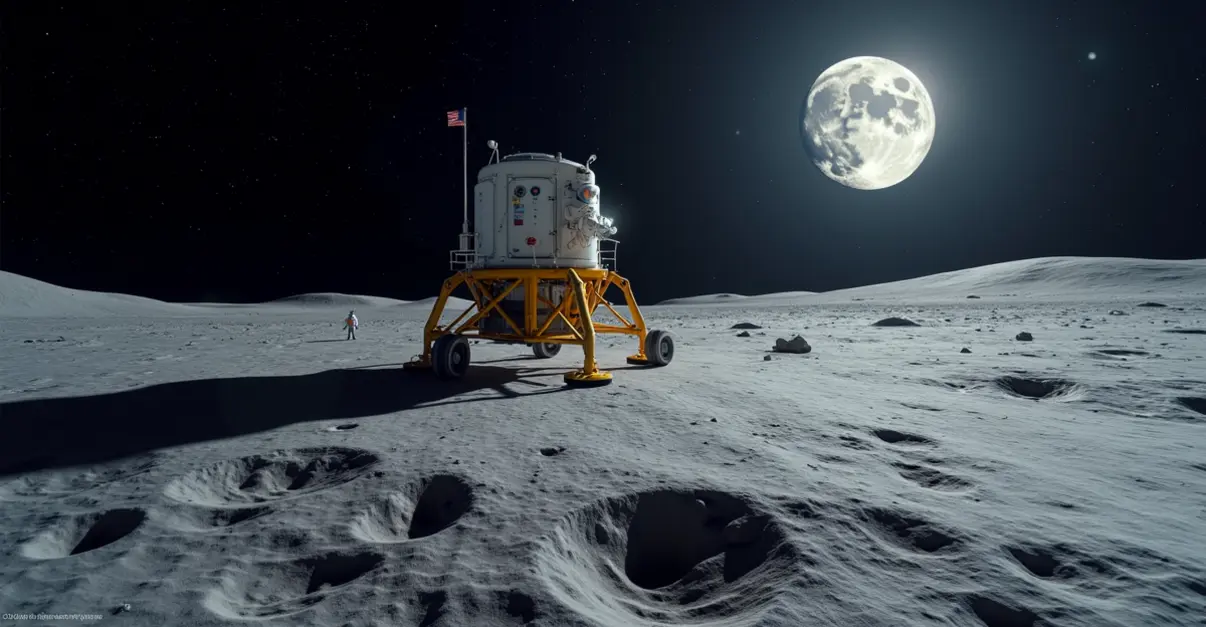
Commercial Lunar Science Payload Contracts represent NASA's innovative approach to lunar exploration through the Commercial Lunar Payload Services (CLPS) initiative. As of 2026, NASA has signed multiple contracts with American companies to deliver over 60 scientific instruments to the Moon's surface and orbit, supporting the agency's Artemis program for sustainable lunar exploration. These contracts mark a fundamental shift from traditional government-led missions to a commercial service model where NASA purchases payload delivery services from private companies rather than owning spacecraft. The program currently involves 13 eligible American companies with a combined maximum contract value of $2.6 billion through November 2028, covering end-to-end services including payload integration, mission operations, launch, and lunar landing.
Mission Objectives: Advancing Lunar Science and Exploration
The primary mission objectives for commercial lunar science payloads focus on three key areas: scientific discovery, technology demonstration, and resource identification. NASA's CLPS initiative aims to gather critical data about the Moon's environment, history, and resources to support future human missions under the Artemis program.
Scientific Discovery Objectives
Scientific payloads target fundamental questions about lunar geology, radiation environment, and thermal properties. Recent selections include EMILIA-3D, which will create 3D thermal models of lunar terrain to study regolith properties and improve navigation; LISTER, which will drill beneath the surface to measure the Moon's internal heat flow and thermal history; and SELINE, which will study the Moon's radiation environment by analyzing both primary galactic cosmic rays and their secondary particles. These investigations aim to enhance understanding of the Moon's history and environment while informing future human safety and navigation for lunar exploration.
Technology Demonstration Goals
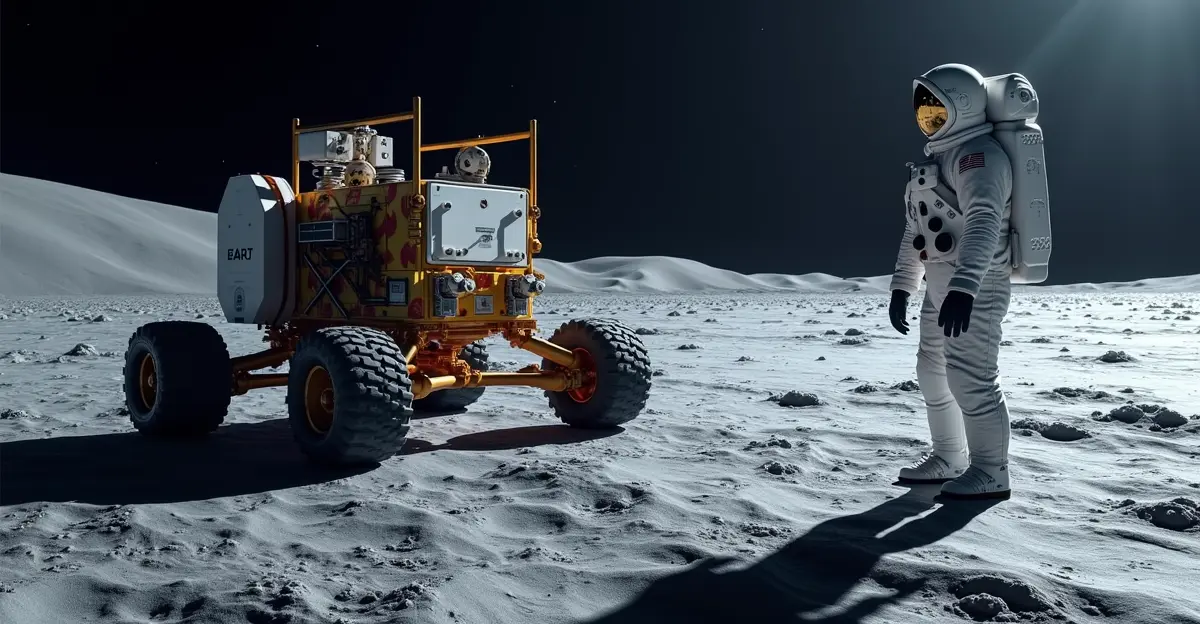
Beyond pure science, commercial lunar payloads test critical technologies for sustainable exploration. Many CLPS landers carry laser retroreflector arrays to create fiducial markers on the lunar surface, establishing precise navigation references. Other payloads test in-situ resource utilization concepts, communication systems, and autonomous operations that will be essential for establishing a continuous human presence on the Moon. The program's 'shots on goal' philosophy accepts calculated risk through multiple lower-cost missions rather than single billion-dollar missions, accelerating technology development through rapid iteration.
Payload Integration: The Commercial Service Model
Payload integration represents a key innovation in NASA's commercial approach. Under CLPS contracts, commercial companies handle the complete integration process, managing the interface between NASA-provided scientific instruments and their commercial landers. This end-to-end service model includes:
- Technical Interface Management: Companies ensure scientific payloads meet mechanical, electrical, thermal, and communication requirements
- Testing and Verification: Comprehensive testing of integrated systems before launch
- Mission Operations Planning: Development of operational procedures for lunar surface activities
- Data Management: Systems for collecting, processing, and transmitting scientific data back to Earth
This approach has stimulated the US industrial base, with companies like Intuitive Machines and Firefly Aerospace achieving commercial lunar landings between 2024-2025. The program creates a competitive lunar logistics market where multiple providers can bid on specific task orders through an Indefinite-Delivery/Indefinite-Quantity (IDIQ) contract structure.
Launch Schedules and Mission Timeline 2026-2028
NASA's commercial lunar payload delivery schedule has become increasingly ambitious through 2026. The agency has awarded 11 task orders with at least 2 more expected in 2025, involving 14 companies that will conduct landings across the Moon's surface including the south polar region and farside. Key upcoming missions include:
| Mission | Company | Target Launch | Primary Objectives |
|---|---|---|---|
| Blue Ghost Mission 2 | Firefly Aerospace | 2026 | South pole resource assessment, technology demonstration |
| IM-3 Mission | Intuitive Machines | 2026 | Far side exploration, communication relay testing |
| Draper SERIES-2 | Draper Laboratory | 2027 | Precision landing demonstration, science payload delivery |
| Multiple CLPS Task Orders | Various Vendors | 2026-2028 | Delivering 60+ instruments across 15 planned missions |
The accelerated schedule reflects NASA's commitment to establishing regular lunar access through commercial partnerships. According to NASA's Joel Kearns, deputy associate administrator for exploration in NASA's Science Mission Directorate, 'These payloads represent continued innovation in lunar exploration that will expand scientific knowledge while informing future human safety and navigation on the Moon and beyond.'
Impact on Lunar Exploration and Space Economy
The commercial lunar science payload contracts have fundamentally transformed how NASA approaches lunar exploration. By transitioning to a service-purchase model, the agency has created a sustainable market for lunar logistics that reduces reliance on any single provider while stimulating innovation through competition. This approach has several significant implications:
Cost Efficiency and Risk Management
The CLPS program represents a more affordable approach to lunar exploration, with individual mission costs ranging from $47 million to $199.5 million compared to traditional billion-dollar government missions. The program accepts some risk of failure as part of its 'shots on goal' philosophy, recognizing that multiple lower-cost missions provide valuable lessons even if individual missions encounter challenges. This risk-tolerant approach has already proven successful, with the first commercial Moon landing achieved by Intuitive Machines' IM-1 mission in 2024.
Industrial Base Development
The program has significantly strengthened the US space industrial base, creating new capabilities and expertise across multiple companies. By establishing a competitive market for lunar delivery services, NASA has enabled smaller companies to develop specialized expertise while encouraging larger aerospace firms to innovate. This diversified industrial base provides resilience and ensures continuous access to lunar surface capabilities even if individual companies face challenges.
International Collaboration Opportunities
The commercial model also creates new opportunities for international collaboration. As noted in assessments of international space partnerships, foreign space agencies and commercial entities can potentially purchase payload delivery services through the same commercial providers, creating a truly global lunar economy. This approach aligns with NASA's broader goals of establishing sustainable international partnerships for lunar exploration.
Expert Perspectives on Commercial Lunar Payload Services
Space industry experts view NASA's CLPS initiative as a transformative development in space exploration. According to analysis from the New Space Economy, 'NASA's Commercial Lunar Payload Services program represents a fundamental shift in space exploration methodology, transitioning from traditional government-led missions to a commercial service model that has become operational reality by 2026.' The program's success has validated the commercial approach to space exploration, potentially serving as a model for future missions to Mars and beyond.
NASA's own assessments, including reports from the Office of Inspector General, have examined the program's effectiveness, cost management, and implementation challenges. These evaluations help refine the commercial model while ensuring taxpayer funds are used efficiently to advance scientific discovery and exploration capabilities.
Frequently Asked Questions (FAQ)
What is NASA's Commercial Lunar Payload Services (CLPS) program?
CLPS is a NASA initiative established in 2018 that contracts commercial companies to deliver scientific, exploration, and technology payloads to the Moon's surface and orbit. The program uses fixed-price contracts to purchase end-to-end payload delivery services from Earth to the lunar surface.
How many companies are involved in CLPS contracts?
As of 2026, NASA has contracts with 13 eligible American companies, with 11 lunar deliveries awarded to five vendors carrying over 50 payloads. The program has expanded from an initial 9 companies in 2018 to 14 eligible vendors.
What are the primary mission objectives for lunar science payloads?
Primary objectives include scientific discovery (studying lunar geology, radiation, and thermal properties), technology demonstration (testing navigation, communication, and resource utilization systems), and resource identification (scouting for water ice and other resources to support human exploration).
When will the next commercial lunar payload missions launch?
Multiple missions are scheduled for 2026, including Firefly Aerospace's Blue Ghost Mission 2 and Intuitive Machines' IM-3 mission. NASA plans to deliver over 60 instruments to the Moon by 2028 via 15 planned lunar delivery contracts.
How does the commercial model benefit lunar exploration?
The commercial model provides cost efficiency through competition, accelerates innovation through rapid iteration, diversifies the industrial base, and creates a sustainable market for lunar logistics that supports long-term exploration goals.
Future Outlook and Conclusion
As NASA continues to execute its Artemis program, commercial lunar science payload contracts will play an increasingly vital role in establishing sustainable lunar exploration. The success of the CLPS initiative has demonstrated that commercial partnerships can deliver scientific results while stimulating economic activity in the space sector. Looking ahead, NASA plans to extend the program to support larger payloads and more complex missions, potentially including sample return capabilities and infrastructure development for human habitats.
The commercial approach to lunar exploration represents more than just a procurement strategy—it embodies a fundamental rethinking of how humanity explores space. By leveraging commercial innovation while maintaining government oversight and scientific direction, NASA has created a model that balances risk, cost, and ambition in pursuit of one of humanity's greatest endeavors: establishing a permanent presence beyond Earth.



Follow Discussion