


 Deutsch
 English
 Español
 Français
 Nederlands
 Português


 Share
Share




China's Communist Party Celebrates 105 Years, But Fear and Paralysis Grip Officials
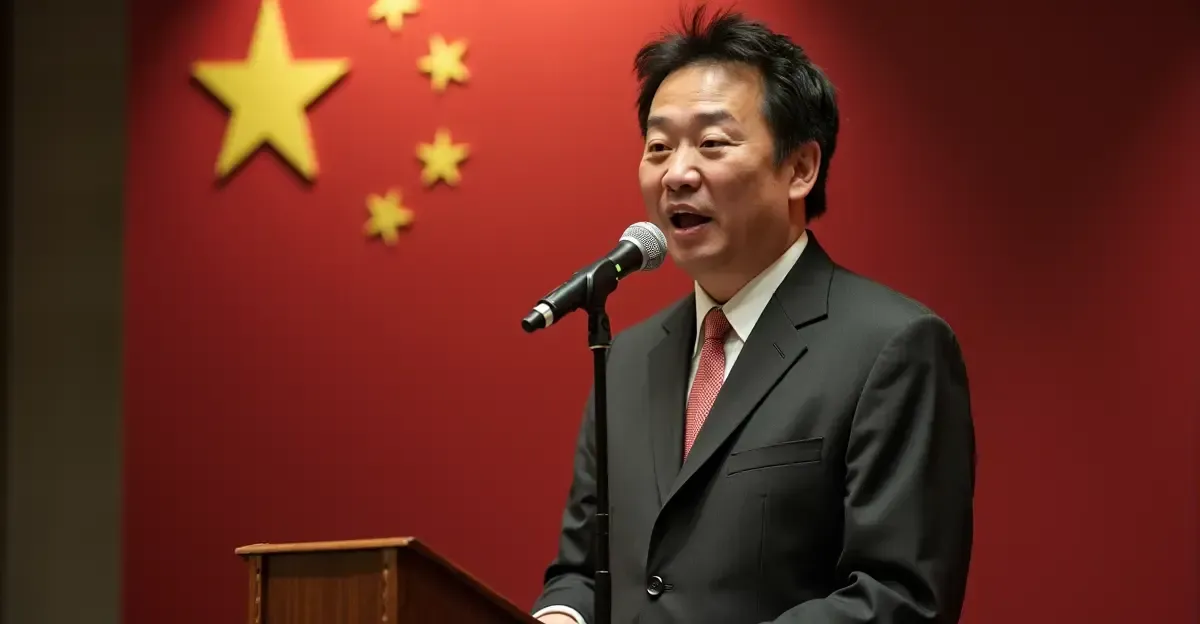
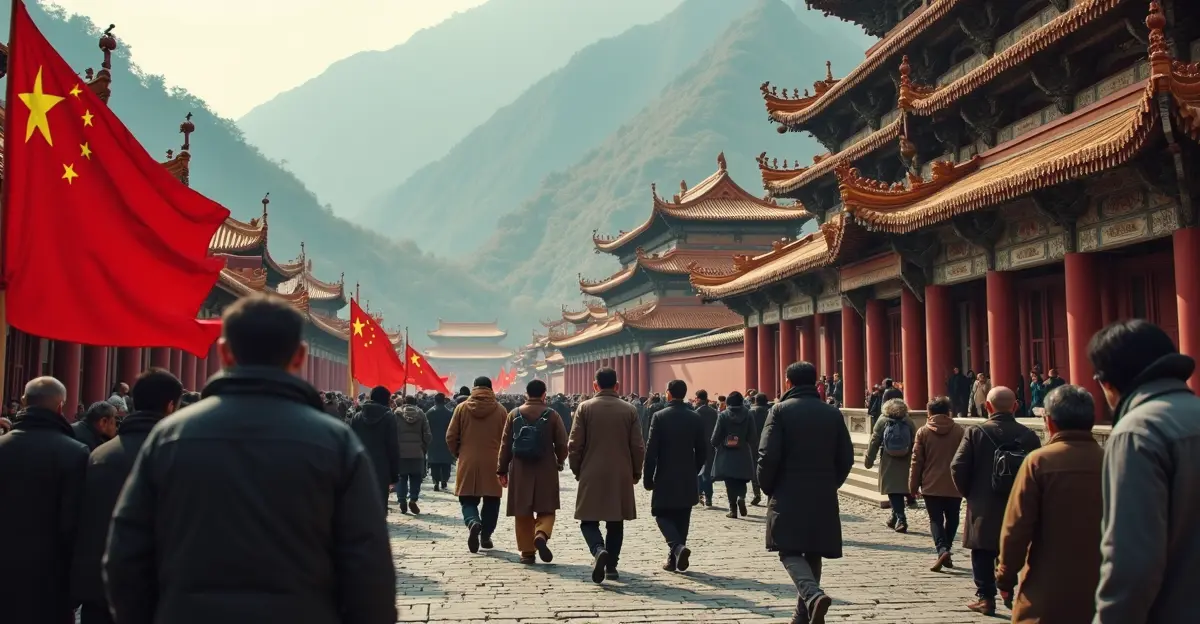
On July 1, 2026, the Chinese Communist Party (CCP) celebrated its 105th founding anniversary with grand ceremonies at the Great Hall of the People in Beijing. President Xi Jinping delivered a keynote speech vowing to intensify the party's signature anti-corruption campaign, describing it as essential to removing "viruses that erode the healthy body of the party." Yet behind the celebrations, a growing sense of fear and paralysis is gripping China's bureaucracy, as the anti-corruption drive enters its 14th year with record numbers of officials being investigated.
Since Xi launched the campaign in 2012, the crackdown has expanded from high-profile "tigers" — senior officials — to millions of grassroots "flies." In 2025 alone, disciplinary authorities filed 789,000 cases and penalized 677,000 individuals, according to official data. The number of high-ranking officials (ministerial level or above) investigated reached a record 115 in 2025, including former agriculture minister Tang Renjian, who was sentenced to death. The purge has also decimated the military's top ranks, with two defense ministers removed in three years and the Central Military Commission reduced to just Xi and one other general.
The Broadening Definition of Corruption
China experts say the campaign's intensity stems partly from an ever-expanding definition of corruption. According to Rahul Karan Reddy, a China researcher at the ORCA Institute, the rules now require officials not only to avoid abusing government instruments but also to demonstrate "political discipline." What this means in practice is deliberately vague.
"The regulations are intentionally ambiguous to intimidate people," says Qian Jingyuan, a China researcher at Boston University. "Many officials might be considered corrupt under the current definition, but they are also highly capable economic managers."
The ambiguity has created a chilling effect. Officials who once prided themselves on creative problem-solving now stick rigidly to orders from above, fearful that any initiative could be retroactively labeled corrupt. This bureaucratic paralysis comes at a critical time, as China faces a property crisis, deflationary pressures, weak consumer confidence, and slowing economic growth — the lowest in decades.
"Officials have become risk-averse and no longer dare to be creative. They only carry out what is ordered from above," Reddy explains. "This is happening precisely when reforms and solutions have historically come from the bottom up."
The Chinese anti-corruption campaign impact on local economies is becoming increasingly visible. Infrastructure projects stall, investment decisions are delayed, and policy implementation slows as officials prioritize self-protection over performance.
Loyalty Over Growth: A Strategic Shift
Under Xi, the criteria for evaluating officials have shifted dramatically. Where local cadres were once judged primarily on economic performance indicators like GDP growth, political loyalty and strict adherence to directives from Beijing now take precedence. This transformation is part of a broader consolidation of power ahead of the 20th National Party Congress in 2027, where the party's top leadership for the next five years will be selected.
According to Qian, the intensified anti-corruption push serves two purposes: First, it pressures local governments to implement central policy priorities more quickly. Second, it provides a mechanism to reward loyal officials with promotions while removing potential rivals. The campaign has become a management tool to ensure discipline as China pursues strategic ambitions in technology, AI, and renewable energy amid intensifying competition with the United States.
In his anniversary speech, Xi struck an outward-looking tone, emphasizing the CCP's global influence. He stated the party has "deeply changed the trend and trajectory of the world's development" and called for promoting "a new type of international relations." On Taiwan, he reiterated that reunification is "the party's unwavering historical responsibility."
The Xi Jinping anti-corruption strategy has drawn comparisons to Mao-era purges, though the methods are more institutionalized. The Central Commission for Discipline Inspection (CCDI) now leverages big data and cloud computing to uncover sophisticated corruption schemes involving shadow companies, delayed bribes, and fake investments. In 2025, 19,000 bribe-givers were also investigated — a sign that the campaign is targeting both sides of corrupt transactions.
Record Numbers, Record Fear
The scale of the campaign is staggering. Between January and November 2025, 536,000 low-ranking officials were disciplined. Through the "Sky Net" operation, China repatriated 782 fugitives and recovered 23.66 billion yuan ($3.38 billion) in illicit assets within 11 months. Notable successes included the extradition of Zhou Jinghua from Thailand and the return of Liang Jinwen after 28 years abroad.
Yet the campaign shows no signs of abating. In January 2026, the Fifth Plenum of the CCDI declared the fight remains "severe and complex," with new priorities integrating anti-corruption with the 15th Five-Year Plan (2026-2030) to secure economic performance. County-level areas have been designated as the main "battlefield."
The CCP 2027 National Congress is expected to be a pivotal moment. Historically, anti-corruption campaigns have intensified in the run-up to party congresses, and 2026 is shaping up to be no exception. Top generals Zhang Youxia and Liu Zhenli were placed under investigation in January 2026, signaling significant upheaval in the military leadership.
Impact: Economic Paralysis and Political Control
The tension between economic growth and political control is at the heart of China's current dilemma. The Economist reported in early 2025 that China's economic recovery efforts were being hampered by a risk-averse bureaucracy, with local officials too frightened to make bold decisions. The central government has attempted to reassure cadres, but the message is undermined by the relentless pace of investigations.
Qian Jingyuan sums up the trade-off: "The Party must balance economic growth and political control. Many officials are, by the Chinese definition, perhaps corrupt, but they are also very capable economic managers. As long as it remains unclear what is and isn't allowed, many administrators will avoid risks. That ultimately comes at the expense of local economic development, while economic growth has been declining for a long time."
With 101 million members, the CCP is the world's second-largest political party. Its legitimacy has long rested on delivering prosperity and stability. The anti-corruption campaign has undoubtedly reduced blatant graft, but the cost — in terms of bureaucratic paralysis, suppressed initiative, and economic stagnation — may prove too high. Whether the party can find a balance between discipline and dynamism will determine its ability to navigate the challenges ahead.
Frequently Asked Questions
What is the Chinese Communist Party's anti-corruption campaign?
Launched by President Xi Jinping in 2012, the campaign targets corruption at all levels of the CCP and government. It has investigated millions of officials, from senior "tigers" to grassroots "flies," and has expanded to include vague criteria such as "political discipline."
How many officials have been investigated in 2025?
In 2025, disciplinary authorities filed 789,000 cases and penalized 677,000 individuals. A record 115 high-ranking officials (ministerial level or above) were investigated, including former agriculture minister Tang Renjian.
Why are Chinese officials afraid?
The definition of corruption has become deliberately broad and ambiguous, covering not just bribery but also a failure to demonstrate "political discipline." This uncertainty has made officials risk-averse, as any initiative could be retroactively deemed corrupt.
How does the anti-corruption campaign affect China's economy?
The campaign has created bureaucratic paralysis, slowing infrastructure projects, delaying investment decisions, and hampering policy implementation. This comes at a time when China faces a property crisis, deflation, and slowing GDP growth.
Will the anti-corruption campaign continue?
Yes. Xi has vowed to intensify the campaign, integrating it with the 15th Five-Year Plan (2026-2030). The run-up to the 2027 National Party Congress is expected to see further investigations as Xi consolidates power.
Follow Discussion