


 Deutsch
 English
 Español
 Français
 Nederlands
 Português


 Share
Share




Trump Taiwan Weapons Sales 2026: Decision Looms as China Meeting Nears
In a significant development that could reshape US-China relations, President Donald Trump has revealed he is actively considering whether to proceed with future weapons sales to Taiwan, with a decision expected soon ahead of his anticipated April meeting with Chinese President Xi Jinping. The announcement, made aboard Air Force One on February 17, 2026, comes amid escalating tensions between Washington and Beijing over Taiwan's status and defense capabilities.
What is the Taiwan Weapons Sales Controversy?
The Taiwan weapons sales controversy centers on US military support for Taiwan, which China considers a breakaway province. Under the Taiwan Relations Act of 1979, the United States is committed to providing Taiwan with defensive weapons, but China views such sales as interference in its internal affairs and violations of the One-China policy. The current debate involves a proposed $20 billion arms package that would follow a December 2025 deal worth approximately $11.15 billion, making it one of the largest military assistance packages in US-Taiwan history.
Trump's Announcement and Diplomatic Context
Speaking to Bloomberg News reporters, Trump stated: "I talk to him about it. We had a very good conversation and we will make a decision on that pretty soon." The president was referring to his February 4 phone conversation with Xi Jinping, during which the Chinese leader reportedly urged Trump to handle arms sales to Taiwan "with prudence."
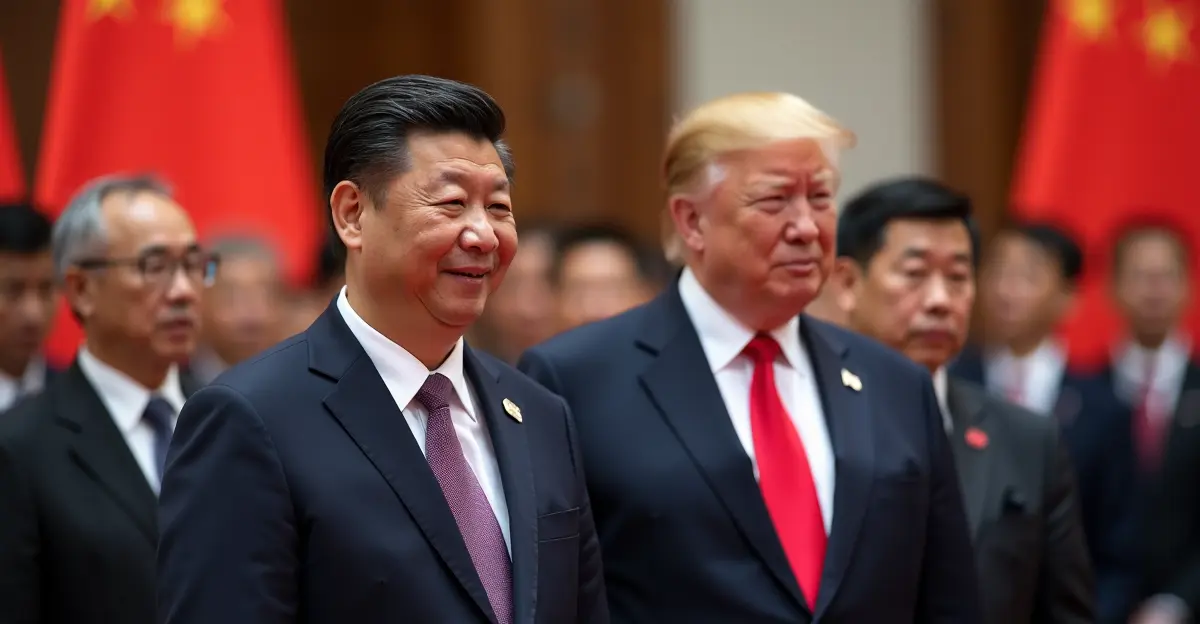
The timing is particularly sensitive as Trump and Xi are scheduled to meet in China in April 2026. According to diplomatic sources, China has privately warned that proceeding with additional weapons sales could jeopardize this high-stakes summit, though some US officials believe Beijing may be overstating this risk.
Key Components of Recent Arms Deals
- December 2025 Package ($11.15 billion): Included advanced missile systems, naval defense equipment, and surveillance technology
- Proposed 2026 Package ($20 billion): Would feature Patriot missile defense systems, advanced fighter jet components, and cyber warfare capabilities
- Strategic Shift: Recent packages emphasize asymmetric warfare capabilities similar to those used successfully by Ukraine
Historical Background: Taiwan's Complex Status
Taiwan's political status represents one of the most enduring geopolitical flashpoints in modern history. After World War II, Taiwan returned to Chinese control following Japanese occupation, but in 1949, nationalist forces under Chiang Kai-shek retreated to the island after losing the Chinese Civil War to Mao Zedong's communists. Since then, Taiwan has functioned as a de facto independent state with its own government, military, and democratic institutions, though China maintains its claim to sovereignty.
The United States has maintained a delicate balancing act, officially recognizing the One-China policy while continuing to support Taiwan's self-defense capabilities through arms sales and military cooperation. This approach has been particularly contentious during the US-China trade tensions of recent years, with Taiwan becoming an increasingly central issue in bilateral relations.
Geopolitical Implications and Regional Security
The decision on Taiwan weapons sales carries significant implications for regional stability and global power dynamics. China has dramatically increased military pressure on Taiwan in recent years, conducting regular military exercises and airspace incursions around the island. In December 2025, China conducted large-scale military exercises that included missile launches toward Taiwan, signaling its readiness to use force if necessary.
Experts note that Taiwan's strategic location in the First Island Chain makes it crucial for controlling access to the Western Pacific. A stronger Taiwanese defense capability could complicate Chinese military planning for potential invasion scenarios, while also serving US interests in maintaining a balance of power in the region.
Comparison: US Arms Sales to Taiwan vs. Other Regions
| Region/Country | Annual Arms Value | Primary Purpose | Geopolitical Impact |
|---|---|---|---|
| Taiwan | $11-20 billion (2025-2026) | Deter Chinese aggression | High tension with China |
| Ukraine | $10-15 billion (2025) | Counter Russian invasion | European security crisis |
| Middle East allies | $30-40 billion annually | Regional stability | Complex alliance dynamics |
What Happens Next: Decision Timeline and Scenarios
Trump's announcement suggests a decision could come within weeks, potentially before his April meeting with Xi. Several scenarios are possible:
- Approval with modifications: The US might proceed with sales but scale back certain components or delay implementation
- Conditional approval: Sales could be tied to specific Chinese concessions or behavioral changes
- Postponement: Decision could be delayed until after the Xi-Trump summit to avoid diplomatic disruption
- Cancellation: Unlikely but possible if China offers significant trade or security concessions
As Bonnie Glaser, director of the Asia Program at the German Marshall Fund noted in recent analysis: "The Taiwan arms sales issue has become a litmus test for US-China relations. How Trump handles this will signal whether Washington prioritizes strategic competition or seeks accommodation with Beijing."
Frequently Asked Questions (FAQ)
Why does China oppose US weapons sales to Taiwan?
China considers Taiwan part of its territory and views foreign military support as interference in its internal affairs, violating the One-China principle that has been the foundation of US-China relations since 1979.
What legal basis does the US have for selling weapons to Taiwan?
The Taiwan Relations Act of 1979 requires the United States to provide Taiwan with defensive weapons to maintain sufficient self-defense capabilities, though the US officially recognizes the One-China policy.
How significant is the proposed $20 billion arms package?
It would be one of the largest US arms transfers to Taiwan, potentially including advanced missile defense systems and technologies that could significantly enhance Taiwan's ability to deter Chinese military action.
Could this decision affect Trump's planned meeting with Xi?
Yes, China has warned that proceeding with arms sales could jeopardize the April summit, though some analysts believe both sides have incentives to maintain high-level dialogue regardless of the outcome.
What are Taiwan's current defense capabilities?
Taiwan maintains a modern military with approximately 215,000 active personnel, advanced air defense systems, and a growing emphasis on asymmetric warfare capabilities to counter China's numerical advantage.

Follow Discussion