


 Deutsch
 English
 Español
 Français
 Nederlands
 Português


 Share
Share




Europe risks squandering its early lead in the race to develop artificial cells unless the European Union provides coordinated funding and long-term strategy, warns Marileen Dogterom, professor of bionanoscience at TU Delft and president of the Royal Netherlands Academy of Arts and Sciences (KNAW). Speaking on the BNR podcast De Technoloog, Dogterom stressed that the Netherlands is currently a global frontrunner, but without Brussels stepping up, the continent could lose autonomy over a technology that promises to revolutionise medicine, industry, and environmental cleanup.
What Are Artificial Cells?
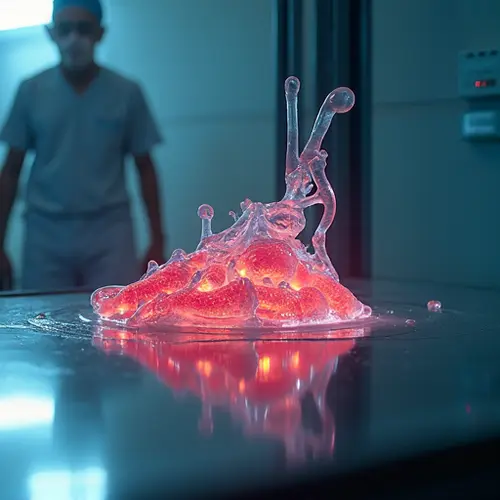
Artificial cells are simplified, purpose-built versions of living cells, constructed from biological building blocks. Unlike natural cells – which emerge only from pre-existing cells and whose inner workings remain incompletely understood – these engineered systems are designed for a single specific task. "Nobody knows exactly how a living cell works," Dogterom said. "Take apart a car or even an ASML machine, and someone can always put it back together. With living cells, that's not possible: they always come from earlier cells." Building cells from scratch would not only answer fundamental questions about the nature of life but also give scientists far greater control over their functions. While existing biotechnology already modifies living cells, artificial cells could operate outside the lab or factory vat, breaking down toxins in the human body or decomposing plastic in the environment.
Why Europe's Lead Is Under Threat
The Netherlands has earned international recognition for its long-term coordination of fundamental research, exemplified by the BaSyC (Building a Synthetic Cell) consortium, which unites 17 research groups across six Dutch institutions. But Dogterom argues that what is missing is a European-level framework. "You see that the community of scientists in Europe is very interested in developing artificial cells. Activity is increasing, and one breakthrough is going to happen. Then things can suddenly move very fast," she noted. Without strategic coordination, Europe could find itself unable to set the terms of the technology's use. "Otherwise we lose our autonomy and Europe cannot determine the conditions. Once the technology is there, it must remain broadly available. We don't want situations where expensive medicines are only available to a small group, or where applications never reach certain parts of the world."
Geopolitics of Synthetic Biology
The urgency is heightened by growing competition from the United States and China. In both countries, private investors and philanthropists are already pouring money into synthetic biology. The US has seen landmark achievements such as the University of Minnesota's "SpudCell" – a synthetic cell assembled from non-living components that can feed, grow and replicate across five generations – while China hosted the inaugural SynCell Global Summit in 2024 and leads in biotechnology publications. By contrast, Europe relies almost entirely on public funding for the foundational research still needed. The EU's next long-term budget (2028–2034) presents a critical opportunity: the European Commission has proposed doubling the Horizon Europe budget to €175 billion, but whether synthetic cell research will be prioritised remains uncertain.
Applications That Could Transform Society
The potential payoff is enormous. Artificial cells could be engineered to:
- Produce affordable, targeted medicines on demand
- Detect and neutralise toxins inside the human body
- Break down microplastics and other persistent pollutants
- Manufacture chemicals and materials sustainably
- Serve as living sensors for environmental monitoring
Dogterom insists that Europe's unique strength lies in its collaborative research culture, but that advantage is perishable. "It would be a huge missed opportunity if we don't build on the lead we still have," she said. The European Synthetic Cell Initiative (SynCellEU) is already working to coordinate efforts, but it requires the political and financial backing that only Brussels can provide.
Frequently Asked Questions
What is a synthetic cell?
A synthetic cell is an artificial construct built from molecular components – lipids, proteins, nucleic acids – that mimics the essential functions of a living cell. Unlike naturally occurring cells, it is designed for specific tasks such as drug delivery or pollution cleanup.
Why is Europe considered a leader in artificial cell research?
Europe, and particularly the Netherlands, has invested early and consistently in bottom-up synthetic biology through programmes like BaSyC and the European Synthetic Cell Initiative, bringing together top researchers across disciplines.
How could artificial cells be used in medicine?
They could be programmed to produce therapeutic molecules inside the body, target cancer cells, or break down toxic substances, offering treatments that are cheaper, more precise, and accessible to wider populations.
What is holding back the development of artificial cells?
The main bottleneck is fundamental understanding: scientists still do not fully grasp how natural cells coordinate thousands of processes simultaneously. Progress requires sustained, coordinated funding for foundational research over many years.
What can the EU do to maintain Europe's lead?
Dogterom calls for earmarked funding in the 2028–2034 EU budget, better coordination of national research efforts, and a strategic vision that ensures artificial cell technologies remain publicly accessible and ethically governed.





Follow Discussion