


 Deutsch
 English
 Español
 Français
 Nederlands
 Português


 Share
Share




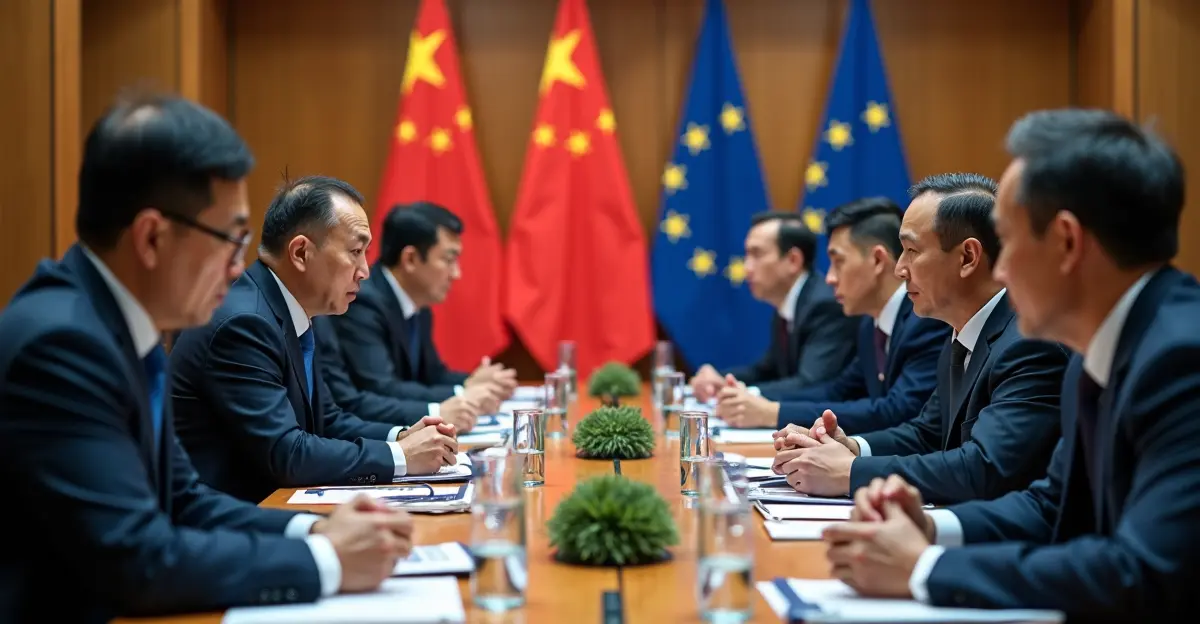
Europe can no longer win the cost war with China, even under the most ambitious reform scenarios, according to a new study by management consultancy McKinsey & Company. The report, covered by the Dutch financial daily Het Financieele Dagblad (FD), delivers a stark warning: the production cost gap between Europe and China has become structural and insurmountable in the foreseeable future.
What is the Europe-China Cost Gap?
The Europe-China cost gap refers to the persistent difference in manufacturing and production costs between the two regions. McKinsey's analysis shows that even if Europe fully embraces artificial intelligence — boosting productivity by 30% — and slashes energy costs to match China's cheapest regions, the continent would still trail behind. The cost chasm, the report concludes, is no longer bridgeable through conventional reforms alone.
Key Findings from the McKinsey Study
The research models the most optimistic scenario for Europe: full AI adoption, a 30% productivity surge, and energy costs driven down to Chinese levels. Yet even under these assumptions, European production costs remain higher. According to Marijn Jongsma, the FD journalist who analyzed the report, the study makes clear that 'the cost gap cannot be closed.'
Sector-by-Sector Breakdown
When more realistic assumptions are applied, sharp sectoral differences emerge. In the semiconductor industry, costs in China are 40–50% lower than in Europe. For nuclear energy, Chinese costs can be up to 300% lower than in France. The solar panel industry is now almost entirely concentrated in China. 'If we want to do that ourselves, we will pay a huge amount of money,' Jongsma explained. 'We can also thank China for doing certain things for us and focus on other things.'
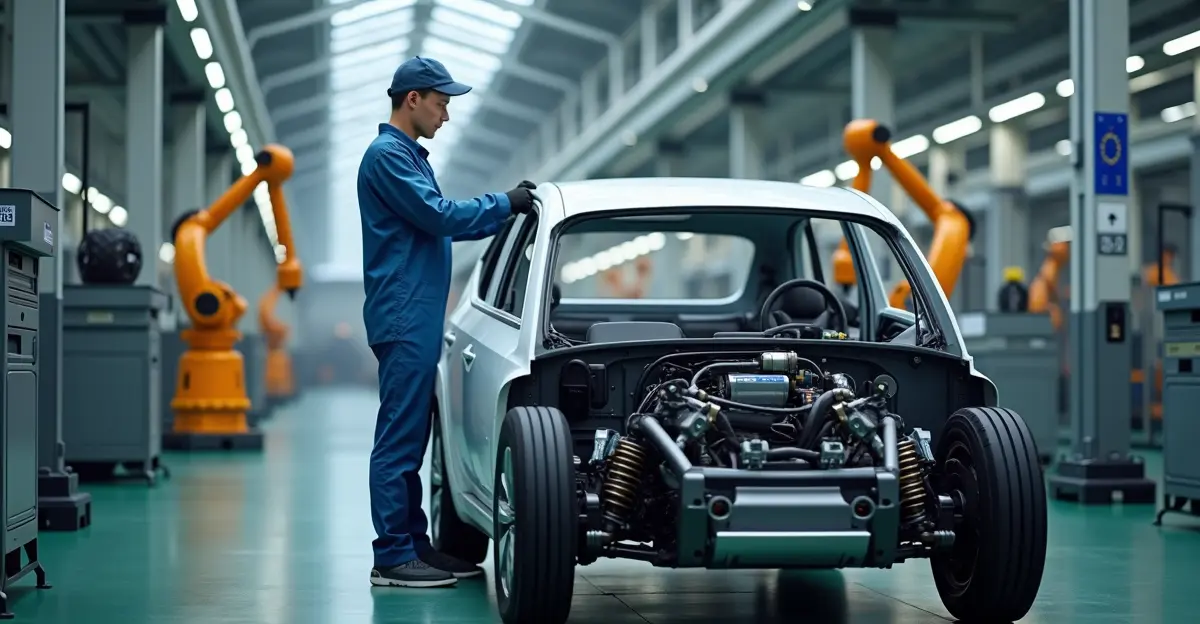
The findings align with other industry data. A CLEPA and McKinsey survey of European automotive suppliers in 2025 found that 57% report increasing pressure from Chinese component imports, and 72% identify decreasing EU competitiveness as a strategic challenge. In electric vehicles, the manufacturing cost gap has widened to over 30%, with Chinese battery cells costing 30% less than European equivalents.
EU China trade war tensions have been escalating, with the European Commission considering tariffs on Chinese electric vehicles and other goods.Why Europe Cannot Compete on Cost Alone
McKinsey's report highlights that China's advantages are not limited to low-wage sectors. The country dominates high-tech industries as well. Jongsma called it 'a major misconception that China only dominates sectors we don't want to be in.' China's lead spans from solar panels and batteries to advanced chips and electric vehicles.
However, Europe retains strengths in institutional quality, knowledge, innovation, and political stability — factors that matter to investors but do not directly translate into lower production costs. The European Green Deal industrial policy aims to boost competitiveness, but the McKinsey study suggests it may not be enough to close the cost gap.
McKinsey's Role and Credibility
McKinsey has its own interests in the competitiveness debate. The firm advises companies on restructuring and cost optimization. Jongsma noted that the report also calls for more flexible introduction periods for electric vehicles in France, Germany, and the US — policies McKinsey could help implement. 'McKinsey is pre-eminently the party that can advise companies on making such changes,' he said. 'But this study is mainly intended to showcase the knowledge McKinsey has in-house.'
McKinsey, founded in 1926, is the oldest and largest of the 'Big Three' strategy consultancies (MBB). It has faced controversies over its work with opioid manufacturers, Enron, and authoritarian regimes, but remains a highly influential voice in global business strategy.
European manufacturing competitiveness 2025 remains a top concern for policymakers, with the EU exploring new industrial strategies.Implications for European Policy and Industry
The McKinsey report has significant implications for EU industrial policy. It suggests that Europe must either accept higher costs for strategic autonomy in certain sectors or double down on its non-cost advantages — innovation, rule of law, and institutional stability. The report also implies that Europe may need to specialize further and import more from China, rather than trying to compete across all industries.
For investors and businesses, the message is clear: cost-driven manufacturing is unlikely to return to Europe in scale. Instead, companies should focus on high-value, innovation-driven production where Europe still holds an edge. The EU's Net-Zero Industry Act and other initiatives may help, but they cannot erase the structural cost disadvantage.
Frequently Asked Questions
What did the McKinsey report say about Europe vs China costs?
The report concluded that even under the most ambitious reform scenarios — including full AI adoption and a 30% productivity boost — Europe cannot match China's production costs. The cost gap is structural and insurmountable.
Which sectors are most affected by the cost gap?
Semiconductors (40–50% cost disadvantage), nuclear energy (up to 300% higher costs in Europe), solar panels (nearly full Chinese dominance), and electric vehicles (over 30% cost gap) are among the most affected sectors.
Does Europe have any competitive advantages over China?
Yes. Europe scores higher on institutional quality, knowledge, innovation, and political stability. These factors are important for investors but do not directly translate into lower production costs.
Is McKinsey's report biased?
McKinsey has commercial interests in advising companies on competitiveness. The report also advocates for policies that McKinsey could help implement, such as flexible EV introduction periods. However, the underlying data on cost gaps is consistent with other independent analyses.
What can Europe do to improve its competitiveness?
Europe can focus on high-value, innovation-driven sectors, leverage its institutional strengths, and accept higher costs for strategic autonomy in critical industries. Policymakers are exploring targeted support through the Net-Zero Industry Act and other measures.


Follow Discussion