


 Deutsch
 English
 Español
 Français
 Nederlands
 Português


 Share
Share




G7 Leaders Converge in Évian for Pivotal Summit
From June 15 to 17, 2026, leaders of the Group of Seven (G7) gathered in Évian-les-Bains, France, for the 2026 G7 Summit, hosted by French President Emmanuel Macron. The summit addressed a range of pressing global issues including the recently brokered US-Iran peace deal, the ongoing war in Ukraine, critical mineral supply chains, digital safety for minors, and the re-emerging Bundibugyo Ebola outbreak in Central Africa. The meetings produced several landmark declarations and set the stage for a formal US-Iran signing ceremony scheduled for June 19 in Geneva, Switzerland.
The summit marked a critical moment for global economic and geopolitical stability amid heightened tensions in the Middle East, volatile energy markets, and persistent inflationary pressures. The G7 summit outcomes 2026 reflect a coordinated effort by major industrialized democracies to address these multifaceted challenges.
US-Iran Deal: A Breakthrough After Months of Conflict
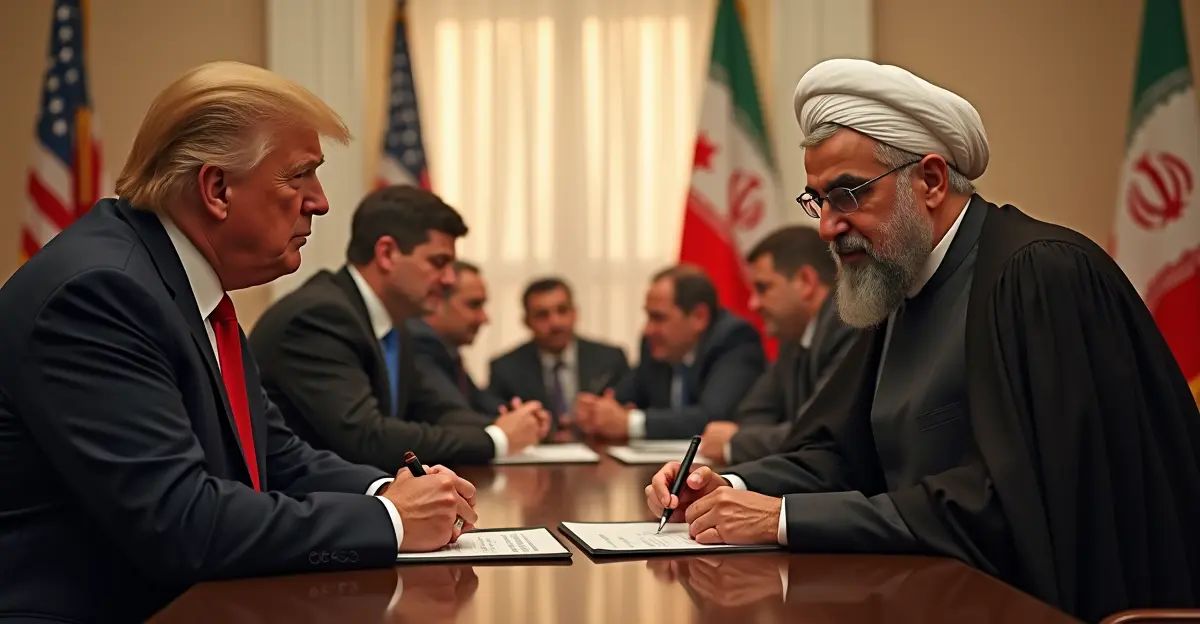
One of the most significant developments discussed at the summit was the US-Iran framework peace deal, digitally signed on June 15 by US President Donald Trump and Vice President JD Vance, alongside Iran's Parliament Speaker Mohammad Bagher Ghalibaf. The agreement ends a three-month-long conflict that saw 13 US service members killed and disrupted global oil shipments through the Strait of Hormuz.
The deal provides for the reopening of the Strait of Hormuz, the lifting of the US naval blockade on Iranian ports, and a 60-day ceasefire period during which the two sides will negotiate a permanent settlement covering Iran's enriched uranium stockpile, sanctions relief, and regional security arrangements. "The deal has already boosted market sentiment, with expectations of increased oil flows and reduced geopolitical risk across the Middle East," reported OilPrice.com.
Israeli Prime Minister Benjamin Netanyahu, speaking at the summit, noted that he and President Trump "do not always see eye to eye" on the agreement, reflecting ongoing concerns within Israel about Iran's nuclear ambitions. The G7 leaders' statement on geopolitical issues welcomed the deal and supported a multinational maritime initiative to ensure safe passage through the Strait of Hormuz.
Global Energy Markets React
The reopening of the Strait of Hormuz, through which approximately 20% of global oil passes, has immediate implications for energy markets. According to the IFM Investors June 2026 Economic Update, the Middle East conflict had introduced a "stagflationary impulse" with higher fuel prices affecting transport, food costs, and consumer confidence. The deal is expected to ease supply concerns, though analysts caution that the shipping industry remains cautious due to lingering threats of mines and drones.
The global oil price outlook 2026 remains uncertain as OPEC+ nations continue to recalibrate production strategies, but the US-Iran agreement removes a significant source of geopolitical risk premium from crude benchmarks.
G7 Declaration on Critical Minerals Supply Chains
On June 17, G7 leaders issued a declaration on securing supply chains for critical minerals, recognizing their strategic importance for economic prosperity, digital transformation, and energy security. The declaration expressed "grave concern over non-market policies, economic coercion, and arbitrary export restrictions" that threaten supply chain resilience.
Key commitments include reducing dependency on single suppliers outside the G7 for rare earths and permanent magnets to under 60% by 2030, with an ambition to reach 50%. Leaders welcomed 195 projects announced since early 2026, representing €64 billion in investments. The declaration also calls for stronger transparency and traceability frameworks, starting with lithium and nickel pilots and expanding to five new critical minerals annually.
Digital Safety for Minors
In a separate declaration, the G7 digital and tech ministers agreed on a Common Set of Principles for protecting minors online, adopted on May 29, 2026. The seven principles call for safety-by-design risk management, robust age assurance solutions, enhanced privacy settings for minors' accounts, and strong measures against child sexual abuse material. The European Commission welcomed the agreement, noting that the principles are "directly inspired by the EU's pioneering approach to online child safety" under the Digital Services Act.
Coordinated Response to the Bundibugyo Ebola Outbreak
The G7 leaders also issued a call for a coordinated global response to the re-emerging Bundibugyo Ebola outbreak in the Democratic Republic of the Congo and Uganda. The outbreak is centered in an isolated, conflict-affected area, complicating containment efforts. Existing vaccines and treatments are not fully effective against this rare viral strain.
Significant financial contributions were highlighted, including over $370 million from the US (with up to $500 million more pledged), €493 million from the EU, and $518 million through the Continental Preparedness and Response Plan. The G7 committed to preventing further spread through contact tracing, infection control, cross-border surveillance, and community engagement.
Ukraine: Continued Support and Sanctions
On the war in Ukraine, G7 leaders reaffirmed unwavering support for Ukraine's territorial integrity and sovereignty, agreeing to increase deliveries of air defense and long-range capabilities. They committed to further sanctions targeting Russia's oil and gas sectors. The statement expressed continued backing for President Trump's peace process efforts while acknowledging that only Ukraine and Russia through good-faith negotiations can reach a peace agreement.
The Ukraine war sanctions 2026 remain a key tool in the G7's strategy to pressure Russia, with leaders emphasizing the need to close loopholes and prevent evasion.
Global Economic Outlook
The World Bank's Global Economic Prospects report, released on June 16, 2026, forecasts global GDP growth at 2.6% for 2026, slightly improved from earlier projections but still weak by historical standards. US GDP is expected at 2.2%, while growth remains concentrated in advanced economies. The World Bank warns that the pace is too slow to significantly reduce extreme poverty.
The IFM Investors update notes that equity markets remain surprisingly buoyant despite elevated risks, with the S&P 500 reaching record highs. However, long-end bond yields have climbed to multi-decade highs as inflation and policy risks are repriced. The report recommends deliberate diversification with exposure to real assets.
FAQ
What were the main outcomes of the 2026 G7 Evian Summit?
The summit produced declarations on the US-Iran peace deal, critical minerals supply chains, digital safety for minors, the Bundibugyo Ebola outbreak, and continued support for Ukraine. Leaders also addressed global economic challenges and geopolitical stability.
How will the US-Iran deal affect oil prices?
The reopening of the Strait of Hormuz is expected to ease supply concerns and reduce geopolitical risk premiums in crude oil prices, though market volatility may persist due to OPEC+ production strategies and lingering security threats.
What is the G7's plan for critical minerals?
The G7 aims to reduce dependency on single suppliers for rare earths to under 60% by 2030, invest €64 billion in 195 projects, and enhance transparency and traceability frameworks for lithium, nickel, and other critical minerals.
What is the Bundibugyo Ebola outbreak?
It is a re-emerging outbreak of a rare strain of Ebola virus in the Democratic Republic of the Congo and Uganda, centered in an isolated, conflict-affected area. Existing vaccines are not fully effective against this strain.
How is the global economy performing in 2026?
The World Bank forecasts global GDP growth of 2.6% in 2026, with US growth at 2.2%. Inflation remains a concern, and central banks face complicated policy responses amid supply-side shocks and geopolitical tensions.


Follow Discussion